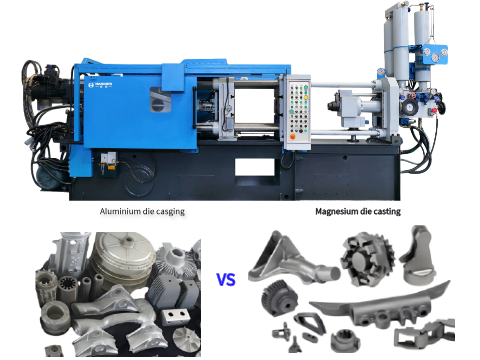
As professional manufacturers, we help you pick suitable die casting material between aluminum and magnesium. Compare performance, cost and usage for your production.
Die casting material choice directly decides part quality, production efficiency and final product cost.
As a professional die casting machine manufacturer, we work with countless factories and know how confusing material selection can be.
Many buyers only focus on price and end up with defective parts or short service life.
Therefore, we break down aluminum and magnesium in simple terms.
Meanwhile, we share practical selection rules to fit different production demands.
Basic Performance of Two Die Casting Materials
Strength and Hardness Traits
First of all, aluminum and magnesium show obvious differences in structural performance. Aluminum alloy holds stable hardness and strong anti-deformation ability.
It resists daily impact and pressure well for long-term use. On the other hand, magnesium alloy features lighter weight but lower overall hardness.
To be honest, magnesium parts bend more easily under heavy external force.
Heat Dissipation Performance
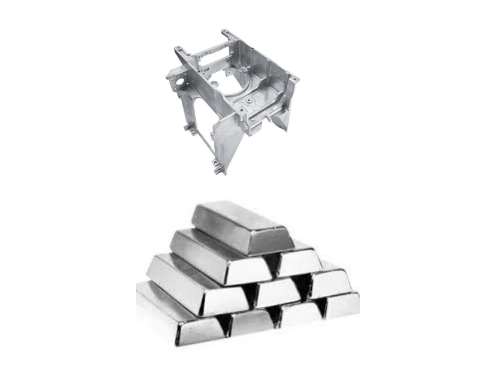
In addition, heat dissipation is a key factor for industrial parts. Aluminum boasts excellent thermal conductivity and releases heat fast.
For this reason, it suits heat-generating electronic and mechanical components.
Conversely, magnesium alloy has weaker heat dissipation capacity. It works better for parts with low heat generation demands.
Production and Cost Differences
Die Casting Production Adaptability
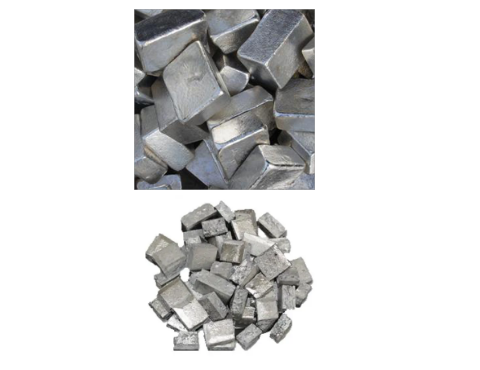
Secondly, different materials match different die casting machine parameters. Aluminum has higher melting points and needs higher machine temperature settings.
It adapts to all standard hot-chamber and cold-chamber equipment. Meanwhile, magnesium melts faster and demands precise temperature control.
Improper settings will ruin the whole die casting material batch and cause waste.
Long-Term Cost Performance
Furthermore, we need to consider both upfront and follow-up costs.
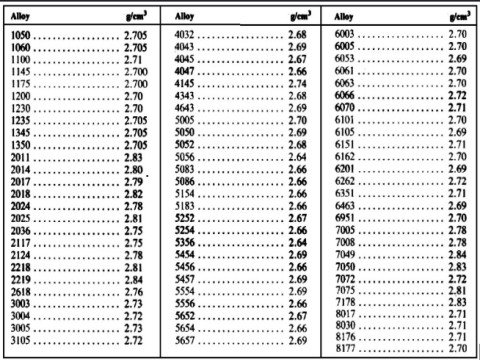
Magnesium raw materials cost more than aluminum in the general market. Besides, magnesium parts need extra surface protection to avoid oxidation.
In comparison, aluminum has lower material cost and simpler post-processing.
As a result, aluminum brings higher cost performance for mass production.
Application Scenarios for Each Material
Aluminum Alloy Main Uses
Thirdly, aluminum alloy covers most mainstream industrial scenarios. It fits auto parts, household appliances and communication equipment perfectly.
Its stable performance reduces product failure rates greatly.
What’s more, it supports complex part designs and high-volume production.
It is always our top recommended die casting material for general projects.
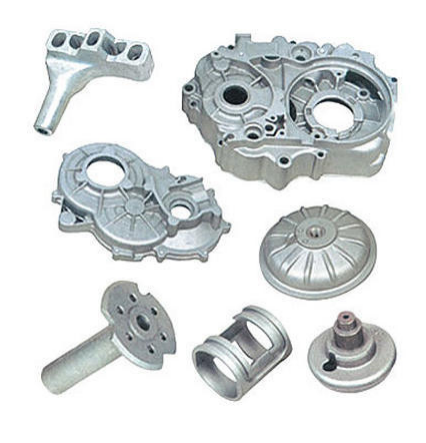
Magnesium Alloy Main Uses
Lastly, magnesium alloy targets lightweight customized fields. It suits precision devices, medical equipment and portable electronic parts.
Its ultra-light feature cuts overall product weight effectively. Even though it has higher costs, it creates unique value for high-end lightweight production.
To sum up, aluminum and magnesium each have unique strengths as die casting material options. Aluminum fits cost-effective, high-stability mass production.
In contrast, magnesium excels in lightweight, high-precision customized projects. As die casting equipment manufacturers, we suggest you match materials with your product positioning.
A reasonable die casting material choice will stabilize production quality and maximize your factory profits.