Die casting is one of the most flexible and innovative manufacturing techniques for fabricating metal parts.
Die-casting technology is one of the most flexible, diverse and forward-looking innovative manufacturing methods used in modern industry for the mass production of complex metal structural components and functional parts.
Its core lies in an advanced high-pressure metal forming and casting process.
Where fully melted non-ferrous metal alloys are forcefully injected into precisely designed hardened steel molds under extremely high hydraulic pressure.
Subsequently, rapid and controlled quenching and solidification occur within the molds.
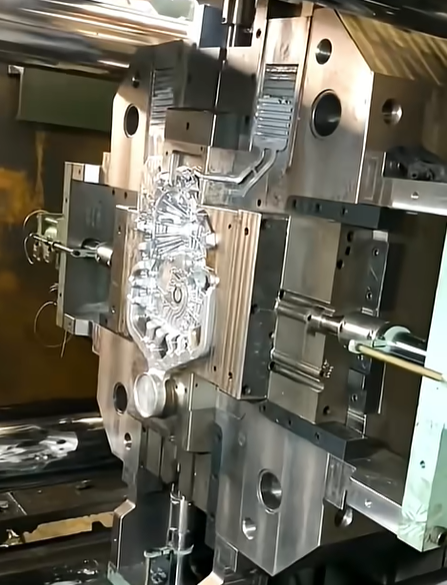
This rapid cooling process immediately locks in the precise geometrical shape of the parts, resulting in finished products with high dimensional accuracy and complex three-dimensional structures, without requiring many subsequent processing steps.
Thanks to its comprehensive core advantages – extremely high production efficiency, reliable high-precision processing capabilities, wide compatibility with various lightweight metal alloys.
And outstanding adaptability to design materials – die-casting technology has firmly established itself as an indispensable core advanced manufacturing technology.
Today, it has become a fundamental production solution covering major industrial fields.
Such as automotive manufacturing, consumer and industrial electronics, household appliances, communication equipment, aerospace components, and power hardware.
Definition and core principles of Die Casting
Die casting uses a manufacturing process where machines inject molten metal into reusable steel molds crafted from hardened tool steel.
The process utilizes fast filling and high pressures to achieve precise molding of complex shapes.
The core steps include mold preparation, injection molding, cooling, demoulding, and trimming.
Based on the melting points of metals, die casting processes fall into two categories:
Hot chamber die casting for zinc and magnesium alloys, and cold chamber die casting for aluminum and copper alloys.
Types of Die Casting
Die casting processes operate under different conditions per process specifications and final part requirements.
Among the many specialist processes in die casting, two are worth elaborating on: the hot chamber die casting and cold chamber die casting processes.
Haichen will assist you in learning about these two techniques so that you can better understand them.
Hot Chamber Die Casting
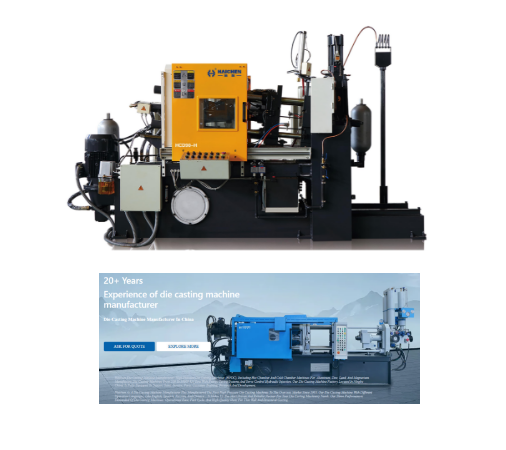
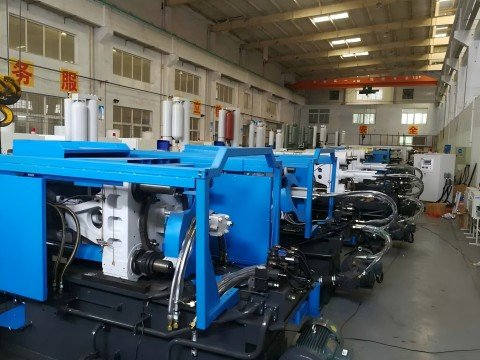
Haichen hot chamber die casting machine adopts up-to-date die casting technology and a high-speed press-injection device.
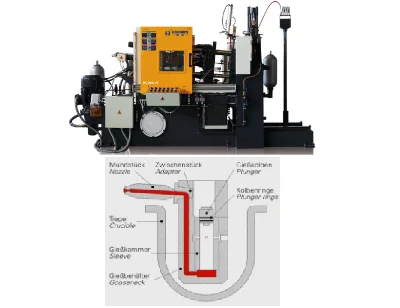
It is equipped with advanced European and American hydraulic components, a fast and stable adjustment structure, an optimized five-point double toggle link mechanism, a solid fixed platen.
And an imported high-class industrial controller with screen display test-control system, ensuring efficient, precise and reliable die casting performance.
The machine integrates a built-in melting furnace, with a gooseneck connecting the furnace to the die cavity.
The gooseneck is made of high-wear-resistant alloy, featuring high temperature and corrosion resistance, with optimized flow passages to reduce turbulence and leakage, ensuring stable injection and quality castings.
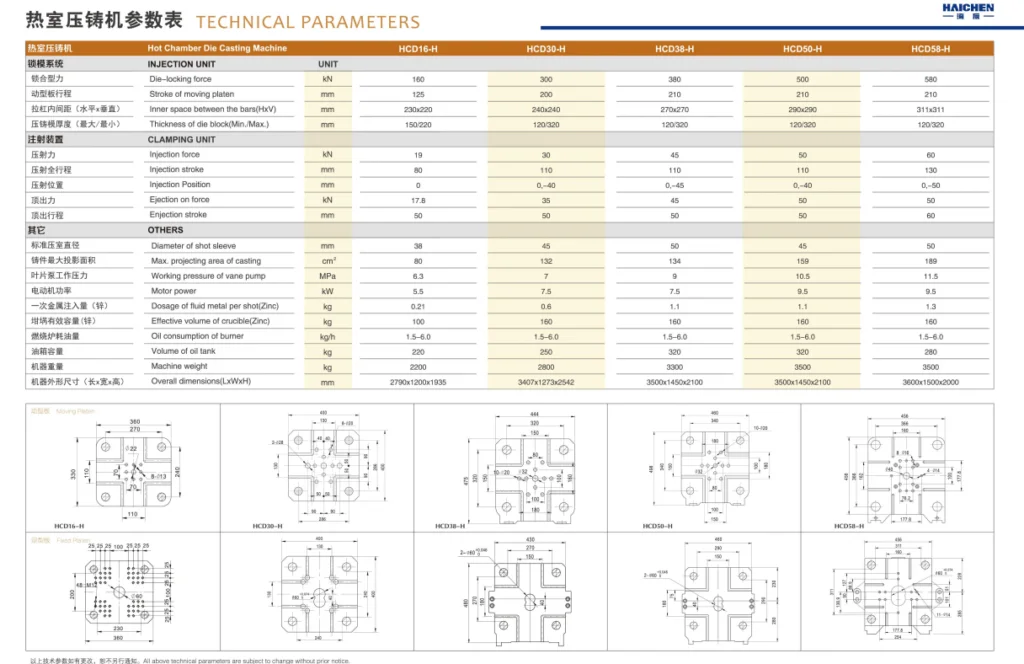
This machine features short cycle times ideal for mass production, and is suitable for low-melting-point metals including zinc, magnesium and lead alloys.
During operation, the plunger injects molten metal through the gooseneck into the die.
After solidification, the mold opens to eject the casting and repeats the cycle automatically.
The process excels in speed, accuracy and consistency, with extended die life and strong corrosion resistance.
It is highly recommended for producing door handles, medals and similar components, with more details available in our case studies.

Cold Chamber Die Casting
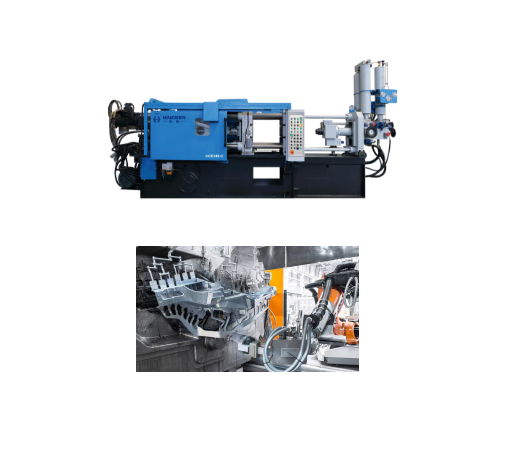
Haichen cold chamber die casting machine adopts up-to-date die casting technology with a high-speed press-injection device.
It is equipped with an imported high-class industrial controller and screen display test-control system, high-rigidity alloy plates, and a bending elbow tilting five-fulcrum clamping mechanism.
It also features an agile automatic mold adjustment system and a high-configuration, high-response hydraulic logic valve system for stable and efficient die casting production.
The cold chamber die casting process is similar to the hot chamber process, except that the metal is not melted in the casting machine.
The metal is melted in an external high-temperature furnace and transferred to the cold chamber die casting machine via a ladle.
In the cold chamber machine, a hydraulic piston forces the metal into the metal die for casting.
This process is suitable for metals with higher melting points such as aluminium and their alloys.
In the case of Haichen, you can find examples of the production of road studs or heating systems.
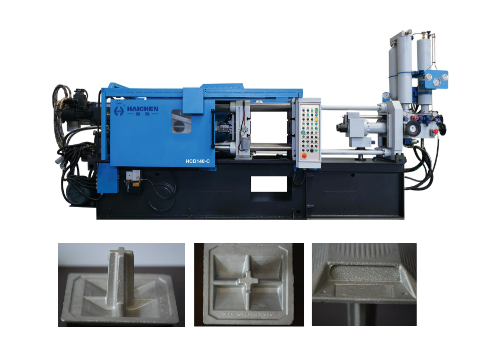
Haichen‘s die casting benefits
- Efficiency – Once the die casting mold is made, it can be used repeatedly. This allows you to quickly produce hundreds, if not millions, of parts with exactly the same specifications.
- Repeatability – yes, mass production is important – but what’s more important? It’s consistency. Haichen‘s die casting process is favored for its high precision and repeatable results, which is crucial for many metal parts.
- Cost-effective – With its high speed, precision, and low waste, the die casting process becomes a cost-effective method for mass-producing metal parts.
- Flexibility – Haichen can be tailored to your specific needs and can be designed to be as simple as possible or as complex as possible. It is this design flexibility that makes the die casting process widely used in numerous industries and suitable for a wide variety of parts.
- Surface Finish Options – While not always required, surface finishing options in the die casting process mean you can further customize and optimize the appearance of the final product. It can include adding decorative elements, enhancing chemical resistance, and more, and is the final step in ensuring that the finished part meets specifications exactly.
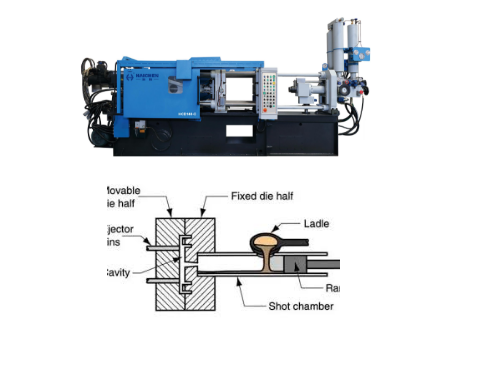
Benefits of die casting
- High precision and complex geometries
- Productivity & Economies of Scale
- Optimization of material properties
- Cost-effective and environmentally friendly
High precision and complex geometries
Die casting produces precision parts with very tight tolerances (± 0.1 mm) and reproduces details.
Such as textures and logos without the need for secondary operations.
For example, die casting can directly mold the delicate heat dissipation holes in the enclosure of electronic devices.
Productivity & Economies of Scale
Single cycle times are as short as 1 second, making them suitable for high-volume production.
The mold life is up to more than 100,000 times, which significantly reduces the cost per piece.
Compared with sand casting, die-casting does not need to change molds frequently, and the efficiency is increased by 5-10 times.
Haichen’s die casting machines are durable and efficient, if you are interested, you can check out our official website.
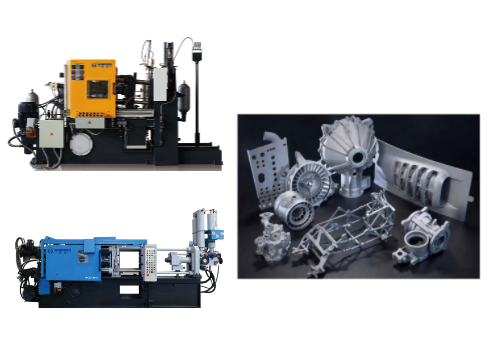
Optimization of material properties
- Thin-walled construction:High-pressure injection molding enables wall thicknesses as low as 0.5 mm, therefore, it is suitable for lightweight designs (e.g., aerospace components).
- Mechanical strength:Rapid cooling to form a fine-grained structure, improving part fatigue resistance and surface hardness.
Cost-effective and environmentally friendly
The material utilization rate exceeds 95%, and the furnace can recycle the waste, further enhancing sustainability.
Then,die casting offers significant advantages, such as reduced machining requirements and energy consumption, as it minimizes material waste and allows for complex part integration in a single process.
For example, integrated components like threaded sleeves and sensors can be cast directly, simplifying assembly and reducing production costs.
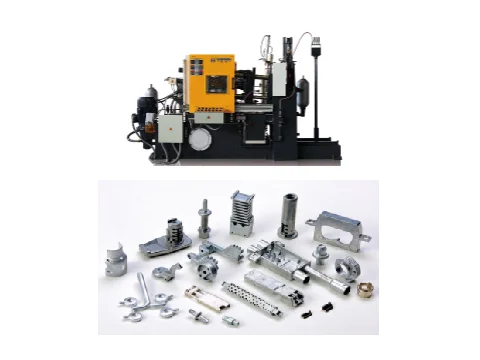
Die Casting Common Products & Application Cases
- Automotive Industry
- Consumer electronics
- Heat dissipation components
- Household appliances
Automotive Industry
- Engine components:Aluminum cylinder heads, such as the Ford EcoBoost engine, combine light weight and high strength by cold chamber die-casting, with a wall thickness uniformity error of <1%.
- Transmission housing:Magnesium alloy die-cast housings weigh up to 40% less than traditional steel parts while maintaining rigidity.
- Structural parts:Then,we adopt vacuum die-casting technology to produce suspension brackets and battery trays, and reduce porosity to less than 0.5%.
Consumer electronics
Apple uses aluminum die-casting to create the MacBook body.
The manufacturing process achieves the integrated Unibody design through anodizing, with a surface roughness of Ra≤1.6μm.
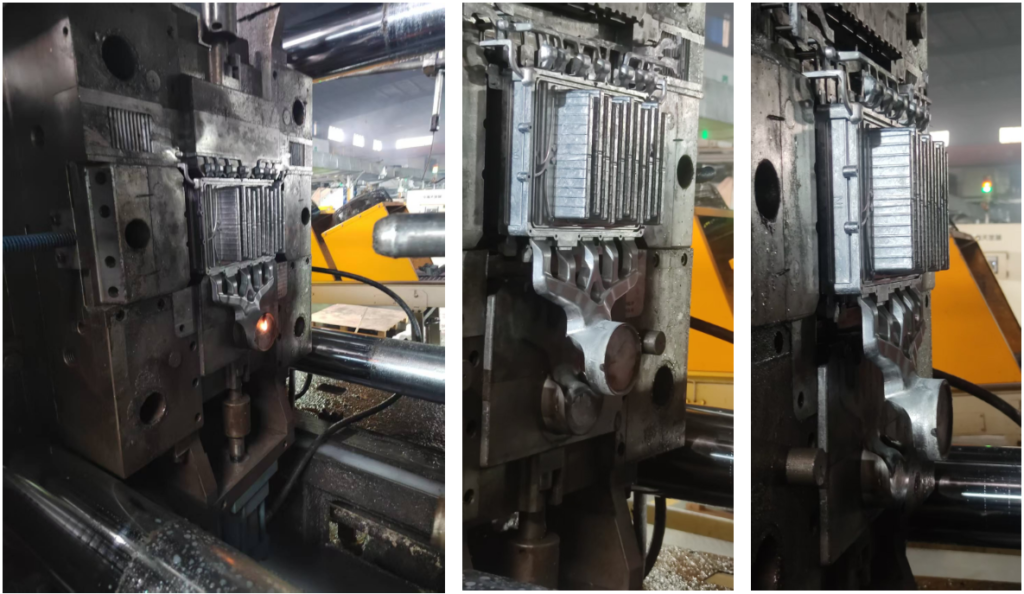
Heat dissipation components
The GPU heat dissipation fins are die-cast by zinc alloy, and the thermal conductivity is increased by 30%.
Household appliances
- Compressor bracket:The aluminum alloy bracket for refrigerator can carry 500kg static load, and the production cycle time is up to 120 pieces/hour.
- Aluminum cookware: In fact, both pizza pans and frying pans are made by casting aluminum alloy. For specific cases, you can consult Haichen.
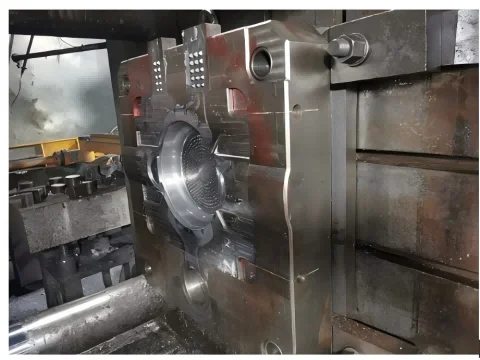
- Aerospace turbine blades:Magnesium alloy die-cast blades have a tensile strength of 320MPa after T6 heat treatment, which is 20% lighter than traditional forgings.
- Cabin structural parts:Then,we produce the seat bracket with vacuum-assisted die-casting and control porosity within 0.2% to meet aviation standards.
Typical application fields and products of die castings
- Automotive industry
- Electronics and home appliances
- Industrial & Energy Equipment
- Aerospace & Medical Aviation
- Medical
- Cases in emerging fields
Automotive industry
- Power system:Engine block, cylinder head, crankcase, oil pan, clutch housing.
- Such as CVT transmission housing to solve shrinkage defects through high-pressure spot cooling technology).
- Haichen has experience in the design and production of gearbox die-casting molds in this regard.
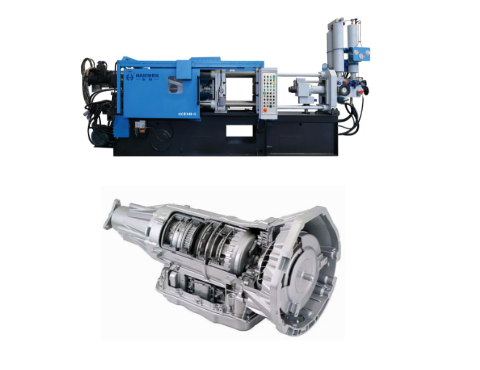
- Structural parts:Body reinforcing beams, suspension brackets, battery pack shells (the integrated die-casting technology of new energy vehicles can reduce the number of parts by 30%).
- Other parts:Alloy wheels, brake calipers, steering knuckles.
Electronics and home appliances
Consumer electronics include metal shells for mobile phones and notebooks, such as MacBook Unibody, as well as heat sinks and camera mounts.
Air conditioner compressor housing, washing machine drum bracket, refrigerator door hinge.
Which is made of zinc alloy die-casting and exhibits strong corrosion resistance.
Industrial & Energy Equipment
- Hydraulic system:Then,Pump body, valve block copper alloy die-casting parts that can withstand high pressure.
- Energy equipment:Wind turbine gearbox housings, nuclear power plant cooling pipe joints.
Aerospace & Medical Aviation
Aircraft seat frames, non-load-bearing door accessories (magnesium alloy weight reduction by 30%).
Medical
Surgical instrument handles, X-ray machine stents (no pores on the surface, easy to sterilize).
Cases in emerging fields
- Super-large die-casting:Tesla uses a 6000T die-casting machine to integrally mold the rear floor of the Model Y, cutting 79 welding points.
- Material innovation:Heat-free aluminum alloys (such as AlSi10MnMg) are used in structural parts of new energy vehicles to avoid high-temperature deformation.


