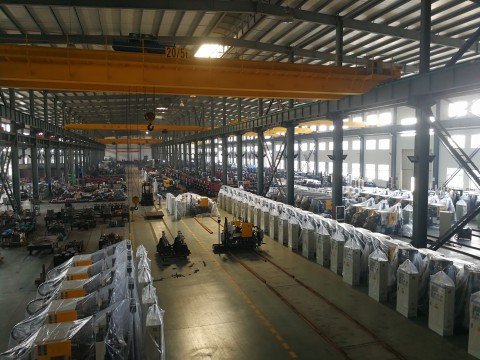
Die casting extractor guide covering types, selection, maintenance and troubleshooting. Learn how to choose the right extractor and reduce cycle time.
The die casting extractor is the unsung hero of any automated die casting cell. It removes solidified castings from the mold, protects expensive tooling, and keeps your production line running. Without a reliable extractor, cycle times stretch, labor costs rise, and mold damage becomes routine.
At HAICHEN, we have integrated extractors with die casting machines for over a decade. This guide covers everything you need to know: core functions, types (servo vs pneumatic), selection criteria, gripper design, maintenance, and troubleshooting — all backed by real production data from HAICHEN installations.
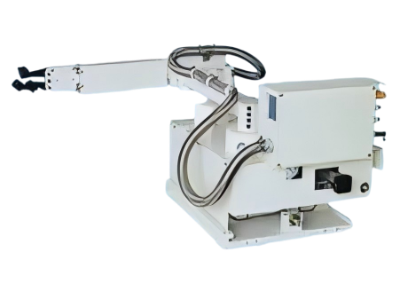
What Is a Die Casting Extractor?
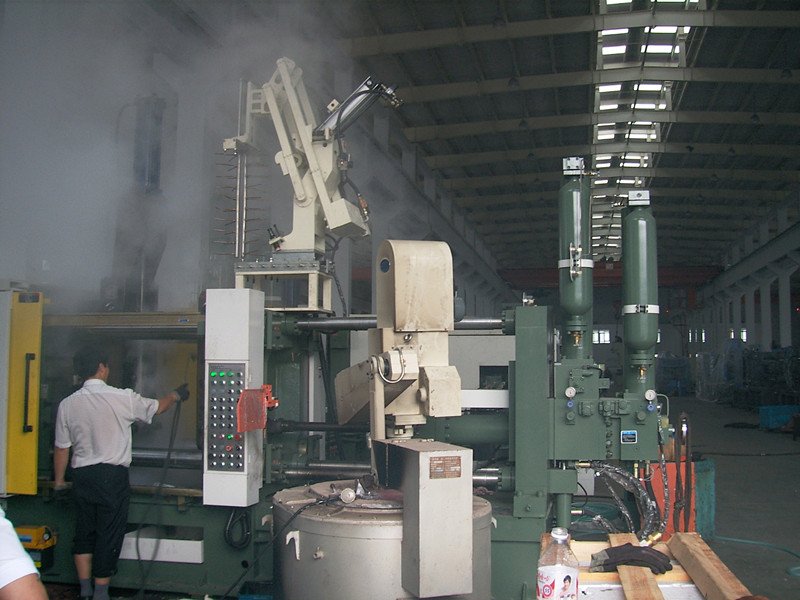
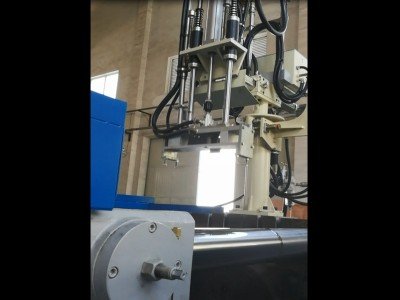
An extractor for a die casting machine is a device designed to automatically remove castings from the die after the casting cycle is complete. It is a mechanical device used to automate the task of picking up die-casting parts. The extractor receives the mold open signal from the die casting machine control system, extends into the mold area, grips the casting, retracts, and releases the part onto a conveyor or cooling station.
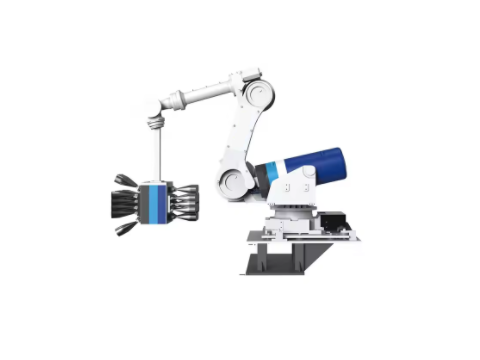
Core Functions of a Die Casting Extractor
Part Ejection
The primary function of an automatic extractor is to remove the cast part from the mold cavity efficiently. This step is fully automatic and critical for large-scale, high-speed production. With it, the entire production line can be automated, reducing cycle time variation.
Mold Protection
Automatic extractors apply consistent and controlled force during part removal, helping prevent wear and tear on the mold. Workers do not need to directly contact the high-temperature mold, which prevents damage or deformation. Automatic ejection extends the life of the mold and ensures the accuracy of product dimensions.
Consistent Quality
Automatic extractors remove parts from molds with controlled precision, maintaining consistent casting quality. This consistent and uniform extraction action ensures that the quality of each batch of products remains stable. In large-scale production, this stability is crucial because any slight fluctuation can cause defects in the product.
Process Connection and Operator Safety
The extractor replaces manual extraction in high-temperature environments, ensuring continuous operation between die-casting and post-processing processes while ensuring operator safety. It can link with the die-casting machine, spraying equipment, and conveyor belt to build a complete automated production line. The extractor automates the ejection process, meaning operators no longer need to directly touch hot castings or frequently operate heavy molds, greatly reducing the risk of worker injury.
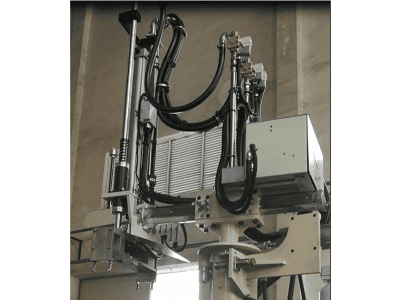
Types of Die Casting Extractors – Servo vs Pneumatic
Die casting extractors fall into two main categories based on their drive mechanism. Each has distinct advantages for different applications.
| Feature | Servo-Driven Extractor | Pneumatic-Driven Extractor |
|---|---|---|
| Drive mechanism | Servo motor with precision control | Air pressure with pneumatic cylinder |
| Repeat positioning accuracy | ±0.1mm | ±0.5mm |
| Extraction time | 3-5 seconds | 5-8 seconds |
| Programming flexibility | Multiple waiting positions, multi-mode extraction | Fixed path, limited programmability |
| Best suited for | Complex molds, high-precision production | Standardized mass production |
| Machine tonnage | All ranges, especially 400T+ | Small to medium (160-800T) |
| Cost | Higher initial investment | Lower initial investment |
For automotive structural parts, precision components, and high-mix production lines, servo-driven extractors offer the best return on investment due to their flexibility and precision. For high-volume, simple-shaped castings on smaller machines, pneumatic extractors remain a cost-effective choice.
How to Choose the Right Die Casting Extractor
Selecting the right extractor depends on four key parameters. Use these guidelines to match the extractor to your specific application.
1. Load Capacity
The maximum casting weight the extractor can grip. Use this formula:
Required Load Capacity = (Casting weight + Runner weight + Gripper weight) × Safety factor (1.5 to 2.0)
Example calculation: Casting weight 3kg, runner weight 1kg, gripper weight 2kg, total = 6kg. With safety factor 1.8, required load capacity = ≥10.8kg.
Choose an extractor with load capacity at least 20% above your calculated requirement for safe operation.
2. Movement Range and Working Radius
The extractor must cover the full path from the mold pick-up point to the placement point (conveyor, cooling station, or trimming press). Add 100-200mm safety margin beyond the minimum required reach. Use 3D simulation to verify no interference with the die casting machine, sprayer, or surrounding equipment.
3. Repeat Positioning Accuracy
For general castings with ±0.5mm dimensional tolerance, extractor repeatability needs ≤±0.1mm. For precision castings with ±0.1mm tolerance, accuracy needs ≤±0.02mm.
4. Machine Tonnage Matching
Match the extractor to your die casting machine size:
| Die Casting Machine Tonnage | Recommended Extractor Type |
|---|---|
| 50-160 tons | Pneumatic extractor or small servo |
| 160-400 tons | Pneumatic or servo extractor |
| 400-800 tons | Servo-driven extractor |
| 800-2000 tons | Heavy-duty servo robotic arm |
| 2000 tons and above | Multi-functional collaborative robot |
Quick Selection Checklist
Step 1: Confirm basic parameters – casting material, weight, dimensions, demolding direction
Step 2: Select drive type – servo for multi-mold flexibility and precision; pneumatic for single-product high-volume production
Step 3: Verify gripper design – multiple contact points, force control, soft pads for surface protection
Step 4: Confirm control interface – CANopen, Profibus, or EtherCAT communication with your die casting machine PLC
Extractor Gripper Design Considerations
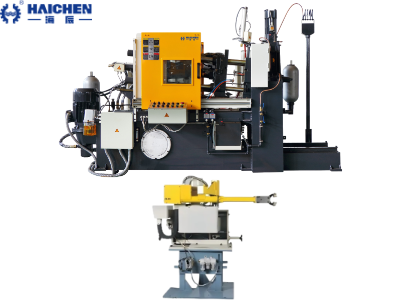
The gripper must match the casting geometry to avoid surface damage. Modern automatic extractors use servo-driven grippers with programmable force limits, allowing gentle handling of thin-wall or complex castings without deformation. Force sensors detect over-resistance during extraction and trigger an alarm or stop sequence, preventing mold damage.
For castings with complex shapes, multi-point grippers with independent force control ensure stable handling without marking the surface. For parts with fragile features such as long ribs or thin flanges, multi-point grippers distribute load evenly, avoiding stress concentration.
Key gripper design considerations:
- Soft pads or custom-machined fingers distribute gripping force evenly, preventing deformation of thin-walled parts.
- For castings with complex shapes, multi-point grippers with independent force control ensure stable handling without marking the surface.
- Cushioning and shock absorption systems (such as ACE MA/ML series buffers) make the ejection process smooth and controllable, effectively reducing impact force on the casting and mold. This extends mold life by an average of 2-3 additional production cycles.
Extractor Maintenance and Common Troubleshooting
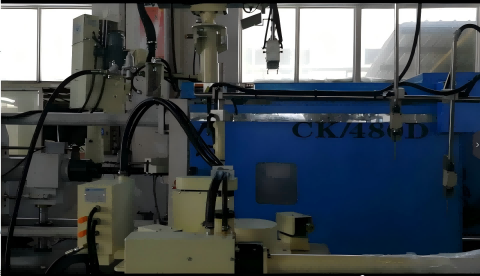
Regular maintenance keeps your extractor running smoothly and prevents unplanned downtime. Follow these guidelines to maximize equipment life and production efficiency.
Daily Maintenance Checklist
- Check gripper pads for wear and replace if necessary
- Inspect air supply lines for leaks (pneumatic systems)
- Verify sensor alignment and cleanliness
- Lubricate moving joints per manufacturer schedule
- Test emergency stop and safety interlocks
Weekly Maintenance Checklist
- Inspect servo motor and drive connections (servo systems)
- Check pneumatic cylinder seals and rod condition (pneumatic systems)
- Clean optical sensors and proximity switches
- Verify extraction path repeatability with test cycle
Common Problems and Solutions
| Problem | Likely Cause | Recommended Solution |
|---|---|---|
| Extractor fails to grip casting | Worn gripper pads, low air pressure, misaligned sensor | Replace pads, check air supply, realign sensors |
| Casting drops during extraction | Insufficient grip force, improper gripper geometry | Adjust force settings, modify gripper design |
| Extractor positioning drifts over time | Sensor drift, mechanical wear, loose couplings | Recalibrate, replace worn components, tighten connections |
| Slow extraction cycle | Pneumatic or servo system issues, restricted air supply | Check drive system, optimize motion profile, clear air lines |
| Casting surface damage | Excessive grip force, sharp gripper edges, rough pads | Reduce force, add soft pads or custom-machined fingers |
| Extractor stops mid-cycle | Emergency stop triggered, sensor failure, power issue | Check safety system, replace faulty sensor, inspect power supply |
When to Replace vs Repair
Repair: Minor issues like worn pads, seals, or sensors; bent but repairable gripper fingers; software configuration errors.
Replace: Severe structural damage, cracked frame or arm, failed servo motor or drive, obsolete control system with no spare parts availability.
HAICHEN Real-World Application Case
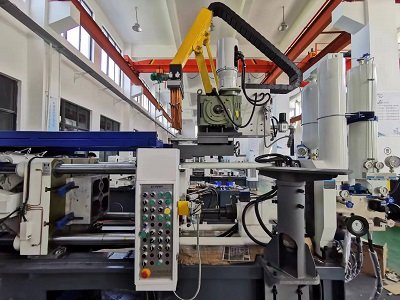
A manufacturer producing new energy vehicle motor housings faced two challenges: long cycle times and casting surface damage from improper removal. The castings had complex geometries with thin walls and tight tolerances, making extraction particularly challenging.
HAICHEN integrated a customized part removal system with optimized gripper design and extraction trajectory. The solution included:
- Servo-driven extractor with ±0.1mm repeatability
- Multi-point grippers with independent force control
- Programmable extraction profile with cushioning and shock absorption
- Real-time force monitoring to prevent surface damage
The results:
- Cycle time reduced by 15% – from 18.5 seconds to 15.7 seconds
- Casting surface damage rate fell from 2.3% to below 0.5%
- Extraction-related scrap virtually eliminated
- Mold maintenance frequency reduced – consistent extraction force extended tooling life
This case demonstrates how the right extractor integration — not just hardware but optimized trajectory and force control — directly improves both production efficiency and casting quality.
Frequently Asked Questions
Q: What is a die casting extractor?
A: A die casting extractor is an automated device that removes solidified castings from the mold after the casting cycle is complete. It improves efficiency, reduces manual labor, and enhances operator safety.
Q: What is the difference between servo-driven and pneumatic extractors?
A: Servo-driven extractors offer higher precision (±0.1mm repeatability), faster response (3-5 seconds extraction time), and programmability for different molds. Pneumatic extractors are simpler, lower cost, and suitable for standardized mass production on small to medium machines (160-800 tons).
Q: How do I calculate the load capacity I need for an extractor?
A: Use the formula: (Casting weight + Runner weight + Gripper weight) × Safety factor (1.5-2.0). For a 3kg casting with 1kg runner and 2kg gripper, you need an extractor with at least 10.8kg capacity.
Q: How does an extractor communicate with the die casting machine?
A: The extractor receives the mold open signal from the die casting machine control system, extends into the mold area, grips the casting, retracts, and releases the part onto a conveyor or cooling station — all synchronized with the casting cycle through standard industrial protocols (CANopen, Profibus, EtherCAT).
Q: Does HAICHEN offer extractors for existing die casting machines?
A: Yes. HAICHEN provides extractors compatible with most major die casting machine brands. Our engineering team can customize grippers and integration solutions for your existing equipment, regardless of brand.
Q: What is the typical lifespan of a die casting extractor?
A: With proper maintenance, a die casting extractor can last 5-10 years depending on usage intensity and environmental conditions. Key wear items (gripper pads, seals, sensors) typically require replacement every 1-2 years.