
Selecting the right zinc door handle machine is essential for producing high‑quality zinc alloy door handles efficiently and cost‑effectively.
Zinc door handles are among the highest‑volume product categories in the die casting industry, widely used in residential, office, and commercial applications due to their excellent surface finish, dimensional accuracy, and production speed.
This guide explains how to choose a zinc door handle machine from multiple angles — including machine type, clamping force, mold design, production efficiency, alloy selection, and maintenance costs.
Whether you are setting up a new production line or upgrading existing equipment, this article helps you make informed decisions based on your part specifications and volume requirements.
As a professional die casting machine manufacturer, HAICHEN offers various hot chamber machine models suitable for different sizes and complexities of zinc alloy door handle production, along with complete process support.

Zinc Door Handle Machine Selection: 6 Key Factors
Choosing the right zinc door handle machine requires evaluating six key factors. The sections below cover each factor in detail.
Machine Type for Your Zinc Door Handle Machine
For zinc alloy die casting, manufacturers typically use hot chamber die casting machines. Zinc has a low melting point of approximately 419.5°C, which makes the hot chamber process highly efficient. Hot chamber machines offer a high degree of automation, lower material losses, and higher production efficiency compared to cold chamber alternatives. These characteristics make them the preferred zinc door handle machine type for most production scenarios.
Machine Tonnage and Clamping Force
Select the appropriate machine tonnage according to the size and weight of your zinc alloy door handles. For small zinc alloy die castings, machine tonnage typically ranges from 20 to 750 tons. The clamping force must be strong enough to keep the mold stable under high‑pressure injection.
When determining the right tonnage for your zinc door handle machine, consider the projected area of the part and the specific injection pressure required. A general rule: larger door handles with greater surface area require higher tonnage machines to prevent flash and ensure dimensional stability.
Mold Design and Runner System
Mold design plays a critical role in the quality of die‑cast door handles. The runner system should gradually transition from the gooseneck to the gate, avoiding sharp corners to ensure smooth molten metal flow into the cavity. Additionally, proper lubrication of the mold reduces resistance and maintains consistent metal flow velocity.
A well‑designed mold maximizes the efficiency of your zinc door handle machine by reducing cycle times and minimizing defects such as cold shuts or incomplete filling.
Production Efficiency and Cycle Time
Hot chamber zinc door handle machines offer high production efficiency, typically producing 400 to 1,000 castings per hour. For very small, detailed castings, specialized machines can achieve production rates of up to 3,500 castings per hour.
When selecting a machine, evaluate cycle time and production capacity against your production requirements. Faster cycle times directly translate to higher output and better profitability.
Alloy Selection and Surface Treatment
Commonly used zinc alloys for door handle production include Zamak 3 and Zamak 5. Zamak 3 is the most widely used due to its excellent mechanical properties, casting performance, and cost‑effectiveness. Zinc alloy die castings are also easy to surface treat — processes such as electroplating, spraying, and painting further enhance the aesthetics and durability of the final products.
Your zinc door handle machine must be compatible with the specific alloy you choose to ensure optimal filling and surface quality.
Cost and Maintenance of Your Zinc Door Handle Machine
Zinc die casting extends mold life and reduces maintenance costs due to its low melting point and good casting properties. Zinc alloy molds typically achieve a lifespan of 750,000 to 2 million castings. When selecting a zinc door handle machine, consider long‑term cost‑effectiveness rather than just the initial purchase price.

Commonly Overlooked Considerations in Zinc Door Handle Machine Selection
Beyond the six key factors, manufacturers often overlook the following aspects, which significantly affect production stability:
Mold and Machine Compatibility
The same mold may perform differently on machines of different tonnages or brands. Provide mold drawings to the equipment supplier to confirm that mold thickness, ejector pin positions, and sprue bushing dimensions match the chosen zinc door handle machine. This prevents installation issues and production delays.
Automation Integration Capability
Door handle production typically requires peripheral automation such as sprayers, extractors, and trimming presses. Confirm that the machine’s control system supports communication with these devices and that interfaces and programs are compatible.
Trial Run Support
Before purchasing, test the machine with actual molds at the supplier’s facility. Observe filling conditions, cycle time, and product defects to verify that the machine meets your production requirements.nts.
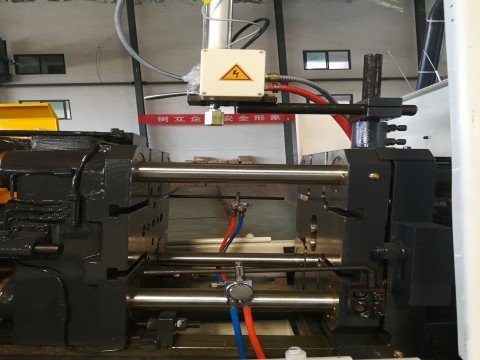
Advantages of HAICHEN Zinc Door Handle Machines
HAICHEN hot chamber die casting machines are specifically optimized for zinc alloy door handle production. Here are the key features that make HAICHEN the preferred zinc door handle machine manufacturer:
Stable Injection System
HAICHEN machines use multi‑stage injection control, allowing slow, fast, and boost phases to be configured according to mold structure. This ensures that thin sections fill completely and surface patterns emerge clear and complete.
Efficient Cycle Time
Hot chamber machines inherently offer high cycle speeds. HAICHEN machines further reduce opening, closing, and ejection times through optimized hydraulics and control programs. Standard single‑cavity molds achieve 400‑600 parts per hour; small two‑cavity molds can exceed 800 parts per hour.
Good Mold Protection
HAICHEN zinc door handle machines include low‑speed, low‑pressure mold closing functions that decelerate before mold contact, preventing impact damage to cavity surfaces. This extends mold life and reduces long‑term production costs.
Surface Quality Assurance
Stable injection pressure and temperature control reduce surface defects such as cold shuts and flow marks. Castings have high as‑ejected surface finish, providing an excellent base for subsequent electroplating or painting.5%.
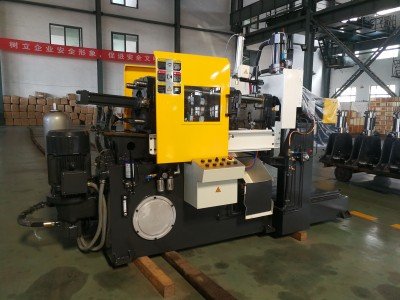
Case Reference: HAICHEN Zinc Machine in Production
A door handle manufacturer uses a HAICHEN HCD90 hot chamber zinc door handle machine to produce European‑style zinc alloy door handles with a single‑cavity mold. Cycle time runs at 28 seconds, daily output exceeds 2,800 parts, and electroplating yield reaches an impressive 98.5%.
Why Choose HAICHEN as Your Supplier
HAICHEN is a die casting machine manufacturer located in Ningbo, China, specializing in both cold chamber and hot chamber die casting machines, along with auxiliary die casting equipment. With over two decades of expertise in crafting the “HAICHEN” brand, we harness cutting‑edge technology and a dedicated team of engineers focused on continuous technical enhancements.
Our zinc door handle machines are designed for ease of operation, professional aesthetics, and guaranteed precision and reliability. We provide comprehensive after‑sales support, including spare parts, technical training, and remote diagnostics.
Frequently Asked Questions
Q: What type of machine is best for zinc door handle production?
A: Hot chamber die casting machines are the preferred zinc door handle machine type due to zinc’s low melting point (419.5°C), which enables high‑speed, automated production with minimal material loss.
Q: What tonnage range is suitable for zinc door handles?
A: Tonnage typically ranges from 20 to 750 tons, depending on part size and weight. Smaller handles may use 20‑90 ton machines, while larger or multi‑cavity molds require higher tonnage.
Q: How many parts can a zinc door handle machine produce per hour?
A: Standard hot chamber machines produce 400‑1,000 castings per hour. Specialized machines for very small parts can achieve up to 3,500 castings per hour.
Q: What zinc alloys are commonly used for door handles?
A: Zamak 3 and Zamak 5 are the most common. Zamak 3 is preferred for its excellent mechanical properties, casting performance, and cost‑effectiveness.
Q: How long do zinc die casting molds last?
A: Zinc alloy molds typically last 750,000 to 2 million castings, significantly longer than aluminum molds, due to zinc’s lower melting point and better casting properties.


