What does a die casting sprayer do? A die casting sprayer applies release agent to the mold surface, cools the mold, and helps eject the finished part. Without proper spraying, castings stick to the mold, surface quality suffers, and production slows down.
Consequently, choosing the right sprayer directly affects your demolding success rate, mold life, casting quality, and production pace.
This guide walks you through the key factors for selecting a die casting sprayer. You will learn about sprayer types, nozzle selection, material choices.
Sprayer Types: Matching the System to Your Production
Different production environments require different sprayer types. The right choice depends on your volume, mold complexity, and budget.
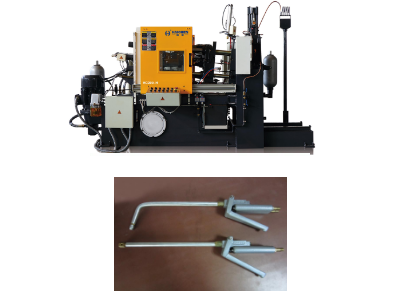
Continuous Sprayers
Continuous sprayers work best for high-volume production of simple parts. These systems use fixed nozzles and operate with fast cycle times and low maintenance. Therefore, they suit large-scale operations where speed matters most.
Robot Sprayers
Robot sprayers handle high-mix, complex molds. These systems offer programmable spray paths and quick changeover between different molds. As a result, they provide precise control and consistency, which is vital for high-quality casting.
Manual Sprayers
Manual sprayers suit small-batch production with low budgets. While they require low initial investment, they come with high labor costs and inconsistent quality.
Traditional Copper Tube Sprayers
Traditional copper tube sprayers use multiple copper tubes to spray, but they often suffer from uneven flow.
Haichen’s Sprayer Solutions
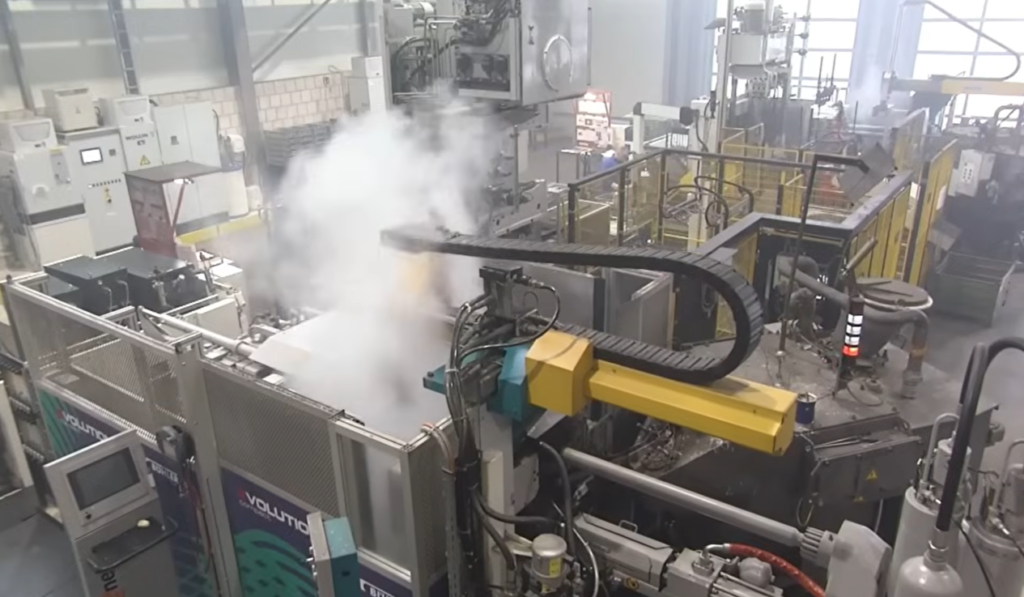
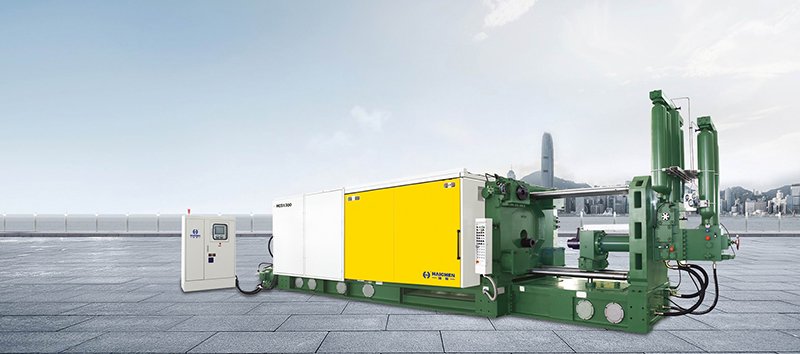
Haichen builds sprayers that connect directly with our die casting machines. Our systems feature durable materials that resist heat, humidity, and dust. This ensures long-term operation in tough foundry conditions with minimal downtime. Moreover, Haichen has successfully supplied die casting spray systems to manufacturers in Russia’s industrial regions, including Tolyatti, a major automotive hub.
Nozzle Selection: Five Critical Factors
The nozzle is the most important part of any die casting sprayer. Choosing the right nozzle determines how well the release agent covers the mold, how much you waste, and how consistent your parts come out.
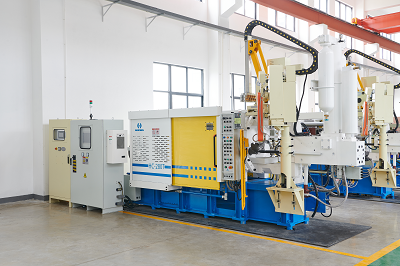
Spray Flow and Pressure
Select the appropriate flow rate and operating pressure for your application. Recommended air pressure typically falls between 2.5 and 3.5 bar (36–50 psi), though some spray guns support up to 6 bar. Common nozzle diameters range from 1.2 mm to 1.8 mm.
Spray Pattern and Angle
Different patterns suit different applications. Flat fan nozzles work well for cleaning, rinsing, and coating, with spray angles from 1° to 170°. Hollow cone nozzles suit cooling, cleaning, and dust control, with angles from 43° to 180°. Furthermore, full cone nozzles produce a uniformly distributed conical spray for full coverage. Fine spray nozzles suit humidification and atomisation. Air atomising nozzles use compressed air to achieve finer droplets for coating and wetting. Consequently, wide angle nozzles (110° to 120°) cover large areas quickly, while narrow angle nozzles (80° to 95°) deliver precise application to specific zones.
Spray Liquid Type
Choose the nozzle based on what you are spraying—water, lubricant, or release agent. Different liquids have different viscosities and therefore require different nozzle designs for proper atomisation.
Nozzle Material
The working environment and liquid characteristics determine the right material choice. Common materials include brass, stainless steel, and ceramics. For instance, stainless steel offers chemical resistance and medium abrasion resistance, with high temperature resistance up to 500°C.
Atomisation Quality
For applications requiring fine atomisation—like coating or wetting—air atomisation nozzles deliver smaller, more consistent droplets. Better atomisation means more uniform coverage and less waste.
Haichen’s Nozzle Expertise
Haichen’s die casting spray nozzles come in various types, including T-Shaped, Cross, Y-Shaped, Pinch, and High-Pressure nozzles. The product shapes and mould designs serve as the basic reference for nozzle selection.
Spray Gun Materials: What Lasts in the Foundry
The spray gun body material directly affects durability and performance. Die casting environments are harsh—high heat, humidity, and dust are the norm. The right material keeps your sprayer running longer.
Aluminum Alloy
Aluminum alloy offers light weight—density is only one-third of steel—and excellent corrosion resistance. It works particularly well with water-based coatings and dissipates heat effectively in high-temperature environments. Haichen uses 280-ton large-scale die-casting machinery followed by CNC machining on internal channels. This achieves enhanced concentricity control, minimized porosity defects, and optimized structural stability.
Stainless Steel
Stainless steel delivers chemical resistance, medium abrasion resistance, and high temperature resistance up to 500°C.
Ceramics
Ceramics offer excellent wear resistance for high-abrasion applications.
What this means for you. Choose your material based on your operating temperature, the chemicals you are spraying, and your expected production volume. For most aluminum and zinc die casting applications, aluminum alloy or stainless steel spray guns provide the best balance of performance and durability.
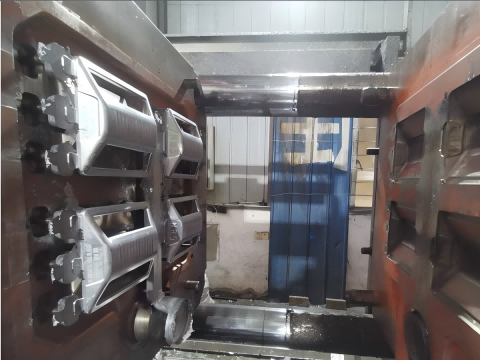
Haichen’s Material Approach
Haichen builds sprayers with durable materials to resist heat, humidity, and dust. Our spray guns feature lightweight design—unit weight typically falls between 400g and 620g—which is conducive to the flexibility of the operating arm.
Key Technical Parameters to Evaluate
Before you commit to a sprayer, check these specifications:
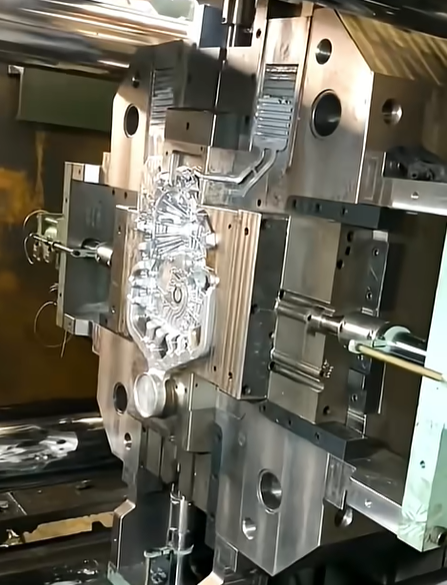
Recommended air pressure. Most spray guns operate between 2.5 and 3.5 bar (36–50 psi), though some support up to 6 bar.
Air consumption. High-pressure low-flow mode consumes approximately 20.4–21.3 m³/h (about 6–7.5 l/min). Conventional mode uses about 23.8–26.5 m³/h.
Spray distance. The recommended distance is 250 mm (approximately 10 inches). Some processes work within 170–210 mm (7–8 inches).
Nozzle diameter. Common specifications are 1.2–1.8 mm. Fine spray models go as small as 0.28 mm.
Spray range. Usually within 280–320 mm, depending on nozzle design and air pressure.
Liquid output. For cooling spray, output is typically lower (350–440 ml/min). For paint spraying, output may be higher.
Maximum liquid temperature. Generally limited to around 50°C for water-based or low-temperature applications. High-temperature resistant spray guns may support higher temperatures.
Common Sprayer Problems and Solutions
Even the best sprayer fails without proper maintenance. Here are common issues and how to address them:
Clogging. Impurities in the release agent or water supply gradually block the nozzle orifice. Regular cleaning prevents this. Haichen’s anti-clogging nozzles reduce downtime.
Uneven spray pattern. Worn nozzles or incorrect pressure settings cause uneven coverage. Replace worn nozzles and calibrate pressure regularly.
Leaking. If the spray gun leaks, the issue often arises from improper installation or worn seals.
Inconsistent atomisation. Changes in air pressure, liquid viscosity, or nozzle condition affect atomisation quality. Monitor these parameters and adjust as needed.
Haichen’s Reliability Record
Haichen sprayers are designed for long-term operation in tough foundry conditions with minimal downtime. Our systems feature automatic control technology that adjusts parameters such as spraying time, pressure, and flow according to production needs.
Questions You should have
Before you place an order, ask these questions:
- “What sprayer type do you recommend for my production volume and mold complexity?” – The answer should reflect your specific needs, not just what they sell.
- “What nozzle pattern and angle do you recommend for my mold geometry?” – Flat surfaces need different nozzles than deep cavities.
- “What materials do you offer, and why do you recommend one over another?” – The answer should reflect your operating conditions.
- “What is the expected service life under my production conditions?” – Get a realistic estimate.
- “How does your sprayer prevent clogging?” – Look for anti-clogging features and filtration recommendations.
- “Do you offer automated or robotic spray solutions?” – Automation improves consistency and reduces labor costs.
- “Can you provide case studies from similar applications?” – Proven results matter more than promises.
Need help selecting the right sprayer for your die casting operation? Contact Haichen Machinery. We will analyze your mold geometry, production requirements, and budget to recommend the optimal sprayer solution for your specific needs.


