Die casting alloys are non-ferrous metals that manufacturers inject into a mold cavity under high pressure to produce complex, high-precision parts. The most common types include aluminum, zinc, magnesium, copper, lead, and tin-based alloys. Each alloy offers distinct properties that make it suitable for specific applications, and your choice directly affects part performance, production cost, and tool life.
This guide walks you through the main die casting alloy families, their key characteristics, and how to choose the right one for your project.
Aluminum Alloys: The Versatile Workhorse
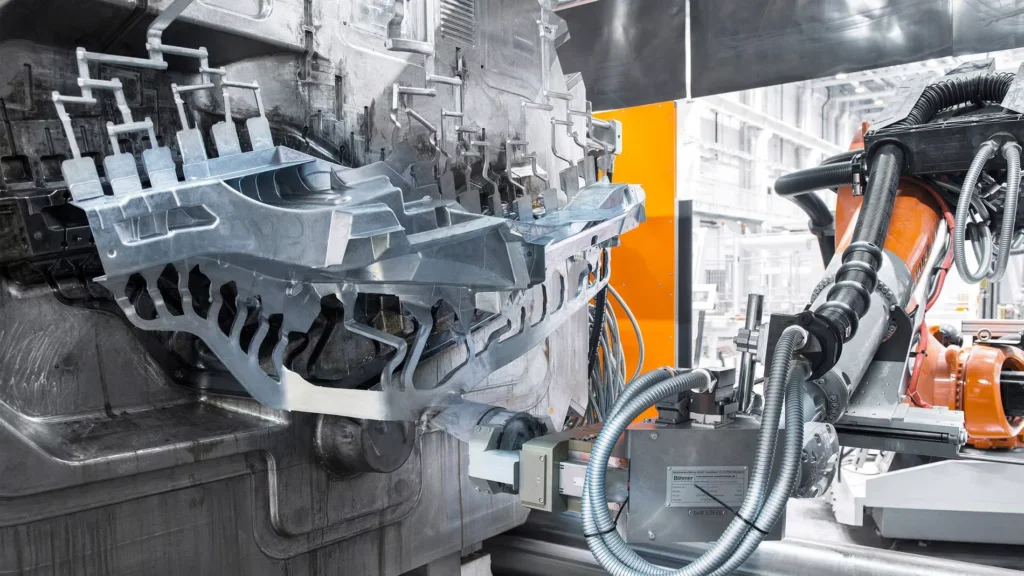
Aluminum alloys are the most widely used materials in die casting. They offer an excellent balance of strength, lightweight, corrosion resistance, and thermal conductivity. These properties make them the go-to choice for automotive, aerospace, and electronics applications.
Common aluminum die casting alloys include A380, ADC12, A356, A360, and B390. A380 is the most commonly specified alloy because it offers the best combination of casting and product properties. A360 provides excellent corrosion resistance and fluidity, while B390 delivers outstanding wear resistance and hardness for demanding applications like engine blocks. ADC12 offers excellent fluidity due to its high silicon content, allowing it to fill every corner of the mold smoothly. A356 excels in corrosion resistance and ductility, and it responds well to heat treatment for improved mechanical properties.
Haichen’s cold chamber die casting machines are specifically designed to handle aluminum alloys with high melting points. These machines feature high injection pressure and speed control, real-time shot monitoring, and energy-efficient hydraulic systems. Haichen has successfully produced aluminum castings such as road studs, deep fry pans, radiators, and automotive ECU housings using A380 alloy.
Zinc Alloys: The Precision Performer
Zinc alloys are ideal when you need high precision, intricate details, and excellent surface finish. They offer low melting points, high ductility, good impact strength, and longer die life because they cause less wear on the tool. Zinc alloys also enable thinner walls and better surface finish due to their high ductility.
Zamak 3 is the most commonly used zinc alloy due to its balanced strength, ductility, and castability. Zamak 5 offers higher strength, and ZA-8 provides improved wear resistance and hardness. ZA-12 often competes with ZA-27 for strength applications. The ZA alloys offer higher strength and useful bearing properties.
Haichen’s hot chamber machines are optimized for zinc and other low-melting-point alloys, offering faster cycle times, lower energy consumption, and precision casting for small, intricate parts. Haichen uses zinc alloys to produce lock parts, zipper sliders, decorative hardware, medals, and metal connectors.
Magnesium Alloys: The Lightweight Champion
Magnesium alloys are the lightest of all die casting alloys. They offer an outstanding strength-to-weight ratio, making them invaluable for aerospace applications and vehicles requiring dramatic weight reductions.
AZ91D is the workhorse of magnesium die casting alloys. It contains nominally 9% aluminum and 1% zinc, and it exhibits an excellent combination of mechanical properties, castability, and corrosion resistance. AM60B offers better fracture toughness than AZ91D, and its tensile strength and 0.2% proof stress are also better.
Haichen’s cold chamber die casting machines handle magnesium alloys with the precision and control these materials demand. Our HCD-C series machines are designed specifically for aluminum and copper alloys, while our HCD-H series hot chamber machines are optimized for zinc and magnesium alloys with closed-loop control systems.
Copper Alloys: The Heavy-Duty Specialist
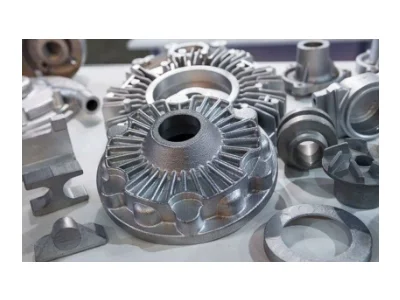
Copper-based alloys, including brass and silicon brass, serve applications where corrosion resistance and strength are paramount. They offer high strength and hardness, excellent corrosion resistance especially in marine environments, and good electrical and thermal conductivity.
Common applications include pipes, electrical components, and marine parts. Brass contains copper, zinc, tin, and lead, which improve its corrosion resistance and workability. Silicon brass provides increased strength and corrosion resistance.
Haichen’s cold chamber die casting machines are designed to handle copper alloys for specialized applications requiring high strength or corrosion resistance.
Lead and Tin Alloys: The Niche Players
Lead and tin alloys were among the first die casting alloys used, but their use has declined with the introduction of zinc and aluminum alloys. As Lead alloys are primarily used for lead-acid battery components such as grids, posts, and connecting bars because of their good electrical conductivity and corrosion resistance. They also serve in construction materials like plates, pipes, and seals due to their relative inertness to the atmosphere.
Tin and lead-based alloys are classified as low melting point metals, all melting at less than 725°F (385°C). They are processed using hot chamber die casting machines.
Material Comparison Overview
| Property | Aluminum | Zinc | Magnesium | Copper |
|---|---|---|---|---|
| Density (g/cm³) | 2.7 | 6.6 | 1.8 | 8.4 |
| Strength-to-Weight Ratio | High | Medium | Highest | Medium |
| Corrosion Resistance | Excellent | Good | Moderate (needs coating) | Excellent |
| Castability | Good | Excellent | Good | Fair |
| Melting Point | ~660°C | ~385°C | ~650°C | ~1080°C |
| Best For | General-purpose, lightweight | Precision, thin walls, high volume | Ultra-lightweight | High strength, corrosion resistance |
Magnesium offers the best machinability of any structural metal in terms of tool life, minimum energy consumption, and low cutting forces. Zinc castings are recommended for nickel, chrome, and gold plating, while aluminum castings are best used as-cast or with an anodize coating or powder-coating.
How to Choose the Right Die Casting Alloy
When selecting a die casting alloy, work through these questions:
- What is your primary performance requirement?
- Lightest weight → Magnesium alloy
- Best overall value → Aluminum alloy (A380 or ADC12)
- Highest precision and surface finish → Zinc alloy
- Highest strength and corrosion resistance → Copper alloy
- What is your part geometry?
- Thin walls and intricate details → Zinc or ADC12 aluminum
- Structural components → A356 aluminum or magnesium AZ91D
- What is your production volume?
- High volume, small parts → Zinc (hot chamber gives faster cycles)
- Medium to high volume, larger parts → Aluminum
- What environment will the part face?
- Outdoor or marine → A356 aluminum or copper alloys
- High temperature → Aluminum alloys
- Corrosive → A356 aluminum or copper alloys
- What are your post-processing requirements?
- Plating → Zinc alloys
- Anodizing → Aluminum alloys
- Minimal machining → Magnesium
- What is your total cost target?
- Consider the cost per cubic inch, not just cost per pound
- Factor in tool life (zinc causes less die wear than aluminum)
- Factor in machining costs (magnesium offers the best machinability)
Improper selection may lead to part failure during service or unnecessary cost overruns. A systematic selection approach is critical to project success.
Haichen’s Die Casting Alloy Solutions
Haichen Machinery has established itself as a reliable manufacturer of die casting equipment, committed to enhancing production efficiency and implementing effective project management to shorten the mold development cycle. We produce both cold chamber and hot chamber die casting machines, along with complete auxiliary equipment including conveyors, vacuum systems, mold temperature controllers, industrial robots, and sprayers.
Cold chamber machines handle aluminum, magnesium, and copper alloys. Haichen’s cold chamber machines feature high injection pressure and speed control, real-time shot monitoring, and energy-efficient hydraulic systems.
Hot chamber machines handle zinc and other low-melting-point alloys. Haichen’s hot chamber machines offer faster cycle times, lower energy consumption, and precision casting for small, intricate parts.
Haichen also provides complete production line support — from raw material selection and mold design to equipment debugging and operator training. Whether you are casting aluminum road studs, zinc decorative hardware, or magnesium structural components, Haichen has the equipment and expertise to help you succeed.


