Die Casting Heat Transfer is one of the most important parts of the die casting process.
Every time molten aluminum or zinc enters the mold, heat moves quickly from the metal into the die.
As this happens, the metal cools, becomes solid, and forms the final product.
Therefore, heat transfer directly affects casting quality, production speed, and mold life.
As a die casting machine manufacturer, we often help customers improve production by controlling heat more effectively. Many people focus on injection pressure or machine size.
However, temperature control is just as important. In fact, good heat transfer can reduce defects, shorten cycle times, and keep production running smoothly.
So, let’s explore how heat transfer works and why it matters.
How Die Casting Heat Transfer Works
Heat transfer begins the moment molten metal enters the die cavity. The process happens very fast, but several factors affect the final result.
Heat Moves from Molten Metal to the Mold
Molten aluminum usually enters the die at temperatures between 650°C and 700°C, while zinc alloys are generally poured at lower temperatures.
At the same time, the steel mold stays much cooler, often between 180°C and 250°C.
Because of this large temperature difference, heat quickly flows from the molten metal into the mold.
As a result, the metal begins to solidify almost immediately. This fast cooling is one reason why die casting can produce accurate parts with smooth surfaces.
The Cooling System Removes Heat
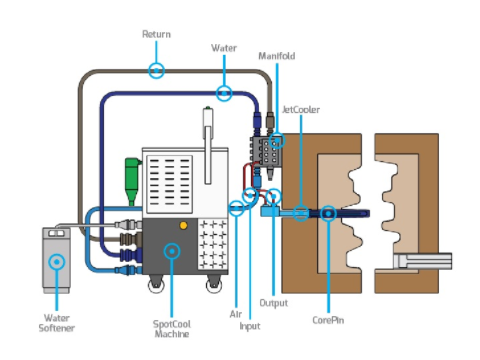
The mold cannot keep absorbing heat forever. Therefore, cooling channels inside the die remove heat after every production cycle.
A well-designed cooling system helps:
- Keep mold temperature stable
- Shorten cycle time
- Reduce thermal stress
- Improve production efficiency
Without proper cooling, the mold becomes too hot. Then defects start showing up, and production slows down. Nobody wants that.
Heat Balance Keeps Production Stable
During continuous production, heat enters the mold and leaves it repeatedly.
When the heat entering the mold matches the heat leaving it, the production process becomes stable.
This heat balance helps manufacturers achieve:
- Consistent casting quality
- Stable dimensions
- Better surface finish
- Longer mold life
Simply put, stable temperature means stable production.
Factors That Affect Die Casting Heat Transfer
Many variables influence how heat moves during die casting.
Therefore, manufacturers should optimize the whole production system instead of focusing on only one factor.
Metal Temperature
Pouring temperature has a direct impact on heat transfer.
If the molten metal is too hot:
- Cooling takes longer
- Cycle time increases
- Mold wear becomes faster
If the temperature is too low:
- Metal may not fill the cavity
- Cold shuts may appear
- Surface quality decreases
Finding the right temperature is the key.
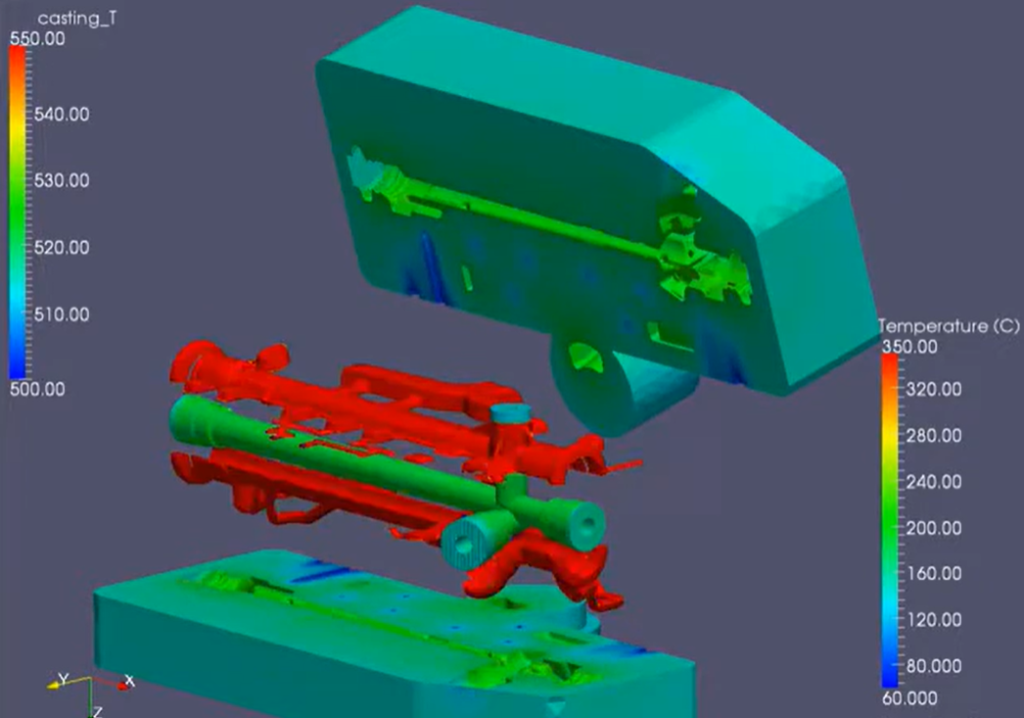
Mold Temperature
The mold should not be too hot or too cold.
A stable mold temperature helps:
- Improve metal flow
- Reduce shrinkage
- Prevent thermal cracks
- Increase mold life
Therefore, many modern die casting systems use automatic mold temperature control equipment.
Machine Performance
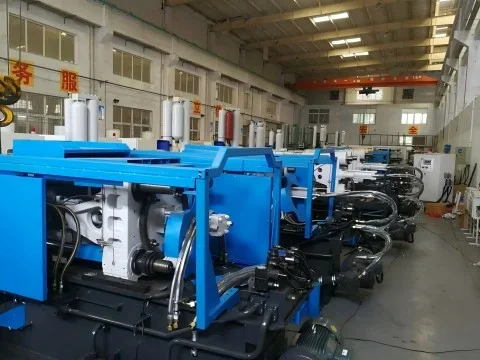
Even with the best mold, poor machine performance can affect heat transfer.
Stable injection speed and pressure help molten metal fill the cavity quickly before excessive cooling begins.
As a result, the casting process becomes more consistent, especially for thin-wall products.
That’s why machine stability matters so much.
Why Heat Transfer Matters in Modern Die Casting
Good heat transfer improves much more than cooling speed. It affects the entire production process from beginning to end.
Better Heat Transfer Improves Casting Quality
When heat moves evenly through the mold, manufacturers can reduce many common casting defects.
These include:
- Porosity
- Shrinkage
- Cold shuts
- Surface defects
- Dimensional variation
Consequently, product quality becomes more stable and scrap rates decrease.