The zinc die casting machine market is closely linked to demand for precision zinc components in automotive, electronics, hardware, appliances, and other manufacturing industries.
Zinc die casting is especially suitable for small and medium-sized components that require complex shapes, good dimensional accuracy, thin walls, and a smooth surface finish.
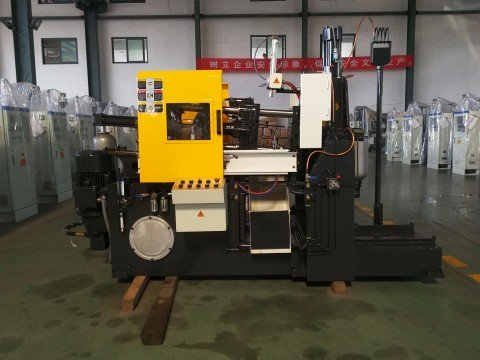
As manufacturers look for faster production, lower labor costs, and more automated processes, demand for efficient zinc die casting equipment continues to attract attention.
However, the market should not be viewed only from the perspective of zinc alloy demand.
Machine technology, automation, energy consumption, production volume, and regional manufacturing activity also influence equipment demand.
This article explains the major zinc die casting machine market trends, applications, growth drivers, regional factors, and challenges.
What Is a Zinc Die Casting Machine?
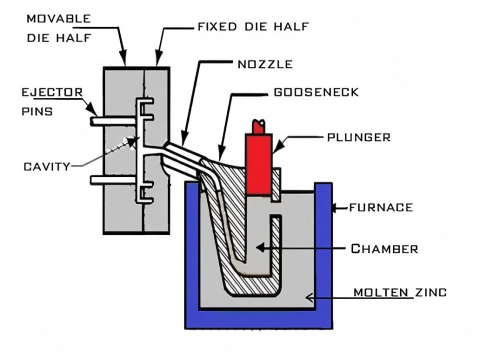
A zinc die casting machine injects molten zinc alloy into a reusable steel die under controlled pressure.
For many zinc applications, manufacturers use a hot chamber die casting machine.
In a hot chamber system, the injection mechanism works closely with the molten metal. This configuration can support fast and repeatable production of zinc components.
A typical zinc die casting production cell may include:
- Hot chamber die casting machine
- Zinc melting and temperature-control equipment
- Die
- Automatic spraying system
- Lubrication system
- Part removal equipment
- Trimming equipment
- Conveyor or material handling system
Therefore, the market is not only about the machine itself. Increasing automation also creates demand for complete die casting cells.
Why Is Demand for Zinc Die Casting Machines Growing?
Several factors support demand for zinc die casting equipment.
Demand for Precision Components
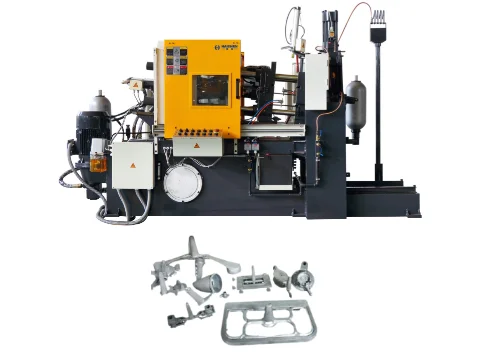
Zinc alloys offer good casting characteristics and can produce detailed parts with relatively thin sections.
This makes zinc die casting useful for:
- Door handles
- Locks
- Brackets
- Connectors
- Automotive components
- Electronic housings
- Appliance components
- Hardware
For these applications, manufacturers often need repeatable dimensions and stable production.
High-Volume Production
Zinc die casting is well suited to large production runs.
Once the die and process parameters are properly established, manufacturers can produce large quantities of similar components with consistent quality.
Therefore, companies producing millions of small components may consider automated hot chamber die casting machines to reduce manual operations and improve output.
Complex Part Geometry
Zinc alloys can fill detailed die cavities effectively.
As a result, manufacturers can integrate features such as:
- Ribs
- Bosses
- Holes
- Threads
- Thin walls
- Mounting features
into a single casting.
This can reduce the number of secondary machining and assembly operations.
Major Applications of Zinc Die Casting Machines
Automotive Components
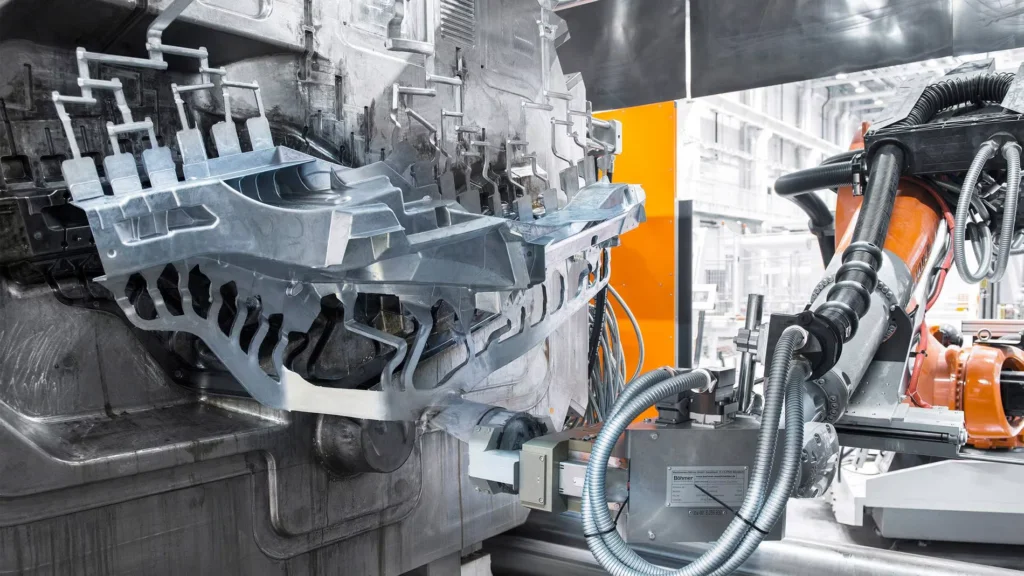
Automotive manufacturers use zinc die castings for various small and medium-sized components.
Examples include:
- Handles
- Locks
- Brackets
- Connectors
- Decorative components
- Functional hardware
The demand for lightweight, precise, and integrated components supports continued use of die casting technology.
Electronics and Electrical Products
Zinc die casting is also used in electronics and electrical equipment.
The process can produce detailed housings, connectors, brackets, and other components with good dimensional consistency.
As electronic products become smaller and more complex, precision casting remains important for selected applications.
Hardware and Building Products
Hardware is another important application area.
Manufacturers use zinc die casting for products such as:
- Door handles
- Locks
- Window hardware
- Furniture fittings
- Bathroom hardware
- Decorative hardware
The ability to produce complex shapes in high volumes makes zinc die casting attractive for these products.
Consumer Appliances
Zinc die castings can also appear in appliances and consumer products where manufacturers need durable and accurately shaped metal components.
The final parts may also receive surface treatments such as:
- Plating
- Painting
- Powder coating
- Polishing
These treatments can improve appearance and corrosion resistance.
Regional Zinc Die Casting Machine Market
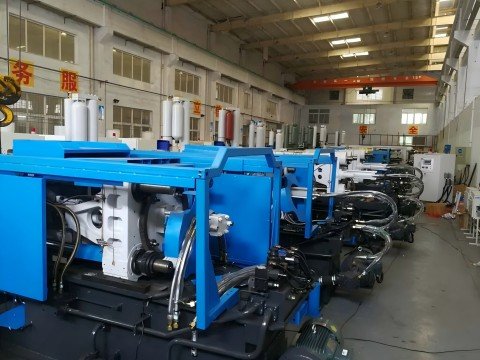
The market has a strong connection with manufacturing activity in Asia, Europe, and North America.
Asia-Pacific
Asia-Pacific is an important region for zinc die casting and die casting equipment because it has large manufacturing bases in China, Japan, South Korea, India, and Southeast Asia.
China is particularly important because of its large metal processing, automotive, electronics, hardware, and machinery industries.
The region also has a large number of die casting machine manufacturers and component producers.
Therefore, both new machine purchases and equipment upgrades contribute to regional demand.
Europe
Europe has a long-established die casting industry.
Germany and Italy are particularly well known for industrial machinery and die casting technology.
European manufacturers often place strong emphasis on:
- Process stability
- Automation
- Energy efficiency
- Quality control
- Production traceability
These requirements encourage investment in advanced die casting equipment.
North America
North America also has an established die casting industry, particularly in automotive, industrial, and consumer product manufacturing.
Demand for automated production and replacement of aging equipment can create opportunities for new die casting machines.
However, machine investment decisions are often closely linked to labor costs, production volumes, and the overall manufacturing environment.
Key Zinc Die Casting Machine Market Trends
More Automation
Automation is one of the most important trends.
Modern zinc die casting cells can integrate:
- Automatic part removal
- Mold spraying
- Lubrication
- Conveyor systems
- Trimming
- Robot handling
- Process monitoring
Automation can reduce manual work and improve production consistency.
Energy Efficiency
Energy consumption is an important consideration when purchasing a die casting machine.
Manufacturers are therefore paying more attention to:
- Servo hydraulic systems
- Efficient motors
- Optimized heating systems
- Improved hydraulic control
- Reduced idle energy consumption
The goal is simple:
Produce more parts while using less energy per part.
Smarter Process Control
Modern machines increasingly use digital control systems to monitor production parameters.
Important parameters may include:
- Injection speed
- Injection pressure
- Metal temperature
- Hydraulic pressure
- Cycle time
- Die temperature
Better monitoring helps operators identify process changes before they result in large quantities of defective parts.
Faster Production Cycles
Cycle time directly affects machine productivity.
Therefore, manufacturers continue to optimize:
- Injection systems
- Die cooling
- Mold spraying
- Part removal
- Hydraulic systems
A shorter and more stable cycle can increase output without increasing the number of machines.
Zinc Die Casting Machine Market Challenges
Although zinc die casting has many advantages, the equipment market also faces several challenges.
High Initial Investment
A complete die casting production cell requires more than the machine.
Manufacturers may also need:
- Dies
- Furnaces
- Sprayers
- Robots
- Trimming equipment
- Cooling systems
- Material handling equipment
Therefore, the initial investment can be significant.
Zinc Price Fluctuation
Zinc is a commodity, so material prices can change over time.
Higher material costs can increase the cost of finished castings and put pressure on manufacturers’ margins.
For this reason, efficient material management and recycling are important.
Die Life and Maintenance
The die is one of the most important components of a zinc die casting production system.
Improper process settings can increase:
- Die wear
- Thermal fatigue
- Flash
- Casting defects
- Maintenance frequency
Therefore, machine selection should be considered together with die design and process conditions.
How to Choose a Zinc Die Casting Machine
If you are planning to purchase a zinc die casting machine, do not select the machine only according to its clamping force.
Consider the following factors.
Casting Weight
Calculate the weight of:
Casting + runner + overflow
The total shot requirement should fit the machine’s injection capacity.
Required Clamping Force
The machine must provide enough clamping force to keep the die closed during injection.
The calculation should consider:
- Projected casting area
- Runner area
- Cavity pressure
- Safety margin
Die Dimensions
Check:
- Die width
- Die height
- Tie-bar spacing
- Platen size
- Mold opening
- Ejector dimensions
A machine can have enough tonnage but still be unsuitable if the die cannot be installed correctly.
Production Volume
If your target output is high, consider:
- Cycle time
- Automation
- Machine availability
- Injection speed
- Part removal
- Maintenance requirements
A machine with a slightly higher purchase price may provide a better return if it significantly improves productivity.
Zinc Die Casting Machine Market Outlook
The future of the zinc die casting machine market will depend on both downstream demand and manufacturing technology.
Several trends are likely to remain important:
- Higher automation
- Better energy efficiency
- More intelligent process control
- Faster production cycles
- Improved die life
- More integrated production cells
- Growing demand for precision components
Market research also shows that zinc die casting remains connected to applications such as automotive, electronics, medical, and other miniature precision components.
For example, a recent TechNavio study forecasts the miniature parts zinc die casting market to grow by about USD 2.85 billion from 2024 to 2029 at a 4.7% CAGR.
Importantly, that figure refers to the miniature parts zinc die casting market, not the zinc die casting machine market itself.
That distinction matters when evaluating market statistics.
Haichen Zinc Die Casting Machines
Haichen provides hot chamber die casting machines designed for zinc alloy applications.
A zinc die casting production line can be configured with supporting equipment such as:
- Automatic sprayers
- Die temperature controllers
- Cooling systems
- Automatic ladles
- Part removal systems
- Conveyors
- Trimming equipment
This allows manufacturers to build a more complete and automated production solution rather than purchasing the die casting machine alone.
For companies evaluating a zinc die casting machine, Haichen can help select a suitable machine according to:
- Zinc alloy
- Casting weight
- Projected area
- Die dimensions
- Production volume
- Required cycle time
- Automation requirements
Frequently Asked Questions
Is zinc die casting suitable for mass production?
Yes. Zinc die casting is particularly suitable for high-volume production of small and medium-sized precision components.
What type of machine is commonly used for zinc die casting?
Hot chamber die casting machines are widely used for zinc alloys because the injection system is integrated closely with the molten metal system.
What industries use zinc die castings?
Major applications include automotive, electronics, hardware, appliances, consumer products, and industrial equipment.
What affects the price of a zinc die casting machine?
Machine size, clamping force, injection system, automation level, control system, auxiliary equipment, and customization all affect the final price.
How do I select a zinc die casting machine?
Start with the casting drawing, zinc alloy, casting weight, projected area, die dimensions, required output, and target cycle time. Then use these parameters to determine the appropriate machine configuration.
Conclusion
The zinc die casting machine market should be viewed as part of a larger manufacturing ecosystem.
Demand comes from industries that need high-volume production of precise zinc components, while technology trends are pushing machines toward greater automation, better energy efficiency, faster cycles, and smarter process control.
At the same time, buyers should be careful when reading market statistics. Data for zinc die casting parts, zinc alloy, and zinc die casting machines represent different markets and should not be mixed.
For manufacturers planning a new zinc die casting production line, the most practical approach is to start with the actual casting requirements and then select the machine, die, and auxiliary equipment as one complete system.


