Types of die casting machines mainly include : cold chamber die casting machine and hot chamber die casting machine.
Hot chamber die casting machines integrate the furnace and injection system. They excel at high-efficiency production of low-melting-point alloys like zinc, making them ideal for mass-producing small to medium precision parts.
Cold chamber die casting machine separates the furnace from the injection chamber. They handle high-melting-point alloys like aluminum, magnesium, and copper, making them core equipment for large complex structural parts in automotive and communications industries.
This article first introduces hot chamber machines, including their working principles, structural features, and typical applications. It then explains cold chamber die casting machine in detail, covering their classification, working process, and suitable scenarios. Next, it compares the key differences between the two types and provides selection guidance. Finally, HAICHEN case studies show how our full range of machines meets different material and product requirements.
- Hot Chamber Die Casting Machine
- Cold Chamber Die Casting Machine
- Comparison of Hot Chamber and Cold Chamber Machines
- Key Factors for Die Casting Machine Selection
- Haichen hot chamber and cold chamber die casting machine
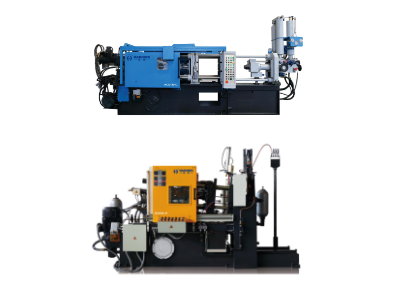
Hot Chamber Die Casting Machines
Hot chamber machines integrate the furnace and injection system into one unit. Their high production efficiency makes them dominant for low-melting-point alloys like zinc.
Working Principles and Structural Features
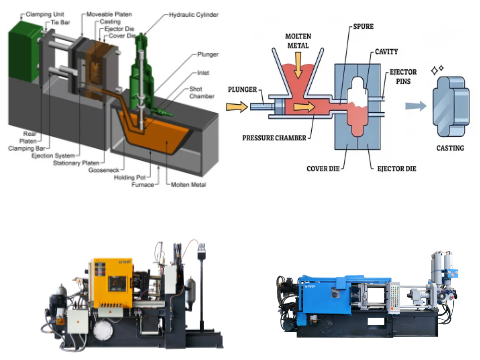
- The furnace connects directly to the injection chamber. The injection mechanism (gooseneck and plunger) immerses in the molten metal
- During injection, the plunger moves down, forcing metal through the gooseneck into the mold cavity
- On the return stroke, molten metal refills automatically without external ladling
- Compact structure, small floor space, high automation level
Core Advantages
- Very high production efficiency. Small parts can cycle in as little as 2-3 seconds
- Molten metal flows in a closed system, reducing oxidation and inclusions, giving good surface quality
- Low heat loss, low energy consumption. Per-part energy use is 30-40% lower than cold chamber machines
- Easy operation, suitable for high-volume continuous production
Applicable Materials
- Zinc alloys (Zamak 3, Zamak 5, ZA series, etc.)
- Lead alloys, tin alloys, and other low-melting-point alloys
- Not suitable for aluminum. Iron dissolves and contaminates the melt
Typical Applications
- Building hardware: door handles, locks, hinges
- Automotive parts: door lock mechanisms, sensor housings
- Electronic products: connector housings, precision instrument frames
- Toys and crafts: model cars, badges, commemorative coins
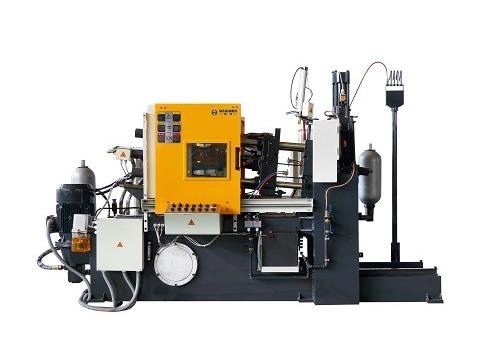
Cold Chamber Die Casting Machines
Cold chamber die casting machine separates the furnace from the injection chamber. They are special designed for high-melting-point alloys and are core equipment for lightweight manufacturing in automotive and 3C industries.
Cooling systems: automotive radiators, LED heat sinks
Working Principles and Process Flow
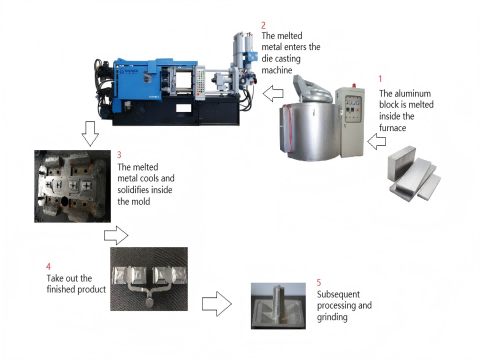
- The furnace stands individually from the main machine, only melting and holding metal
- An automatic ladle delivers a measured amount of molten metal into the horizontal injection chamber
- The injection plunger advances rapidly, pushing metal into the mold cavity for filling
- After solidification, the mold opens and ejectors push out the casting. The plunger retracts for the next cycle
Classification Methods
- By clamping force: Small (under 200 tons), Medium (200-800 tons), Large (800-2000 tons), Ultra-large (over 2000 tons)
- By control type: Traditional hydraulic, Servo energy-saving, All-electric
- By structure: Toggle type, Direct hydraulic type, Two-platen type
Core Advantages
- Handles high-melting-point alloys like aluminum, magnesium, and copper. Wide material applicability
- High injection pressure (over 100MPa), suitable for large complex structural parts
- Integrates with vacuum systems to reduce porosity defects
- Relatively long mold life, control maintenance costs
Applicable Materials
- Aluminum alloys (ADC12, A380, A356, 6063, etc.)
- Magnesium alloys (AZ91D, AM series, etc.)
- Copper alloys (brass, bronze, etc.)
- Can also process some zinc alloys, but efficiency lower than hot chamber
Typical Applications
- Automotive industry: engine blocks, transmission housings, battery housings, structural parts
- Communications and electronics: 5G base station heatin housings, phone mid-frames
- Power tools: motor housings, gearbox cases

Comparison of Hot Chamber and Cold Chamber Machines
Understanding the differences between the two types is essential for correct selection. You must balance factors like product material, structure, and production volume.
Working Principle Comparison
- Hot chamber: Furnace and injection chamber integrated, injection mechanism immersed in molten metal
- Cold chamber: Furnace and injection chamber separated, requires ladling for feeding
- Hot chamber has shorter cycle times. Cold chamber handles higher melting point materials
Applicable Material Range
- Hot chamber: Low-melting-point alloys like zinc, lead, tin (melting point below 450°C)
- Cold chamber: High-melting-point alloys like aluminum, magnesium, copper (melting point above 600°C)
- Aluminum requires cold chamber. Zinc first choice of hot chamber
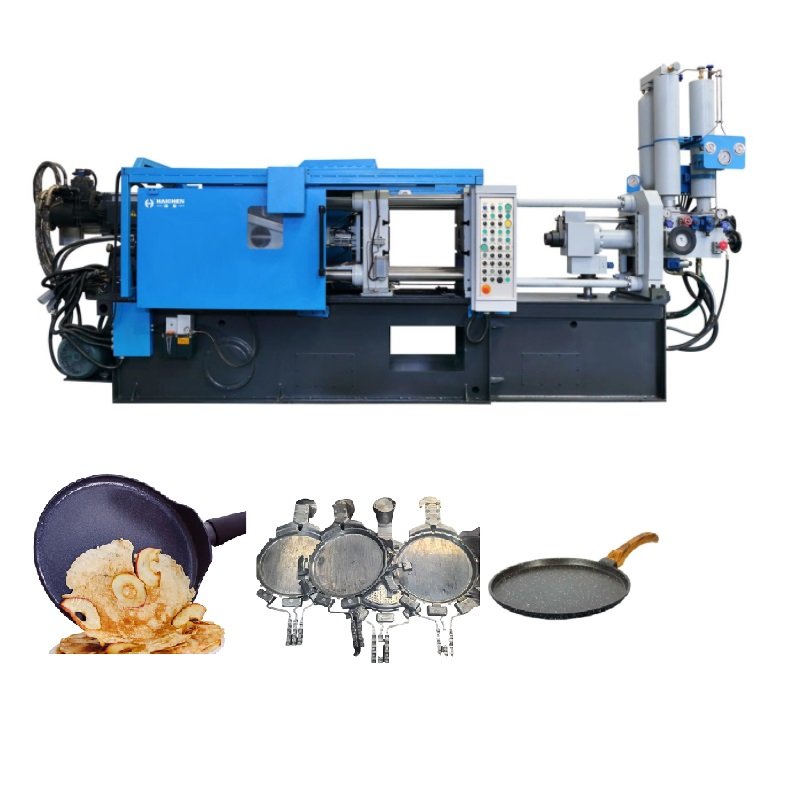
Production Efficiency Comparison
- Hot chamber cycle times are short. Small parts take 2-3 seconds, ideal for mass production
- Cold chamber cycle times are longer. Medium parts take 60-90 seconds, but can produce large parts
- Hot chamber has high automation integration. Cold chamber offers more flexibility
Casting Quality Comparison
- Hot chamber gives good surface quality, suitable for decorative finishes like plating
- Cold chamber provides high internal density, suitable for load-bearing structural parts
- Both can achieve high quality through process optimization
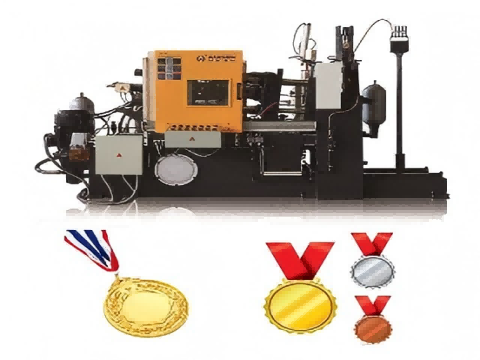
Cost and Maintenance Differences
- Hot chamber goosenecks are prone to corrosion and need regular replacement, but overall maintenance cost is low
- Cold chamber has higher initial investment, but injection chamber life is long, and maintenance costs are relatively stable
- Hot chamber has lower per-part energy consumption. Cold chamber processes higher-value materials
Key Factors for Die Casting Machine Selection
Choosing the right machine type requires consider product material, structural features, production volume, and investment budget.
Material Determines Machine Type
- Zinc alloy products select hot chamber for high efficiency and low cost
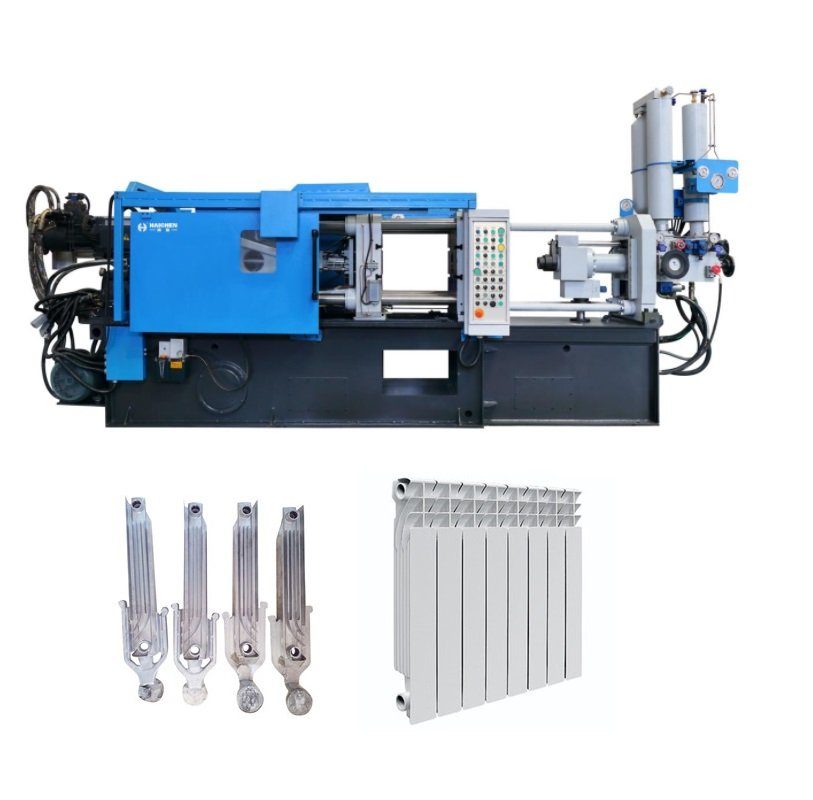
- Aluminum products must use cold chamber
- Magnesium and copper also require cold chamber
Product Structure and Size
- Small precision parts can use hot chamber. Thin-wall complex parts need high-speed injection capability
- Large structural parts need high-tonnage cold chamber for sufficient clamping force
- Deep cavity molds require consider extraction space and injection stroke
Production Volume Considerations
- Above 100,000 parts annually, hot chamber efficiency better choice
- For multi-variety small batches, cold chamber offers flexible mold changes
- For high-volume single products, configure automation cells to maximize efficiency
Return on Investment Analysis
- Hot chamber has lower initial investment, suitable for small and medium businesses with limited budgets
- Cold chamber investment is higher but processes higher-value products
- Must consider machine price, energy consumption, maintenance, and product value
Haichen hot chamber and cold chamber die casting machine
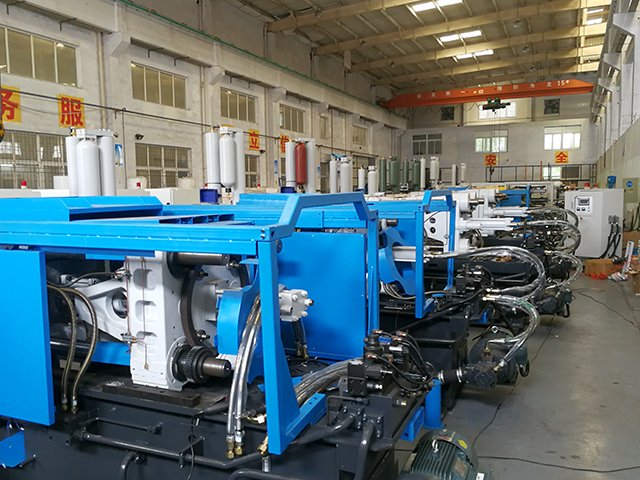
Haichen machinery was founded in 2005, Located in Ningbo, Zhejiang, China. HAICHEN specializes in the production and sale of hot chamber die-casting machines, cold chamber die casting machines, servo die casting machines, magnesium alloy die casting machines and rela.tive auxlliary equipment.
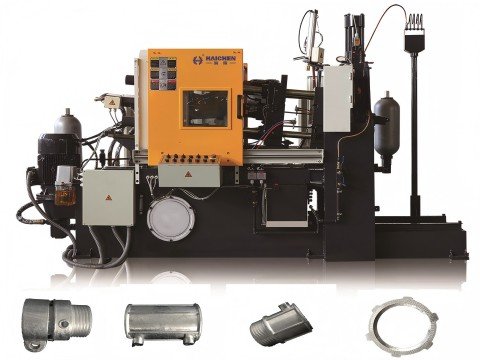
HAICHEN Hot Chamber Die Casting Machine
- HCH series: Clamping force 30-180 tons, specially optimized for zinc alloys
- High-precision servo injection system, repeat accuracy ±0.5%, ensuring consistent casting quality
- Intelligent temperature control module maintains melt temperature wavewithin ±2°C
- Gooseneck made from special corrosion-resistant alloy, service life doubled
- Typical applications: precision locks, bathroom hardware, electronic connectors
HAICHEN Cold Chamber Die Casting Machine
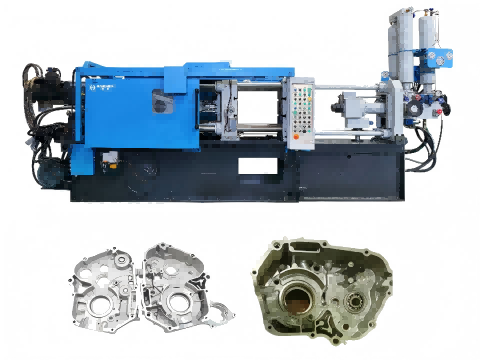
- HCD series: Clamping force 25-2080 tons, covering small to large structural parts
- High-rigidity platen structure, deformation controlled within 0.05mm/m
- Servo energy-saving system reduces energy consumption by 40-60%, millisecond response time
HAICHEN Selection Support Advantages
- Professional engineers provide accurate machine recommendations based on product drawings
- Process simulation verifies machine suitability, reducing trial and error costs
- Full machine range available, one-stop purchasing simplifies management
HAlCHEN always places more emphasis on the technology and management. Because of its advanced technology, high quality and effective management, “HAlCHEN’s hot chamber as well as cold chamber dle-casting machines has won the trust from our cllents at home and abroad.


