Die casting release agent consist of four main categories: water-based, oil-based, solvent-based, and powder.
Each type uses different base materials, carriers, and active ingredients to perform its essential function. Water-based agents dominate the market today, while oil-based and solvent-based agents serve more specialized applications.
Before we dive into the composition details, let me explain what these agents actually do and why their composition matters to your bottom line.
What Does a Die Casting Release Agent Do?
A release agent forms a thin barrier film on the mold cavity surface. This film prevents the molten metal from sticking to the mold steel under high pressure, ensuring that your casting releases intact when the mold opens. Without this barrier, you would face stuck parts, surface defects, and mold damage.
Beyond release, the agent also cools the mold surface, which has a strongly elevated temperature after each casting cycle. It protects the die casting mold from thermal shock and extends its service life.
What this means for you: The composition of your release agent directly affects your scrap rate, cycle time, mold life, and operating cost. Choosing the right composition is not just a technical detail—it is a business decision.
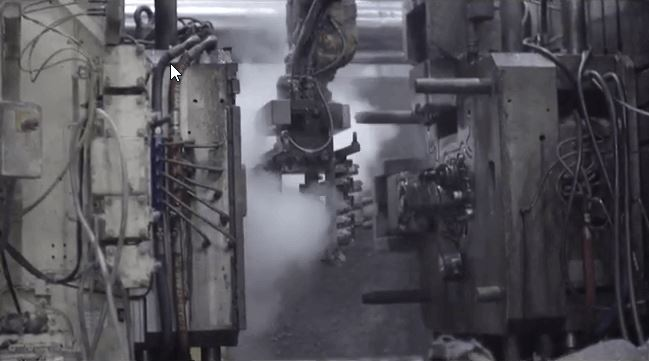
The Four Main Types of Release Agents
Release agents for die casting fall into four categories. Let me walk you through each one.
Water-Based Release Agents
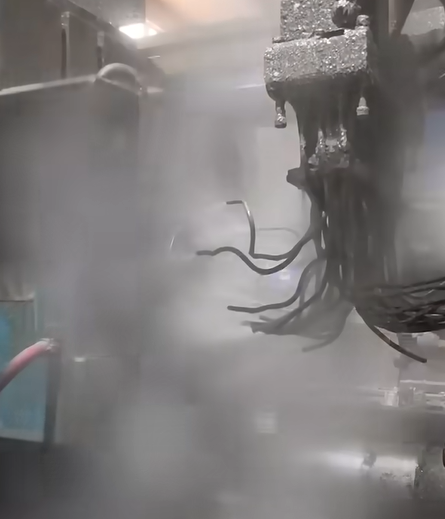
Water-based agents are the most widely used type in die casting today. They consist of a concentrate diluted with water before application. Water acts as the carrier, and the active ingredients provide the release and lubrication functions.
Why buyers choose them:
- Cost-effective and easy to dilute
- Environmentally friendly with low toxicity
- Provide excellent cooling to the mold, reducing thermal distortion
- Minimize thermal shock and extend mold life
What to watch for:
Water-based agents work particularly well for aluminum and zinc alloy die casting. The cooling effect helps manage mold temperatures and maintain consistent cycle times.
Oil-Based Release Agents
Oil-based agents do not contain water. They mainly consist of mineral oil or synthetic oil, silicone oil, and lubricating additives.
Why some buyers still use them:
- Excellent lubrication properties for complex parts
- Work well at lower mold temperatures
The downsides:
- Produce smoke during use
- Create environmental pollution and health risks
- Gradually being eliminated from the industry
Oil-based agents still have a place for parts with particularly complex shapes, but many manufacturers are transitioning away from them.
Solvent-Based Release Agents
Solvent-based agents use organic solvents as the carrier. These solvents evaporate quickly after application, leaving a thin lubricant film on the mold surface.
Key advantages:
The trade-offs:
- Higher cost compared to water-based options
- Solvent emissions create environmental concerns
- Require proper ventilation and safety precautions
These agents suit high-pressure casting applications where metal temperatures run very high and you need immediate lubrication without cooling.
Powder Release Agents
Powder agents represent an emerging direction in the industry. These dry powders apply to the mold surface without any liquid carrier.
What they contain:
- Solid lubricants like graphite, talc, and molybdenum disulfide
- Polymers such as polyethylene and polypropylene
- Ceramic materials like alumina and boron nitride
Why they are gaining attention:
- No carrier liquid eliminates evaporation issues
- Suitable for vacuum die casting applications
- Produce minimal waste
The powder form requires specialized application equipment, but many buyers see this as the future of high-performance release technology.
Detailed Composition Breakdown
Now let me get specific about what goes into each type. Understanding these components helps you evaluate supplier offerings and make informed purchasing decisions.
Water-Based Release Agent Composition
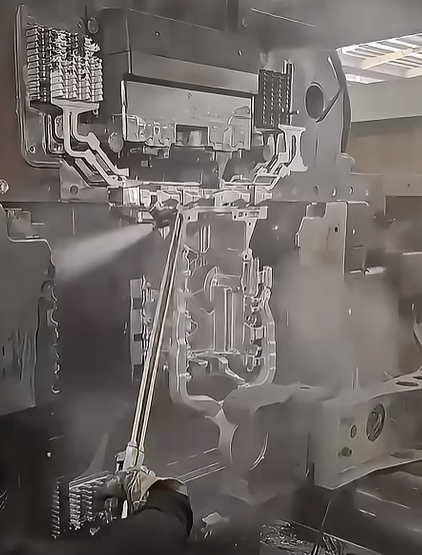
A typical water-based release agent for aluminum alloy die casting contains:
| Component | Percentage | Function |
|---|---|---|
| Dimethicone | 10–30% | Primary release agent; low surface tension, good heat resistance |
| Modified silicone oil | 5–15% | Improves emulsification and high-temperature stability |
| Wax composition | 5–20% | Provides lubrication and film-forming properties |
| Surfactant | 4–15% | Helps emulsify oils in water |
| Anti-rust corrosion inhibitor | 1–3% | Protects the mold from corrosion |
| Bactericide | 0.1–1% | Prevents bacterial growth in the mixture |
| Deionized water | Balance | Carrier that provides cooling |
The silicone oil in these formulations is critical. Dimethicone has low surface tension and good heat resistance, making it an excellent release material. Modified silicone oil reduces emulsification difficulty and performs better at high temperatures.
The wax composition provides excellent lubrication capability and forms a good film on the mold surface.
Oil-Based Release Agent Composition
Oil-based release agents typically contain:
| Component | Percentage | Function |
|---|---|---|
| Petroleum hydrocarbon solvent | 70–98% | Carrier with high flash point (70–170°C) |
| High-viscosity mineral/synthetic oil | 1–10% | Base lubricant |
| Silicone oil | Up to 15% | Release enhancement |
| Lubricating additives | 1–5% | Improved lubrication performance |
Some formulations also include paraffin wax, polytetrafluoroethylene (PTFE), or high-temperature resins. These require heating to 60–80°C during mixing to achieve uniform melting.
Solvent-Based Release Agent Composition
Solvent-based agents use organic solvents as the primary carrier. The solvent evaporates quickly after spraying, leaving behind a thin layer of lubricant. The active ingredients are similar to oil-based agents but formulated for higher evaporation rates.
Additional Components You Should Know About
Inorganic lubricants appear in some specialized formulations. These include materials like graphite and molybdenum disulfide.
Spherical resin particles (0.1–10 μm) improve the release agent’s properties in low-speed injection die casting.
Organic carboxylic acid metal salts serve as lubricating additives in some aqueous formulations.
Alkali metal salts of aromatic and aliphatic polycarboxylic acids appear in some release and lubricant compositions.
How Composition Affects Your Production
The composition of your release agent directly impacts several key production metrics.
Cooling effect: Water-based agents cool the mold as the water evaporates. This helps maintain consistent mold temperatures and prevents thermal distortion.
Film formation: The wax and silicone components determine how well the release agent forms a barrier film. Good film formation means fewer sticking issues and better surface finish.
High-temperature stability: Modified silicone oils resist breakdown at high temperatures. This matters when you cast aluminum at temperatures around 620–680°C.
Environmental impact: Water-based agents are biodegradable and produce fewer emissions. Oil-based and solvent-based agents create more environmental and health concerns.
Mold life: Agents with proper corrosion inhibitors and film-forming properties protect your mold from wear, extending its service life.
Semi-Permanent Release Agents
A separate category worth mentioning is semi-permanent release agents. These form a strong film on the mold surface that lasts several casting cycles before reapplication.
What they contain: Similar active ingredients to other types, but formulated for longer-lasting adhesion to the mold surface.
Why buyers consider them:
- Less frequent application reduces cycle time
- Lower overall release agent consumption
- Suitable for medium to high-volume production
The trade-off:
Approach to Release Agent Systems
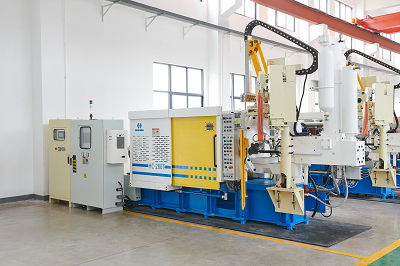
At Haichen, we understand that the release agent is only as good as the system that delivers it. We manufacture both cold chamber and hot chamber die casting machines, and we supply complete auxiliary equipment including release agent mixers.
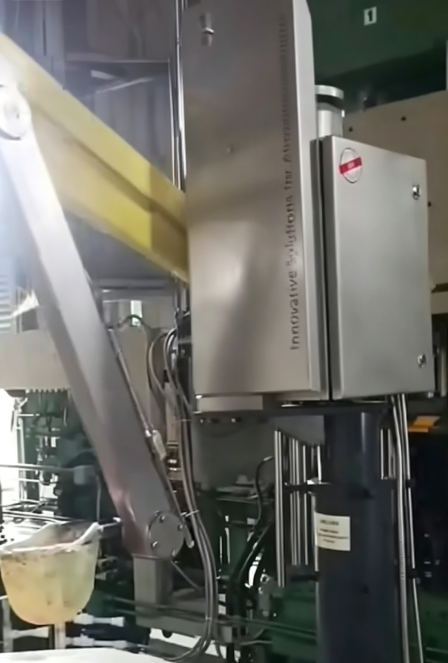
Our release agent mixers automatically mix the release agent with water according to your set ratio, ensuring the diluent reaches the desired concentration for your specific mold. We offer both centralized and individual mixing systems, each delivering precise, automated dilution for optimal performance.
We also help our customers avoid common release agent problems. For example, using a release agent that does not generate gas can prevent introducing additional gas during the die casting process. And thermally stable release agents prevent carbonization and scaling at high temperatures, extending mold life.
What this means for you: The right release agent composition, delivered through the right mixing system, prevents casting defects, extends mold life, and improves final part surface finish. It also reduces waste and consumption of costly release agents, leading to substantial material cost savings.


