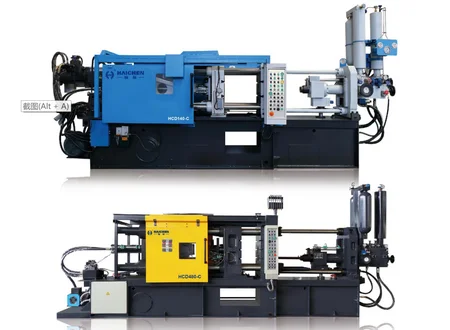
The connecting rod of the die-casting machine is a crucial component that connects the two halves of the die-casting mold.
Its main function is to transfer pressure to keep the mold closed, ensuring the stability of the die-casting process and the quality of the castings.
Die casting has become an essential manufacturing process across numerous industries due to its ability to produce complex, high-precision components with excellent surface finish and dimensional stability.
From automotive engineering to consumer electronics, the versatility of die casting continues to expand as materials and technology evolve.
In summary, die casting stands at the intersection of speed, precision, and scalability.
By mastering process control, material selection, and die design, manufacturers produce high-quality, cost-effective parts that drive innovation from automotive assemblies to consumer electronics.
As Industry 4.0 introduces IoT-enabled monitoring, AI-driven optimization, and hybrid additive tooling, die casting will continue to evolve—maintaining its role as a strategic enabler of mass-production excellence.
At Haichen, we stand ready to partner with you in leveraging these advanced techniques to optimize your component designs, material selections, and production workflows.
Ensuring that your next project exceeds every performance and sustainability benchmark.
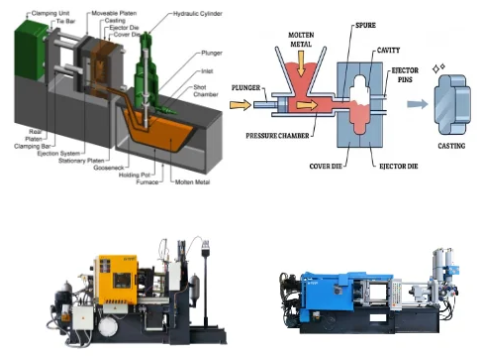
Die-casting machine connecting rod function
The connecting rod of the die-casting machine is the core load-bearing component, responsible for maintaining the closure of the mold.
It needs to meet requirements such as high-strength pressure-bearing, dynamic stability, and resistance to corrosion and wear.
- Transmitting pressure: By connecting the two halves of the mold, ensure that the mold is closed during the die-casting process.
- Withstanding metal injection pressure: Withstand the high-pressure impact when the metal melt is injected.
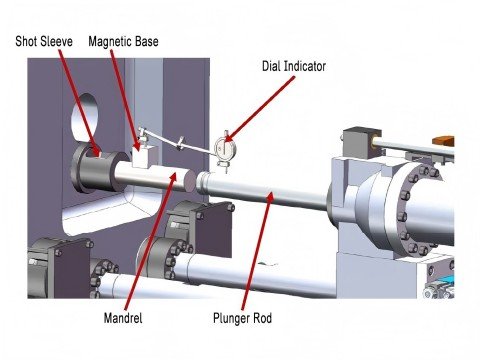
Connecting rod materials and design
- Material Selection
- Design Optimization
Material Selection
Commonly used materials include steel, aluminum alloy, titanium alloy, forgings, and composite materials.
Steel offers high strength and toughness, aluminum is lightweight and fatigue-resistant, and titanium alloy is suitable for high-performance environments.
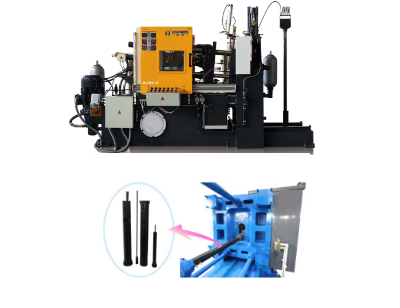
Design Optimization
The structural design of the connecting rods needs to take into account strength calculations, material selection, and manufacturing processes.
Structures such as heart-shaped cross-sections and N-shaped cross-sections are used to optimize performance.
Connecting rod manufacturing process
- Forging process
- Heat treatment
- Machining
Forging process
Forging is a crucial step in enhancing the mechanical properties of materials. It enables the improvement of the material’s microstructure and the enhancement of fatigue resistance.
During the forging process, parameters such as temperature, pressure, and speed need to be controlled.
Heat treatment
Heat treatment (such as quenching and tempering) can further enhance the strength and toughness of the material.
For example, the hardness requirements for heat treatment of 45 steel and 40Cr steel are 217-293HB.
Machining
Machining (such as turning, milling, and grinding) must ensure the processing accuracy and surface quality to enhance the performance and service life of the connecting rod.
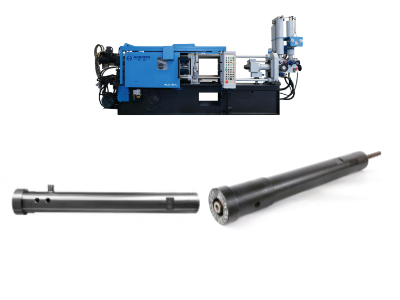
Common Problems and Maintenance of connecting rod
- Problem: The connecting rods may malfunction due to excessive stretching, wear, corrosion or improper installation.
- Solution: Regular inspections, optimizing mold design, using high-quality materials and intelligent monitoring technologies (such as strain sensors) to extend their lifespan.
Haichen die-casting machine connecting rod
Haichen is a die casting machine factory located in Ningbo, China, mainly supplying cold chamber die casting machine and hot chamber die casting machine.
Besides machines, we also supply die casting auxiliary equipments and spear parts.
Haichen designs their connecting rods with an “H” or “I” section to ensure maximum stiffness and minimum weight, which is essential for maintaining stability under high stresses and at high speeds.
In addition, the connecting rod has the ability to withstand axial stresses, bending stresses, and inertia forces.
It results from gas pressure in the cylinder, centrifugal force, and the reciprocating motion of the piston.
Together, these features and characteristics ensure that connecting rods will work reliably in a die-cast or diesel engine and are an integral part of the engine design.