Die Cast Cookware Benefits have easy to clean, uniform heating and heat retention, high durability, versatility and so on.
Die-cast aluminum cookware has a variety of advantages, and here is a detailed description of its main advantages:
- Superior Product Performance and Quality
- Manufacturing Efficiency and Design Flexibility
- Economic and Market Advantages for Manufacturers
- HAICHEN’s Role in Realizing Cookware Manufacturing Benefits
Die cast cookware is made by injecting molten aluminum into a steel mold under high pressure. This article will explain the key advantages of this production method. We will discuss the superior performance of the final product, the efficiency of the manufacturing process, and the economic benefits for makers. Finally, we will show how HAICHEN’s machines enable these benefits for manufacturers.
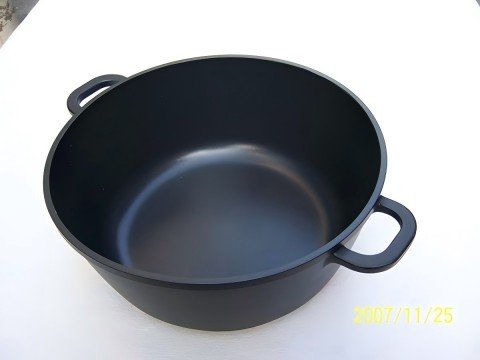
Superior Product Performance and Quality
The die casting process gives cookware excellent functional properties.
- Exceptional Heat Distribution and Response
- High Structural Strength and Durability
- Consistent Quality and Precise Dimensions
Exceptional Heat Distribution and Response
The cast aluminum body has uniform density and no gaps. Heat spreads quickly and evenly across the entire cooking surface. This prevents hot spots and ensures food cooks uniformly.
High Structural Strength and Durability
High-pressure filling creates a very dense metal structure. This makes the cookware robust and resistant to denting or warping from thermal shock, guaranteeing a long service life.
- Fundamental differences in manufacturing process
- Durability and warp resistance comparison
- Thermal performance and cooking efficiency comparison
Consistent Quality and Precise Dimensions
Every piece from the same mold is identical. This gives perfect consistency in weight, wall thickness, and shape, which is crucial for both performance and stacking in storage.
HAICHEN Ensure Uniform Wall Thickness and Excellent Thermal Performance in Cookware
HAICHEN cold chamber machines are designed for aluminum cookware. They use a high-precision injection system to ensure fast, uniform filling of the mold. This results in consistent wall thickness, which is the basis for even heat distribution and eliminating hot spots . HAICHEN’s customized line for a 240mm diameter, 65mm high frying pan achieves stable wall thickness while maintaining a cycle time of about 40 seconds per pan, combining quality and efficiency.
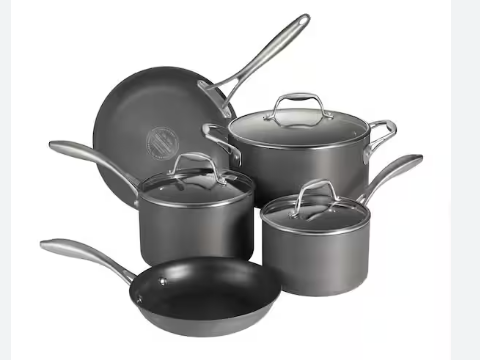
Performance comparison between die cast and forged cookware
Die cast cookware and forged cookware are the two main types of aluminum cookware on the market. Understanding the process differences and performance traits of each helps manufacturers and consumers make the right choice.
Fundamental differences in manufacturing process
Forged aluminum cookware is made by heating a solid aluminum block until it becomes soft. It is then shaped under high pressure. This process realigns the metal grains along the direction of force, creating a very dense structure. Die cast cookware is made by injecting molten aluminum into a precision steel mold under high pressure. The aluminum solidifies quickly inside the mold cavity. The key difference between the two processes is that forging deforms solid metal, while die casting pours liquid metal into a mold. One die cast cookware benefit is design flexibility. Die casting allows complex shapes that are hard to achieve with forging.
Durability and warp resistance comparison
Forged aluminum cookware generally performs better than die cast aluminum in high-temperature warp resistance due to its dense grain structure. The forging process compacts the metal tightly, enhancing structural integrity. The resulting cookware can withstand higher heat levels and is less likely to warp over time. Die cast non-stick cookware, while generally durable, may be more likely to warp under extreme conditions. However, high-quality die cast cookware compensates for this difference with thick bottom design (typical thickness 7.5 mm). Its warp resistance is still much better than ordinary stamped aluminum cookware. The advantage of die casting is uniform wall thickness. It avoids the “thick bottom, thin wall” problem of stamped cookware.
Thermal performance and cooking efficiency comparison
Die cast aluminum cookware performs very well in fast heat conduction because of its uniform wall thickness and dense structure. The die casting process keeps thickness tolerance between bottom and side walls within 0.3 mm. This eliminates the uneven heat conduction problem of stamped cookware. Forged aluminum cookware usually has a thicker base. This gives better heat retention, which suits slow cooking and dishes that need steady temperatures. Die cast non-stick cookware heats up more quickly. This suits quick cooking tasks. In summary, die cast cookware benefits are more about fast response and even heating. The advantage of forged aluminum is better resistance to deformation under extremely high heat.
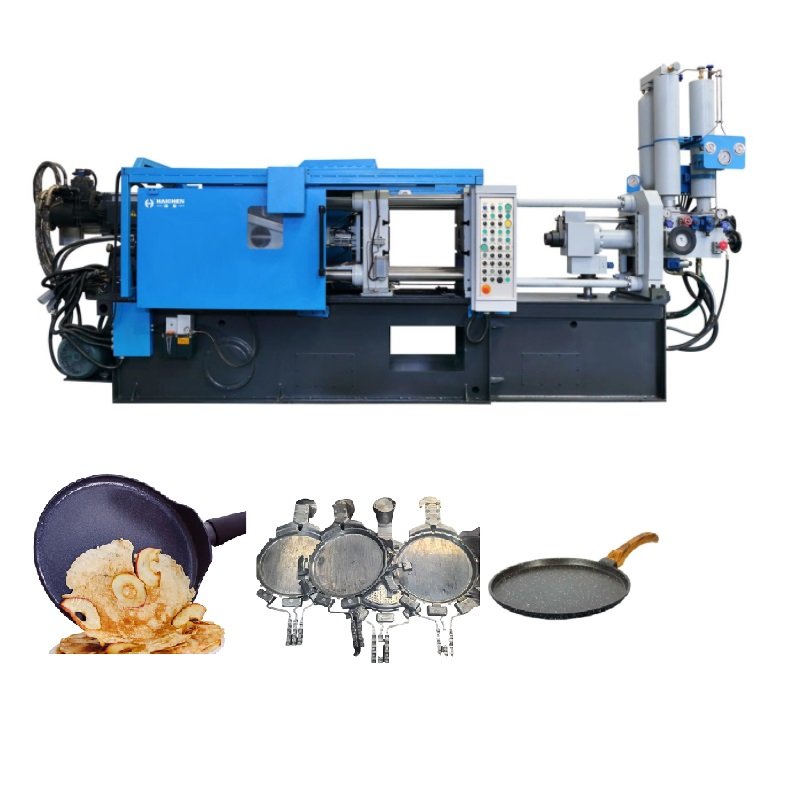
Manufacturing Efficiency and Design Flexibility
The process offers significant advantages for production.
- High-Speed, High-Volume Production Capability
- Ability to Create Complex, Integrated Shapes
- Excellent Surface Finish for Minimal Post-Processing
High-Speed, High-Volume Production Capability
Die casting cycles are very fast, often taking less than a minute per part. This allows for the cost-effective mass production of items like pots, pans, and lids.
Ability to Create Complex, Integrated Shapes
The process can form intricate handles, spouts, and reinforcement ribs in a single step. It can also cast-in metal inserts for handles, eliminating the need for later riveting.
Excellent Surface Finish for Minimal Post-Processing
The surface straight from the mold is very smooth. This reduces the time and cost needed for polishing and finishing before applying non-stick coatings or other treatments.
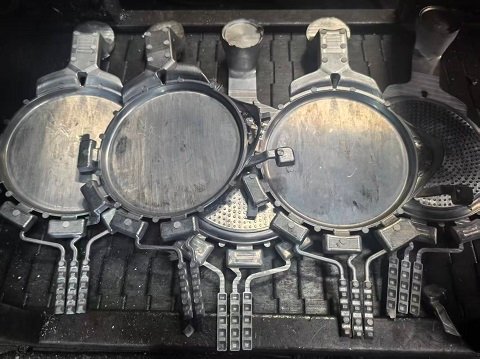
HAICHEN Automation Cells for Efficient Cookware Production
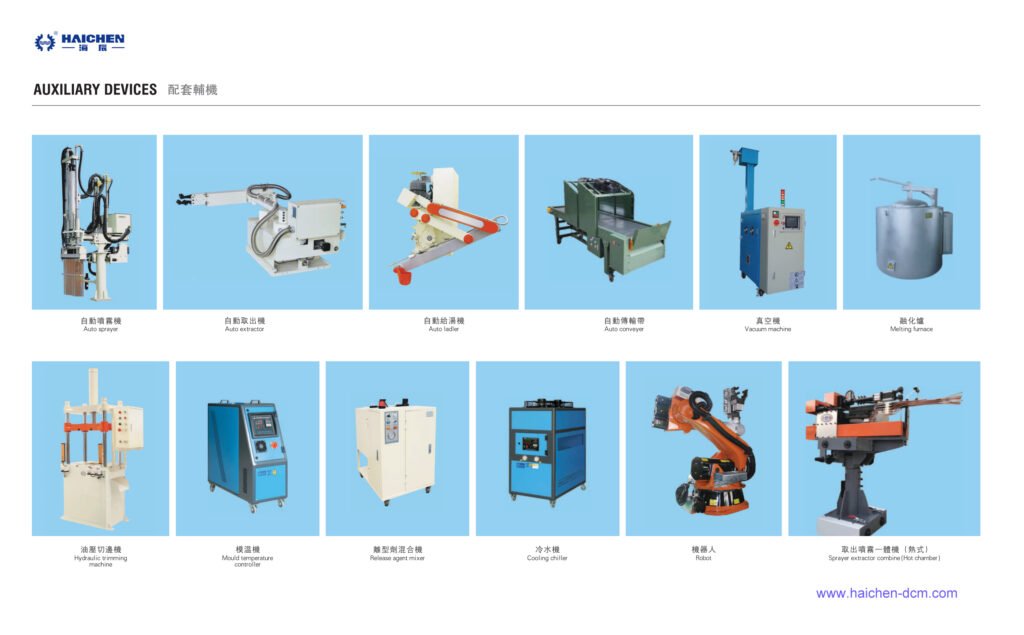
HAICHEN provides complete automation cells for cookware die casting, covering ladling, extraction, and spraying. This integrated automation reduces labor costs and improves part consistency . For large frying pans or pots, HAICHEN machines support various automation configurations, helping customers achieve stable, high-volume production.

Economic and Market Advantages for Manufacturers
These benefits translate directly to a stronger business position.
- Reduced Material Waste and Lower Unit Cost
- Simplified Assembly and Lower Labor Costs
- Enhanced Brand Value through Premium Product Quality
Reduced Material Waste and Lower Unit Cost
The near-net-shape casting minimizes excess material. Combined with fast cycle times, this results in a very competitive cost per unit for large production runs.
Simplified Assembly and Lower Labor Costs
By integrating features like handles, the number of separate parts is reduced. This simplifies the assembly line, cuts labor time, and lowers overall production costs.
Enhanced Brand Value through Premium Product Quality
Superior heat distribution, durability, and consistent finish are tangible quality markers that consumers value. This allows brands to command a higher price point and build customer loyalty.
HAICHEN’s Professional Support in Cookware Molds, Materials, and Processes
HAICHEN not only supplies machines but also has capabilities in cookware mold design and manufacturing. Its team optimizes gating, venting, and cooling systems based on aluminum die casting characteristics. This ensures high dimensional accuracy, a smooth surface, and excellent heat resistance and service life for the cookware . HAICHEN offers full technical support for different pot sizes, from material die casting aluminium cookware selection and mold design to production processes, helping customers realize their product designs.
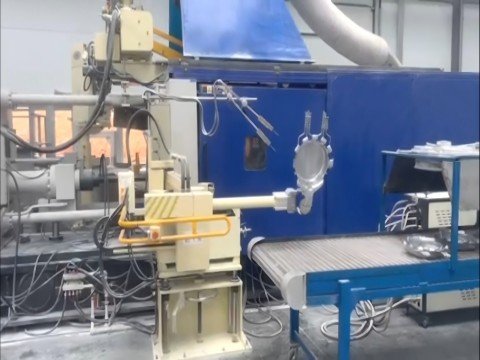
HAICHEN’s Role in Realizing Cookware Manufacturing Benefits
HAICHEN provides the reliable, high-performance machinery needed for top-quality die cast cookware production.
- Case: Enabling a Manufacturer’s Product Line Upgrade
- The HAICHEN Advantage: Precision and Stability for Mass Production
Case Study of Haichen aluminum cookware production
A cookware company in Istanbul wanted to launch a new line of premium aluminum fry pans with an integrated handle design. Their old equipment could not achieve the required thin wall thickness without defects.
HAICHEN supplied a 500-ton cold chamber machine with precise injection control. This machine filled the complex mold perfectly every time, producing pans with consistent 2.5mm thin walls, excellent surface finish, and high structural integrity.
The success of this line significantly boosted the manufacturer’s market share.
HAICHEN aluminum cookware Advantage
For cookware, aesthetic consistency is as important as performance. HAICHEN machines deliver this through stable clamping and repeatable injection profiles. Our robust construction ensures this precision is maintained guidd for cast-aluminium cookware over millions of cycles, which is essential for profitable high-volume cookware manufacturing. We provide the dependable technology that turns design advantages into commercial success.
The benefits of die cast cookware are clear: superior cooking performance, efficient high-volume production, and strong economic value. For manufacturers, this method enables the creation of premium, competitive products. Success depends on using precise and reliable die casting technology. As demonstrated by HAICHEN, partnering with an expert machine builder provides the essential capability to consistently achieve these benefits, ensuring quality and profitability in the cookware market.
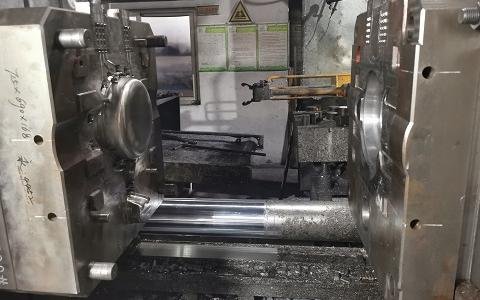
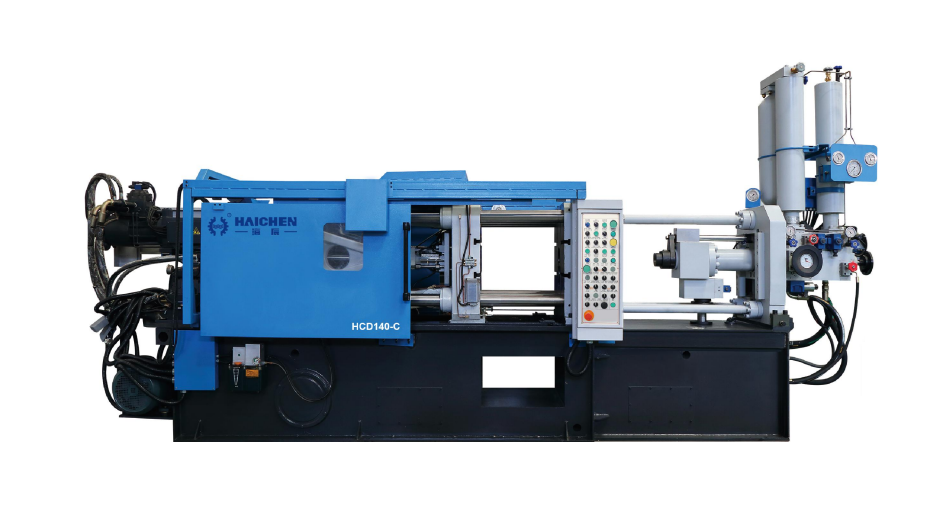
Haichen die casting machine
Haichen is one Chinese die casting machine manufacturer for more than 10years. We produce both high pressure cold chamber die casting machine and hot chamber die casting machine.They have durable and highly precise features.
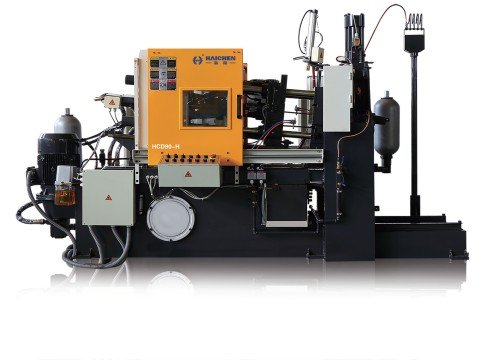
Haichen also produce die casting machine auxiliary equipment. Such as conveyor, vacuum machine, mold temperature controller, industrial robot, sprayer and so on.
We supply cold chamber and hot chamber die casting machine spare parts.
When you have any demand, feel free to contact us.


