Controlling porosity in pressure die casting involves optimizing injection speed and pressure, ensuring proper mold venting, maintaining consistent metal temperature, and using high-quality alloys to minimize defects and improve part integrity.
Pressure die casting is a highly efficient manufacturing process for producing complex metal parts with high precision. However, uncontrolled porosity leads to rejected parts, increased scrap costs, and potential field failures in critical applications such as automotive safety components and EV battery housings.
This guide covers the complete porosity control in pressure die casting picture — causes, types (gas vs shrinkage), and proven solutions — with real production data and technologies from HAICHEN installations.
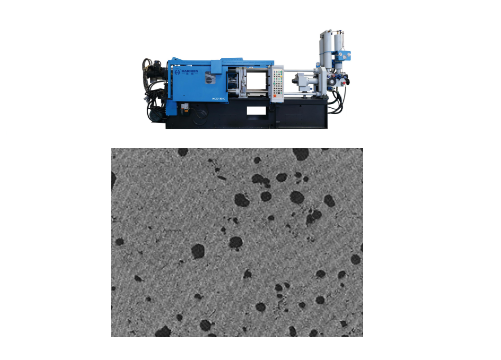
Understanding Porosity in Pressure Die Casting
Porosity in pressure die casting can be classified into two main types: gas porosity and shrinkage porosity.
Gas Porosity
Gas porosity occurs when air or other gases become trapped within the molten metal during the injection process. This can happen due to improper venting, high injection speeds, or poor mold design. Gas porosity appears as spherical voids and typically occurs near the surface or in thick sections.
Shrinkage Porosity
Shrinkage porosity results from the solidification process when the metal contracts as it cools, creating voids within the part. This type of porosity often appears as irregularly shaped voids and is more challenging to detect and control. It typically occurs in thicker sections where the metal solidifies last.
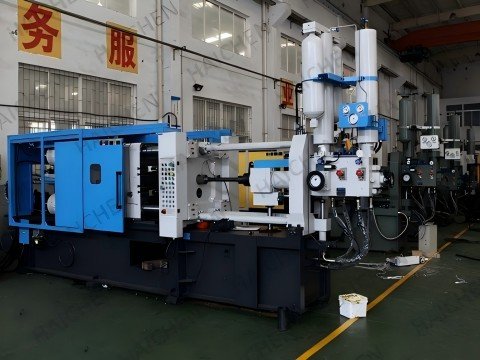
Key Factors Affecting Porosity
Injection Speed and Pressure
The speed at which the molten metal is injected into the mold plays a crucial role in porosity formation. Too high an injection speed can trap air within the metal, leading to gas porosity. Conversely, too low a speed may cause the metal to cool prematurely, resulting in shrinkage porosity. Finding the optimal injection speed and pressure is essential to minimize porosity.
Mold Design and Gating
The design of the die casting mold has a significant impact on porosity. Proper venting channels are necessary to allow trapped air to escape during the injection process. Additionally, the mold should be designed to promote uniform metal flow and avoid areas where the metal can cool too quickly or too slowly.
HAICHEN mold optimization practices:
- Computational Fluid Dynamics (CFD) simulation for gate location, size, and direction optimization
- Multi-branch tangential gates for large thin-wall parts to expel gas effectively
- Venting channel depth of 0.05-0.15mm for smooth gas discharge
- Overflow channels for cold metal, impurities, and auxiliary venting
- High-precision polishing (VDI 3400 #A1 standards) on critical surfaces
Metal and Mold Temperature
The temperature of the molten metal is another critical factor. If the metal is too hot, it may cause excessive turbulence during injection, trapping air and creating gas porosity. If it is too cold, the metal may solidify too quickly, leading to shrinkage porosity. Maintaining consistent and optimal metal temperature is vital for reducing porosity.
The temperature of the mold also affects porosity. A mold that is too cold can cause the metal to solidify too quickly, leading to shrinkage porosity. A mold that is too hot may result in gas porosity due to increased turbulence. Proper mold temperature control is essential for consistent casting quality.
HAICHEN temperature control features:
- Multi-zone independent mold temperature control with real-time thermocouple feedback
- Temperature difference across mold surface controlled within ±5°C
- Variable temperature control (TCM) for high-appearance or complex parts
- Point cooling (Baffle/Bubbler) for local hot spots
- 3D printed conformal cooling water channels for complex geometries
Material Quality
The quality of the metal alloy used in the casting process can also influence porosity. Impurities or inclusions in the metal can act as nucleation sites for gas bubbles, increasing the likelihood of gas porosity. Using high-quality, clean metal alloys is important for minimizing porosity.
Die Spray and Lubricant
Excessive die spray or improper drying leaves residual moisture in the cavity. When molten metal enters, this moisture vaporizes instantly, creating gas porosity. Use programmable spray systems with air blow-off cycles to remove residual liquid. HAICHEN machines integrate spray control with injection timing to ensure cavity dryness before metal injection.
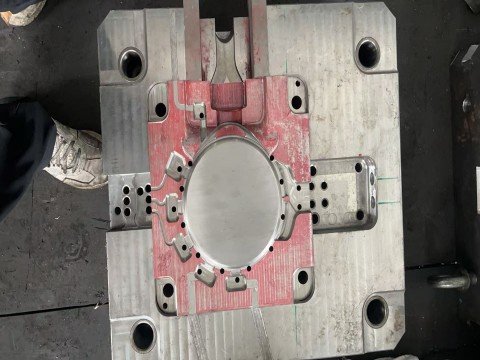
HAICHEN Porosity Control Technology System
Precision Injection Control System
HAICHEN die casting machines are equipped with advanced injection control systems that implement a “slow-fast-slow” multi-stage injection process. By precisely controlling the injection curve, we ensure smooth cavity filling of molten metal, effectively reducing turbulence and gas entrapment. Real-time pressure feedback adjusts injection parameters at the millisecond level.
Intelligent Temperature Management System
HAICHEN has developed a unique dual-closed-loop temperature control technology that precisely regulates both mold temperature and metal temperature simultaneously. The system monitors temperature changes in real-time through sensors at key mold positions, automatically adjusting cooling channel flow rates to ensure uniform temperature distribution (±5°C).
Vacuum-Assisted Die Casting Technology
HAICHEN‘s high-vacuum die casting system can achieve cavity vacuum levels above 95% within 0.3 seconds, significantly reducing residual gases in the mold cavity. This system is particularly suitable for producing structural components requiring high density, such as automotive safety parts and aerospace components, reducing porosity by over 60% compared to conventional die casting.
Mold Optimization Design Services
HAICHEN provides professional mold design optimization services based on computational fluid dynamics (CFD) simulation analysis. Our engineering team optimizes the gating and overflow system design, ensuring orderly filling and smooth gas evacuation.
Real-Time Process Monitoring and Data Logging
HAICHEN machines record injection pressure, velocity, and cavity vacuum level for each shot. If parameters drift outside preset limits, the system alerts the operator or automatically adjusts the next cycle. Long-term data analysis identifies trends before defects occur. In a recent case, monitoring detected a gradual vent clog after 8,000 cycles, allowing cleaning without unplanned downtime and maintaining porosity below 0.8%.
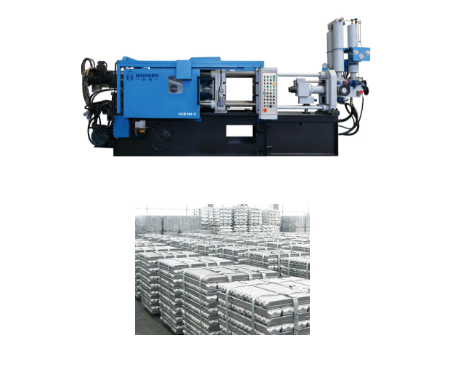
Recommended Parameters for Different Part Types
Porosity control parameters vary by part geometry, wall thickness, and alloy. Here are general guidelines:
| Part Type | Injection Speed (m/s) | Intensification Pressure (MPa) | Mold Temperature (°C) | Vacuum Recommended |
|---|---|---|---|---|
| Thin-wall (<2mm) | 3-5 | 80-100 | 180-220 | Yes |
| Medium wall (2-4mm) | 2-3 | 70-90 | 200-230 | Recommended |
| Thick-wall (>4mm) | 1-2 | 100-120 | 200-240 | Optional |
| Structural/EV parts | 2-4 | 90-110 | 200-230 | Required |
Note: These are starting points. Optimal parameters should be validated through trial runs for each specific mold and alloy combination. HAICHEN provides process optimization support to help customers fine-tune parameters.
Frequently Asked Questions
Q: What is porosity in pressure die casting?
A: Porosity refers to voids or gas pockets within a cast part. It appears in two forms: gas porosity (trapped air/gases during injection) and shrinkage porosity (contraction during solidification). Both weaken the part and can cause field failures.
Q: What is the main cause of gas porosity?
A: The main causes are excessive injection speed (traps air), improper mold venting (air cannot escape), and inadequate cavity evacuation. Using vacuum-assisted casting reduces gas porosity by over 60%.
Q: How does injection speed affect porosity?
A: Too high an injection speed traps air, creating gas porosity. Too low a speed causes premature cooling, leading to shrinkage porosity. The optimal speed depends on part geometry — thin-wall parts need higher speeds (3-5 m/s) than thick-wall parts (1-2 m/s).
Q: What is the best way to control porosity?
A: An integrated approach combining optimized injection parameters, proper mold venting, consistent temperature control (±5°C uniformity), and vacuum assistance delivers the best results. HAICHEN machines integrate all these technologies.
Q: Can HAICHEN machines help reduce porosity?
A: Yes — HAICHEN machines feature multi-stage injection control, real-time process monitoring, vacuum-assisted casting, and intelligent temperature management. A recent case achieved porosity below 0.8% with monitoring that detected vent clog after 8,000 cycles.
Q: What is the acceptable porosity level for die cast parts?
A: For general-purpose parts, porosity below 2% is acceptable. For automotive structural and safety-critical parts, OEMs typically require porosity below 1%. HAICHEN vacuum systems achieve below 0.5% in optimized processes.


