Metallic lightweight materials properties and production includes main types, production methods, microstructure and so on.
Metallic lightweight materials have the characteristics of low density and high strength. They widely use in aerospace, automobile manufacturing, defense industry and other fields.The main properties of these materials include excellent strength, corrosion resistance, good machinability, and excellent thermal and electrical conductivity.
We will analyze the metallic lightweight materials properties and production from below four main aspects:
- Main types of metal lightweight materials
- Production methods of lightweight metal materials
- Metallic lightweight materials Properties
- Aluminum and Magnesium Die Casting Production
- Application of lightweight metal materials
- Case Study of Haichen Mettalic Lightweight Material Solutions
The following is a detailed analysis of the metallic lightweight materials properties and production:
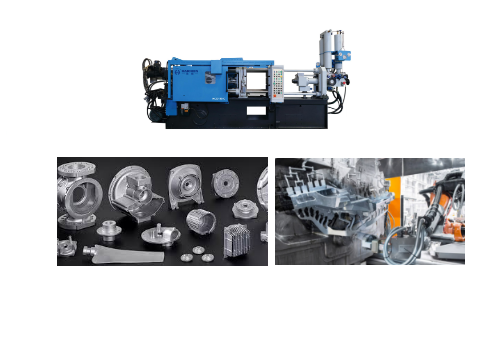
Main types of metal lightweight materials
Metal lightweight materials mainly include aluminum alloys, magnesium alloys, titanium alloys and high-strength steel. These materials widely use in the industrial field due to their low density and high strength:
- Aluminum alloy
- Magnesium alloy
- Titanium alloys
- High-strength steel
Aluminum alloy
Density is about 2.7 g/cm³, with good corrosion resistance and machinability, commonly used in aerospace and automotive manufacturing.
Magnesium alloy
It has the lowest density (about 1.74 g/cm³), high strength and good casting properties, suitable for precision casting.
Titanium alloys
High strength, corrosion resistance, and good fatigue properties, commonly used in aerospace and high-performance industrial applications.
High-strength steel
Although it has a high density, it can be lightweight by optimizing the microstructure. It is suitable for structural parts that require high strength.
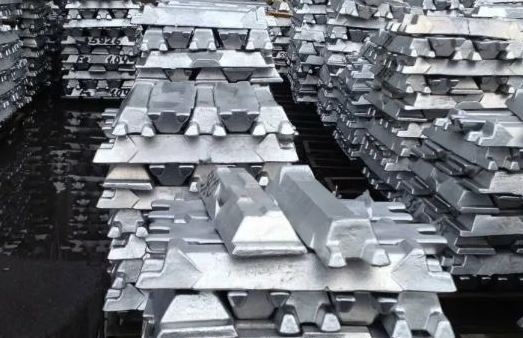
Production methods of lightweight metal materials
There are various production methods for lightweight metal materials. Including traditional processes such as casting, forging, rolling, extrusion, as well as modern 3D printing technology. And thermomechanical processing technology:
- Casting
- Forging
- Rolling and extrusion
Casting
Aluminum and magnesium alloys usually produce by permanent mold casting, high pressure casting or sand casting.
Forging
Titanium alloys and high-strength steels are made into complex shaped parts through cold or hot forging processes.
Rolling and extrusion
Aluminum and titanium alloys produce into sheets and profiles through rolling and extrusion processes.
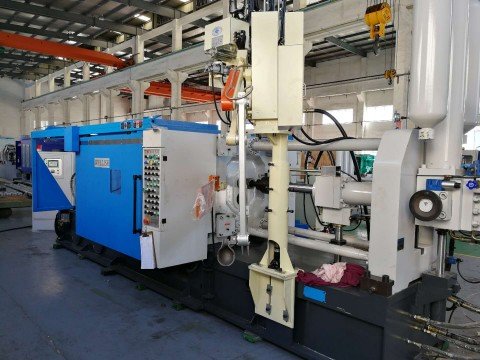
Metallic lightweight materials properties
The properties of lightweight metal materials are closely related to their microstructure.
By adjusting the pore size, pore spacing and distribution, the mechanical properties of the material can be significantly changed.
Different lightweight materials have unique density, strength, and cost characteristics. Choose based on application needs.
- Aluminum Alloy Properties
- Magnesium Alloy Properties
- High-Strength Steel Properties
Aluminum Alloy Properties
- Density about 2.7g/cm³, one-third of steel, significant weight reduction
- Tensile strength 250-350MPa, higher specific strength than common steel
- Good corrosion resistance, forms dense oxide layer
- Thermal conductivity 200-230W/(m·K), excellent heat dissipation
- Moderate cost, mature recycling, best overall value
Magnesium Alloy Properties
- Density about 1.8g/cm³, 30% lighter than aluminum, lightest structural metal
- Specific strength similar to aluminum, but lower absolute strength
- Excellent damping properties, good vibration and noise reduction
- Outstanding electromagnetic shielding for electronic housings
- Poor corrosion resistance, needs surface protection
- Higher cost, higher raw material price wave
High-Strength Steel Properties
- Density 7.8g/cm³, same as common steel, but strength 2-3 times higher
- Tensile strength 800-1500MPa, used for critical safety parts
- Relatively low cost, forming processes
- Good weldability, easy to join with body structures
- Less weight reduction than light metals, but strength obvious advantages
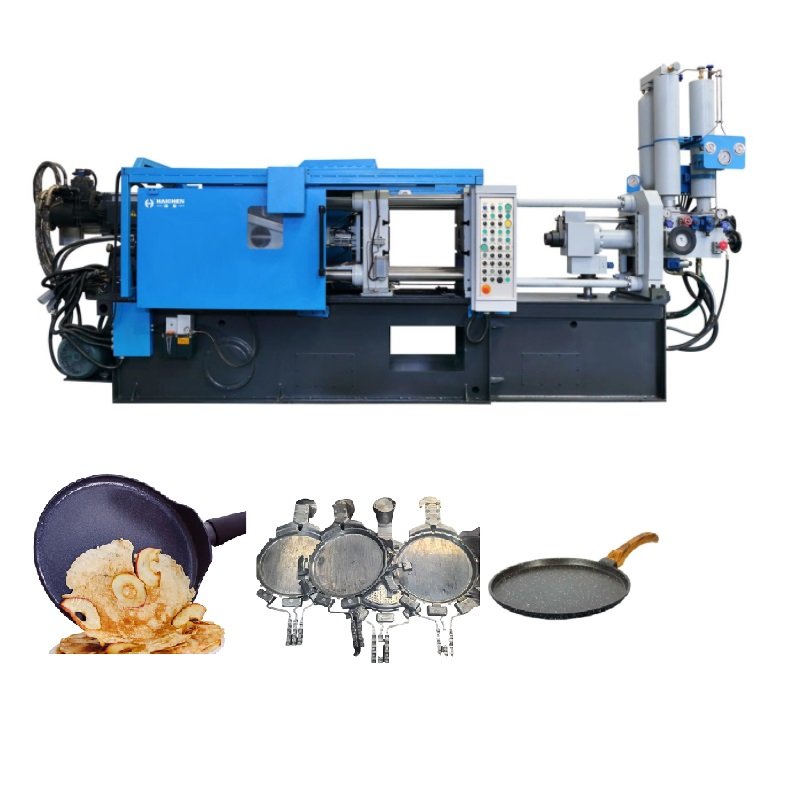
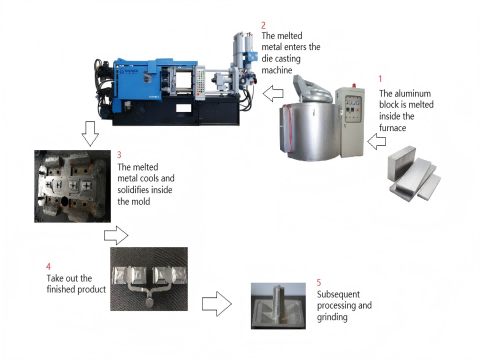
Aluminum and Magnesium Die Casting Production
Aluminum and magnesium are the main lightweight materials for die casting. The process offers high efficiency and control cost.
Aluminum Die Casting Process
- Casting temperature 660-700°C, needs cold chamber machines
- Injection speed 2-5m/s, injection pressure 40-80MPa
- High-vacuum die casting reduces porosity, supports heat treatment
- Typical parts: engine blocks, transmission housings, steering knuckles, battery housings
- Production efficiency: cycle time 60-120 seconds, good for high volume
Magnesium Die Casting Process
- Casting temperature 650-680°C, needs cold chamber with gas protection
-easy to oxidation and combustion, melting and casting require inert gas shielding - Injection speed can be higher than aluminum, good for thin walls
- Typical parts: instrument panels, seat frames, laptop housings
- High safety requirements, needs fire suppression and explosion protection
Die Casting Adaptability for Lightweight Materials
- High fluidity design: thin walls need optimized gating for complete filling
- Temperature control: uniform mold temperature reduces stress and distortion
- Vacuum assist: lowers porosity, improves internal quality
- Heat treatment: T5/T6 processes improve mechanical properties
Post-Processing of Castings
- Machining: remove gates and flash, finish key dimensions
- Surface treatment: anodizing for aluminum, conversion coating for magnesium
- Heat treatment: solution and aging improves strength and hardness
- Inspection: X-ray, ultrasonic, leak testing
Application of lightweight metal materials
Lightweight metal materials have shown wide application potential in many fields due to their lightweight and high strength characteristics:
- Aerospace
- Automobile manufacturing
Aerospace
Aluminum alloys and titanium alloys are widely used in aircraft fuselages, engine components and spacecraft structures.
Automobile manufacturing
Magnesium alloys and aluminum alloys are used in body panels, chassis components and engine components, which help reduce vehicle weight and improve fuel efficiency.
Metallic lightweight materials occupy an important position in modern industry due to their unique properties and broad application prospects. Future research will further promote their application and development in more fields.
Case Study of Haichen Mettalic Lightweight Material Solutions
HAICHEN offers die casting machines optimized for aluminum and magnesium lightweight materials, helping customers achieve efficient production.
Customer Background and Production Needs
- A cookware company plan to produce aluminium pot, no bubbles over high temperature
- Large size, thin walls, high leak-tightness requirements
- Needed high production efficiency to meet vehicle assembly demand
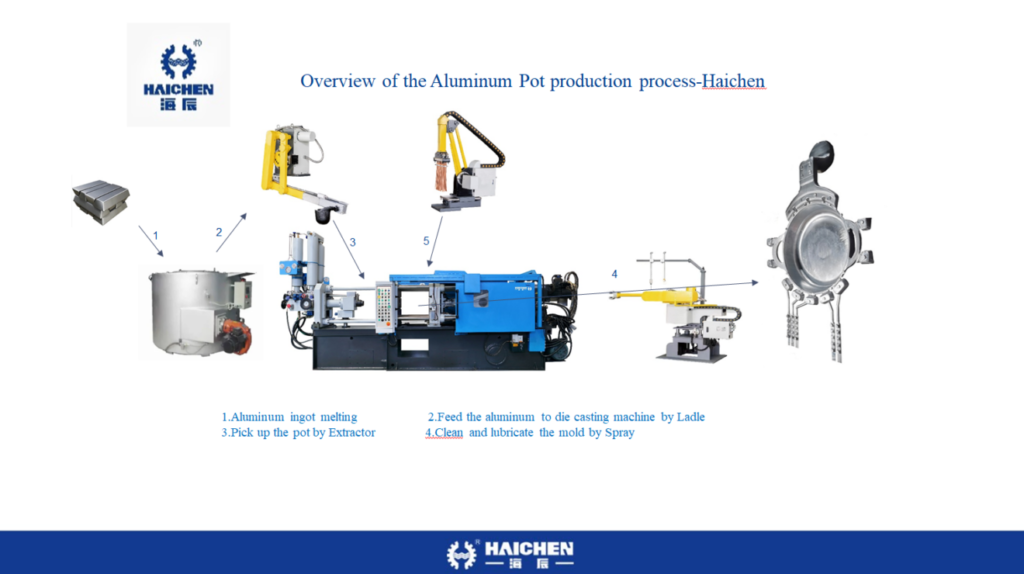
HAICHEN Die Casting Solution
- HAICHEN HCL series ultra-large cold chamber machine, clamping force 680 tons
- Design with one cavity mould
- Intelligent temperature control, melt wave ±3°C
Process Optimization and Quality Assurance
- Mold flow analysis optimized gating, ensuring thin-wall regions fill completely
- Vacuum assist reduced porosity below 1%
- Post-heat treatment tensile strength 320MPa, meeting structural requirements
Results Achieved
- No gas bubbles over 400℃
- Smooth and firm to the surface
- Casting yield 96%, significant scrap cost reduction
HAICHEN Lightweight Material Die Casting Advantages
- High-vacuum system supports leak-tight battery housing production
- High-rigidity platen ensures precision for large thin-wall parts
- Process database increasing experience for various lightweight materials
- Full technical support from material selection to mass production
Haichen die casting machine
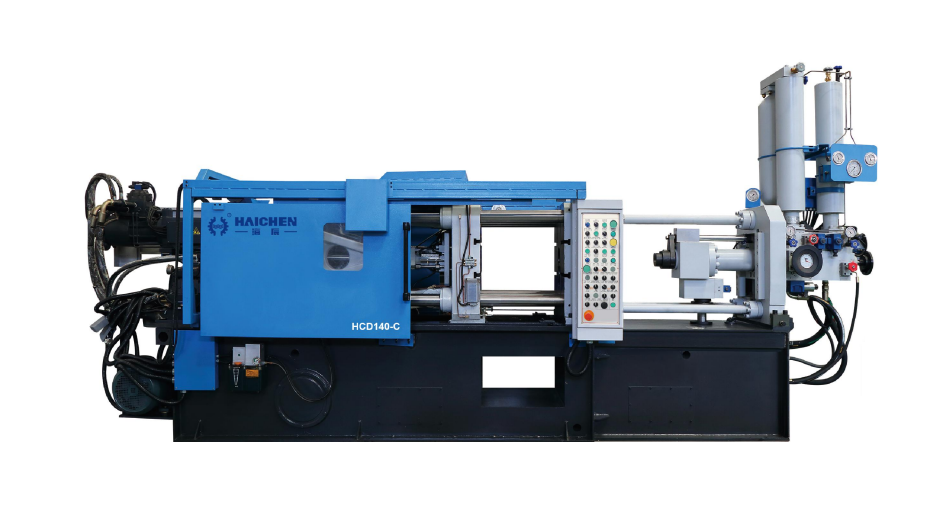
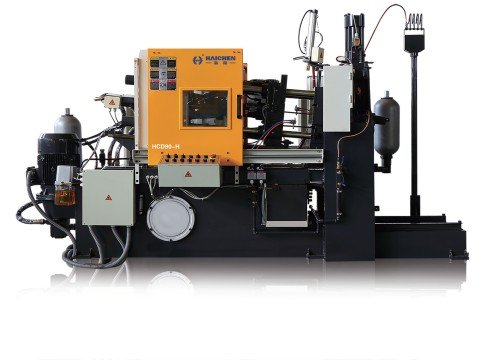
Haichen is one Chinese die casting machine manufacturer for more than 10years. At the same time, we produce both high pressure cold chamber die casting machine and hot chamber die casting machine. They have durable and highly precise features.
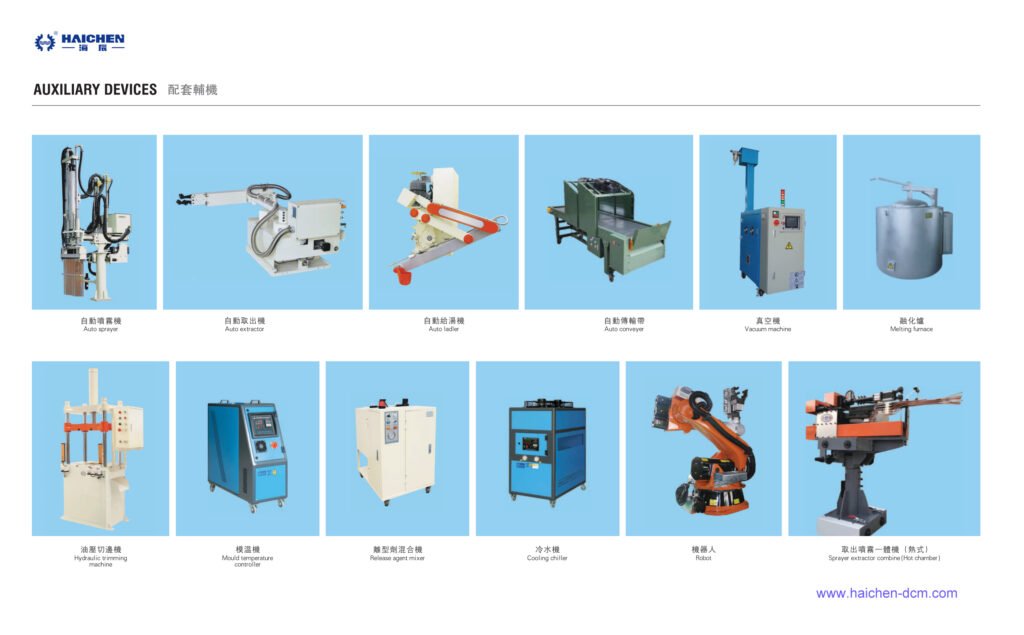
Haichen also produce die casting machine auxiliary equipment. Such as conveyor, vacuum machine, mold temperature controller, industrial robot, sprayer and so on.
We supply cold chamber and hot chamber die casting machine spare parts.
Welcome contact us.


