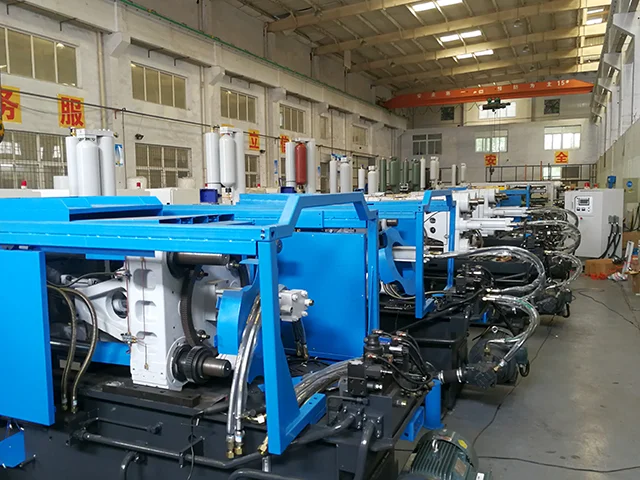
Graphite crucibles and ceramic crucibles each have their own advantages and disadvantages,there is no absolute “better”.
The choice depends on specific application requirements, such as temperature, environment, material type and operating conditions.
Graphite crucibles have obvious advantages in thermal conductivity, high-temperature tolerance in non-oxidizing environments, and efficient melting, but they are fragile and require atmosphere control.
Haichen’s graphite crucible is superior in mechanical strength, thermal shock resistance, and corrosion resistance, and is particularly suitable for oxidizing environments.
High temperature resistance
- Graphite Crucible
- Ceramic crucibles
Graphite Crucible
The typical use temperature range is 1200-1400°C, and it can withstand 2000-2500°C for a short period of time in vacuum or inert environments.
However, in the oxidation environment, oxidation begins at more than 400°C, and oxidation accelerates above 800°C.
Haichen‘s graphite crucible have good high-temperature resistance and can withstand thermal shock and chemical reactions during high-temperature melting processes.
For example, ceramic crucibles are used in investment casting to hold molten metal, ensuring that the metal flows smoothly into the mold.
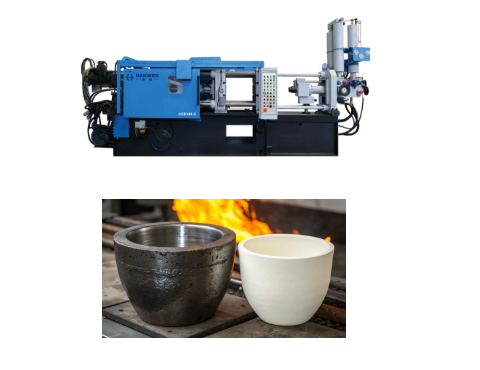
Ceramic crucibles
The main materials of ceramic crucibles include clay, quartz, alumina, zirconium, etc. The manufacturing process involves raw material preparation, mixing, shaping, drying, firing, and post-processing, etc.
It has excellent performance and is widely used in high-temperature and corrosive environments for experiments and industrial applications.
Ceramic crucibles are mainly used in metal casting for melting and insulation.
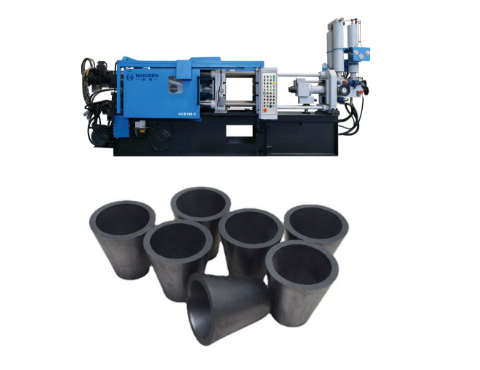
Thermal conductivity and thermal efficiency
- Graphite crucibles
- Ceramic crucibles
Graphite crucibles
Graphite crucibles are ideal for projects that require rapid temperature changes, such as metal melting. Their thermal conductivity is excellent.
With a thermal conductivity of up to 751 W/mK, a small coefficient of thermal expansion, fast and uniform heat transfer.
Melting time can be shortened by 30-50% and energy consumption can be significantly reduced.
These materials’ high-temperature resistance enables them to perform excellently in high-temperature melting processes.
These materials are also used in Haichen’s crucibles, which explains their durability.
Ceramic crucibles
The temperature resistance limit of silicon carbide ceramic crucibles can reach above 1600°C, making them suitable for high-temperature melting and heat treatment processes.
Additionally, silicon nitride ceramic crucibles can operate stably at 1600°C, and some optimized products can be used long-term in 1400°C oxidizing atmospheres.

Thermal shock resistance
- Graphite crucible
- Ceramic crucible
Graphite crucible
The coefficient of thermal expansion is anisotropic, and the ability to resist quench and heat is strong, and it can withstand a temperature change rate of 50°C/min.
Ceramic crucible
Alumina ceramics have poor thermal shock resistance, and the recommended temperature change rate is only 3-5°C/min.
Boron nitride ceramics have excellent thermal shock resistance, which is comparable to graphite.
Chemical stability
- Graphite crucible
- Ceramic crucible
- Boron Nitride
Graphite crucible
Resistant to acid, alkali and salt corrosion, but sensitive to strong oxidizing substances (such as nitrate), and the atmosphere needs to be protected in a high-temperature oxidizing environment.
Ceramic crucible
Alumina: resistant to weak acids and alkalis, but strong alkalis (such as NaOH) will corrode;
Zirconia: extremely chemically inert, resistant to strong acids and alkalis;
Boron Nitride
Virtually does not react with molten metal, making it suitable for oxygen-sensitive applications.
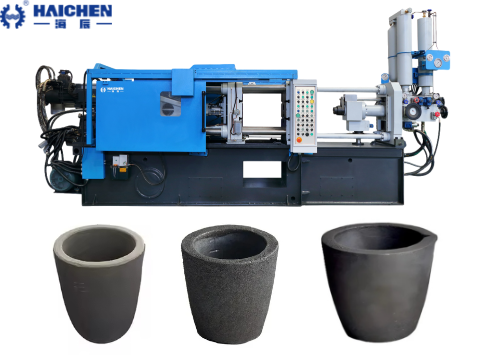
Mechanical strength and longevity
- Graphite crucible
- Ceramic crucible
Graphite crucible
The mechanical strength is low, and it is easily damaged by external impact, but the strength is increased at high temperatures.
The lifespan is usually 3-6 months.
Ceramic crucible
Alumina ceramic has a compressive strength of ≥ 350 MPa and is more resistant to mechanical impact.
The life of silicon carbide composite ceramics can reach 3-5 times that of graphite.
Ceramic crucibles are more durable, especially in high mechanical load scenarios.
Differences in application scenarios
Graphite crucible
It is mainly used for the smelting of non-ferrous metals (copper, aluminum, precious metals), as well as high-temperature sintering in the electronics and battery industries.
Its high thermal conductivity and resistance to metal erosion make it irreplaceable in the metallurgical field.
Ceramic crucible
Silicon carbide ceramic: suitable for smelting aluminum, copper, iron and other metals.
Zirconia ceramics: used in platinum group precious metal melting.
Quartz ceramics: used in glass manufacturing and the semiconductor industry.
Graphite is superior in general metal smelting, and ceramics are more specialized in the field of special materials (such as precious metals, glass).
How to choose right crucible?
Graphite crucibles excel in thermal conductivity and heat resistance, but they are prone to oxidation. Ceramic crucibles offer good stability but may not effectively withstand extreme temperatures as well as graphite crucibles.
Additionally, graphite crucibles are expensive due to their complex manufacturing process and maintenance requirements.
Ceramic crucibles provide a more affordable and equally robust alternative. Graphite crucibles are ideal for applications requiring rapid temperature changes, such as metal melting in die casting.
Their excellent thermal conductivity is a key advantage.
If you still have questions about these two crucibles, please feel free to contact Haichen.
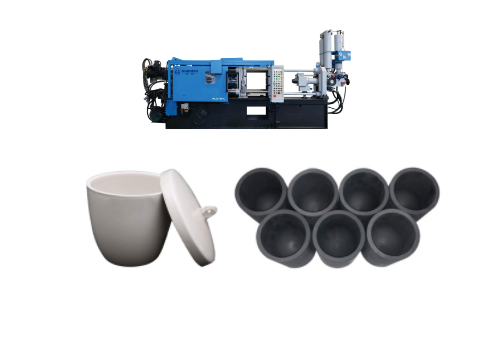
Haichen Graphite Crucible and Ceramic Crucible
Graphite is more versatile, and ceramics are more suitable for specific chemical environments (such as acid-base sensitive experiments).
Graphite crucibles have more advantages in high-temperature, high-thermal conductivity, and industrial melting scenarios.
While ceramic crucibles are irreplaceable in special materials, high-purity experiments, and specific corrosion resistant environments.