Maintenance points for die casting machine PLC include environmental control, hardware checks, program backup, module testing, and fault diagnosis to ensure automation system stability.
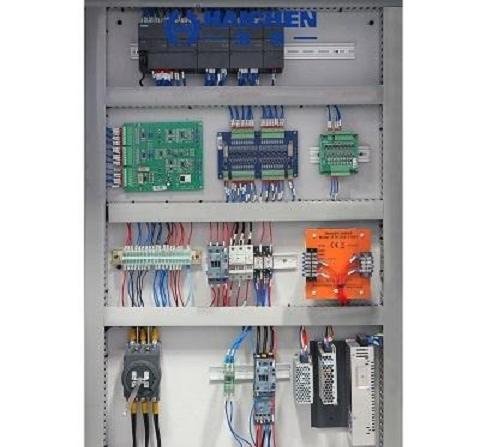
The die casting machine PLC is the core unit controlling production. Its maintenance directly affects machine stability. The following explains three key aspects: environment and hardware, program and data, and communication systems.
This article will explain the environmental and hardware maintenance requirements for die casting machine PLC. Describe key operations for program and data management, cover inspection methods for I/O modules and communication systems. And we will also introduce HAICHEN’s professional advantages in PLC system design and maintenance support.
Maintenance points for die casting machine PLC
Environmental and Hardware Requirements
Input/Output (I/O) Module Maintenance
Program and Data Management
Communication & Networking
Die casting machine PLC supplier: Haichen Machinery
Maintenance points for die casting machine PLC
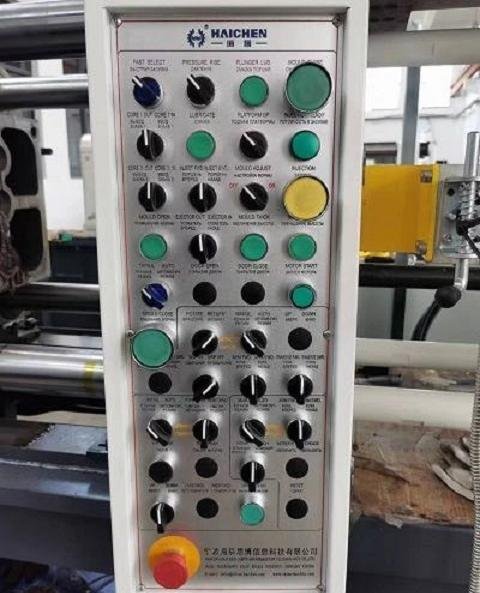
Proper maintenance ensures the machine’s reliability, longevity, and efficiency. Below are the key maintenance points for a die-casting machine PLC:
Regular Inspection & Cleaning
- Dust & Debris Removal: Clean the PLC cabinet and surrounding area to prevent overheating and electrical faults.
- Check Ventilation & Cooling: Ensure cooling fans and heat sinks are functioning properly.
- Inspect Wiring & Connections: Look for loose, corroded, or damaged wires and terminals.
Power Supply Check
- Voltage Stability: Verify that the input power supply matches the PLC’s requirements (typically 24V DC or 110V/220V AC).
- UPS/Battery Backup: Ensure backup power systems (if any) are operational to prevent data loss during power fluctuations.
- Grounding: Confirm proper grounding to avoid electrical noise interference.
PLC Program & Memory Backup
- Regular Backups: Save the PLC program and parameters periodically to prevent data loss.
- Check for Corruption: Monitor for unexpected program changes or faults.
- Firmware Updates: Apply manufacturer-recommended updates if necessary.
Environmental and Hardware Requirements
Die casting shops have high heat, dust, and oil mist. These factors threaten PLC reliability.
Control Cabinet Environment
Keep the control cabinet interior clean. Clean dust from cooling fan filters regularly. Therefore, good ventilation prevents module overheating. Also, ensure door seals are intact. This stops oil mist from damaging circuit boards.
Power and Grounding Check
Check input power voltage stability. For example, 24V DC power should stay within ±5%. Also, confirm ground resistance is under 4 ohms. This eliminates electrical noise interference.
Hardware Connection Status
Check terminal block wiring for looseness or corrosion. Pay attention to power and ground wires. For communication cables, ensure connectors are secure and shielding is grounded well.
Environmental Protection
- Temperature & Humidity Control: Maintain ambient conditions within the PLC’s operating range.
- Protect from Oil & Moisture: Seal the PLC cabinet to prevent oil ingress (common in die-casting environments).
- Vibration Resistance: Secure mounting to minimize vibrations affecting components.
Input/Output (I/O) Module Maintenance
I/O modules connect to field devices. Communication systems enable data exchange. Both need high reliability.
Sensor and Actuator Check
Check proximity switches and pressure sensors for accurate signals. Clean oil from sensor surfaces to prevent false signals. Similarly, check hydraulic valves and motors for timely response.
Communication Cable and Network Monitoring
Check Ethernet and Profinet cables for physical damage. Ensure communication connectors are secure. After that, monitor communication status between PLC and host computers. Handle delays or interruptions promptly.
Signal Testing and Fault Diagnosis
Test I/O signal accuracy periodically using programming software. For example, analog signal deviation should stay within ±1%. For instance, when signals are abnormal, check sensors first.
Inspect Sensors & Actuators
Ensure proximity switches, pressure sensors, and limit switches are functioning correctly.
- Test Digital & Analog I/Os: Verify signal accuracy and responsiveness.
- Replace Faulty Modules: Swap out malfunctioning I/O modules promptly.
Program and Data Management
The program is the logic core of die casting machine PLC. Data loss causes production stops.
Regular Program Backup Strategy
Back up programs immediately after every parameter change. Do a full backup to external storage at least monthly. For instance, use dedicated memory cards or save to a computer.
Data Integrity Verification
Compare running programs with backup files regularly. Monitor system logs through the HMI. Find abnormal data records early. In other words, active monitoring spots potential problems in advance.
Firmware Updates and Recovery Practice
Update firmware when needed following manufacturer advice. Always fully back up existing programs before updating. Similarly, practice parameter recovery regularly. This ensures quick production restoration in emergencies.
Communication & Networking
- Check Communication Cables (RS-485, Ethernet, Profibus, etc.): Ensure no physical damage or loose connections.
- Monitor Network Stability: Look for communication errors or delays in HMI/SCADA interactions.
- Test Remote Access (if applicable): Ensure secure and stable connectivity.
Error Logging & Diagnostics
- Monitor PLC Alarms: Regularly check for fault codes or warnings in the HMI.
- Analyze Historical Data: Review logs to identify recurring issues.
- Reset & Clear Faults: Address errors promptly to avoid cascading failures.
Preventive Replacement of Critical Components
- Relays & Contactors: Replace worn-out components before failure.
- Backup Battery (for RAM storage): Change every 2-5 years to retain memory.
- Capacitors & Power Modules: Inspect for bulging or leakage.
Operator & Technician Training
- Proper Handling: Train staff to avoid accidental parameter changes.
- Emergency Procedures: Ensure correct shutdown/restart protocols.
- Troubleshooting Skills: Familiarize maintenance teams with common PLC issues.
Die casting machine PLC supplier: Haichen Machinery
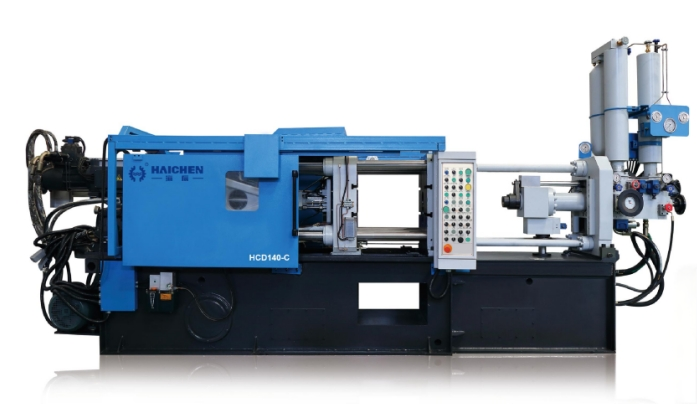
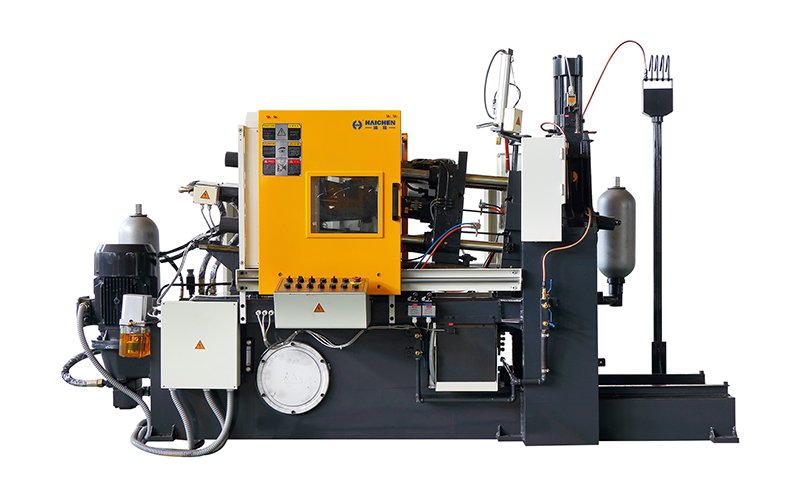
Haichen Machinery is a Chinese company specializing in die casting machines and peripheral equipment, including PLC control systems for die casting automation.
We provide integrated solutions for pressure die casting (aluminum, zinc, magnesium) with a focus on energy efficiency and precision control.
Key Features of Haichen Die Casting Machines with PLC Control
Automation & Control Capabilities:
- Real-time monitoring of injection pressure, speed, and temperature.
- Closed-loop control for high-pressure die casting (HPDC).
- Integration with robots, extractors, and spraying systems.
Machine Range:
- Cold chamber die casting machines (for aluminum/magnesium).
- Hot chamber machines (for zinc alloys).
- Servo-driven models for energy savings.
After-Sales & Support:
- Provides PLC programming, maintenance, and troubleshooting services.
- Customizable PLC logic for specific production needs.
Case Study: Fixing Recurring Mold Clamp Alarms
A customer’s 1000T machine had random “Mold Not Closed” alarms several times weekly. HAICHEN engineers analyzed historical data remotely. They found alarms occurred after 3 hours of continuous operation. The root cause was slight timing changes from increased oil temperature.
Solutions included: upgrading PLC software with adaptive time check; suggesting a cooling loop for the cylinder; increasing lubrication frequency. After implementation, recurring alarms stopped completely. Monthly unplanned downtime dropped by over 80%.
Die casting machine PLC maintenance needs a systematic approach. Environmental control protects the hardware base. Program management ensures data safety. Module testing guarantees signal accuracy. HAICHEN provides high-reliability PLC design and professional support. This ensures stable and efficient die casting production.


