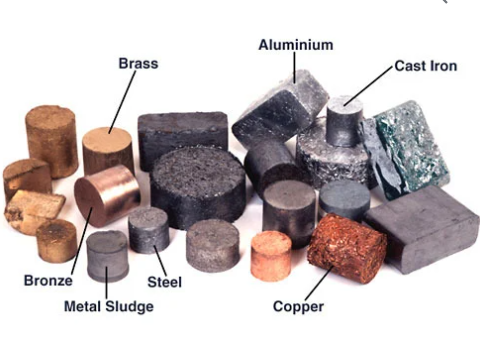
The best alloys for casting includes aluminium-based alloys, copper-based alloys, magnesium alloys and so on.
There is no single “best” alloy for all die casting. The optimal choice balances strength, weight, surface finish, cost, and production speed. Aluminum, zinc, and magnesium alloys each serve different purposes. Success comes from matching the die casting material to the product’s function and production goals. With HAICHEN’s technical support, manufacturers can make informed decisions, avoiding trial and error. This leads to better products, smoother production, and stronger competitiveness in the market.
The selection of the best casting alloy should be based on specific application requirements, such as strength, corrosion resistance, machinability and economy. For example: aluminum-based alloys (such as A380 and A360) are suitable for most industrial applications; Magnesium alloys (such as AZ91) are suitable for areas that require light weight and high strength.; Copper alloys excel in corrosion resistance and thermal conductivity and are suitable for specific industrial uses. In addition, iron-based and titanium alloys also play an important role in specific fields.
The choice of casting alloy depends on the specific die casting materials application requirements, including mechanical properties, corrosion resistance, processing performance and cost. The following is a detailed analysis and recommendation of some of the best casting alloys:
- Aluminum-based alloys
- Zinc alloys
- Copper-based alloys
- Magnesium alloys
Aluminum-based alloys
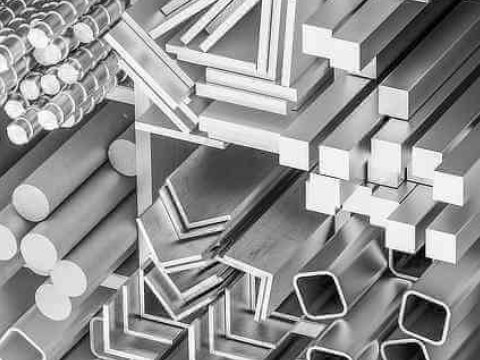
Aluminum alloys are the most widely used materials in die casting. Their lightweight, high strength, good thermal conductivity, and corrosion resistance make them dominant in automotive, electronics, and industrial fields.
- A380 alloy
- A360 and A383 alloys
- Al-Si alloys
A380 alloy
This is one of the most commonly used aluminum alloys.
- And it highly regarded for its excellent comprehensive properties. Including light weight, high strength, high temperature resistance and good corrosion resistance.
- It performs well in complex shapes and thin-walled parts. While maintaining good dimensional stability and thermal conductivity. Making it ideal for casting automotive, electronic equipment and industrial components.
A360 and A383 alloys
- These two alloys perform better in high temperature resistance and hot cracking resistance, and are suitable for parts that require high pressure and high temperature environments.
- A360 alloy excels in pressure sealing and corrosion resistance, while A383 alloy provides higher strength at high temperatures and reduces the risk of hot cracking.
Al-Si alloys
- Such as AlSi7Mg0.3, AlSi8Cu3, etc. These alloys are widely used in the automotive industry and industrial castings.
- Due to their good mechanical properties, corrosion resistance and castability.
- They can obtain better mechanical properties after heat treatment and are suitable for manufacturing wheels, structural castings and suspension components.
Zinc Alloys
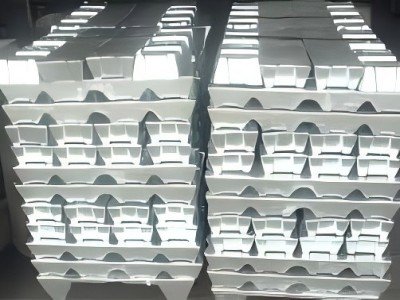
Zinc alloys offer excellent castability, good plating properties, and cost-effectiveness. They dominate small to medium precision parts.
- Zamak 3 zinc alloy
- Zamak 5 zinc alloy
- ZA series zinc alloys
- Typical applications
Zamak 3
Contains 3.5-4.3% aluminum, under 0.25% copper. Excellent fluidity, great dimensional stability, high surface finish. Tensile strength about 280MPa, elongation 10-15%.
- Most widely used zinc alloy, over half of all zinc castings. Good for precision casting, stable dimensions, good plating surface.
- Zamak 3 shrinks about 30 micro-inches per inch, making it the standard for dimensional control.
Zamak 5
Adds 0.7-1.2% copper to Zamak 3. Tensile strength 350-380MPa, hardness 90-100HB, higher strength and hardness.
- Solid shrinkage 30% less than No. 3, better dimensional accuracy.
- Lower elongation, 7-10%. For higher strength parts like gears, connectors, valve bodies.
ZA series
Zamak series has about 4% aluminum, called low-aluminum version.
- ZA series has 8-27% aluminum, called high-aluminum zinc alloys.
- ZA-8 contains 8.0-8.8% aluminum, the only ZA alloy for hot chamber. Tensile strength 360-390MPa, hardness 90-100HB.
- ZA-12 and ZA-27 have higher aluminum, higher strength, but ZA-27 is brittle in as-cast state, better for sand or permanent mold casting.
- ZA series have lower density (5.8-6.3g/cm³), higher specific strength, excellent wear resistance. Typical parts: bearings, bushings, heavy-load wear parts.
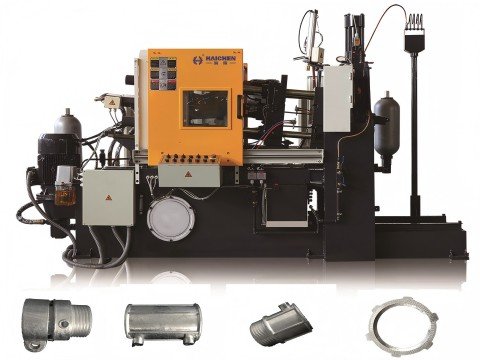
Copper-based alloys
Copper alloys offer excellent electrical conductivity, thermal conductivity, wear resistance, and corrosion resistance. They have unique advantages for specific performance needs.
- Cu-Sn-Zn-Pb alloy
- Copper alloy AB1
Cu-Sn-Zn-Pb alloy
This alloy performs well in sand casting, has good castability, mechanical properties and corrosion resistance, and is suitable for manufacturing precision parts such as valves, pumps and bearings.
Copper alloy AB1
This alloy is suitable for cost-effective sand casting, and has good welding performance and corrosion resistance, and is suitable for marine engineering and petrochemical industries.

Magnesium alloys
Magnesium alloys are the lightest structural metals in use. Density only 1.8g/cm³, about 30% lighter than aluminum. They have irreplaceable advantages in aerospace, automotive lightweighting, and high-end electronics.
- AZ91 alloy
- AZ51 and ZA8 alloys
AZ91 alloy
- This is one of the most widely useS alloy among magnesium alloys.
- And it widely uses in the automotive and aerospace fields. Due to its excellent casting properties, high strength and corrosion resistance.
- However, it is prone to creep at high temperatures. And it has poor corrosion resistance in some cases. But its performance can be improved by improving its composition.
AZ51 and ZA8 alloys
These alloys have higher mechanical strength and ductility, are suitable for hot press casting, and can produce complex parts with high structural strength and appearance.
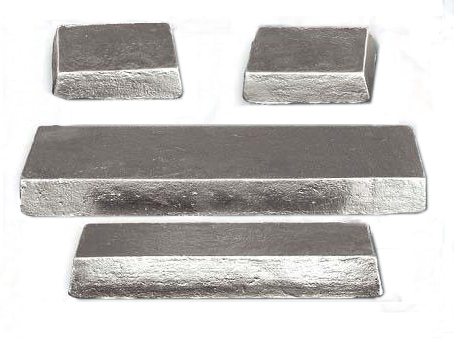
How to choose the best alloy for casting?
Choosing the best alloy requires consider mechanical properties, physical characteristics, process feasibility, and economics. Here is a systematic selection process.
- Mechanical property matching
- Physical property matching
- Process feasibility assessment
- Cost and supply stability
Mechanical property matching
- For high strength, consider aluminum A380 (320MPa) or zinc Zamak 5 (350-380MPa).
- For high toughness (elongation), choose aluminum A356 (5% after heat treatment) or magnesium AM60 (8-12%).
- For high wear resistance, choose ZA series zinc alloys or copper bronze.
- For high fatigue strength, choose heat-treatable aluminum A356, A357.
Physical property matching
- The lightweight, start with magnesium (density 1.8g/cm³).
- With high thermal conductivity, use aluminum (200-230W/(m·K)) or copper (about 380W/(m·K)).
- For EMI shielding, choose magnesium or zinc alloys.
- To corrosion resistance, choose aluminum A356 (low copper) or copper brass/bronze.
Process feasibility assessment
- Regard to high-volume complex thin-wall parts (>100,000/year), choose zinc hot chamber or aluminum cold chamber.
- The large projected area and uneven wall thickness, choose aluminum cold chamber (200-5,000 ton clamping force).
- To high leak-tightness parts like hydraulic valves, choose vacuum-assisted aluminum or zinc.
- For extremely thin walls (<1mm), choose zinc hot chamber.
Cost and supply stability
- Zinc raw material costs are higher than aluminum, but higher production efficiency and longer mold life may give lower per-part cost.
- Magnesium has the highest raw material cost, but 30% weight reduction offsets some cost.
- Copper has the highest cost, only for irreplaceable conductivity or wear applications.
- Market supply stability: aluminum best, magnesium prices more volatile.
Alloy selection decision framework
- First, list all functional requirements (strength, weight, thermal conductivity, corrosion resistance, etc.).
- Second, screen candidate alloys that meet minimum mechanical and physical properties.
- Third, assess each alloy’s process feasibility for part geometry and production volume.
- Fourth, calculate total per-part cost (material + production + post-processing) for each option. Balance performance and cost to make the final choice.
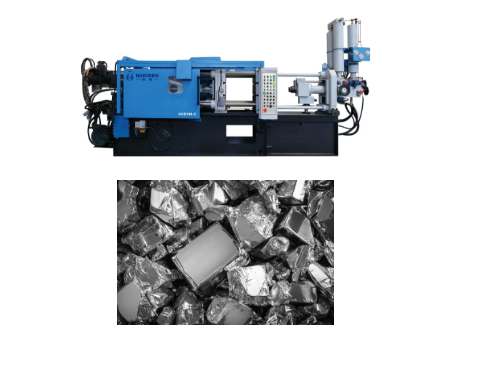
Haichen experience of best alloys for die casting
We can help clients choose the right alloy and machine for optimal results.
- Change alloys for aluminium Auto Part
- Optimize production for a metal electronics cover
Change alloys for aluminium Auto Part
One of Haichen clients made an engine mount from a standard aluminum grade. The part was strong but heavy, and the client wanted to reduce weight. HAICHEN engineers suggested switching to a high-strength aluminum alloy suitable for our cold chamber machines. This new alloy allowed for thinner walls without losing strength. The part weight dropped by 15%, and production remained stable on HAICHEN presses.
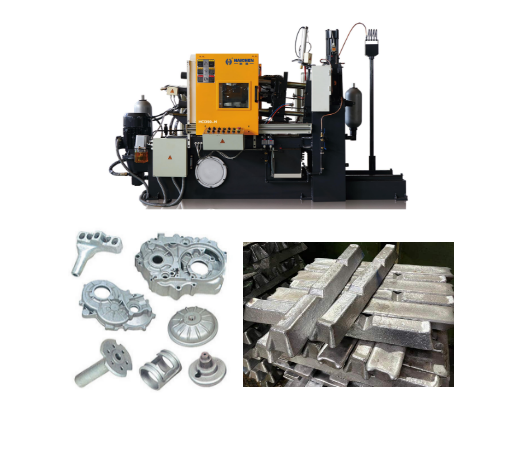
Optimize production for a metal electronics cover
For example, a customer used a generic aluminum alloy. They faced issues with surface finish and long cycle times. After analysis, HAICHEN recommended a different aluminum alloy with better fluidity for their specific part geometry. Paired with process tuning on our machine, this change improved surface quality and reduced cycle time by 10%, boosting daily output.
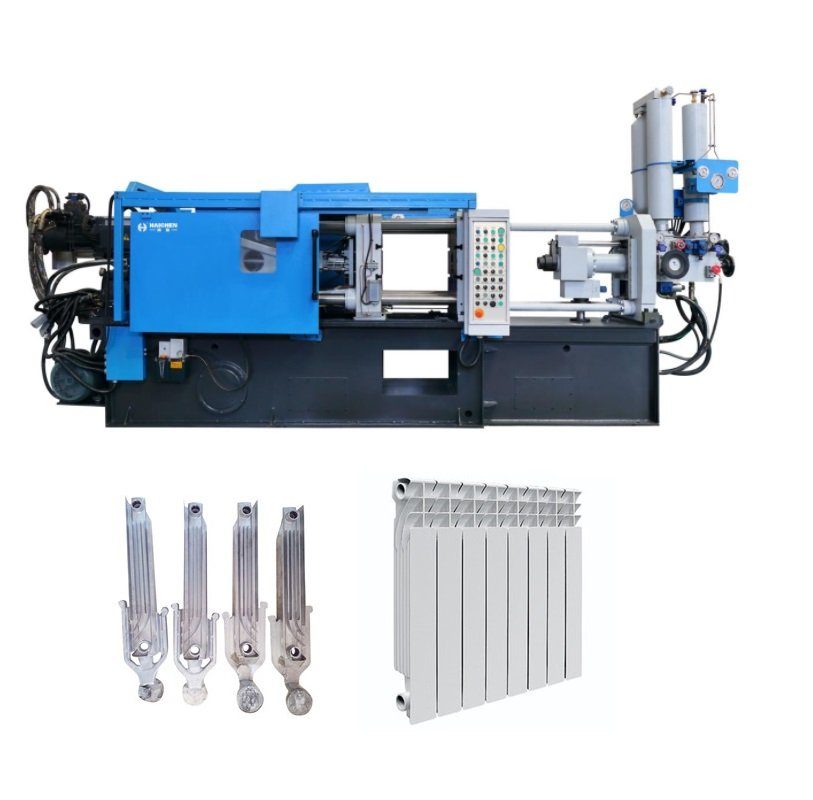
As a professional die casting machine manufacturer, HAICHEN provides more than equipment. Our deep process knowledge helps you select the best alloys for casting your specific products. We understand how material choice interacts with machine settings. This allows us to offer complete solutions that ensure quality, efficiency, and cost-effectiveness for manufacturers in Turkey and beyond.
Haichen die casting machine
At the same time, we produce both high pressure cold chamber die casting machine , hot chamber die casting machine and spare parts. They have durable and highly precise features.
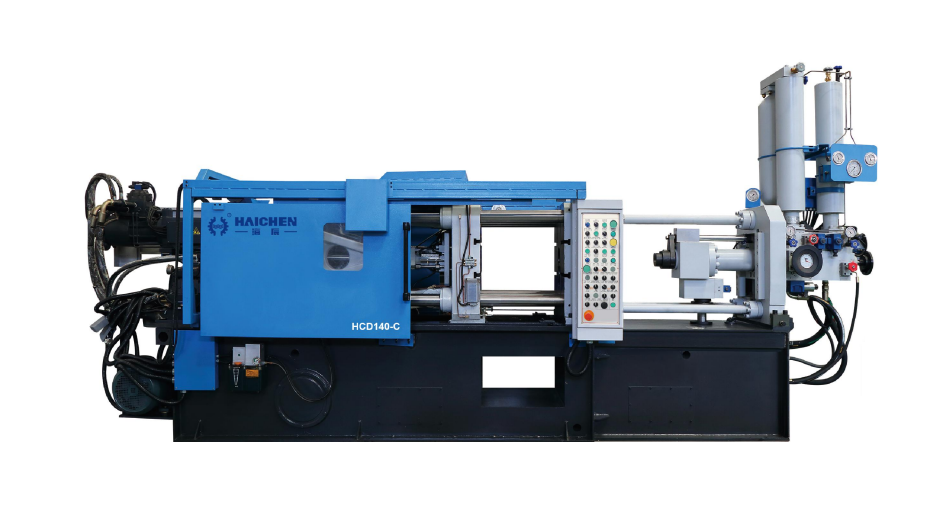
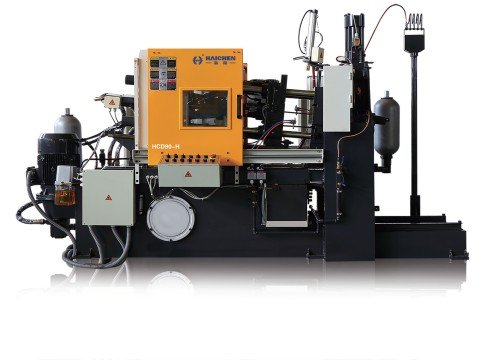
Haichen also produce die casting machine auxiliary equipment. Such as conveyor, vacuum machine, mold temperature controller, industrial robot, sprayer and so on.
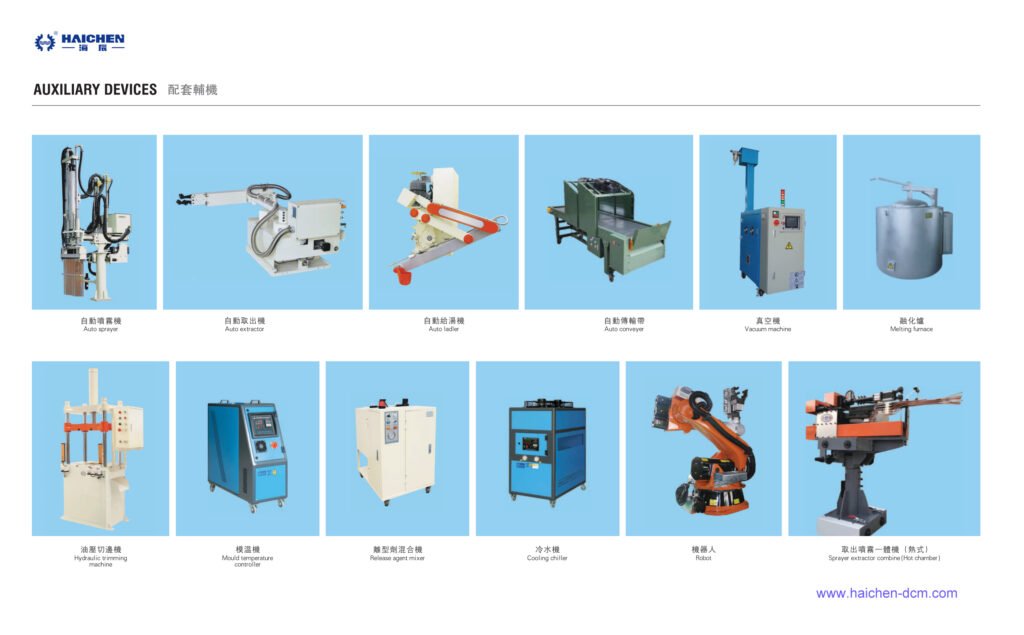
We supply cold chamber and hot chamber die casting machine spare parts.
Welcome contact us.


