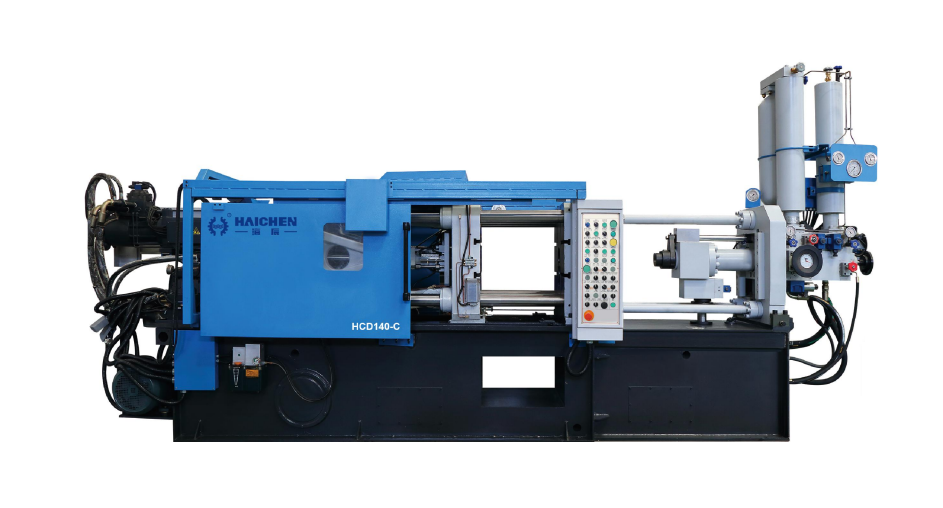
Aluminum die casting is one of the most efficient ways to make complex metal parts — fast, precise, and cost-effective for high volumes. This step-by-step guide walks you through the entire process, from mold prep to finished part.
Aluminum pressure die casting is one of the most efficient manufacturing processes for producing complex metal parts — fast, precise, and cost-effective at high volumes. When properly controlled, the process can achieve yield rates above 98.5% with cycle times under 45 seconds for parts like cookware and automotive components.
At HAICHEN, we have engineered die casting solutions for aluminum components for over a decade. This guide walks you through the complete aluminum pressure die casting process — from mold preparation and injection to ejection, finishing, and quality control — with real production data and defect prevention strategies.
What Is Aluminum Pressure Die Casting?
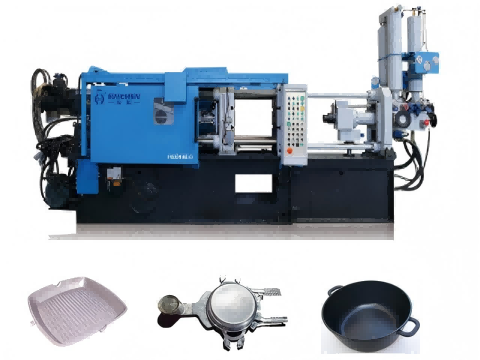
Aluminum pressure die casting is a highly efficient manufacturing process used to produce complex and high-quality metal parts. The process involves injecting molten aluminum into a mold cavity under high pressure, ensuring precise and consistent part production. This method is widely used in automotive, consumer goods, industrial equipment, and electronics industries due to its ability to produce parts with excellent dimensional accuracy, thin walls, and smooth surfaces.
The 4-Step Aluminum Die Casting Process
Step 1 – Mold Preparation and Preheating
Before production starts, the mold must be cleaned, preheated, and lubricated.
Preheating: Operators must preheat the mold to 150-250°C (for aluminum alloys) to prevent thermal shock (cracking from sudden heat) and cold shuts (incomplete filling). HAICHEN machines feature a programmable mold preheat cycle that gradually raises temperature over 30-60 minutes — preventing localized overheating and extending die life.
Cleaning and lubrication: Workers clean the die to remove residual metal, lubricants, or debris from previous castings — ensuring a smooth surface finish. A release agent is then applied to help the part eject easily and protect the die from excessive heat and wear.
Step 2 – Metal Preparation and Injection
Metal Preparation: The aluminum alloy is melted in a holding furnace at 650-700°C (1200-1300°F). Common alloys used in aluminum die casting include:
- A380 – Most common, best castability
- A360 – Best corrosion resistance
- A356 – Best ductility, heat-treatable
Injection: The machine transfers molten aluminum to the shot sleeve, and the machine applies high pressure (100-200 MPa) to force the metal into the die cavity at high speed. Filling happens in milliseconds. High pressure and speed push metal into every tiny detail of the mold — ensuring the part comes out exactly as designed, with crisp edges and smooth surfaces.
Step 3 – Solidification and Cooling
After injection, the metal begins to cool and solidify. The mold’s cooling channels accelerate this process, minimizing cycle time and ensuring consistent part quality. The solidification time depends on the part thickness and the cooling system — typically ranging from a few seconds to about one minute.
HAICHEN machines feature multi-zone mold temperature controllers that cool different mold sections independently, ensuring balanced solidification and minimizing distortion.
Step 4 – Ejection and Trimming
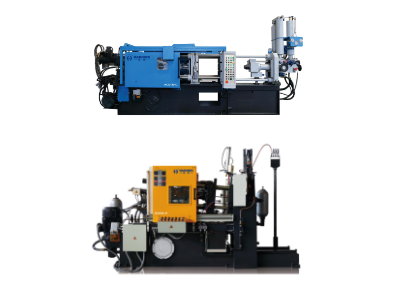
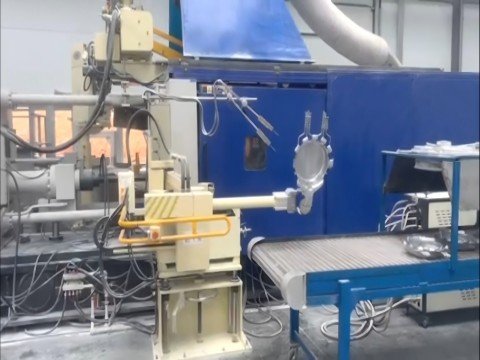
After the part solidifies, the die opens and ejector pins push the part out of the mold cavity. Any excess material such as flash or runners is trimmed from the part. HAICHEN extractors can be integrated to automate this step, reducing cycle time and labor.
Post-Processing and Quality Control
Inspection: Inspectors check parts for defects such as porosity. Non-destructive testing methods like X-ray inspection or ultrasonic testing may be used for critical parts.
Secondary operations: Depending on the application, parts may undergo additional processes such as machining, heat treatment, or surface finishing (e.g., painting, plating) to meet final specifications.
Quality control and recycling: Strict quality control measures ensure consistency. Statistical process control (SPC) monitors critical parameters throughout the process. All scrap and defective parts are collected and recycled — aluminum is highly recyclable with no loss of properties.
Common Defects in Aluminum Die Casting and Their Root Causes
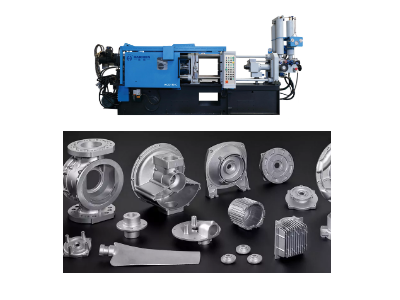
Even with proper process control, defects can occur. Understanding the root causes helps you prevent them before they impact production.
| Defect | Visual / Physical Sign | Root Cause | Prevention / Solution |
|---|---|---|---|
| Porosity | Small holes or voids inside the casting | Air trapped during injection; dissolved gases in the melt; inadequate venting | Optimize venting; reduce first-stage injection speed; use vacuum systems; degas the melt |
| Cold shuts | Visible lines or seams where metal failed to fuse | Low melt temperature; slow injection speed; poor gate design | Raise melt temperature; increase injection speed; redesign gate for smoother flow |
| Shrinkage | Depressions or voids in thicker sections | Insufficient feed metal during solidification; poor cooling channel placement | Improve gate design for directional solidification; add cooling channels to thick sections |
| Soldering | Aluminum stuck to mold surface | High mold temperature; insufficient or poor-quality release agent | Reduce mold temperature; apply adequate release agent; use high-quality lubricants |
| Flash | Thin metal fins at the parting line | Insufficient clamping force; worn mold surfaces; excessive injection pressure | Increase clamping force; repair mold surfaces; reduce injection pressure at end of fill |
| Flow marks | Visible lines or ripples on the surface | Low melt temperature; slow injection speed; poor gate location | Increase melt temperature; increase injection speed; optimize gate placement |
Cost Factors in Aluminum Die Casting
Understanding the cost structure helps you make informed decisions about production volumes and process optimization.
| Cost Component | Typical Range | Key Considerations |
|---|---|---|
| Tooling (Mold) | $10,000 – $100,000+ | Depends on cavity count, complexity, steel grade. Amortized over production volume |
| Die casting machine | $50,000 – $500,000+ | Depends on tonnage (160T to 2000T) and features (servo vs hydraulic) |
| Aluminum alloy (raw material) | $2,000 – $3,000 per ton | Alloy selection (A380, A360, A356) affects cost and properties |
| Electricity (melting + injection) | 0.4 – 0.8 kWh per kg of aluminum | Servo machines reduce energy consumption by 40-60% |
| Labor | Varies by region | Automation (extractors, conveyors) reduces labor cost |
Key cost-saving strategies:
- High-volume production – Tooling cost amortizes over more parts, lowering per-unit cost
- Servo-driven machines – Reduce electricity consumption by 40-60% vs standard hydraulic
- Automation – Extractors, conveyors, and robots reduce labor costs and improve consistency
- Recycling – Aluminum scrap from runners, flashes, and defective parts can be remelted (up to 95% recyclability)
Aluminum Die Casting vs Alternative Processes
Different manufacturing processes suit different applications. Here is how aluminum die casting compares to other methods:
| Parameter | Die Casting | Sand Casting | Gravity Casting |
|---|---|---|---|
| Production speed | Very fast (seconds to minutes) | Slow (hours) | Medium (minutes) |
| Dimensional accuracy | ±0.1mm (high) | ±1mm (low) | ±0.5mm (medium) |
| Surface finish | Smooth, ready for coating | Rough, needs machining | Medium, needs finishing |
| Tooling cost | High ($10,000 – $100,000+) | Low ($500 – $5,000) | Medium ($5,000 – $20,000) |
| Per-part cost at high volume | Very low | High | Medium |
| Wall thickness | 1.5mm – 4mm (thin wall possible) | 4mm – 10mm | 3mm – 8mm |
| Best suited for | High volume, complex shapes | Large parts, low volume | Medium volume, simple shapes |
When to choose aluminum die casting:
Consistent surface finish is require for coating or painting
Production volumes exceed 5,000 – 10,000 parts per year
Parts require thin walls (1.5mm – 3mm) with good strength-to-weight ratio
Dimensional tolerances are tight (±0.1mm or better)
How HAICHEN Machines Improve Aluminum Die Casting
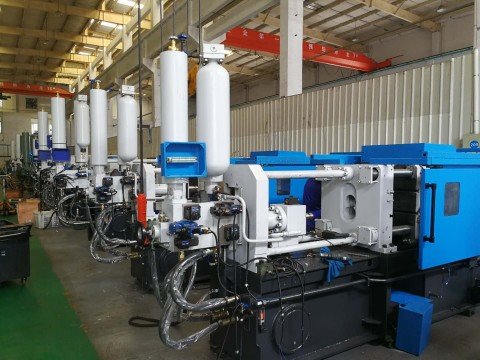
HAICHEN die casting machines are known for stability and precise control. Here is a real production example demonstrating our advantage.
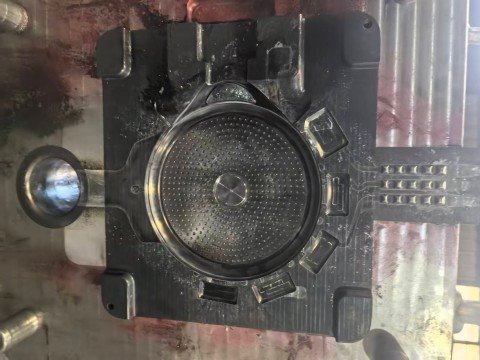
Case Study – 28cm Aluminum Fry Pan Production
Challenge: A customer needed to produce a deep aluminum fry pan (28 cm diameter, 7 cm height) with thin walls (4 mm bottom, 2.8 mm side), smooth surface, and consistent heat distribution — all at high production speed.
HAICHEN Solution:
- Machine: HAICHEN 650-ton cold chamber machine with servo-hydraulic drive
- Mold design: HAICHEN engineers optimized the gate design using a center gate for smooth filling and reduced turbulence
- Injection control: 3-stage injection system (slow sealing → high-speed filling → high-pressure packing) reduced cold marks and shrinkage holes
- Temperature control: Multi-zone mold temperature controllers cooled the bottom and sides evenly, ensuring consistent dimensions and strength
Results:
- Cycle time: Under 45 seconds
- Production yield: Over 98.5%
- Wall thickness: Consistent across all parts
- Surface quality: Good enough for non-stick coating application
This case demonstrates how the right combination of machine, process control, and engineering support directly improves both quality and productivity.
Frequently Asked Questions
Q: What is aluminum die casting?
A: Aluminum die casting is a process that injects molten aluminum into a steel mold under high pressure — producing complex, high-quality metal parts with tight tolerances and smooth surfaces.
Q: What are the most common aluminum die casting alloys?
A: A380 is the most common (general purpose), A360 offers better corrosion resistance, and A356 is heat-treatable for applications requiring high ductility.
Q: How long does an aluminum die casting cycle take?
A: Cycle time ranges from a few seconds to about one minute, depending on part size, wall thickness, and cooling system design. Our HAICHEN 650-ton machine produces aluminum fry pans in under 45 seconds.
Q: Is aluminum die casting expensive?
A: Tooling costs are high upfront ($10,000 – $100,000+), but per-part costs are very low for high-volume production (5,000+ parts per year).
Q: What is the difference between cold chamber and hot chamber die casting for aluminum?
A: Aluminum uses cold chamber die casting because its high melting point damages the injection system in hot chamber machines. Cold chamber machines inject aluminum from a separate shot sleeve, extending equipment life.
Q: How do I choose the right tonnage for my aluminum die casting machine?
A: Required clamping force depends on the projected area of the part and injection pressure. Use this quick guide: small parts (e.g., 100x100mm) need 160-250 tons; medium parts (e.g., 300x300mm) need 400-650 tons; large parts (e.g., 500x500mm) need 800-2000 tons.as good enough for non-stick coating later. The customer’s production efficiency improved a lot.