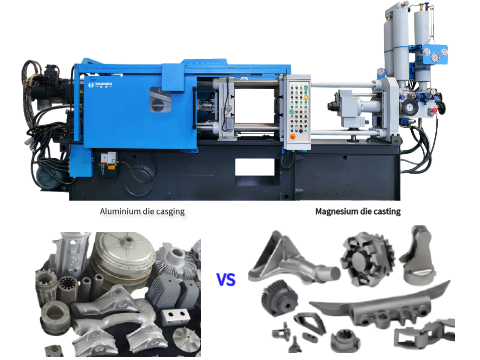
Aluminum vs Magnesium die casting application comparison includes material characteristics, manufacture process, economical, etc.
Magnesium die casting and aluminum die casting each have their own advantages and disadvantages. Magnesium alloys are suitable for areas that need to reduce weight (such as automotive parts). Due to their light weight, high strength and good heat dissipation performance.While aluminum die casting is suitable for a wider range of industrial and construction fields. Due to its low cost and good processing performance.
Aluminum die casting and magnesium die casting each have their own advantages in the application field. Also in their choice depends on specific needs. The following provides a detailed comparison in terms of material properties, manufacturing processes, economy, and application areas. We will compare
- Material characteristics
- Manufacturing process
- Application areas
- Economical
- Future development trends
The main difference between aluminum and magnesium die casting is: aluminum dominates traditional sectors like automotive and electronics with its high strength and good corrosion resistance, while magnesium grows rapidly in high-end equipment and portable devices for its lightweight and excellent damping properties. This article first compares their physical and mechanical properties. It then analyzes their core applications. Next, it explains differences in cost and process requirements. Finally, through the case shows how our machines handle both materials.
Material characteristics
- Density and strength
- Thermal conductivity
- Processing performance
Density and strength
The density of magnesium alloy is about 2/3 of that of aluminum. But the specific strength of magnesium alloy is higher than that of aluminum.
Which means that magnesium alloy can provide higher strength while reducing weight.
However, the yield strength and tensile strength of magnesium alloys are usually lower than those of aluminum alloys.
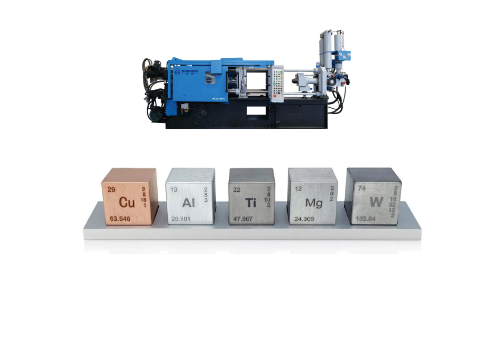
- Aluminum density about 2.7g/cm³, about two-thirds lighter than steel
- Magnesium density about 1.8g/cm³, about 30% lighter than aluminum
- Magnesium is the lightest structural metal in engineering use
- For the same volume, magnesium parts achieve more weight reduction
Thermal conductivity
The thermal conductivity of magnesium alloy is about 1/2 of that of aluminum. Which gives magnesium alloy an advantage in heat dissipation performance.
Such as used in car radiator brackets and dashboard frames.
- Aluminum thermal conductivity 200-230W/(m·K), good electrical conductivity
- Magnesium thermal conductivity 50-80W/(m·K), about one-third of aluminum
- Aluminum better for heat sinks, motor housings needing good heat dissipation
- Magnesium has better insulation, suits applications needing less heat loss
Processing performance
Due to its hexagonal close packed crystal structure, magnesium alloys have poor processing performance. Especially prone to deformation at high temperatures.
In contrast, aluminum has better processing performance. But magnesium alloys can improve their processing performance by optimizing processes such as vacuum die casting.
- Corrosion Resistance
- Aluminum forms dense oxide layer, good corrosion resistance
- Magnesium has poorer corrosion resistance, easy to electrochemical corrosion.
- Magnesium parts often need surface treatment or coatings
- Aluminum performs better in humid and salt spray environments
Manufacturing process
- Melting and Material Handling
- Die casting process
- Vacuum die casting
Melting and Material Handling
- Magnesium Alloys: Melting requires special protection (such as an inert gas blanket) to prevent surface oxidation and combustion.
- The furnace must be designed independently, and waste materials (scrap castings, runner systems) must be returned to the smelter for remelting into ingots and cannot be recycled on-site. New technologies have brought magnesium smelting costs close to those of aluminum.
- Aluminum Alloys: Centralized melting (reverberatory furnaces or stacked furnaces) is typically used, with the molten aluminum transferred to the die-casting machine and waste recycled on-site.
- Aluminum has a lower affinity for steel furnaces, resulting in lower equipment maintenance costs.
Die casting process
Both magnesium alloys and aluminum are suitable for high pressure die casting (HPDC). But magnesium alloys have shorter die casting cycles and longer die life.
In addition, magnesium alloys can be efficiently produced through cold chamber die casting and hot chamber die casting.
Vacuum die casting
- Vacuum die casting technology can significantly reduce the pores in magnesium alloy castings.
- Moreover, improve their mechanical properties and heat resistance.
- Aluminum die casting rarely uses vacuum technology because aluminum has better fluidity. And it does not require additional gas removal.
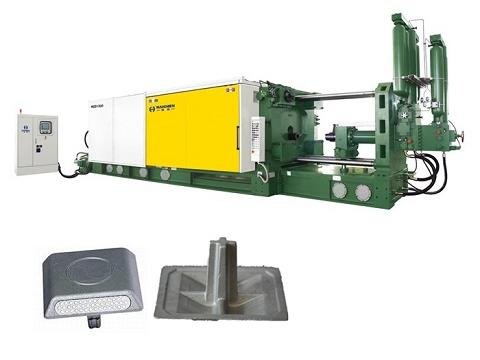
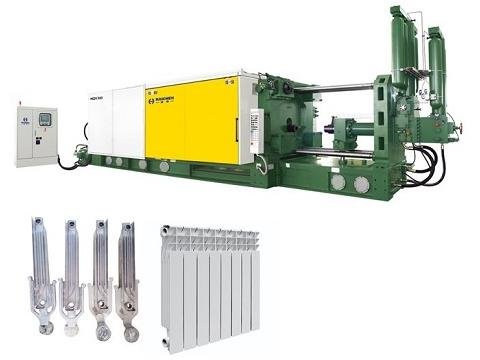
Haichen adopts aluminium die casting technique to produce road studs.
Application areas
Automotive industry
Magnesium alloys widely use in automotive parts due to their lightweight properties. Such as dashboard brackets, seat brackets, steering columns, etc.
- Magnesium alloys also use in complex structural parts, such as gearbox housings and body beams
- In contrast, aluminum die casting is more used for body structural parts and engine parts
Electronics Industry
Aluminum Alloy Die Casting
- Used for housings, heat sinks, power supply casings, etc., with a good surface gloss, but requiring post-polishing.
For example, Haichen adopts aluminum die casting machine techniques to proudce high-quality aluminium alloy cookware pans. Under high-pressure die casting (HPDC) cold chamber die casting machine.with exceptional efficiency and performance.
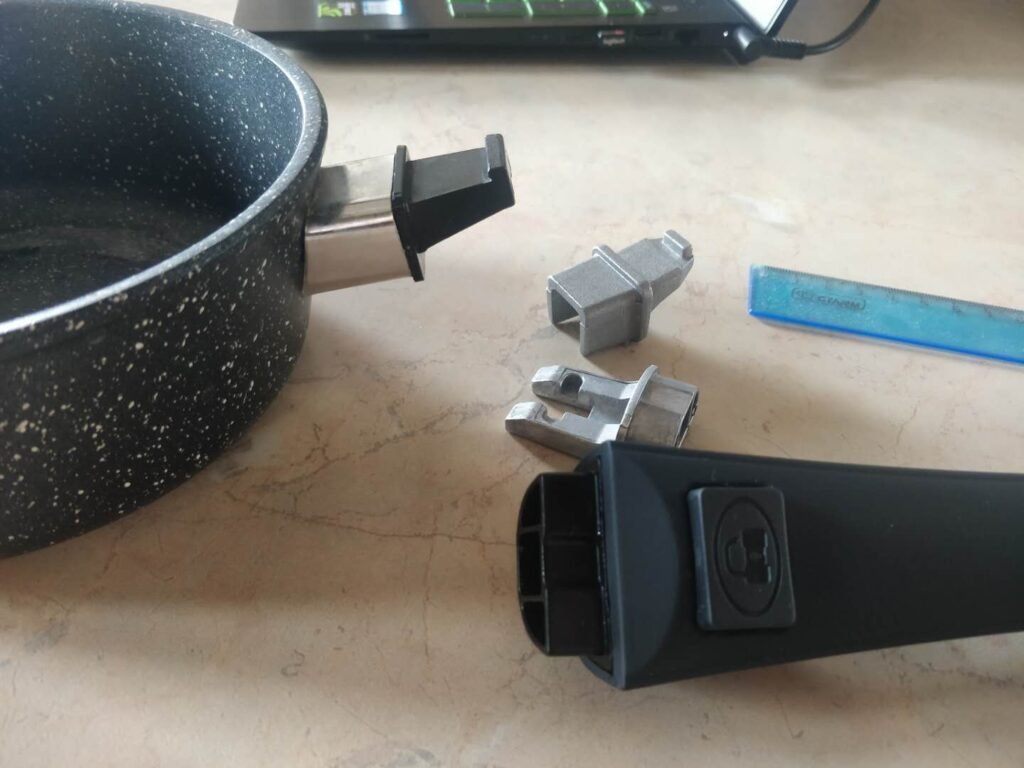
By injecting molten aluminum into precision steel molds under intense pressure, this process enables the rapid production of pots with complex, thin-walled geometries and excellent dimensional consistency. The result is lightweight yet durable cookware with superior heat distribution.
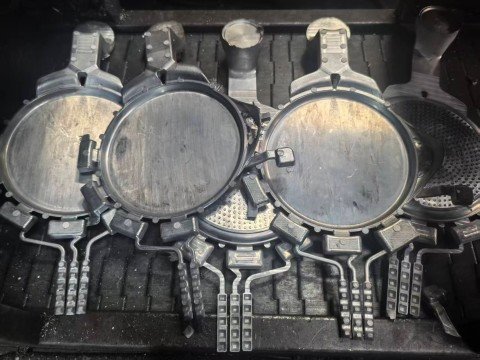
Key advantages include high production speeds, minimal material waste, and the ability to integrate reinforced structures and intricate surface details directly into the casting, ensuring both functional excellence and aesthetic appeal in every piece.
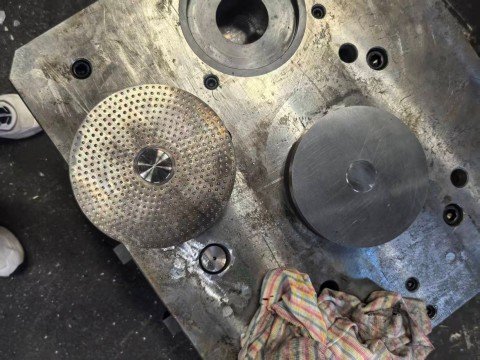
Haichen can also produce replaceable pot bottom moulds for same diameter with different bottom shape pans. That can help save and reduce customer’s significant cost.
Magnesium Alloy Die Casting
- Its lighter and thinner properties make it an ideal choice for laptop casings, camera bodies, and mobile phone cases.
- Its excellent heat dissipation performance (low specific heat capacity) and strong resistance to electromagnetic interference make it suitable for precision electronic equipment.
Aerospace and Military Industry
Aluminum Alloy Die Casting
- Used for aircraft engine casings, aviation instruments, missile components, etc.
Magnesium Alloy Die Casting
- Due to its highest specific strength (except for titanium alloys) and shock absorption properties, it is used in spacecraft components and military equipment.
- However, its poor corrosion resistance requires special treatment.
Other fields
Magnesium alloys
They widely use in consumer electronics (such as mobile phone housings) and aerospace.
Aluminium alloys
Aluminum die casting occupies an important position in construction. In addtionally, it’s in industrial equipment due to its good.
Economical
Cost comparison
The smelting cost of magnesium alloy is relatively high, but its lightweight effect is significant. Every 10% reduction in vehicle weight can save 6%-8% of fuel consumption.
Although aluminum has a lower smelting cost, it is heavier and cannot completely replace magnesium alloy.
Raw Material Cost
- Aluminum price relatively stable, about 18,000-25,000 yuan/ton
- Magnesium price wave harder, usually 20-50% higher than aluminum
- Magnesium production uses more energy, price affected by market
- Aluminum has stable supply, mature recycling system
Energy consumption
The smelting of magnesium alloy requires higher energy. But its energy consumption in the die-casting process is lower than that of aluminum.
- Aluminum casting temperature 660-700°C, higher thermal shock on molds
- Magnesium casting temperature 650-680°C, needs inert gas protection
- Magnesium easy to oxidation and burn, needs stricter melting and casting environment
- Aluminum process more mature, longer mold life
Future development trends
- Magnesium alloys expand application
- Alumniium die casting technology
With the decline in magnesium alloy prices and technological advances (such as vacuum die casting and rare earth modification).
Magnesium alloys expand application
The application range of magnesium alloys will be further expanded. At the same time, the combined use of magnesium alloys and aluminum alloys (such as magnesium-aluminum composites) is also being studied to further improve performance.
Alumniium die casting technology
Aluminum die-casting technology is also being continuously optimized, such as improving production efficiency by improving mold design and process parameters.
In the future, with the advancement of technology and changes in market demand, the application fields of the two materials may further cross and merge.
Haichen die casting machine
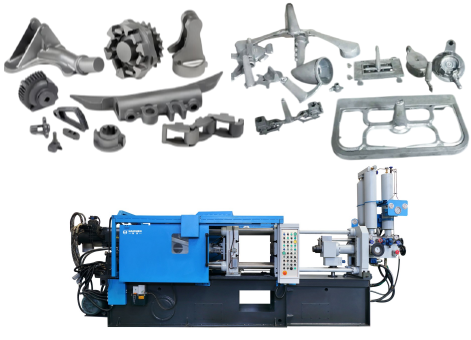
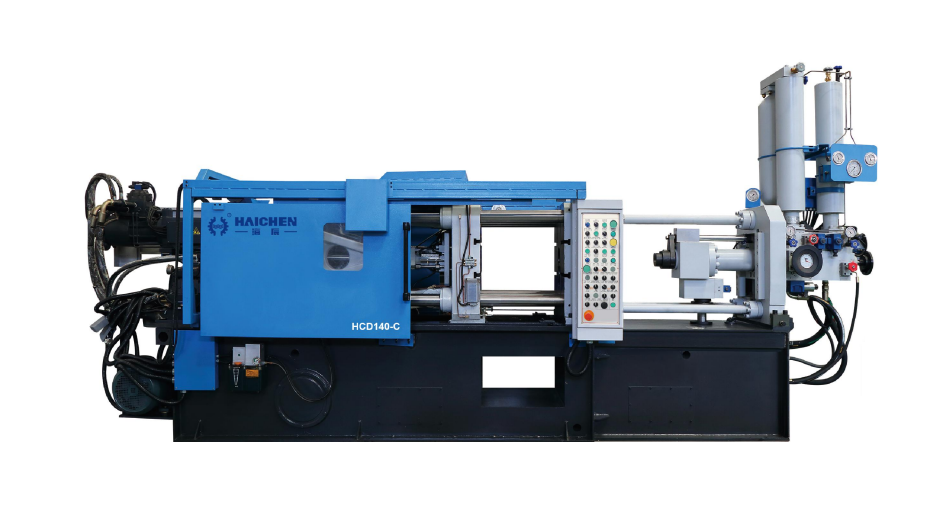
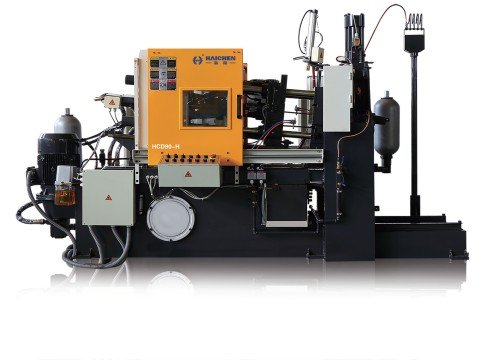
Haichen is one Chinese die casting machine manufacturer for more than 10years. We produce both high pressure cold chamber die casting machine , hot chamber die casting machine and spare parts. They have durable and highly precise features.
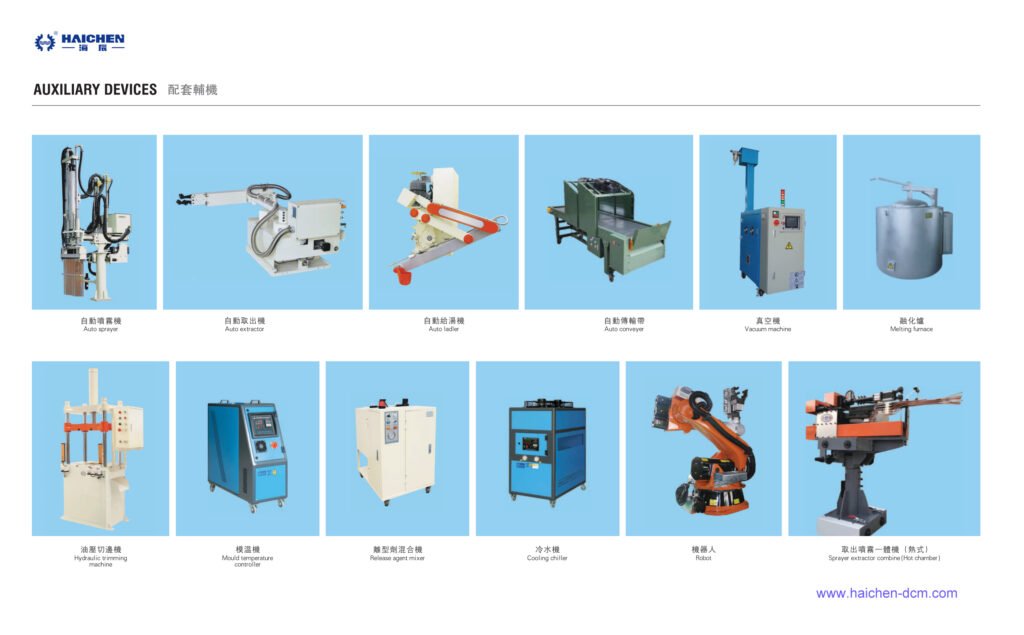
Haichen also produce die casting machine auxiliary equipment. Such as conveyor, vacuum machine, mold temperature controller, industrial robot, sprayer and so on.
We supply cold chamber and hot chamber die casting machine spare parts.
Welcome contact us.


