Die casting machine ladle application is the transfer of molten metal from the furnace to the injection chamber or mold.
In cold chamber die casting, the ladle is an indispensable tool for pouring molten metal from the furnace into the injection chamber and then injecting it into the mold by means of a hydraulic piston.The design and material selection of the ladle is critical to ensure a stable transfer of molten metal and to prevent temperature loss.
A ladle for die casting machine is key auxiliary equipment for precise metal transfer from furnace to injection chamber. Their core functions include measured transfer, safety protection, contamination reduction, and temperature maintenance.
This article first introduces the core functions of ladles in die casting production. It then explains the characteristics and selection key of different ladle types. Next, it analyzes automatic control systems and working processes. Finally, HAICHEN case studies show how our ladle solutions create value for customers.
- Core Functions of Ladles
- Main Types of Ladles
- Key Parameters for Die Casting Machine Ladle Selection
- Working Process of Automatic Ladles
- HAICHEN Die Casting Machine Ladle Application Cases
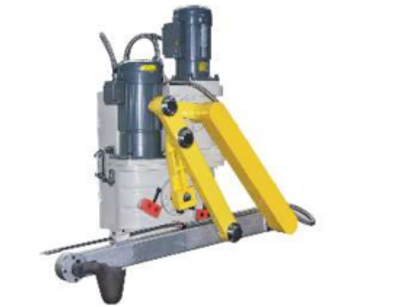
Core Functions of Ladles
Ladles handle the transfer of molten metal from furnace to injection chamber. Their performance directly affects casting quality and process stability.
Measured Metal Transfer
- Precise control of scooping amount ensures consistent metal weight per shot
- Ladle capacity should be about 1.1 times the shot weight to reduce heat loss and temperature fluctuation
- Dosing accuracy directly affects casting dimensional stability and internal quality
Operation Safety
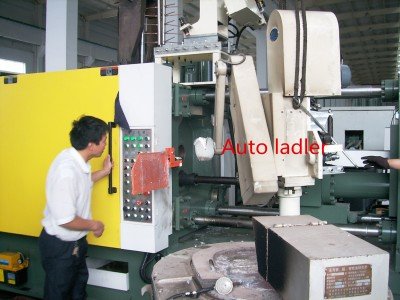
- Automatic ladles keep operators away from hot molten metal, eliminating burn risks
- Long handles on manual ladles allow safe operating distance
- Closed systems reduce splashing and oxidation
Reduce Metal Contamination
- Scooping action skims dross from melt surface, preventing oxides from entering cavity
- Ceramic-coated or composite ladles have non-wet surfaces, preventing metal buildup
- Reduces iron contamination, especially important for aluminum casting
Maintain metal temperature
- Good insulation reduces temperature drop during transfer, keep fluidity
- Ceramic composites have thermal conductivity only 1/15 of cast iron
- Stable temperature control prevents cold shut defects
Main Types of Ladles
Ladles can be classified by material, drive method, and structure. Different types suit different casting scenarios.
By Material
- Cast Iron: Low cost, high strength, needs regular coating, service life about 3 months
- Alloy Steel: H13 tool steel resists high temperature and thermal fatigue, suitable for aluminum
- Stainless Steel: 304/316 grades resist corrosion, suitable for contamination-sensitive alloys
- Ceramic Composite: Corrosion-resistant, non-wet, no preheat needed, life 6-12 months, higher cost
By Drive Method
- Manual Ladles: For small batches or trials, flexible but precision depends on operator
- Pneumatic Ladles: Simple structure, suitable for small to medium tonnage machines
- Servo Automatic Ladles: High repeat accuracy, integrates with machine control
- Robot-Held Ladles: Six-axis robots provide maximum flexibility for complex conditions
By Structure
- Lip Pour Ladles: Classic design, metal pours over the lip, simple structure
- Teapot Spout Ladles: Spout controls flow, reducing turbulence and oxidation
- Bottom Pour Ladles: Metal discharges from bottom, skims surface dross, better quality
- Closed Ladles: keep sealed during transfer, suitable for easy oxidation alloys
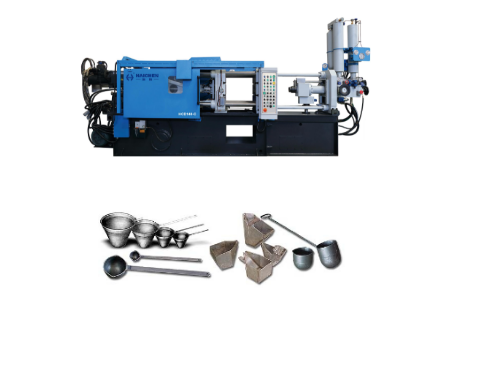
Key Parameters for Die Casting Machine Ladle Selection
Correct die casting machine ladle selection requires considering multiple technical parameters to match machine and process needs.
Capacity Determination
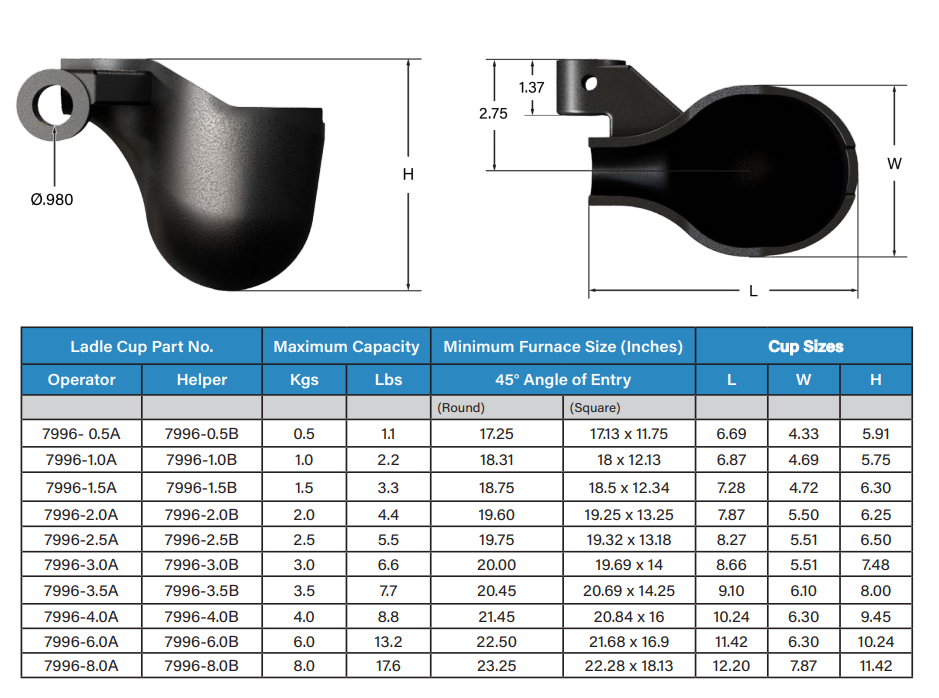
- Ladle capacity ≈ Shot weight × 1.1 (kg)
- Oversize increases metal stay time, causing temperature drop and defect risks
- Undersize needs multiple scoops, reducing efficiency
Size and Mounting
- Must fit furnace opening diameter, ensuring ladle enters bath smoothly
- Mounting interface must match machine or robot. HAICHEN machines preserve standard interfaces
- Working radius must consider furnace and shot sleeve positions
Matching Machine Tonnage
- 100-200 ton machines: Ladle capacity 0.2-2.0kg, cycle time about 12 seconds
- 250-400 ton machines: Ladle capacity 0.4-4.5kg, cycle time about 16 seconds
- 500-650 ton machines: Ladle capacity 4.0-6.0kg, cycle time about 16 seconds
- 800+ ton machines: Ladle capacity up to 8.0kg, cycle time about 18 seconds
Special Process Requirements
- Aluminum casting needs dross skimming to prevent oxide films
- Magnesium casting needs inert gas shielding to prevent combustion
- Vacuum die casting needs sealed ladle systems
Working Process of Automatic Ladles
Modern automatic die casting machine ladles use PLC control and servo drives for precise, stable metal transfer.
Scooping Stage
- Ladle lowers into furnace, adjusts tilt angle to scoop metal
- Servo motors precisely control scoop depth and angle for consistent number
- Some systems skim dross automatically before scooping
Transfer and Pouring Stage
- Ladle lifts and rotates to shot sleeve, same steps with sleeve movement
- Controlled tilt speed achieves laminar flow, reducing turbulence
- Advanced systems integrate with machine control, pouring during final clamping movement
Drip and Reset Stage
- Ladle maintains tilted until last drop falls
- Some designs have drip backflow function to remove residual oxides
- Ladle returns to standby position for next cycle
Intelligent Control Features
- PLC enables multi-speed adjustment, programmable pouring profiles
- Real-time monitoring adjusts scoop parameters for changing metal levels
- Coordinates with mold temperature controllers and extractors for full automation
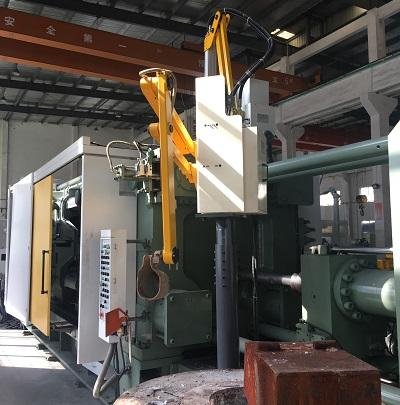
HAICHEN Die Casting Machine Ladle Application Cases
HAICHEN Machinery provides automatic ladle solutions deeply integrated with die casting machines, helping customers achieve precise and stable metal transfer.
Customer Background and Production Challenge
- An aluminum auto parts producer made engine brackets with manual pouring, causing inconsistent metal.
- Castings had dimensional difference and internal porosity from unstable pours, reject rate 12%
- Operators worked near hot metal, creating safety hazards
HAICHEN Ladle Solution
- HAICHEN Automatic Ladle System: Servo-driven, repeat accuracy ±0.5mm, custom capacity
- Deep Integration with HCD Series Machines: Ladle actions coordinated by machine control, millisecond synchronization
- Ceramic Composite Ladle: Pyrotek RFM® material, non-wet surface prevents sticking, life over 6 months
Results Achieved and Value Created
- Pouring precision improved: Weight difference from ±5% to ±1%
- Reject rate dropped: Internal porosity from 12% to 2.5%, dimensional pass rate 97%
- Efficiency increased: Cycle time reduced 8%, output per shift up 15%
- Safety ensured: Operators far away from furnace area, burn risks eliminated
HAICHEN Ladle Technology Core Advantages
- Deep Integration: Seamless connection with HAICHEN machine control for unified parameter setting
- High Precision: Servo drive ensures consistent pours every cycle, foundation for quality castings
- Material Optimization: Recommend best ladle material for different alloys, balancing performance and cost
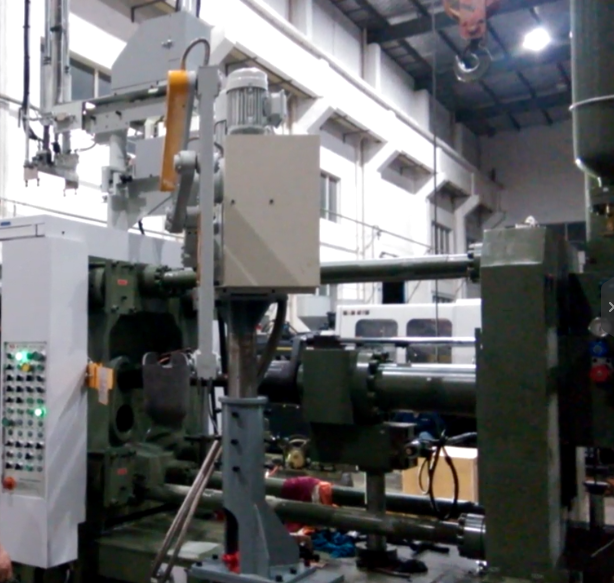
Haichen is known for providing various solutions in die casting operations, including ladles and other auxiliary machinery.
If you need specific technical details about Haichen ladles, such as dimensions, material specifications, or compatibility with particular die casting machines. Welcome to consult us.
Die casting machine ladle is mainly to safely and efficiently transport molten metal from the furnace to the injection chamber, and to ensure the stability of the entire casting process and product quality.


