Boosting Handwheel of the die-casting machine is a crucial control device, which is used to enhance the accuracy and efficiency during the die-casting process.
Hand wheels are circular manual controls that adjust machinery.
They operate through a simple rotation mechanism that can precisely control the movement of a machine component, usually along a threaded spindle or shaft.
The user turns the hand wheel, and the attached mechanism translates this rotary motion into a linear or rotary output, depending on the application.
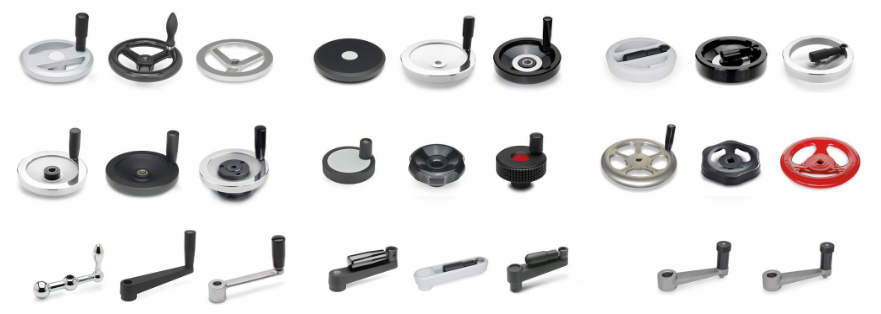
You commonly find them on industrial machines like lathes, milling machines, grinders, and valves in fluid-control systems.
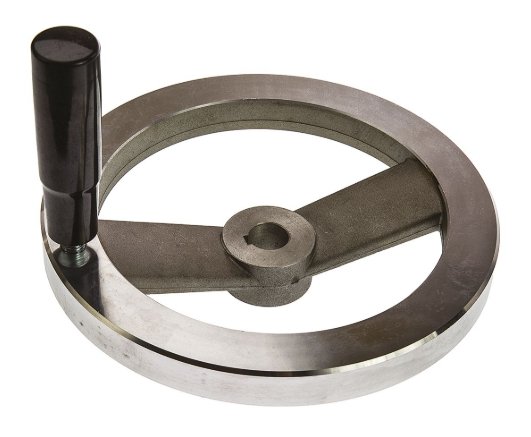
The design of a hand wheel can vary from solid disks to spoked wheels, often with a handle to enhance grip and turning leverage.
This enables operators to make fine adjustments with relative ease and precision, facilitating better control over machine operations.
Hand wheels embody the concept of mechanical advantage, providing an ergonomic and effective means of manual control in various mechanical and industrial settings.
Designs include spoked or dished with a central mounting hole which is either pilot, round, square or keywayed to mount it to the application.
Function and Role of Boosting Handwheel
The Boosting Handwheel is a manual control device that achieves precise control of the injection process during die-casting operations.
It enables the operator to manually apply additional force to the injection unit, thereby achieving precise control of the injection process and improving the quality and consistency of the parts.
The specific operations include adjusting speed and pressure settings, such as by rotating the handwheel to regulate speed and pressure.
This manual control device provides flexibility and precision during the die-casting process, helping to reduce defects and improve product quality.
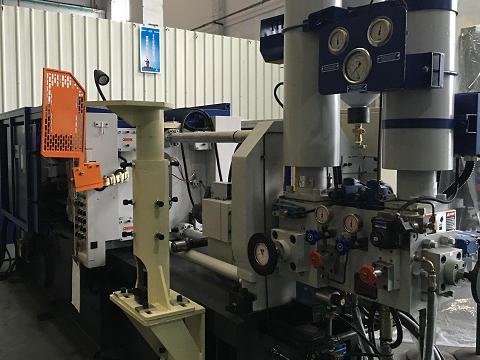
Boosting Handwheel in Die Casting
- Improving Casting Quality
- Enhancing Production Efficiency
- Handling Complex and Thin-Walled Parts
- Reducing Defects and Scrap
- Enhancing Tensile Strength
- Integration with Modern Die Casting Machines
- Safety and Ergonomics
Improving Casting Quality
Boosting cylinders are used to increase the injection pressure during the die casting process.
This helps in filling the mold cavity more effectively, especially for complex shapes and thin-walled parts.
By providing a higher pressure, the metal can flow more uniformly into the mold, reducing defects such as porosity, cold shuts, and misruns.
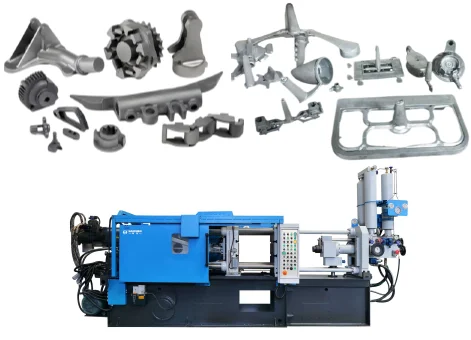
Enhancing Production Efficiency
Boosting systems can significantly improve production efficiency.
By ensuring that the mold is filled quickly and completely, the cycle time can be reduced.
This leads to higher throughput and overall productivity in the die casting process.
Handling Complex and Thin-Walled Parts
In the production of complex and thin-walled parts, boosting cylinders play a crucial role.
These parts require precise control of injection pressure and speed to ensure proper filling and solidification.
Boosting systems provide the necessary pressure boost to achieve this, making it possible to manufacture parts with intricate designs and thin sections.
Reducing Defects and Scrap
By improving the filling and solidification process, boosting systems help reduce defects such as shrinkage porosity, blowholes, and inclusions.
This leads to fewer scrap parts and higher overall yield, which is critical for cost-effective die casting operations.
Enhancing Tensile Strength
In some applications, such as sports goods manufacturing, boosting the injection pressure can lead to improved tensile strength of the die-cast components.
This is particularly important for parts that need to withstand high stress and impact.

Integration with Modern Die Casting Machines
Modern die casting machines often come equipped with advanced boosting systems that can be controlled and monitored in real-time.
These systems can be integrated with sensors and data analytics tools to optimize the process parameters dynamically, ensuring consistent quality and performance.
Safety and Ergonomics
Boosting systems can also be designed with ergonomic features, such as easy-to-use handwheels or automated controls.
This makes the operation safer and more comfortable for workers, reducing the risk of accidents and repetitive strain injuries.
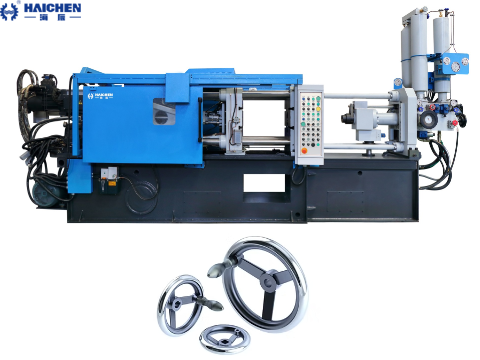
Boosting handwheel and die-casting automation
The integration method of the lifting handle in modern die-casting automation systems mainly lies in its role as a manual control device.
Which is used to precisely adjust the injection pressure and improve operational accuracy.
However, its integration in the automation system is more as an auxiliary function rather than a core control part.
Modern die-casting automation systems rely more on robots, automated control systems.
And AI-driven optimization technologies to achieve higher efficiency and quality control.
The integration method of the lifting handle is more as a bridge between manual control and the automation system, rather than a core component of the automation system.
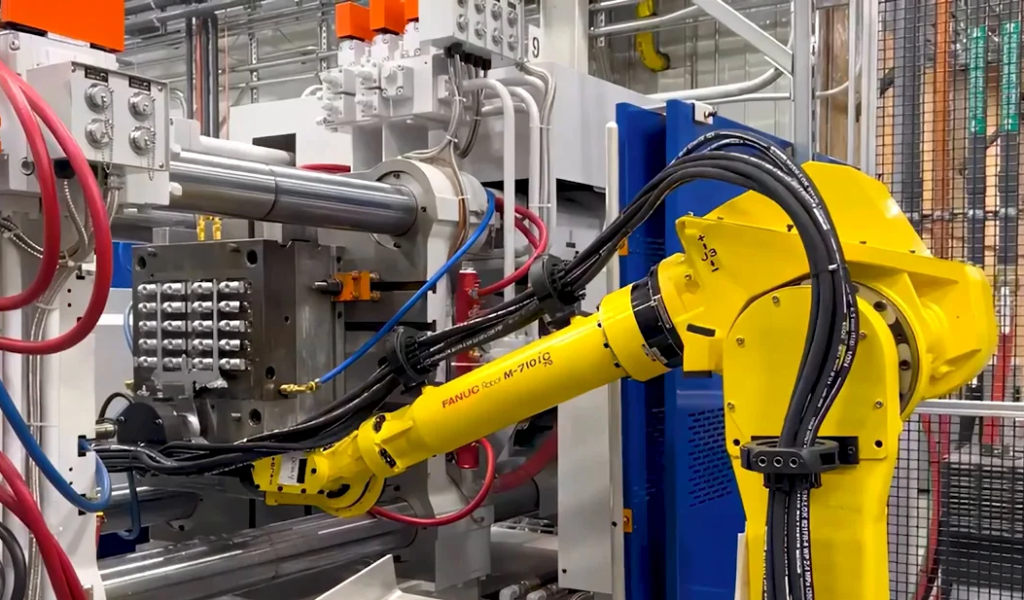
The limitations of handwheels in die casting
The handwheel, as a manual control device, may only serve as an auxiliary or supplementary function in highly automated die casting systems, rather than being the core control component.
For example, Haichen’s die casting machine automation system tends to optimize the die casting process through robot, sensor and AI-driven automated solutions, rather than relying on manual control.
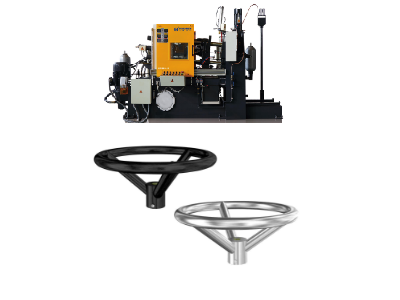
Die casting machine supplier: Haichen Machinery
Haichen Machinery is a supplier of die casting machines and related spear parts.
We specialize in providing die casting production solutions for various materials, including aluminum, magnesium, zinc, and copper alloys.
Our cold chamber and hot chamber die casting machines are used for manufacturing products such as automotive parts, LED lamp shells, radiators, and household appliance components.
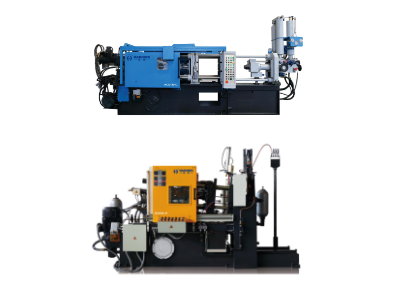
Boosting systems, including boosting cylinders and related components, are essential in die casting operations for improving casting quality.
Enhancing production efficiency, and enabling the production of complex and high-performance parts.


