Cast aluminum Advantages vs. Other Materials: Cast aluminum, in comparison to steel, or iron, is much lighter in weight, and it is also resistant to corrosion. In addition, it possesses a favorable ratio of strength to weight, as well as a high level of thermal and electrical conductivity.
When selecting casting materials, manufacturers must balance part performance, manufacturing cost, and service life. Cast aluminum has emerged as the preferred choice across automotive, aerospace, and electronics industries due to its unique combination of lightweight, high strength, corrosion resistance, and excellent thermal conductivity.
Compared to traditional materials like steel, iron, and zinc, cast aluminum reduces weight by 40-60% while meeting structural requirements. This guide covers the complete cast aluminum advantages — weight, strength, thermal properties, and cost — with real production data from HAICHEN installations.
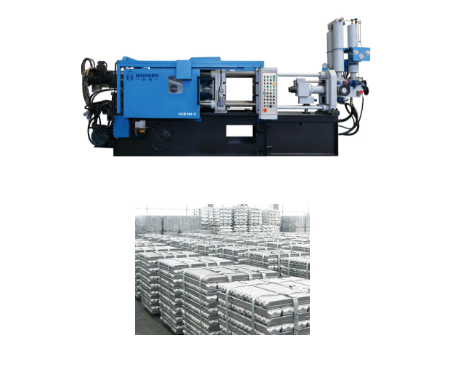
Key Advantages of Cast Aluminum
Lightweight and High Strength-to-Weight Ratio
The die-casting process allows for a density of only 2.7 g/cm³, approximately one-third that of steel, and allows for thin-wall designs of 0.5mm. This significantly reduces component weight. The strength-to-density ratio for die-cast aluminum alloys is 300-450 MPa tensile strength, helping achieve weight and load-bearing requirements for the automotive and aerospace industries.
Excellent Thermal and Electrical Conductivity
Thermal conductivity of aluminum at 96-140 W/(m·K) is over three times that of steel, making it the better choice for electronic device radiators and engine components. Aluminum alloy also provides RF shielding and EMI shielding, protecting precision electronic equipment from outside interference.
Corrosion Resistance and Surface Treatment Flexibility
Aluminum alloy’s natural surface oxide film provides basic protection, and further protection from anodizing and electrophoretic coating enhances corrosion resistance. The high surface finish of Ra 1.6-3.2μm reduces post-processing costs for exterior components.
Production Efficiency and Recyclability
In cold-chamber die-casting, molds are filled at 16-80 m/s with 0.01-0.2 second filling time. Cold-chamber machines achieve 50-90 pieces per hour; hot-chamber machines achieve 400-900 pieces. Molds achieve lifespans of several million pieces, ideal for mass production. Recovery rates of aluminum alloys exceed 95%, significantly lowering raw material costs.
Complex Structure Forming Capabilities
Cast aluminum enables the integration of multiple parts into single components — reducing assembly steps for transmission housings, engine blocks, and mobile phone frames. Thin-wall, one-piece forming capabilities simplify production and improve structural integrity.
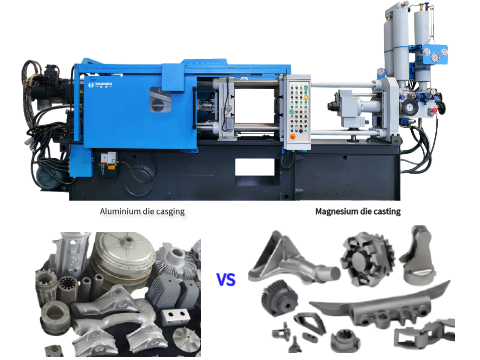
Cast Aluminum vs Other Materials – Performance Comparison
Here is how cast aluminum compares to steel, iron, and zinc across key performance metrics:
| Property | Cast Aluminum | Steel | Cast Iron | Zinc |
|---|---|---|---|---|
| Density (g/cm³) | 2.7 | 7.8 | 7.2 | 6.6 |
| Weight vs aluminum | Baseline | 2.9x heavier | 2.7x heavier | 2.4x heavier |
| Weight reduction from steel | 65% lighter | Baseline | 8% lighter than steel | 15% lighter than steel |
| Tensile strength (MPa) | 300-450 | 400-800 | 150-350 | 350-450 |
| Specific strength (strength/weight) | Excellent | Good | Moderate | Moderate |
| Thermal conductivity (W/m·K) | 96-140 | 45-50 | 40-50 | 80-120 |
| Corrosion resistance | Excellent (self-passivating) | Poor (needs coating) | Poor (needs coating) | Good |
| Machinability | Excellent | Moderate | Moderate | Good |
| Recyclability | 95%+ | 80%+ | 80%+ | 90%+ |
| Relative cost | Moderate | Low | Low | Moderate |
Key insight: Cast aluminum offers the best combination of lightweight, thermal conductivity, corrosion resistance, and recyclability — making it ideal for most automotive, electronics, and structural applications.aft parts and automotive engine components. A206 offers good ductility and resistance to fatigue, making it suitable for parts that undergo repeated stress cycles.
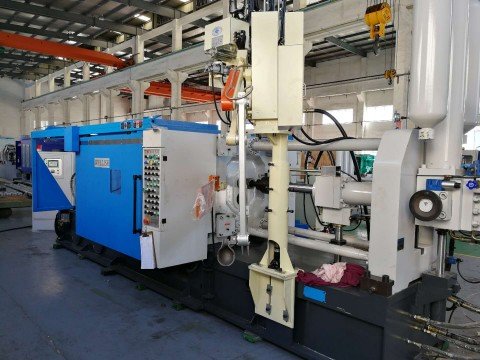
Cast Aluminum Alloy Grades and Applications
Different aluminum alloys serve different applications. Here are the most common grades:
| Alloy | Key Properties | Typical Applications |
|---|---|---|
| A356 | High strength, good ductility, excellent casting characteristics, corrosion resistant | Engine blocks, transmission housings, wheels, structural components |
| A380 | Superior flow properties, good dimensional stability, excellent surface finish | Electronics housings, enclosures, consumer goods, decorative parts |
| A360 | High strength, excellent corrosion resistance, good machinability | Aerospace structural components, high-performance automotive parts |
| A206 | Heat-treatable, high strength, good ductility, fatigue resistance | Aircraft parts, automotive engine components, high-stress parts |
Selection guideline: For general-purpose die casting, A380 is the most cost-effective. For structural applications requiring higher strength, choose A356 or A360. For heat-treated high-strength parts, choose A206.
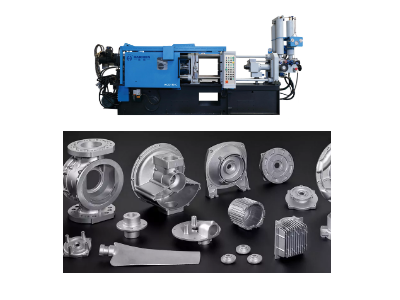
Practical Benefits of Lightweight Design
Replacing steel or iron with cast aluminum achieves 40-60% weight reduction.
In automotive applications, every 100kg weight reduction lowers fuel consumption by approximately 0.3-0.5L per 100km for combustion vehicles and increases electric vehicle range by 5-8%.
For large structural parts such as engine blocks, switching to cast aluminum saves 20-30kg. For small components like steering knuckles, weight reduction reaches 30-50%.
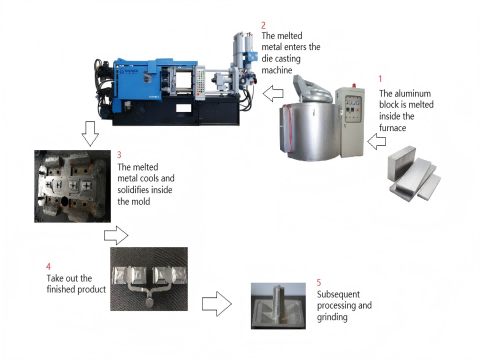
These benefits are even more significant in aerospace, where every 1kg reduction delivers substantial fuel economy gains.n cooled, extracted, and post – processed to ensure high – quality and market – ready products。
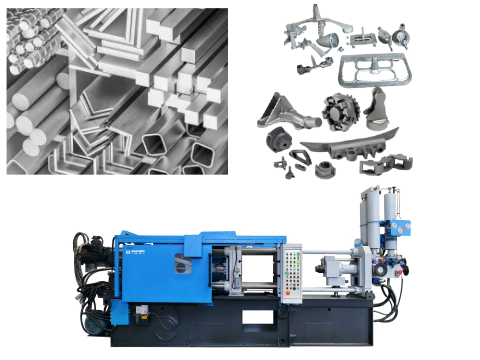
HAICHEN Aluminum Die Casting Solutions
HAICHEN machines are optimized for aluminum casting production, covering a full tonnage range from precision small parts to large structural components. HAICHEN machines ensure thin-wall aluminum castings maintain structural integrity through precise injection control and vacuum assistance.
Key capabilities for cast aluminum:
- Cold chamber machines from 160 to 2000 tons
- Multi-stage injection control for thin-wall parts
- Vacuum assistance for porosity reduction
- Precise temperature control for consistent quality
- Real-time monitoring for process stability
Application Case – Aluminum Road Studs
Challenge: A customer needed to produce aluminum road studs with strict weight consistency and strength requirements for road safety applications.
HAICHEN Solution: HAICHEN HCD 880-C cold chamber machine with four-cavity mold, optimized for thin-wall aluminum casting.
Results:
- Cycle time: 50 seconds
- Daily output: Over 6,800 pieces
- Wall thickness: Uniformly controlled at 3mm
- Weight variation: Less than 1.5% between cavities
- Product yield: 98.2%
- Defect rate: Reduced by 60% compared to previous equipment
- Reliability: 18 months continuous operation without major failure
Additional applications:
Aluminum cookware: Cold chamber die casting for pots and pans with consistent quality
Aluminum radiators: 300-ton automatic cold chamber machine for high-precision casting
Frequently Asked Questions
Q: What are the main advantages of cast aluminum compared to steel?
A: Cast aluminum is 65% lighter than steel, offers 3x higher thermal conductivity, excellent corrosion resistance without coating, and superior machinability. Weight reduction alone can lower fuel consumption by 0.3-0.5L per 100km per 100kg saved.
Q: How much weight can I save by switching from steel to cast aluminum?
A: Typical weight savings range from 40-60%. For large structural parts like engine blocks, switching to cast aluminum saves 20-30kg. For smaller components like steering knuckles, weight reduction reaches 30-50%.
Q: Is cast aluminum more expensive than steel?
A: The raw material cost of aluminum is higher than steel. However, lifecycle cost savings from fuel efficiency, longer service life, lower maintenance, and 95%+ recyclability often offset the initial premium.
Q: What is the best aluminum alloy for die casting?
A: A380 is the most common for general-purpose die casting due to its excellent flow and dimensional stability. A356 is best for structural applications requiring higher strength, while A206 is for heat-treated high-strength parts.
Q: Does HAICHEN offer machines for cast aluminum production?
A: Yes — HAICHEN offers cold chamber die casting machines from 160 to 2000 tons, optimized for aluminum casting with multi-stage injection control, vacuum assistance, and real-time monitoring.
Q: What is the typical yield rate for cast aluminum parts?
A: With proper process control, HAICHEN installations achieve yield rates of 95-98%. Our road studs case achieved 98.2% yield with defect rates 60% lower than previous equipment.


