Aluminum casting is the process of pouring molten aluminum into a mold, cooling it, and solidifying it to take the required shape.
After the extraction and processing of aluminium materials, the next step is their casting into the desired product shape. The forming method for aluminium castings includes pouring molten metal into moulds already prepared to conform to the intended final product configuration. Three forming techniques that are commonly used for making castings include die casting, permanent mould casting, and sand casting.
An aluminum cold chamber die casting machine is production equipment used in making aluminum parts by the process of die casting.
Basic operation process of die casting
- Preparation
- Pouring of Molten Aluminum
- Injection
- Solidification
- Ejection
- Trimming and Post – Processing
Preparation
The die is first preheated to a certain temperature (usually around 200 – 300°C). This helps to reduce thermal shock to the die and also allows the molten aluminum to flow more easily into the cavity. Workers clean any residual metal or debris from the previous cycle to prepare the cold chamber.
Pouring of Molten Aluminum
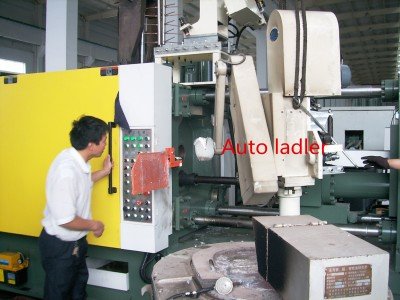
The molten aluminum, which has been melted in a separate furnace and brought to the appropriate temperature (around 660 – 700°C for aluminum), is poured into the cold chamber. Workers carefully control the amount of metal poured to match the volume needed to fill the die cavity.
Injection
Once the molten aluminum is in the cold chamber, the plunger in the injection system starts to move forward. It pushes the molten aluminum through a shot sleeve and into the die cavity at high speed (typically around 2 – 6 meters per second). The high injection speed is crucial to ensure that the molten metal fills the complex and thin – walled parts of the die cavity before it starts to solidify.
Solidification
After the molten aluminum is injected into the die cavity, it begins to cool and solidify. The die remains closed during this stage to allow the metal to solidify into the desired shape. The solidification time depends on the size and thickness of the products. It usually ranges from a few seconds to tens of seconds.
Ejection
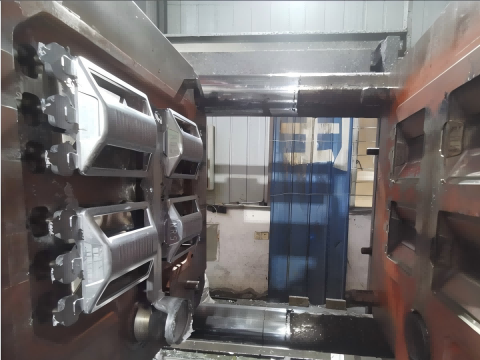
Once the metal has solidified, the clamping unit opens the die. The ejector pins in the ejector die push the solidified casting out of the die cavity. The casting is then removed from the machine, usually by a robot or an operator.
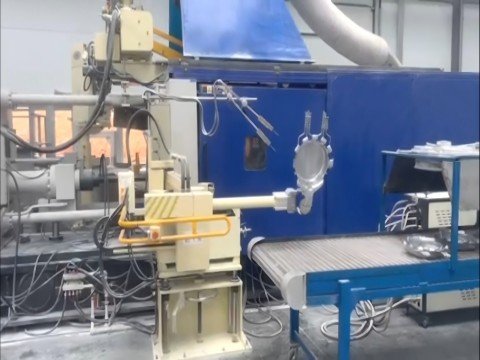
Frying pan production steps
Trimming and Post – Processing
The casting may have some excess metal such as flash or runners. These are usually trimmed off in a separate process. The casting may also undergo further operations like heat treatment, machining or surface finishing depending on the requirements of the final product.
Advantages of Cold Chamber Die Casting Machines
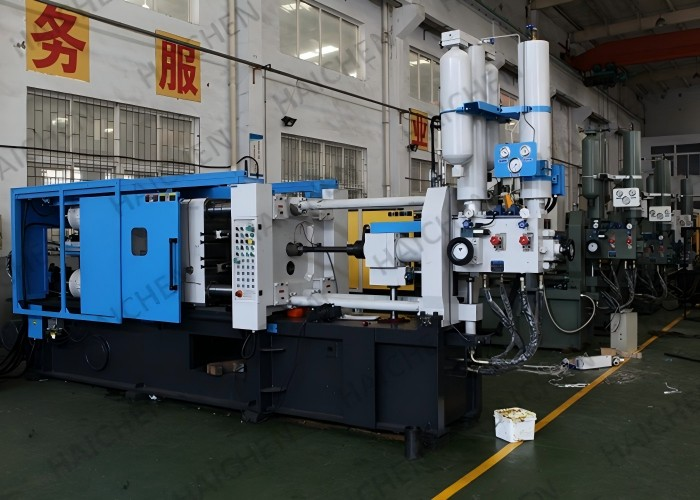
Haichen high pressure cold die casting
- Suitability for Aluminum
- High – Volume Production
- Complex Shapes
Suitability for Aluminum
Aluminum has a relatively high melting point compared to some other metals like zinc. Cold chamber die casting is more suitable for metals with high melting points because it avoids the problem of the metal reacting with the machine components (which can happen in hot chamber die casting).
High – Volume Production
This process is highly efficient for producing large quantities of parts with high dimensional accuracy and good surface finish. The cycle time is relatively short, often just a few seconds per part.
Complex Shapes
The high injection pressure allows for the production of complex – shaped parts with thin walls and intricate details. Industries such as automotive and aerospace find this particularly useful because they need lightweight and complex components.
Aluminum die casting machine supplier: Haichen Machinery
Haichen Machinery is a Chinese company specializing in the manufacturing and supply of aluminum cold chamber die casting machines, hot chamber die casting machines and related equipment. We offer a range of die-casting solutions, including cold chamber die casting machines, which can commonly using for aluminum, magnesium, and other non-ferrous alloys.
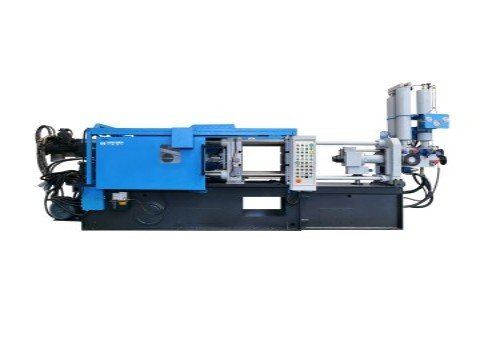
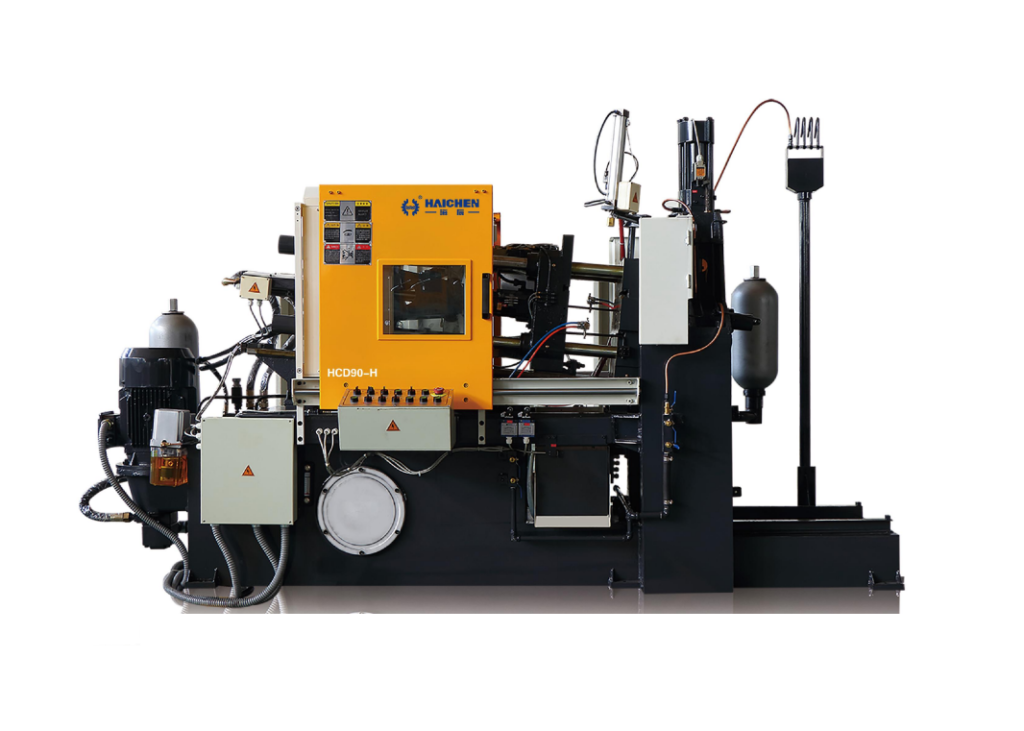
Key Features of Haichen Machinery’s Aluminum Die Casting Machines:
High Pressure & Precision: Suitable for producing complex, high-quality aluminum parts.
Energy Efficiency: Designed to reduce power consumption while maintaining performance.
Automation Compatibility: Supports integration with robotic systems for automated production.
Reliability & Durability: Built with robust materials for long-term industrial use.
Customizable Solutions: Offers machines in different tonnages (e.g., 160T, 250T, 400T, etc.) to meet various production needs.
Aluminum casting is a complex and diverse manufacturing process that involves multiple steps from melting to post-processing.


