The clamping unit main components are the backbone of every die casting machine. This system holds the mold securely closed during high‑pressure injection, preventing molten metal leakage and ensuring defect‑free castings. Without a reliable clamping unit, even the best mold design will fail.
In this guide, we break down the clamping unit main components, explain how each works, compare hot‑chamber vs. cold‑chamber setups, and give you practical selection and maintenance tips. Whether you are an engineer, production manager, or buyer, this article will help you make better decisions.

Understanding the Clamping Unit Main Components
The clamping unit opens, closes, and locks the two mold halves during each casting cycle. Its core functions are:
- Applying sufficient clamping force to counteract the expanding pressure of molten metal.
- Guiding and aligning the moving platen for precise mold closure.
- Ejecting the finished part after solidification.
A well‑designed clamping unit reduces downtime, extends tool life, and boosts overall efficiency. Now let’s examine each of the clamping unit main components in detail.

The 7 Clamping Unit Main Components Explained
Below are the essential clamping unit main components that every die casting professional should know.
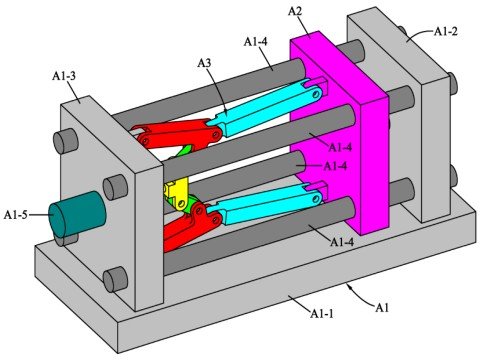
1. Clamping Plates – A Key Clamping Unit Component
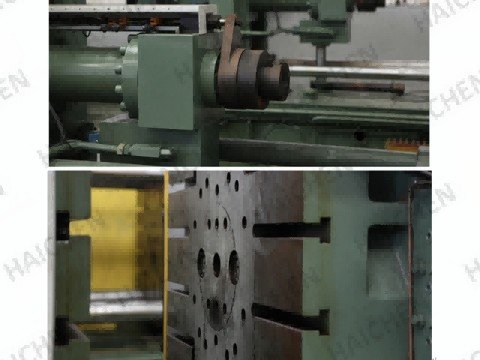
Clamping plates (stationary and moving) are heavy steel plates that hold the mold halves. They provide the rigidity needed to withstand high clamping forces and prevent deflection during injection. The stationary platen is fixed, while the moving platen slides along the tie bars.
Key points:
- Made of high‑grade cast iron or forged steel.
- Precision‑machined surfaces ensure even force distribution.
- Proper plate flatness avoids flash and part distortion.
2. Tie Bars – Critical Clamping Unit Components
Tie bars (tie rods) connect the stationary and moving plates, guide the moving platen, and absorb tensile stresses. Made from high‑strength alloy steel, they stretch elastically and return to original length each cycle.
Why they matter:
- Maintain parallelism between plates.
- Uneven tension causes misalignment and premature wear.
- Regular inspection of tie bar elongation detects fatigue.
3. Clamping Cylinders – Power Source of the Clamping Unit
Clamping cylinders are hydraulic actuators that provide the force to close and lock the mold. They mount on the rear platen and push the toggle mechanism (or directly act on the moving platen). Cylinder size and hydraulic pressure determine the maximum clamping force.
Modern trend: Servo‑driven hydraulics offer energy savings and precise force control.
4. Toggle Mechanism – A Vital Clamping Unit Component
Most die casting machines use a toggle mechanism to multiply force from the clamping cylinder. A series of levers and links convert linear motion into much higher clamping force at the mold.
Advantages:
- Allows a smaller cylinder to generate large tonnage.
- Faster cycle times due to rapid opening/closing.
- Lower overall cost compared to direct‑hydraulic designs.
However, toggles need regular lubrication and adjustment of connecting rod bearings to maintain consistent force.
5. Ejector System – Part of the Clamping Unit
After solidification, the ejector system pushes the part out of the mold. It consists of ejector pins, plates, and hydraulic cylinders. Ejection force must be carefully controlled to avoid damaging thin‑walled or complex parts.
Best practice: Use adjustable ejector stroke and speed for different designs.
6. Mold Alignment System – Ensuring Clamping Unit Precision
Precise alignment of the two mold halves is essential for defect‑free castings. Guide pins and bushings fit into matching holes, ensuring the mold closes exactly in the same position every cycle.
Note: Worn guide pins cause flash and dimensional inconsistency. Replace them during routine maintenance.
7. Lubrication System – Supporting Clamping Unit Longevity
Often overlooked, the lubrication system is vital for clamping unit longevity. It supplies grease or oil to toggle joints, tie bar bushings, and slide surfaces. Automatic systems deliver the right amount at the right time, reducing friction and heat.
Clamping Unit Comparison: Hot Chamber vs. Cold Chamber
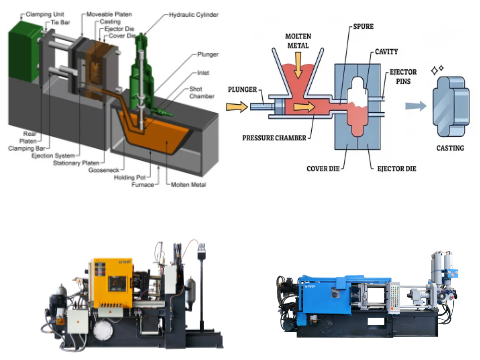
While the basic clamping mechanism is similar, operating conditions differ significantly between hot‑chamber and cold‑chamber die casting machines. The table below highlights key differences and their impact on the clamping unit main components.
| Parameter | Hot Chamber Machine | Cold Chamber Machine | Effect on Clamping Unit |
|---|---|---|---|
| Clamping Force | Lower (zinc alloys have better fluidity) | Higher (aluminum alloys need greater resistance) | Tie rod diameter increased by ~15% in cold‑chamber units |
| Production Rate | Up to 600 cycles/hour | Around 200 cycles/hour | Hot‑chamber toggles require enhanced wear resistance |
| Mold Temperature | ~300°C (zinc) | ~700°C (aluminum) | Cold‑chamber platens need forced cooling channels |
| Typical Alloys | Zinc, magnesium, lead | Aluminum, brass, copper | – |
When selecting a machine, always consider the alloy and part geometry to choose the right clamping system.
Clamping Force Calculation for Your Clamping Unit
Selecting the correct tonnage is a common challenge. While a full calculation requires detailed mold data, use this simplified formula as a starting point:
Clamping Force (tons) ≈ Projected Area (cm²) × Specific Injection Pressure (kg/cm²) ÷ 1000
Example: For an aluminum casting with a projected area of 500 cm² and an injection pressure of 600 kg/cm², the required force is:
500 × 600 ÷ 1000 = 300 tons
However, factors such as metal fluidity, gate design, and machine condition can shift this number. We strongly recommend consulting HAICHEN’s technical team for a precise sizing based on your actual part and production needs.
Common Clamping Unit Issues and Maintenance Tips
Even robust clamping unit main components need routine care. Below are frequent problems and how to prevent them.
| Issue | Possible Cause | Recommended Action |
|---|---|---|
| Insufficient clamping force | Worn toggle bushings or tie bar fatigue | Measure tie bar elongation; replace worn parts |
| Platen deflection | Uneven mold mounting or poor plate flatness | Re‑align mold; check platen parallelism |
| Abnormal opening/closing noise | Lack of lubrication or damaged bearings | Clean and lubricate; inspect bearings |
| Casting flash | Misalignment or low force | Check guide pins; verify hydraulic pressure |
Regular maintenance checklist:
- Annually: Perform a full hydraulic system audit.
- Daily: Lubricate toggle joints and slide ways.
- Weekly: Check tie bar tension and platen parallelism.
- Monthly: Inspect ejector pins for wear.
Why Choose HAICHEN Die Casting Machines?
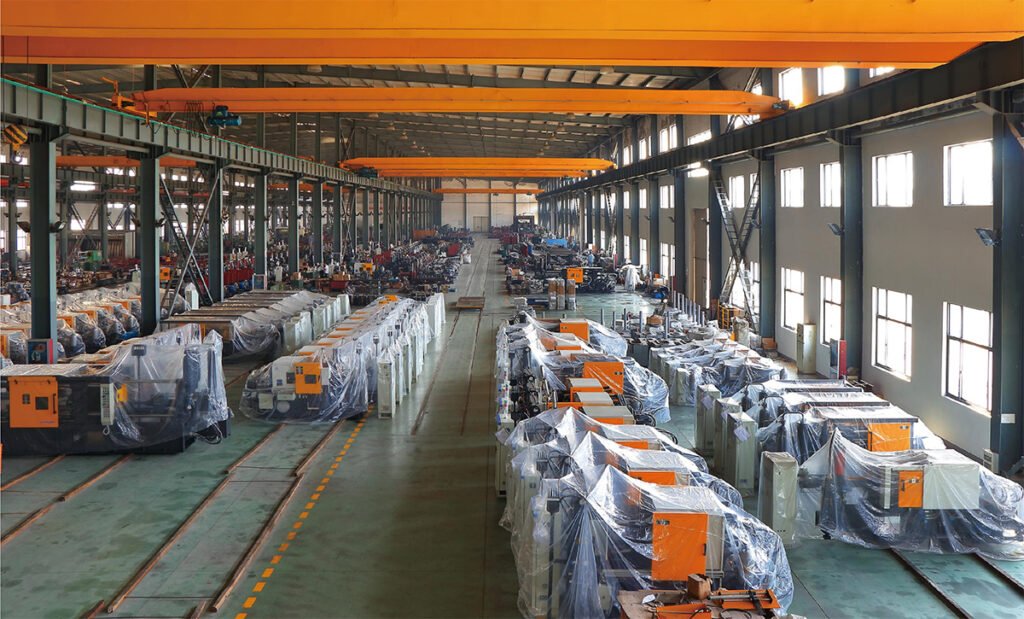
With over 20 years of experience, HAICHEN designs and builds die casting machines that excel in real‑world production. Our clamping unit main components feature:
- Heavy‑duty tie bars made from premium forged steel.
- Optimised toggle geometry for smoother motion and longer life.
- Integrated cooling channels on platens for consistent temperature control.
- Servo‑hydraulic systems that reduce energy consumption by up to 40%.
We offer both hot‑chamber and cold‑chamber models, fully customisable to your tonnage and automation requirements. Every machine is backed by comprehensive after‑sales support, including spare parts, on‑site training, and remote diagnostics.


