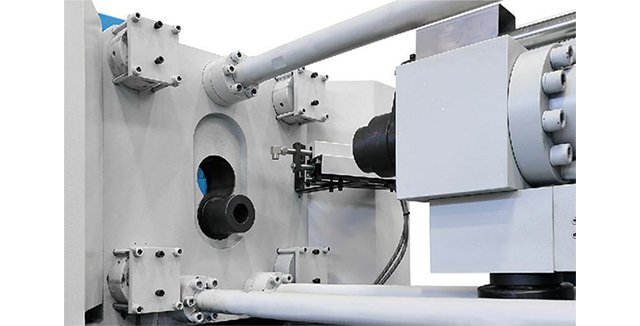
Die casting platen performance affects quality. HAICHEN platens maintain 0.05mm flatness and reduce flash.
The die casting platen is the backbone of your machine — it holds the mold in place, absorbs clamping force, and keeps everything aligned. If it flexes even 0.1mm, you get flash, defects, and scrap. Over a year, that 0.1mm deflection can cost you $50,000+ in scrap and downtime.
At HAICHEN, we have spent over a decade engineering high-pressure die casting platens that maintain <0.05mm flatness even after 1.2 million cycles — without re-machining. This guide explains why platen performance matters, how deflection impacts your bottom line, and how HAICHEN platens deliver measurable results.
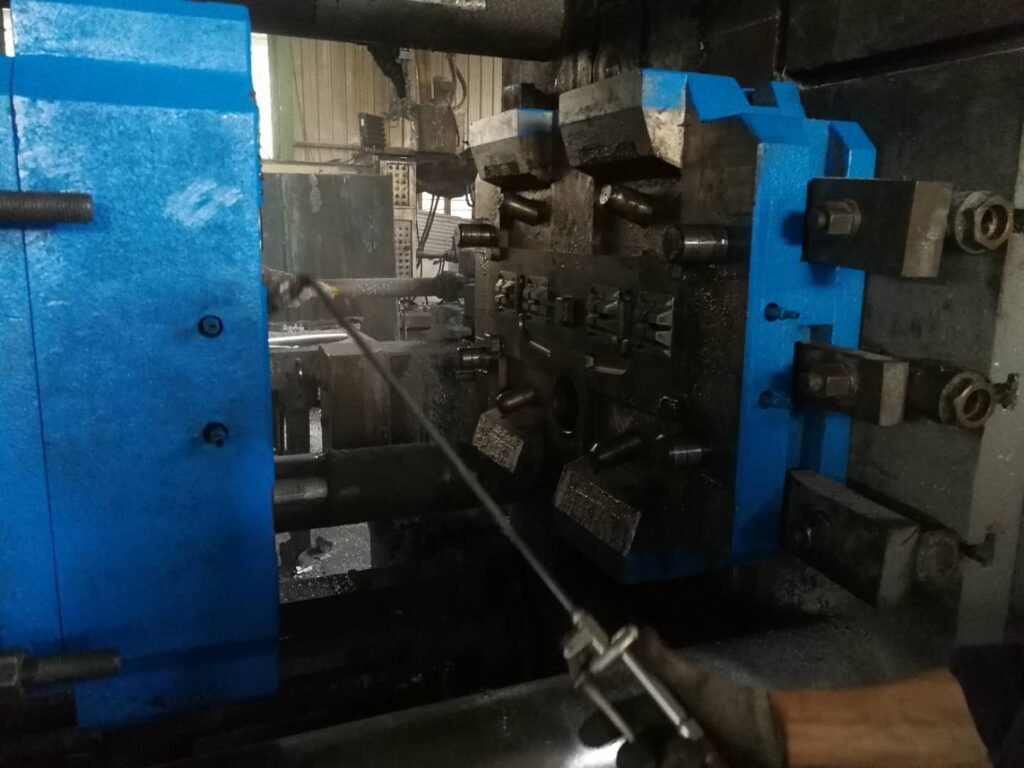
The Real Cost of Platen Deflection
In high-pressure die casting, clamping forces routinely exceed 1000 tons. Under this load, even the strongest steel flexes. The question is: how much?
A platen that deflects 0.1mm under full clamp force creates a gap between the mold halves. Molten metal fills that gap — that’s flash. Flash means:
- Scrap: At 2% flash rate on a 1000-ton machine producing 500 castings per shift, that’s 10 scrapped parts per shift — over $30,000 per year in wasted material.
- Downtime: Flash requires manual trimming. Each trimmed part adds 30-60 seconds of labor. Over a year, that’s hundreds of hours of unproductive labor.
- Mold damage: Uneven clamping caused by platen deflection accelerates mold wear. A $50,000 mold that should last 500,000 cycles might fail at 300,000 cycles — a $20,000 loss.
- Machine wear: Misaligned platens stress tie bars and bushings, leading to premature machine failure.
The bottom line: A platen deflection of 0.1mm doesn’t sound like much. But over a year of 24/7 production, it can cost you $50,000–$100,000 in scrap, labor, and maintenance.

How HAICHEN Platens Solve These Problems
HAICHEN platens are engineered specifically to minimize deflection under high clamping forces. Here is how we do it:
1. Advanced Material Selection
We use high-grade alloy steel (42CrMo) with quenching and tempering, achieving yield strength over 800MPa. Each platen undergoes ultrasonic testing to eliminate internal defects — no voids, no weak points.
2. Finite Element Analysis (FEA) Optimization
Our platens are designed using FEA to optimize rib layout — maximizing rigidity while minimizing weight. Built-in cooling channels control thermal deformation, maintaining uniform temperature distribution during continuous production.
3. 5-Axis Precision Machining
Each platen is machined in a single setup on 5-axis machining centers, achieving flatness within 0.02mm and guide hole position tolerance of ±0.01mm. Laser tracker inspection ensures perfect contact with the mold mounting surface — minimizing flash at the source.
4. Thermal Balance Design
Under 1000 tons of clamping force, HAICHEN platens maintain deformation below 0.05mm/m. Accuracy remains stable after long-term thermal cycling — no re-machining required.
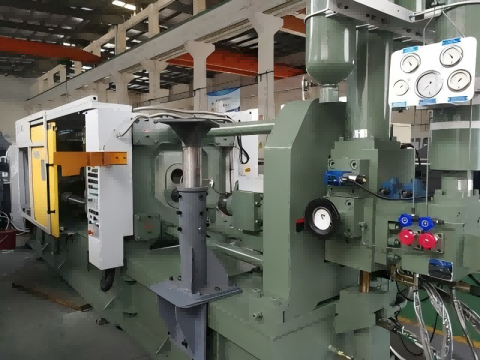
Field Validation – 1.2 Million Cycles Without Re-Machining
Talk is cheap. Here is real data.
An automotive parts manufacturer using a HAICHEN 1250-ton cold chamber machine ran a two-year production trial. The results:
- 1.2 million injection cycles completed
- Platen flatness maintained within 0.025mm — no re-machining required
- No alignment correction needed over the entire trial period
- Flash-related downtime eliminated
- Mold maintenance frequency reduced by 35%
- Overall equipment effectiveness (OEE) improved directly
That is not a laboratory test. That is real production performance.
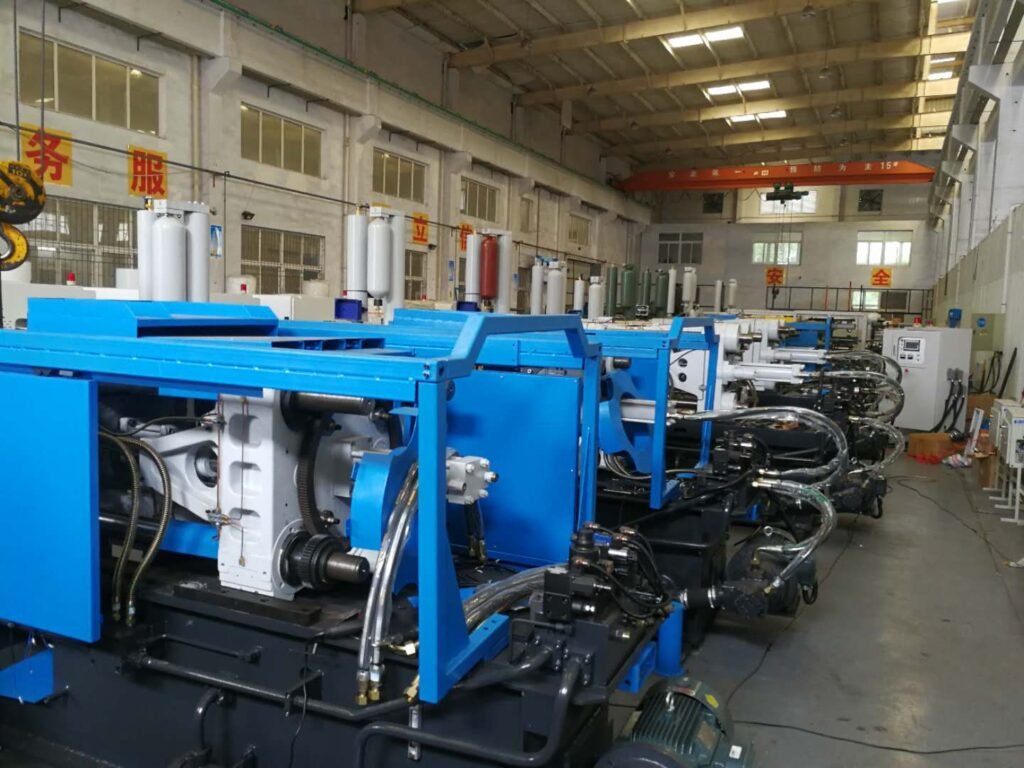
Technical Specifications – What Makes HAICHEN Platens Different
| Parameter | HAICHEN Platen | Industry Standard |
|---|---|---|
| Material | 42CrMo alloy steel (800MPa+ yield strength) | Cast iron or lower-grade steel |
| Flatness (machined) | <0.02mm | 0.05–0.08mm |
| Deflection under 1000T | <0.05mm/m | 0.08–0.15mm/m |
| Guide hole tolerance | ±0.01mm | ±0.03–0.05mm |
| Design life | 10 million+ cycles | 3–5 million cycles |
| Thermal management | Built-in cooling channels | External cooling only |
Frequently Asked Questions
Q: What is a die casting platen?
A: The platen is the large steel plate that holds the mold in a die casting machine. It provides the mounting surface for the mold, absorbs clamping force, and ensures alignment between the stationary and moving mold halves.
Q: How much does platen deflection affect casting quality?
A: Even 0.1mm of deflection can cause flash, dimensional inaccuracies, and mold damage. Over a year, this can cost $50,000–$100,000 in scrap, labor, and maintenance.
Q: What makes HAICHEN platens different from standard platens?
A: HAICHEN platens are engineered with FEA-optimized rib structures, 42CrMo high-strength steel, 5-axis precision machining (0.02mm flatness), and built-in cooling channels for thermal balance. Field data shows they maintain <0.05mm deflection after 1.2 million cycles.
Q: What is the typical lifespan of a HAICHEN platen?
A: HAICHEN platens are designed for over 10 million injection cycles — equivalent to 10+ years of continuous production in most foundries.
Q: Can HAICHEN customize platens for existing machines?
A: Yes. We offer customized platen designs to fit specific machine sizes and mold configurations. Our engineering team can work with your existing equipment specifications.