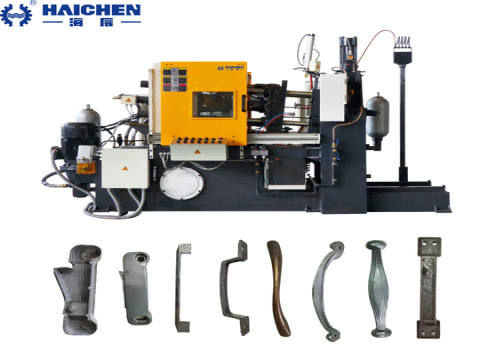
Hot Chamber Die Casting is one of the fastest metal casting methods used in modern manufacturing.
It is widely used for zinc, magnesium, and other low-melting-point alloys because it offers high production speed, excellent repeatability, and smooth surface quality.
As a result, many industries rely on this process to produce large numbers of precision parts every day.
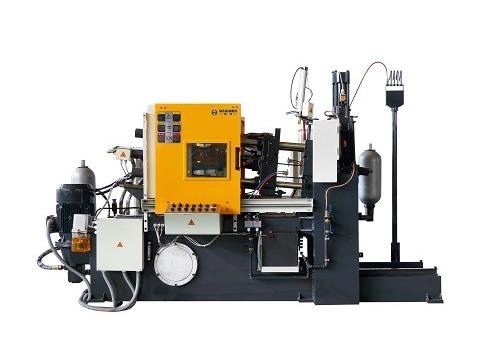
As a manufacturer, we often help customers decide whether a hot chamber machine is the right solution for their production.
While many people know the basic idea, they often want to understand how the process works and why it performs so well. So, let’s break it down in a simple way.
How Hot Chamber Die Casting Works
The hot chamber process uses an injection system that stays inside the molten metal. Therefore, each production cycle is fast and efficient.
The Injection System Stays in the Furnace
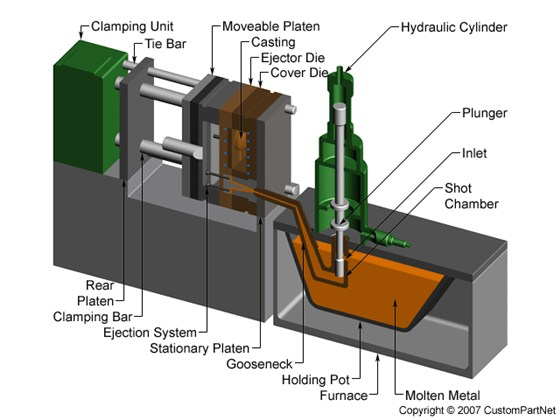
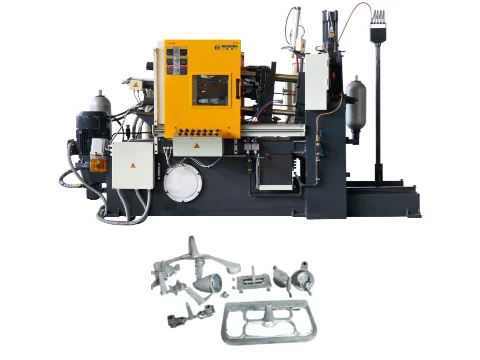
Unlike a cold chamber machine, a hot chamber die casting machine keeps its gooseneck and injection system inside the molten metal.
When the plunger moves, molten metal flows into the injection chamber. Then, the machine pushes the metal into the die cavity under high pressure.
Because the metal does not need to travel through an external ladle every cycle, the entire process becomes much faster.
Simply put, fewer steps mean faster production.
Fast Filling and Solidification
After the molten metal enters the mold, it cools and solidifies within seconds.
This quick cycle offers several advantages:
- High production speed
- Stable part dimensions
- Smooth surface finish
- Excellent repeatability
Consequently, manufacturers can produce thousands of identical parts every day with very consistent quality.
That’s a pretty sweet deal for mass production.
Automatic Production Cycle
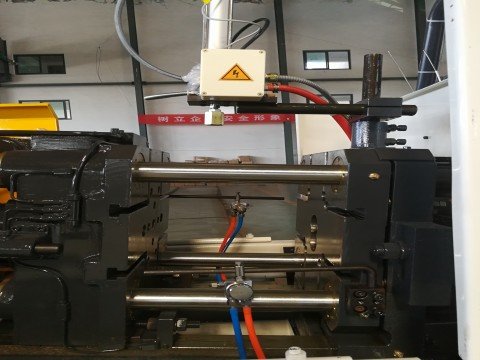
Modern hot chamber die casting machines complete almost every step automatically.
The machine can:
- Inject molten metal
- Hold injection pressure
- Open the die
- Eject the casting
- Start the next cycle
Therefore, manufacturers improve productivity while reducing manual labor and production costs.
Advantages of Hot Chamber Die Casting
Hot chamber technology has remained popular for decades because it combines speed, efficiency, and precision.
Higher Production Efficiency
Since the injection system stays inside the furnace, the machine eliminates the extra step of transferring molten metal.
As a result, production cycles become much shorter.
Manufacturers benefit from:
- Higher output
- Lower labor costs
- Better production efficiency
- Stable operation
For high-volume factories, these advantages really add up.
Excellent Product Quality
This production method produces parts with excellent consistency.
The process helps achieve:
- Smooth surfaces
- Accurate dimensions
- Thin-wall structures
- Low scrap rates
Because injection conditions stay stable, product quality also becomes more consistent throughout long production runs.
Lower Operating Costs
Fast cycles improve productivity while reducing energy consumption per part.
Meanwhile, automatic operation reduces labor requirements.
Over time, manufacturers enjoy:
- Lower production costs
- Higher equipment utilization
- Better return on investment
- Stable long-term performance
In other words, efficient production helps both quality and profitability.
Typical Applications
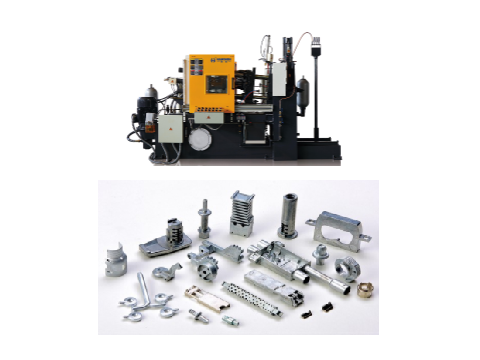
Manufacturers use die casting machine to produce many precision components, including:
- Electronic connectors
- Lock parts
- Door handles
- Hardware fittings
- Automotive accessories
- Consumer products
These parts often require high dimensional accuracy and smooth surface quality.