Force casting in die casting, also known as high-pressure die casting, is a manufacturing process that uses high pressure to inject molten metal into a mold cavity.
This process enables the production of complex metal parts with high dimensional accuracy, smooth surfaces, and excellent mechanical properties. It is widely used in automotive, aerospace, electronics, and consumer goods industries for mass-producing components from aluminum, zinc, and magnesium alloys.
Understanding how force casting works helps manufacturers optimize their production processes, reduce defects, and improve overall efficiency.
This article will explain the key steps of the force casting process, including preparation, injection, cooling, ejection, and trimming. It will also discuss how HAICHEN die casting machines support each stage with advanced technology and reliable performance.
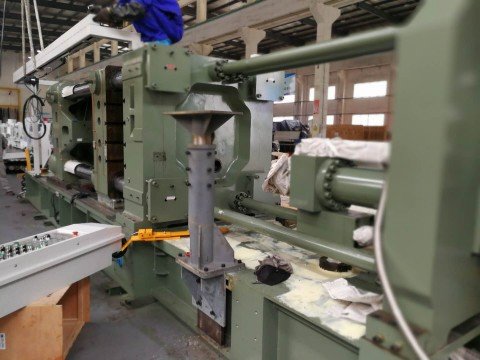
How Force Casting Works
- Preparation and Clamping
- Injection Process
- Cooling Process
- Ejection Process
- Trimming Process
Preparation and Clamping
First, the die halves are cleaned and lubricated to facilitate the removal of the casting after solidification. The die halves are then attached to the die casting machine and clamped together with significant force to prevent leakage during the injection process.
Injection Process
Workers transfer molten metal from the holding furnace to the injection chamber of the die casting machine. The machine then injects the metal into the closed die at high pressure, typically ranging from 100 bars (1,400 psi) to 1,800 bars (26,000 psi).
This high pressure ensures that the molten metal fills the mold cavity quickly and completely, preventing early solidification and defects. The injection time is usually very short, often less than 0.1 seconds.
Cooling Process
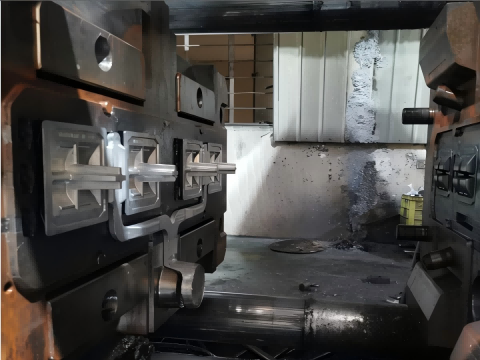
Once the mold cavity is filled, the molten metal begins to cool and solidify. The cooling time depends on the material properties, the wall thickness of the part, and the complexity of the mold. Thicker walls and more complex molds require longer cooling times.
Ejection Process
Once the cooling time elapses, the die halves open, and an ejection mechanism pushes the solidified casting out of the mold. The ejection force must be sufficient to overcome the adhesion caused by the part shrinking during cooling.
Trimming Process
Workers trim any excess material, such as runners and flash, from the casting, either manually or with a trimming press. They often recycle the trimmed material and reuse it in the die casting process.
Force casting in die casting offers several advantages over gravity die casting, including faster production rates, better surface finish, and the ability to create intricate designs.
Die casting machine supplier : Haichen Machinery
Haichen Machinery is a prominent supplier of die casting machines, specializing in providing advanced cold chamber die casting and hot chamber die casting solutions for various metal alloys, including aluminum, magnesium, zinc, and copper.
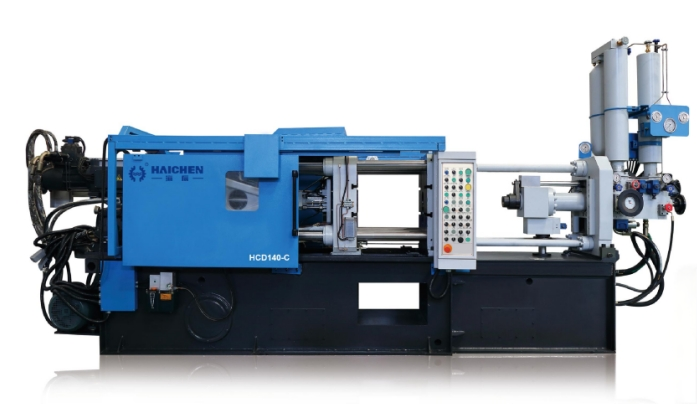
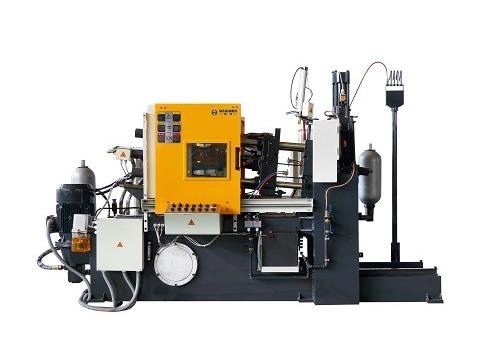
The advantages of Haichen die casting machines
- High Precision and Consistency
- Energy Efficiency
- Fast Cycle Times
- Customization and Flexibility
High Precision and Consistency
Haichen machines are designed to deliver high precision and consistency in die casting operations. We ensure tight tolerances and high repeatability, making them ideal for producing complex parts with intricate details.
Energy Efficiency
Haichen focuses on energy-saving technologies, such as advanced hydraulic systems and servo-driven mechanisms, which reduce power consumption and operational costs.
Fast Cycle Times
These machines offer short cycle times, making them highly suitable for high-volume production. This efficiency helps manufacturers achieve greater productivity and economies of scale.
Customization and Flexibility
Haichen offers customizable solutions to meet specific customer requirements. Our machines can handle a wide range of materials and part sizes, making them versatile for various industries.
HAICHEN Application Example: Motorcycle Engine Mount Production
A motorcycle manufacturer needed to produce aluminum engine mounts with complex geometry and high strength requirements. The parts required consistent quality for safety-critical applications.
- Challenge: The engine mount had varying wall thickness and required excellent internal density. Previous machines produced parts with porosity issues, leading to rejected components and wasted material.
- HAICHEN Solution: The manufacturer installed a HAICHEN 400-ton cold chamber die casting machine. Key features included:
- Multi-stage injection control for optimized filling
- Real-time pressure monitoring during solidification
- Stable clamping force maintaining mold alignment
- Result: Porosity defects reduced by 60%. Cycle time decreased from 95 to 72 seconds per part. Yield rate improved from 87% to 96%. Reduced waste and increased production efficiency.
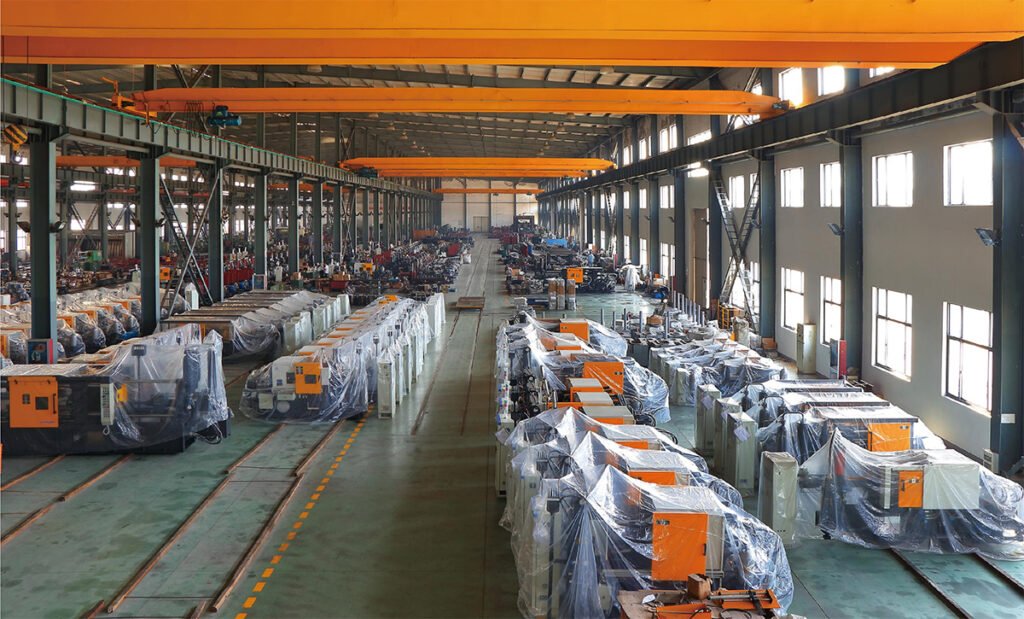
If there is any demand for our die casting machines, welcome to consult us.


