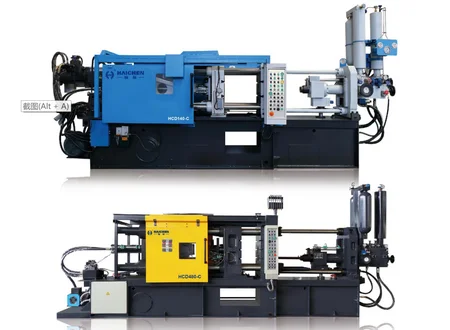
Calculate Die Casting Parts includes material costs, mold costs, die-casting machine costs, labor costs, indirect expenses, as well as various auxiliary processes required.
The process of die-casting parts can be analyzed through cost estimation formulas and examples.
Incorporating factors like material waste and scrap rates further enhances the accuracy of cost calculations.
And consider design factors like wall thickness and draft angles to optimize efficiency.
For costing, material and manufacturing costs are summed, with factors like the metal’s density and current market price influencing the raw material cost.
Die-cast parts can be optimized in their mold design through computer simulation to reduce defects.
This mainly relies on computer-aided design (CAD) and computer-aided engineering (CAE) technologies, especially the application of casting simulation software.
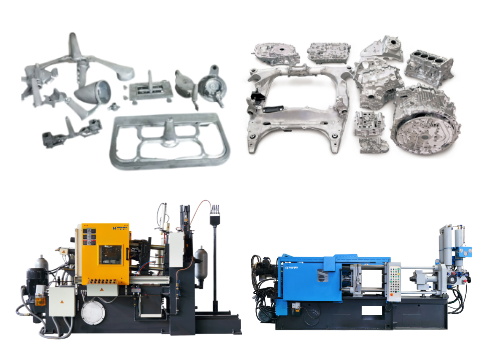
Material selection
Choose the right metal material according to the performance requirements of the die casting parts, such as aluminum alloy, zinc alloy, magnesium alloy, etc.
Consider factors such as the material’s flowability, shrinkage, strength, and corrosion resistance.

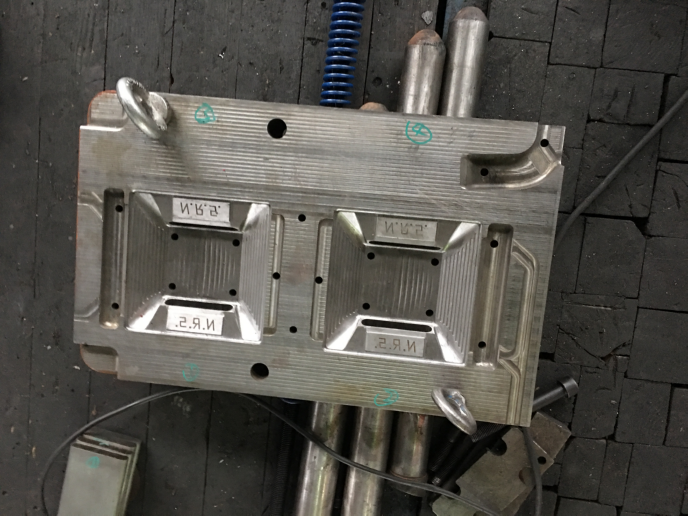
Mold Design
Molds are specialized products with high technological content.
Instead, it should be high-quality at a better price, and the quality, precision, and life of the mold should be the first priority.
Design the gating system of the mold to ensure that the molten metal can fill the cavity evenly and smoothly.
Consider exhaust design to avoid porosity and other defects.
Determine the cooling system of the mold to control the solidification process and reduce thermal stress.
Haichen has designed overpressure casting molds, such as aluminum casting for road studs, aluminum casting for radiators, and aluminum pots, etc.
Size calculation
According to the drawing size of the die casting part, considering the shrinkage of the material, calculate the size of the mold cavity.
Consider machining allowances and tolerances to ensure the dimensional accuracy of the parts.
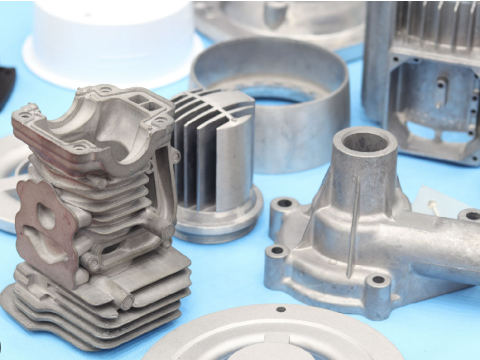
Production Cost Estimate
Calculate the cost of raw materials, including metal materials and auxiliary materials.
Estimate mold manufacturing cost and service life.
Consider energy consumption, labor costs, and equipment depreciation in the production process.
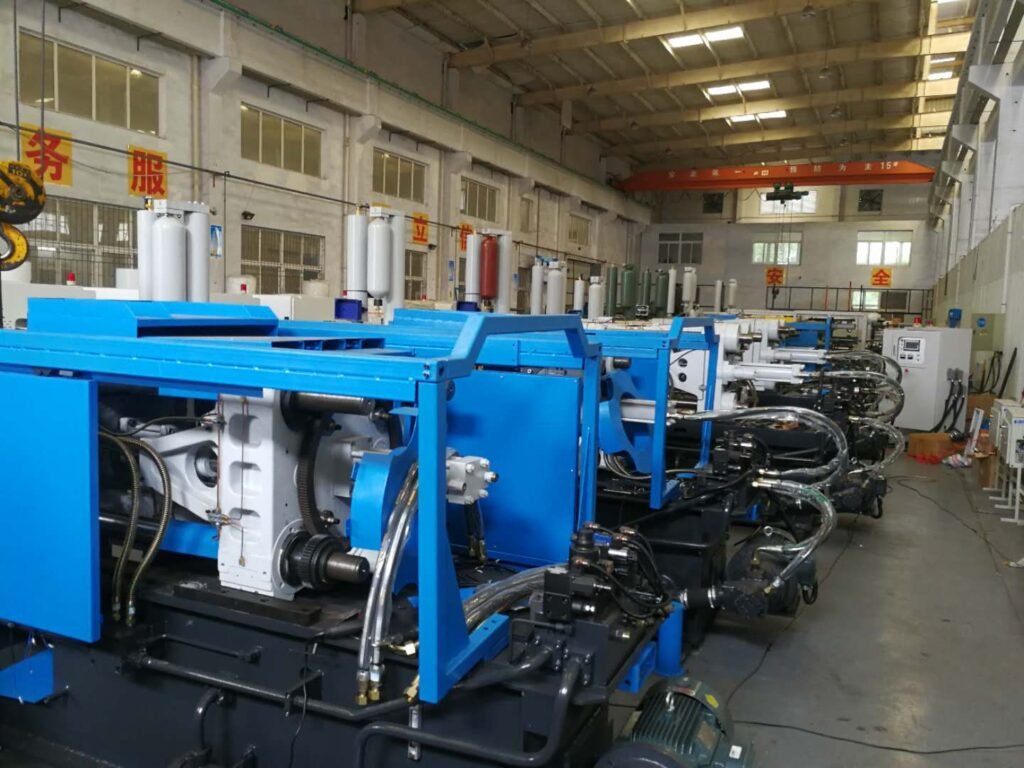
Die Casting Work Points
- Cost Estimation
- Quality Control
- Parameter Optimization
- Part & Material Selection
Part & Material Selection
Define the shape and size of die castings. Select materials like aluminum, zinc, magnesium or brass. Material choice impacts product shrinkage.
Cost Estimation
Calculate costs for raw materials (metal & auxiliary materials), mold production and service life. Account for energy use, labor and equipment depreciation during production.
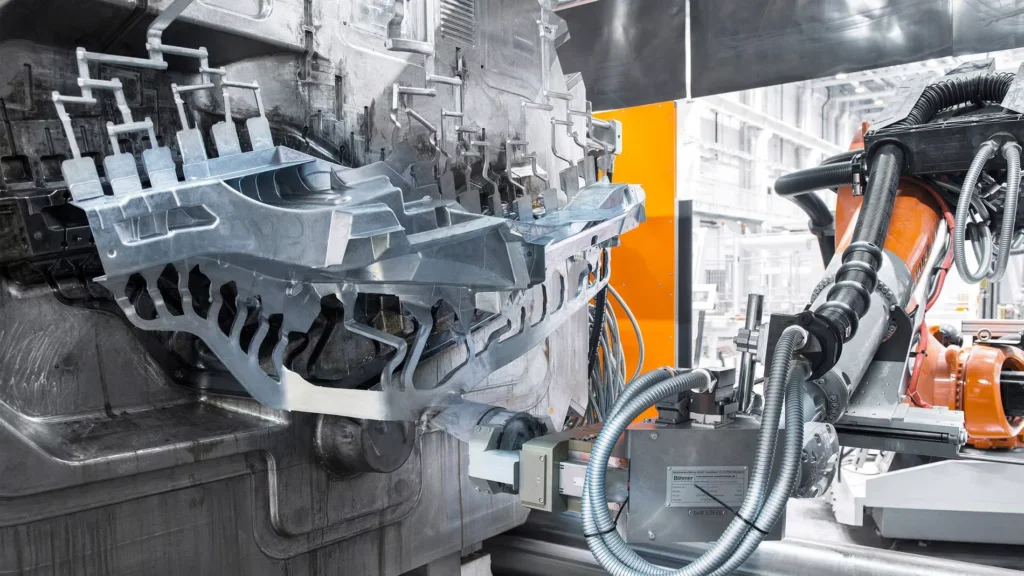
Quality Control
Set inspection rules to guarantee die casting quality. Inspect molds regularly and fix or replace broken components promptly.
Parameter Optimization
Test to confirm ideal pouring temperature, injection speed, pressure and holding time. Run flow simulation to improve gating and cooling systems.
Calculation of Key Die Casting Process Parameters and Gate Design Determination
- Die Casting Machine Pressure Calculation
- Metal Velocity Calculation
- Gate Area Calculation
- Gate Design Determination
Die Casting Machine Pressure Calculation
To match the production demand of die castings, it is first necessary to select and calculate the appropriate die casting machine pressure according to the size and shape of the target die casting.
Typically, die casting machine pressure is measured in tonnage, with conventional equipment tonnage ranging from 200 tons to 5000 tons.
In addition to matching the product specification, a critical calculation principle must be followed: the rated pressure of the selected die casting machine must exceed the mold separation force generated during the entire die casting process,
So as to avoid mold opening deviation and ensure the smooth progress of casting production.
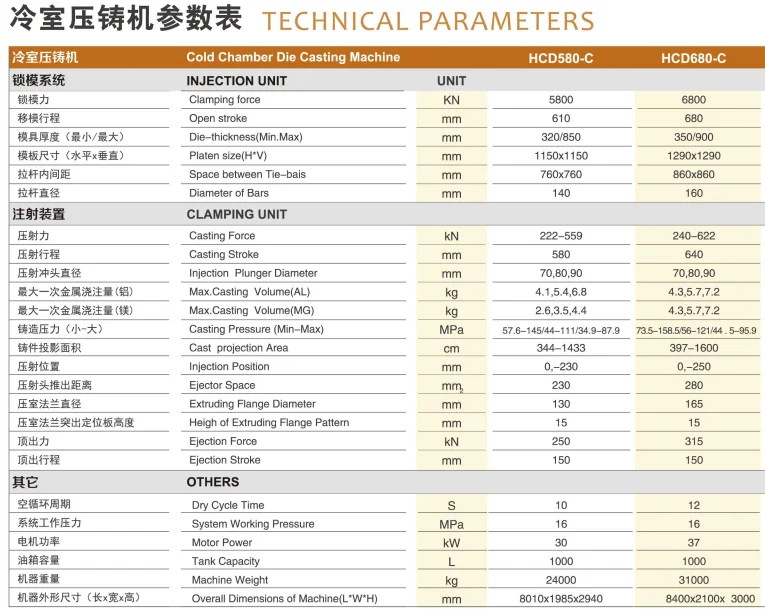
Metal Velocity Calculation
Metal velocity serves as one of the pivotal factors that directly influence the surface quality and internal performance of finished die castings, so its accurate calculation is essential for quality control.
The standard calculation formula for metal velocity is derived based on metal flow rate and gate area.
In the formula, V represents the metal velocity with the unit of m/s.
Q refers to the metal flow rate measured in m³/s, and A stands for the gate area with the unit of m².
This parameter lays a fundamental data foundation for subsequent gate area calibration.
Gate Area Calculation
Based on the two core parameters of metal flow rate and metal velocity confirmed above, the gate area can be accurately calculated through a fixed formula.
The dedicated calculation formula for gate area is A=Q/V, where each parameter corresponds to the same definition and unit as those in the metal velocity calculation formula: Q is the metal flow rate (m³/s), V is the metal velocity (m/s), and A is the final calculated gate area (m²).
The precise gate area calculated by this formula can effectively guide the standardized setting of die casting molds.
Gate Design Determination
On the basis of completing parameter calculations, targeted gate design selection is required combined with the actual product requirements.
Specifically, the optimal gate design scheme should be selected according to the geometric structure, wall thickness and surface roughness standards of the die casting part.
The mainstream and commonly used gate designs in industrial production include sprues, runners and sprue rings.
It is worth noting that gate design is closely related to final product quality.
And a scientific and reasonable gate structure can effectively prevent common die casting defects such as porosity, cratering and flash, greatly improving the yield of die casting products.
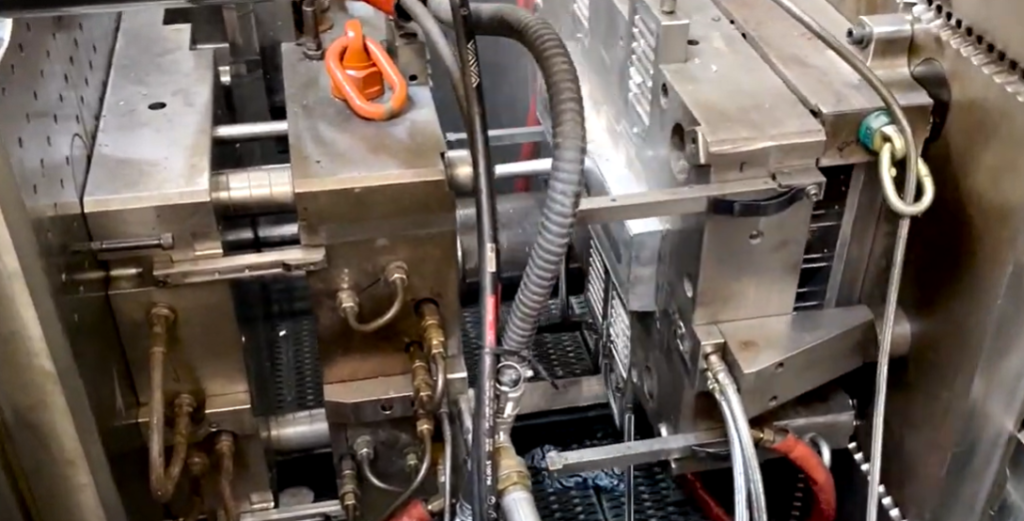
Choosing Machine for Die Casting Part
Choosing the right die casting machine requires several factors to consider.
Including the complexity of the part, size, type of material, production batch.
And the technical parameters and performance of the die casting machine.
- Cold chamber die casting machine
- Hot chamber die-casting machine
- Determine the complexity and size of the part
Determine the complexity and size of the part
Simple-shaped parts are suitable for pressure casting or metal mold casting, while more complex molds are required for parts with complex shapes.
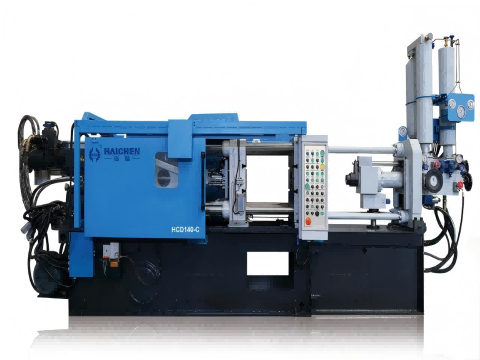
Cold chamber die casting machine
Suitable for casting high melting point alloys, such as aluminum, magnesium, copper, etc., with a closed injection chamber.
Which can achieve precise control of the flow and cooling of molten metal, suitable for the production of complex shapes of high-strength parts.
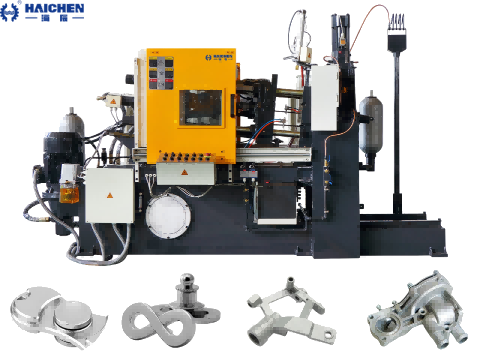
Hot chamber die-casting machine
Suitable for casting non-ferrous alloy parts with low melting point, such as zinc, aluminum, etc.
With an open injection chamber, simple operation, high degree of automation, suitable for mass production.
Haichen die casting solution
Understanding the die-casting cost is of vital importance for procurement and component design engineers, as they need to optimize to enhance the production efficiency of custom metal components.
Haichen can accurately calculate the cost of the die-casting production line by considering factors.
Such as material selection, component complexity, production volume, and mold costs.

Haichen’s expertise in the complexity, cost analysis, and optimization methods of metal die-casting technology offers valuable insights to manufacturers seeking custom molds or services.
By understanding the factors influencing die-casting costs and implementing cost optimization strategies, manufacturers can achieve efficient and cost-effective production, thereby meeting the needs and expectations of customers.