To select heating bush in die casting mainly includes material and application, evaluate the heating requirements, assess the durability and maintenance.
Selecting a heating bush for die casting requires balancing power, temperature, and installation. Estimate power at 150-250W per kg of nozzle mass. Use the higher end for aluminum and lower for zinc. Set nozzle temperature at 580-620°C for aluminum, 400-430°C for zinc, 620-660°C for magnesium, and 900-1000°C for copper. Leave a 0.1-0.2mm gap during installation and place the thermocouple near the heater middle. Dry-fire protection is a must—always check that metal is inside the nozzle before heating.
Heating bush plays a critical role in die casting by maintaining optimal mold temperatures, ensuring consistent part quality, and reducing cycle times.Selecting the right heating bush improves efficiency, extends mold life, and minimizes defects. Here’s a comprehensive guide to help you make the best choice.
We will discuss How to select Heating bush in die casting mainly from below aspects:
- Core Functions and Power Calculation
- Types of Heating Bushes
- Temperature Setting for Different Alloys
- Heating bushes Material and Application
- Evaluate the Heating Requirements
- Assess the Durability and Maintenance
- Case Study of Sprue Bushing Heating Bush Optimization
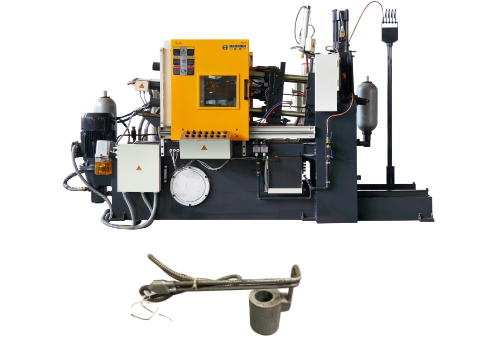
Core Functions and Power Calculation
A heating bush keeps the nozzle or sprue bushing hot, preventing molten metal from freezing in the flow channel.
- Prevent metal freeze and blockage
- Maintain stable fluidity
- Power calculation formula
- Power density selection principle
Preventing metal freeze and blockage
The die casting nozzle loses heat quickly to the air. As metal cools, its viscosity rises and fluidity drops. In severe cases, a cold slug forms inside the nozzle, blocking the channel. Heating bush in die casting compensates for this heat loss.
Maintaining stable fluidity
A stable nozzle temperature keeps metal entering the cavity at the same viscosity. Heating bush in die casting also reduces process variation between cycles.
Power calculation formula
Required heating power P = C × M × ΔT / (t × η). C is the specific heat capacity of steel (about 460 J/(kg·K)), M is the nozzle mass, ΔT is the temperature rise needed, t is the heating time, and η is thermal efficiency (about 0.6-0.8). As a rough rule, each 1kg of nozzle mass needs 150-250W of power.
Power density selection principle
Standard heating bushes have power density of 2-5W/cm². Too low gives slow heating. Too high (>8W/cm²) causes local overheating and shortens heater life. Heating bush in die casting uses lower density for zinc and higher density for copper.
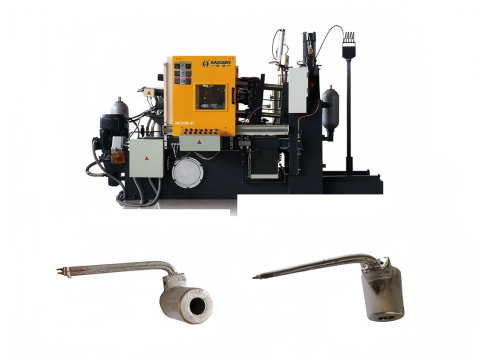
Temperature Setting for Different Alloys
The heating bush temperature must coordinate with both the alloy melting point and the mold temperature.
- Aluminum alloy range
- Zinc alloy range
- Magnesium alloy range
- Copper alloy range
Aluminum alloy range
Keep aluminum nozzle temperature at 580-620°C. This is 80-100°C below the furnace (660-700°C) and about 400°C above the mold (180-220°C). Heating bush in die casting set too low lets aluminum freeze inside the nozzle. Too high makes aluminum stick to the inner wall, increasing flow resistance.
Zinc alloy range
Zinc nozzle temperature should be 400-430°C. Zinc melts at about 380°C, so the setting needs to be only 20-50°C above the melting point. Heating bush in die casting for zinc can use lower power accordingly.
Magnesium alloy range
Magnesium nozzle temperature should be 620-660°C, close to its melting point (about 650°C). Heating bush in die casting must have precise control to prevent the magnesium melt from overheating and burning.
Copper alloy range
Copper alloys run the hottest, up to 900-1000°C. Here the heating bush needs a high-temperature alloy sheath or ceramic material. Heating bush in die casting power density often exceeds 5W/cm² for copper.
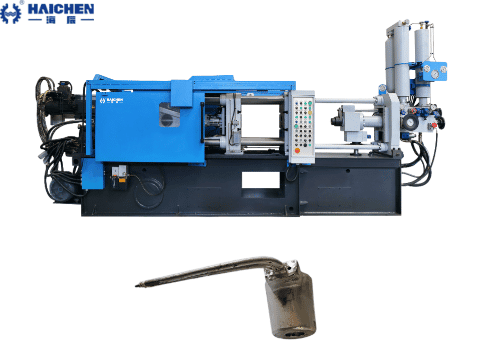
Types of Heating Bushes
- High-frequency induction heating bush
- Electrical resistance heating bush
- Hot runner heating bush
Heating bushes come in various types, each with its own advantages and applications. Common types include:
High-frequency induction heating bush
This type uses electromagnetic induction to heat the metal quickly and efficiently. It is ideal for applications requiring precise temperature control and rapid heating.
Electrical resistance heating bush
These are powered by electrical resistance heating elements. They are suitable for a wide range of temperatures and are generally easy to install and maintain.
Hot runner heating bush
Used primarily in injection molding, these heating bushes help maintain a consistent temperature throughout the runner system, reducing material waste and improving part quality.

Heating bushes Material and Application
- Aluminum die casting
- Zinc or magnesium die casting
The material you are casting and the specific requirements of your application will significantly influence your choice of heating bush. For example:
Aluminum die casting
High-frequency induction heating bushes are often preferred due to their ability to provide rapid and uniform heating.
Zinc or magnesium die casting
Electric heating bushes may be more suitable, as they can offer precise temperature control over a wide range.
Evaluate the Heating Requirements
- Temperature range
- Heating speed
- Energy efficiency
Determine the specific heating requirements for your die casting process.
Temperature range
Ensure the heating bush can achieve and maintain the required temperature for your material.
Heating speed
Consider how quickly the bush can heat the metal. High-frequency induction heating bushes are known for their rapid heating capabilities.
Energy efficiency
Choose a heating bush that offers good energy efficiency to reduce operational costs over time.
Assess the Durability and Maintenance
The durability and ease of maintenance of the heating bush are critical factors:
- Material quality
- Maintenance requirements
- Maintenance requirements
Material quality
High-quality materials will ensure the heating bush can withstand the harsh conditions of the die casting environment.
Maintenance requirements
Opt for a heating bush that is easy to clean and maintain. Some types may require more frequent maintenance, which can impact production efficiency.
Consult with Suppliers and Experts
Each die casting operation has unique requirements. Consulting with suppliers and experts can provide valuable insights and recommendations. They can help you select the right heating bush based on your specific needs and ensure it is compatible with your existing equipment.
Case Study of Sprue Bushing Heating Bush Optimization
HAICHEN engineers solved a cold shut problem at the sprue area of aluminum steering knuckles by adjusting heating bush power and control strategy.
- Problem and root cause
- Improvements
- Results
Problem and root cause
A die casting plant used a HAICHEN HCD800 cold chamber machine for aluminum steering knuckles. The gate area showed frequent cold shuts, with 7% scrap. Surface temperature at the sprue bushing was only 120°C, far below the required 180-220°C. The original 800W heating bush lacked enough power to recover heat loss during mold opening.
Improvements
HAICHEN replaced the 800W heating bush with a 1500W unit, raising power density from 2.8W/cm² to 5.2W/cm². In the temperature control strategy, they added a preheat stage after mold close: heat at 50% power for 5 seconds before injecting metal. Heating bush in die casting also moved the thermocouple from the heater edge to the middle, closer to the gate side.
Results
Sprue bushing surface temperature stabilized at 195-210°C. Cold shut defects at the gate dropped from 7% to 1.5%. The heating bush surface temperature stayed uniform, with no burnout. After checking heating bush cost analysis in die casting. The customer applied the same solution to three other machines, cutting average scrap by 4 percentage points.
Haichen die casting machine heating bush
Haichen (Haichen) is a professional die casting machine manufacturer offering cold chamber and hot chamber die casting machines. Its products are suitable for die casting of aluminum, zinc, lead and other materials. Besides the machines, we also supply spare parts inclduing heating bush.
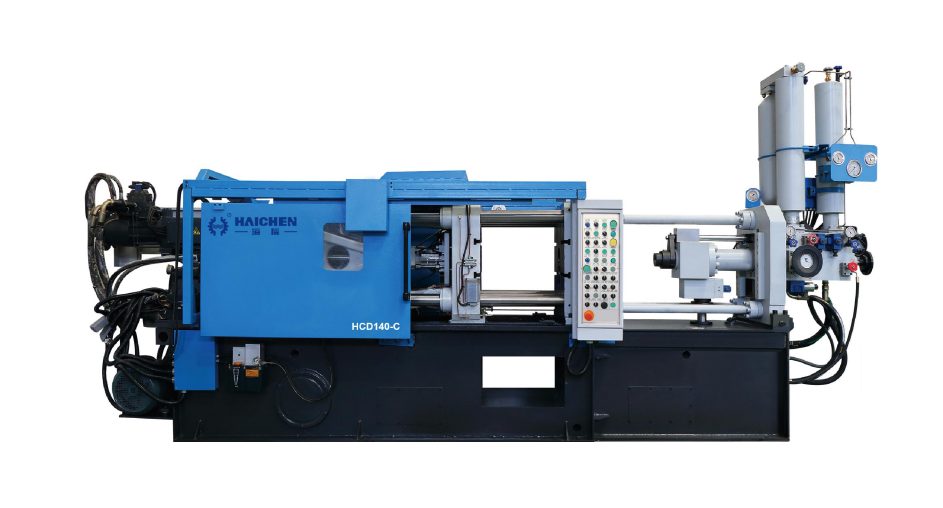
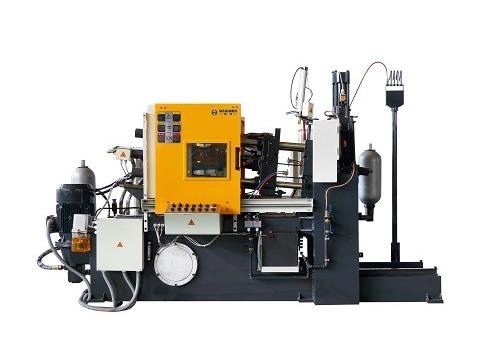
Selecting the right heating bush improves die casting efficiency, part quality, and mold longevity. By considering heating capacity, material, size, and control compatibility, you can optimize performance and reduce downtime.
Welcome to consult us for more information.


