Addressing a PLC alarm on a die casting machine involves identifying the specific error code, checking for common issues like sensor malfunctions or communication errors, and following the machine’s diagnostic procedures to resolve the problem and restore normal operation.
Maintaining smooth and efficient operations is crucial in the die casting industry.
One common issue that can disrupt the production process is a PLC (Programmable Logic Controller) alarm.
PLC alarms are designed to alert operators to potential problems, but they can also cause downtime if not addressed promptly.
In this article, we will explore the common causes of PLC alarms in die casting machines and provide practical solutions to resolve these issues quickly and effectively.
Understanding and addressing PLC alarms is essential for minimizing disruptions and ensuring high – quality production output in die casting operations.
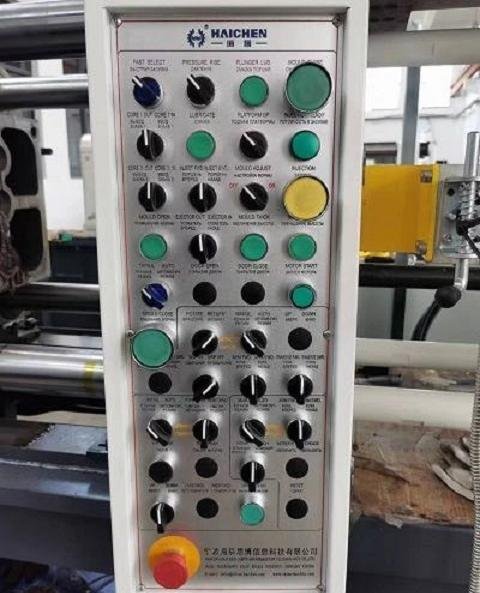
Common PLC Alarms in Die Casting Machines & Solutions
- Hydraulic System Alarm
- Overheating Alarm
- Sensor & Limit Switch Faults
- PLC Program Errors
Hydraulic System Alarm
Possible Causes:
Low hydraulic oil level;Clogged filters;Pump or valve malfunctions
Solutions:
Check and refill hydraulic oil;Clean or replace filters
✔ Inspect pumps and valves for damage
HAICHEN’s Advantage:
HAICHEN machines feature real-time hydraulic monitoring, helping operators detect issues before they trigger alarms.
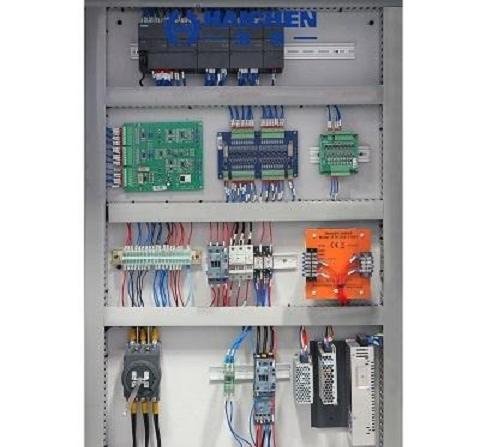
Overheating Alarm
Possible Causes:
Cooling system failure;Excessive machine load;Poor ventilation
Solutions:
Verify cooling fans and water circulation;Reduce cycle time if overloaded;Ensure proper airflow around the machine
Sensor & Limit Switch Faults
Possible Causes:
Misaligned sensors;Wiring damage;Contamination (oil, dust)
Solutions:
Recalibrate or replace faulty sensors;Check electrical connections;Clean sensor surfaces regularly
HAICHEN’s Solution:
HAICHEN uses high-precision sensors with protective coatings to reduce false alarms.
PLC Program Errors
Possible Causes:
Software bugs;Incorrect parameter settings;Power fluctuations
Solutions:
Restore backup PLC program;Verify parameter settings;Install a voltage stabilizer
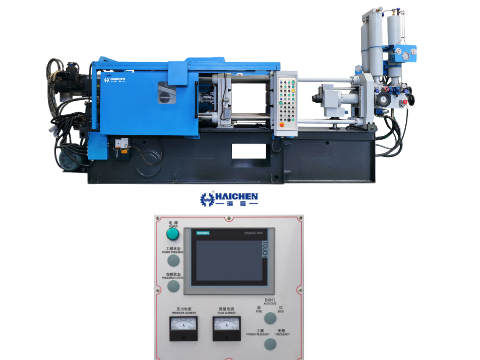
Troubleshooting and Troubleshooting Process
Read and confirm alarm information
- Click “Alarm Information” on the HMI and record the alarm code and the corresponding sensor/valve.
Check on-site hardware status
- Sensors: Clean according to “Common Causes of PLC Alarms and Corresponding Solutions” (rinse with deionized water 2-3 times) and recalibrate.
- Wiring: Verify that the PE grounding resistance is <4Ω, and that the RS-485/PROFINET cable is secure and shielded.
Verify the hydraulic/mold system
- Observe the pressure gauge and oil temperature gauge to confirm the oil level and quality. If the pressure is abnormal, check the pump, valve, and oil line for leaks or blockages.
- Check the clamping cylinder stroke and limit switches for sticking.
Special Inspection – Aluminum Overflow
- Check whether the fusible link is blown and whether the limit switch is reset. If the fusible link needs to be replaced, it can be replaced manually without tools, significantly reducing downtime.
Communication and Diagnosis
- If communication anomalies occur, use the PROFINET → DeviceNet intelligent gateway for real-time diagnosis. The gateway automatically switches to redundant paths, records historical data, and triggers alarms when anomalies occur, helping to quickly locate network faults.
Reset or Restart
- After completing the above checks, execute “Reset” on the HMI. If the alarm persists, restart the PLC to perform a complete system self-test.
How HAICHEN Enhances PLC Reliability
To minimize PLC-related alarms, HAICHEN implements:
- Redundant PLC systems – Ensures continuous operation even if one module fails.
- Self-diagnostic functions – Automatically detects and logs errors for quick troubleshooting.
- User-friendly HMI (Human-Machine Interface) – Simplifies alarm interpretation and corrective actions.

Preventive Maintenance Tips
To avoid frequent PLC alarms:
Train operators on basic troubleshooting;
Regularly inspect hydraulic, cooling, and electrical systems;
Keep firmware updated for optimal PLC performance.
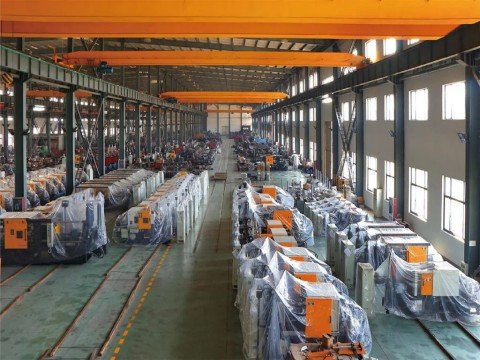
HAICHEN: System Design to Reduce Alarms at the Source
HAICHEN’s control system is deeply engineered to prevent and simplify PLC alarm handling through hardware, software, and user interface design.
- Improved Hardware Reliability & Smart Diagnostics
- Optimized Software Logic & Alarm Management
- Case Study: Fixing Recurring Mold Clamp Alarms in an Auto Parts Line
Improved Hardware Reliability & Smart Diagnostics
We use redundant signal design for critical sensors (like mold close and injection pressure) and high-protection (IP67) sensors to resist oil and moisture. Our PLC modules perform continuous self-diagnostics, logging trends and sending warnings before limits are exceeded, shifting from “failure alarms” to “condition alerts.”
Optimized Software Logic & Alarm Management
HAICHEN PLC programs categorize alarms into “Stop,” “Warning,” and “Info” levels. They include built-in diagnostic logic. For example, a “Low Hydraulic Pressure” alarm on the touchscreen will also suggest checking oil level, filters, and related pumps/valves, guiding maintenance staff through the most likely causes in order.
Case Study: Fixing Recurring Mold Clamp Alarms in an Auto Parts Line
A customer producing engine blocks had random “Mold Not Closed” alarms several times a week on their HAICHEN 1000T machine, causing unpredictable stops.
- Analysis: HAICHEN engineers reviewed historical data remotely. They found alarms occurred after about 3 hours of high-speed continuous operation. On-site checks ruled out sensor failure. The root cause was increased oil temperature inside the clamping cylinder from rapid cycling, which changed oil viscosity and caused slight timing variations, occasionally exceeding the PLC’s fixed time window.
- Solution:
- Software Update: We added an “Adaptive Clamp Time Check” function to the PLC. It learns the normal time range from recent cycles and adjusts the alarm tolerance dynamically.
- Hardware Advice: Suggested adding a small cooling loop to the cylinder’s return line.
- Maintenance Guidance: Advised doubling the lubrication frequency for the clamp tie bars.
- Result: The recurring alarm was completely eliminated after the update. Production stability improved greatly, with monthly unplanned downtime reduced by over 80%. The line’s Overall Equipment Effectiveness (OEE) saw significant improvement.
PLC alarms in die casting machines can disrupt production, but most issues can be resolved through systematic checks and proper maintenance. By understanding common alarms and their Solution to PLC alarm, manufacturers can reduce downtime, improve productivity, and extend machine life.


