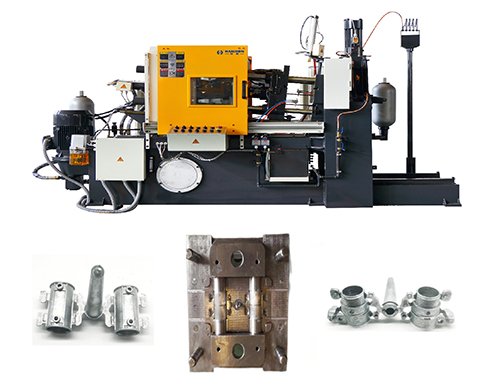
Metal pipe fittings different types:
- Elbows
- Tees
- Reducers
- Couplings
- Unions
- Caps and Plugs
- Flanges
- Adapters
- Bushings
- Nipples
Metal pipe fittings are components that connect and manipulate metal pipes in a system.
Common types include elbows, tees, reducers, couplings, unions, caps, plugs, and various types of flanges.
These fittings are used to change direction, join pipes of different sizes, terminate pipes, and create various connections in piping systems.
A pipe fitting is a piping component that connects multiple pipelines. It can regulate and alter the course of a fluid in a pipe system.
For example, a pipe fitting can connect a thick pipe with a narrow pipe, reducing the volume of water.
Another example may be combining the water flow of two pipes into one using a tee fitting.
There is a lot of variety when it comes to pipe fittings. Some are mere connectors, while some alter the water volume.
Fittings specifications and piping standards are important considerations in pipeline design.
Improper connections may result in leakage or damage to the piping system. It is also necessary to match the material of the connector to that of the pipe.
Components differ in their quality, size, material, and construction. In the following sections, let’s discuss the different types of pipe fittings.
Elbows types
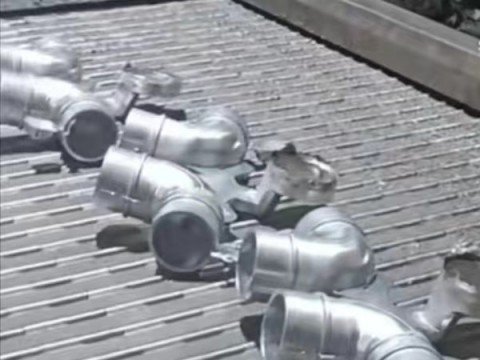
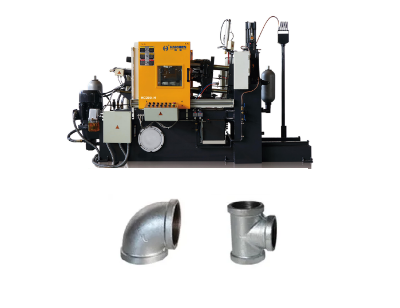
Pipe elbow is a key part in every piping system. It mainly works to change the direction of flowing fluid.
This fitting links two pipes together. The two pipes can have the same nominal diameter or different sizes. It turns the pipeline at standard angles, mostly 45 degrees or 90 degrees.
You use pipe elbows to alter the path of pipe lines. They are common parts to shift fluid flow direction in all kinds of piping projects.
Tees types
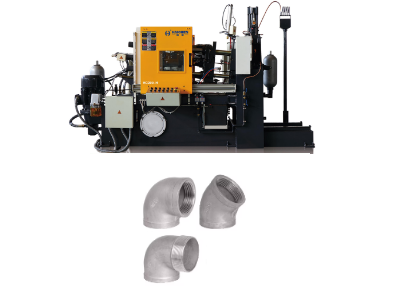
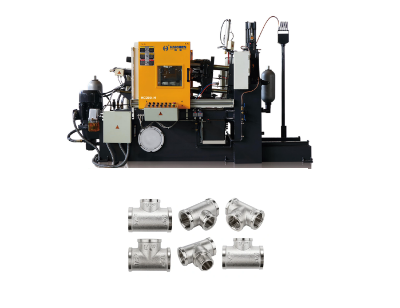
Pipe fitting tees are available in a range of sizes and wall thicknesses to accommodate different piping systems.
We measure standard tee sizes in inches, and they typically range from 1/2″ to 48″, equivalent to DN15 to DN1200.
The wall thicknesses can vary and are specified using various schedules.
Connect three pipes, with two at a right angle and one at a right angle to the other two.
Reducers types
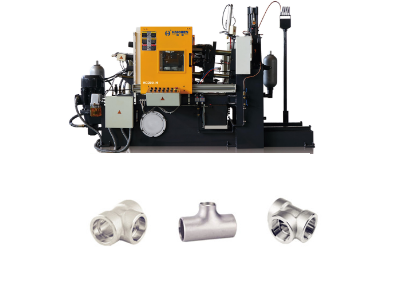
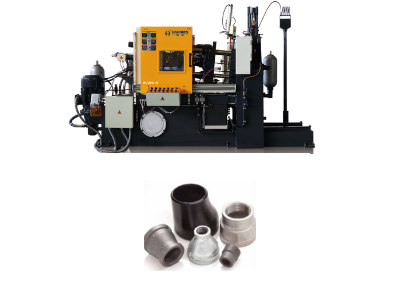
A pipe reducer serves as a key pipeline component. It actively reduces line size from large to small bore according to inner diameter.
The length of the reduction here is equal to an average of the smaller and larger pipe diameters.
Here, the reducer can be used as a diffuser or a nozzle.
The reducer helps in meeting the existing piping of varied sizes or hydraulic flow of the piping systems.
Connect pipes of different diameters, reducing the flow rate from a larger to a smaller diameter.
Couplings types
- Structure and Installation Features
- Classification and Main Applications
Structure and Installation Features
Socket-welded pipe couplings adopt socket-welded structures to link pipes directly. Workers insert steel pipes into socket holes and weld them firmly.
This method needs no complicated threading or extra work. It brings easy installation and dependable sealing.
The parts feature compact build, great pressure resistance and excellent sealing effect, so they work well under high pressure and high temperature.
Classification and Main Applications
We divide socket-welded couplings into single-socket and full-socket types by socket quantity.
They mainly connect two pipes with the same diameter for pipe repair and extension.
These couplings see wide use in water supply, drainage and municipal engineering.
Unions types
Facilitate the connection and disconnection of pipes, allowing for easier maintenance or repair.
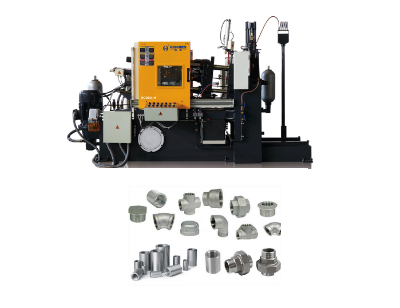
A pipe union is a type of detachable pipe fitting connection consisting of two end joints and a locking nut in the middle, enabling quick assembly and disassembly without rotating the pipe body.
Based on different connection methods, pipe unions fall into two main types: socket weld unions and threaded unions.
These two types differ significantly in terms of structural design, installation method, sealing performance, and applicable scenarios.
Caps and Plugs types
- Basic Functions of Pipe Caps
- Structural Features and Advantages
Basic Functions of Pipe Caps
Terminate pipes, either with or without threading, to seal them.
Pipe End Caps are a particular kind of fitting that mostly cover a pipe end.
They stop impurities like water, moisture and dust from getting inside pipes.
These parts also prevent pipe damage and fully protect pipe ends.
Structural Features and Advantages
End cap pipe fittings usually come with a tear tab or strip for easy removal.
They have various shapes, sizes and are made of premium materials.
Besides protecting pipe ends, they reduce pressure drops and keep the inside of pipes clean all the time.
Flanges types
- Working Principle & Composition
- Core Advantages & Application Scope
Working Principle & Composition
Flanges connect pipes, valves and other parts with bolts and clamps to form a tight seal.
A standard flange connection includes three key parts: flange body, gasket and bolts.
It serves diverse industrial scenarios, and fits different pressure grades and conveying media.
Core Advantages & Application Scope
Flanges rank among the most popular pipe connectors. They join pipelines, valves, tanks and other equipment widely.
This connection keeps flow and pressure stable with unobstructed passage.
Below we introduce common flange types and their practical uses.
Adapters types
Adapters are piping components that attach different kinds of pipes.
For example, an adapter could contain a compression fitting at one end and a threaded fitting at the other.
Pipe adapters are made with both male and female connectors.
Adapters feature a wide range of opening shapes.
Threaded adapters are easy to install. You can connect pipes by twisting them together.
Compression adapters close tightly around the pipe to secure the joints.
For additional security, you may choose a barbed adapter.
It has barbs that secure to the pipe openings. Several other types of specialized adapters are available in the market.
Brass adapter joints resist oxidation and rusting, making them ideal for irrigation. Stainless steel adapters can bear high-pressure gas flow.
Copper and PVC adapters are suited for plumbing due to their corrosion resistance, heat conductivity, and pricing.
Bushings types
Connect pipes of different diameters, typically used to reduce the size of a larger pipe to a smaller one.
Sometimes, you may need to connect pipes that have different connectors.
This can often happen when revamping old pipe networks.
Bushing joints can connect pipes of different types, such as male-to-female or threaded-to-welded.
They can attach pipes of different sizes and openings. They can have internal or external threading.
Common materials for bush connectors are plastic, steel, brass, and bronze.
They are excellent for general use, chemical industry, plumbing, and oil pipelines.
Nipples types
Nipple fittings are male-threaded at both ends.
They can connect two female-threaded pipes.
They are often used in plumbing due to their efficient nut-and-bolt construction.
Plumbers can easily work them using a wrench.
A close nipple has little to no unthreaded space between the openings.
Conversely, barrel nipples have a long length of unthreaded space between the openings.
A welding nipple has an unthreaded portion that can attach to a pipe opening.
Nipple joints are useful components in plumbing, oil, gas, and petrochemical industries.
Short, threaded pipes used for connecting fittings or other components.
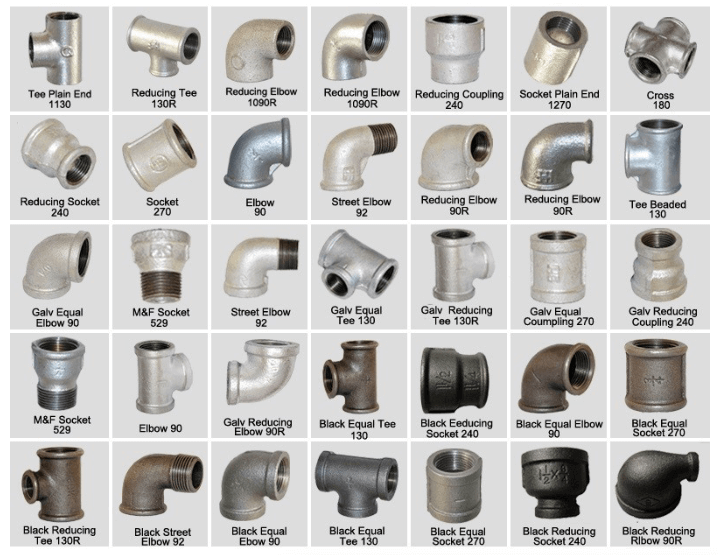
Different pipe fittings application scenarios
- Petrochemical industry
- Shipbuilding
- Architecture and Municipal Engineering
- Energy and electricity
Petrochemical industry
Flanges and butt-weld elbows: Connect the reactor to the distillation tower and withstand high temperature and high pressure.
Reducer tee: Separates crude oil from refined products, and the material is mostly stainless steel or alloy steel.
Shipbuilding
Flange connection system: Used for fuel and cooling water pipelines, it is required to be resistant to salt spray corrosion.
Expansion compensator: Offsets the stress caused by thermal expansion and contraction to prevent pipeline deformation.
Architecture and Municipal Engineering
Threaded joints and mechanical clamping accessories: Quick installation of fire sprinkler systems, suitable for complex layouts.
Galvanized steel pipe elbows: Building drainage systems, balancing strength and rust prevention.
Energy and electricity
Alloy steel tee: Steam pipeline for supercritical units, with a temperature resistance of over 600℃.
Copper tube expansion joint fittings: Refrigerant transportation in refrigeration systems, ensuring sealing and heat conduction efficiency.
Manufacturing Methods of Metal Pipe Fittings
- Die-Casting Method
- Hydraulic Cold Forming & Cold Working Processes
Die-Casting Method
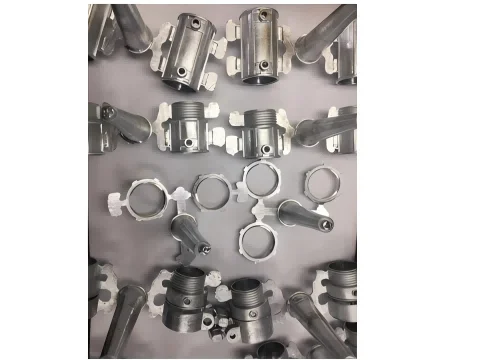
Aluminum alloy & zinc-aluminum alloy die-casting fittings are connected by special fastening tools without heating or high skills, suitable for flammable environments.
The joint is compressed radially to form a tight seal. These fittings feature corrosion resistance, high strength and excellent sealing, widely used in irrigation, liquid sealing conduits and industrial construction.

Hydraulic Cold Forming & Cold Working Processes
Advanced hydraulic cold forming ensures high precision and quality for special pipe fittings.
Seamless steel pipes are produced via rolling, continuous rolling, three-roller rolling and extrusion for different diameters.
Cold working strengthens metals, improves corrosion resistance; stainless steel and titanium tubing are widely applied in oil & gas, medical and aerospace fields.
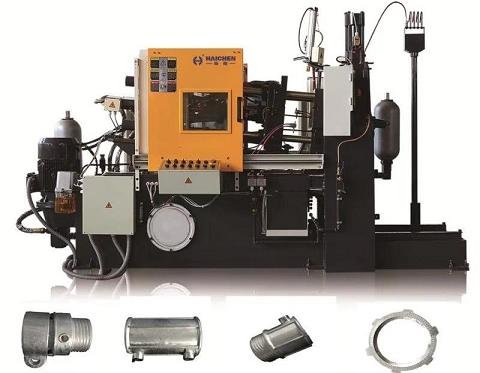
Haichen Metal Pipe Fittings Machine
Different types of die-cast metal pipe joints have their own characteristics and advantages in different application scenarios, such as corrosion resistance, high strength, good sealing, etc.
And are suitable for various industrial and construction fields.
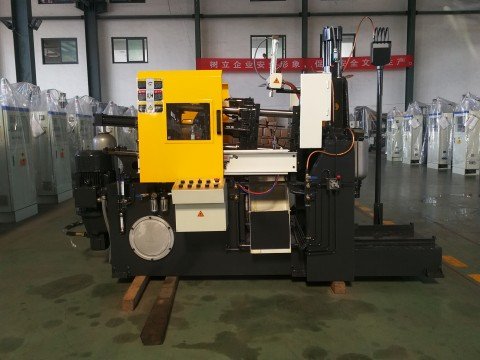
Haichen specializes in the manufacturing of press-founding equipment and molds for professional metal pipe fittings.
With years of rich production experience, we possess mature technologies and stable processes in developing and processing metal pipe component molds.
We offer customized mold design and manufacturing services for various shapes and specifications of die-cast metal pipe joints.
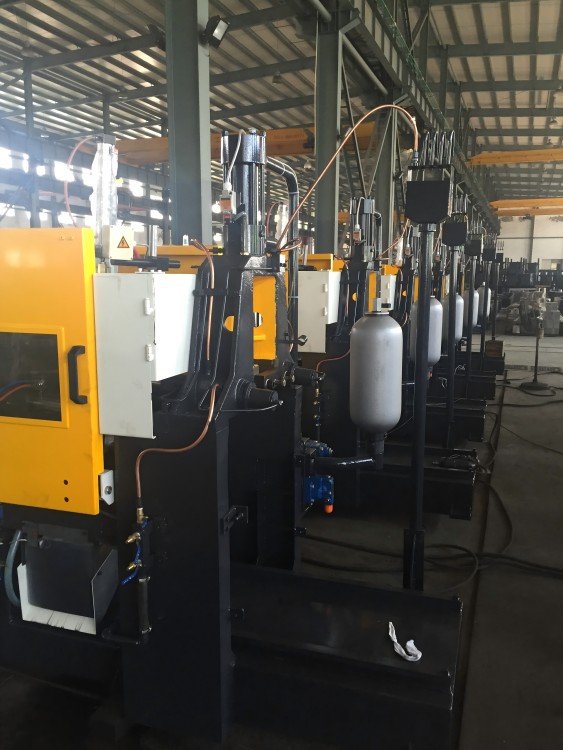
In addition, we provide an extremely wide range of die-casting machine models to meet the requirements of different tonnages, production efficiency and product dimensions, thus ensuring stable and high-quality batch production of various pipe components.
Our solutions are widely applied in various industrial and construction fields, such as pipeline systems, hydraulic and pneumatic equipment, automotive engineering, municipal construction, petroleum, chemical industries.
And general machinery, providing reliable, efficient and cost-effective die-casting solutions for global customers.