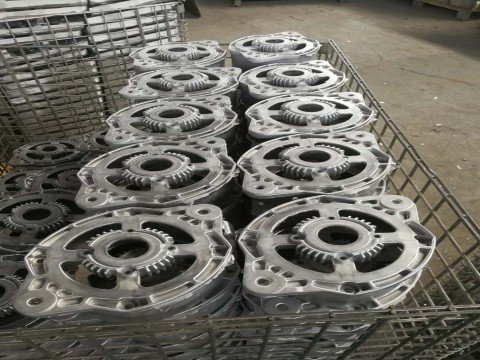
Alloy selection die casting starts with understanding your part’s needs — strength, weight, cost, and environment. This guide covers aluminum, zinc, magnesium, and copper alloys to help you choose the right one.
Die casting alloy selection starts with understanding your part’s needs — strength, weight, cost, operating environment, and production volume. Choose the wrong alloy and you risk premature part failure, excessive machining costs, or unacceptably low production yields.
This guide compares the four main die casting alloy families — aluminum, zinc, magnesium, and copper — across key performance metrics and cost factors. With over a decade of experience in die casting, HAICHEN provides alloy-specific machine solutions backed by real production data.
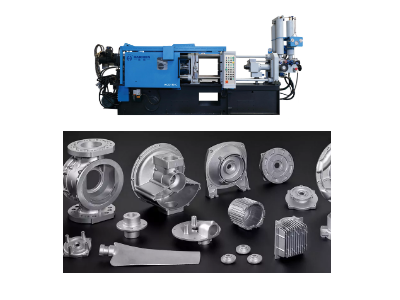
What Is Die Casting Alloy Selection?
Die casting is a metal casting method that forces molten metal into a mold with high pressure. The choice of alloy is very important for obtaining the desired properties in the product. Each alloy family offers distinct advantages and limitations that directly impact part performance, production efficiency, and total cost.
The Four Main Die Casting Alloy Families
| Alloy | Best For | Key Benefit | Cost |
|---|---|---|---|
| Aluminum | General, lightweight | Strength-to-weight | Moderate |
| Zinc | Intricate parts | Castability, thin walls | Moderate |
| Magnesium | Ultra-light parts | Lightest structural metal | Higher |
| Copper | Conductivity | Heat and electrical transfer | Highest |
Aluminum – The Most Common Die Casting Alloy
Aluminum is everywhere in die casting — cars, planes, phones, and more. It offers sufficient strength for most applications at about one-third the weight of steel, and it resists corrosion well.
Key advantages:
- Excellent strength-to-weight ratio
- Good corrosion resistance
- High thermal and electrical conductivity
- Widely available, cost-effective
Common alloys:
A380 (general purpose), A360 (corrosion resistance), A356 (heat-treatable)
Real-world use: Automotive ECU housings, LED housings, electronic enclosures, cookware
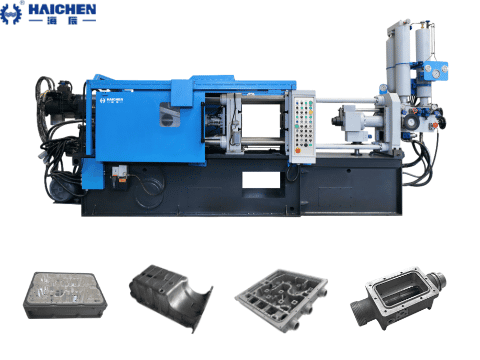
HAICHEN machines for aluminum: Cold chamber machines with high injection pressure, real-time shot monitoring, and energy-efficient hydraulics
Zinc – A Versatile Die Casting Alloy
Zinc alloys offer excellent castability — including thin walls and complex shapes with bends. They are often used for small fasteners, automotive components, and decorative hardware.
Key advantages:
- Excellent castability — fills thin walls easily (down to 1.0mm)
- Good strength and wear resistance
- Low melting point — faster cycles (typically 20-30% faster than aluminum)
- Easy to plate and finish
Common alloys:
ZA-8 (small intricate parts), ZA-12 (balance of strength, ductility, castability)
Real-world use: Lock parts, zipper sliders, decorative hardware, small automotive components
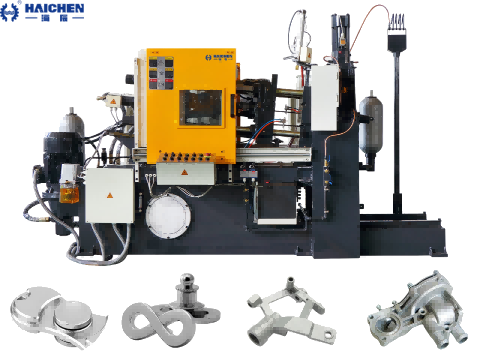
HAICHEN machines for zinc: Hot chamber machines with faster cycles, lower energy consumption, and precision casting
Magnesium – The Lightest Die Casting Alloy
Magnesium is the lightest structural metal — about 33% lighter than aluminum and 75% lighter than steel. When weight is critical, magnesium is the answer.
Key advantages:
- Lightest structural metal
- Excellent strength-to-weight ratio
- Good damping characteristics
- Ideal for weight-critical applications
Common alloys:
AZ91D (automotive, weight reduction)
Real-world use: Aerospace components, automotive parts where weight matters, power tool housings
HAICHEN machines for magnesium: Vacuum-assisted injection systems with anti-oxidation protection
Copper – The Die Casting Alloy for Conductivity
Copper alloys (brass, bronze) offer excellent thermal and electrical conductivity — ideal for heat dissipation and electrical contacts.
Key advantages:
- Excellent thermal conductivity (300-400 W/m·K)
- High electrical conductivity
- Good corrosion resistance
- Aesthetic value (ornamental products)
Real-world use: Heat sinks, electrical connectors, decorative hardware, marine components
HAICHEN machines for copper: High-temperature injection units with wear-resistant componentsmachines with high injection pressure, real-time shot monitoring, and energy-efficient hydraulics.
Cost Comparison and Economic Factors
Material cost is only one part of the equation. Total cost includes material, processing, tooling, and scrap rates.
| Cost Factor | Aluminum | Zinc | Magnesium | Copper |
|---|---|---|---|---|
| Raw material cost (relative) | Moderate | Low | Higher | Highest |
| Cycle time (relative) | Moderate | Fastest | Moderate | Slowest |
| Mold life (relative) | Moderate | Longest | Moderate | Shortest |
| Machining cost (relative) | Low | Low | Moderate | Higher |
Key economic insight: Zinc often delivers the lowest per-part cost at high volumes due to fast cycle times and long mold life, despite moderate material cost. Aluminum offers the best balance for medium volumes. Magnesium and copper are premium choices for specialized applications.
How HAICHEN Optimizes Each Alloy in Real Production
HAICHEN’s value lies not only in providing die casting machines for different alloys but also in offering deep process support to help customers fully realize each alloy’s potential.
What HAICHEN provides for each alloy:
- Aluminum: Cold chamber machines with high injection pressure, real-time shot monitoring, and energy-efficient hydraulics
- Zinc: Hot chamber machines with faster cycles, lower energy consumption, and precision casting
- Magnesium: Vacuum-assisted injection systems with anti-oxidation protection
- Copper: High-temperature injection units with wear-resistant components
Real production example – Magnesium automotive part:
A customer developing a thin-wall magnesium automotive structural part faced filling and warpage challenges due to magnesium’s high reactivity and low ductility.
HAICHEN engineered a solution combining vacuum-assisted injection, optimized mold temperature gradients, and nitrogen-shrouded melt handling. Results:
- No oxidation defects in over 50,000 cycles
- Yield rate exceeded 99%
- Production efficiency increased by 25%
- Part weight reduced by 40% vs. steel equivalent
Frequently Asked Questions
Q: What are the best alloys for die casting?
A: Aluminum is the most common, followed by zinc, magnesium, and copper. The best choice depends on your application requirements for strength, weight, corrosion resistance, and cost.
Q: Which die casting alloy is the lightest?
A: Magnesium is the lightest structural metal — about 33% lighter than aluminum and 75% lighter than steel.
Q: Which alloy has the best castability for thin walls?
A: Zinc alloys offer the best castability. They can achieve wall thicknesses as thin as 1.0mm, compared to 1.5mm for aluminum.
Q: Which alloy is the most cost-effective?
A: Aluminum and zinc are generally the most cost-effective. Zinc offers faster cycle times and longer mold life, reducing per-part cost at high volumes. Aluminum offers the best balance of material cost and performance.
Q: Why can’t I use magnesium for all lightweight parts?
A: Magnesium has poor corrosion resistance without coating, higher material cost, and requires specialized handling (anti-oxidation protection). It is best used when weight reduction is the primary design driver.
Q: Can HAICHEN machines handle all these alloys?
A: Yes — HAICHEN offers both cold chamber (for aluminum, magnesium, copper) and hot chamber (for zinc) machines. We also provide alloy-specific process support and machine configurations.
Q: How does alloy selection affect mold life?
A: Zinc is gentlest on molds (longest life), followed by aluminum, magnesium, and copper (shortest life due to higher temperatures and abrasive properties). This must be factored into total cost calculations.