Aluminum cold chamber die casting is a specific type of die casting process used primarily for metals with high melting temperatures, such as aluminum.
Aluminum die casting is widely use in automotive, aerospace, electronics, and consumer goods industries due to its ability to produce lightweight, strong, and complex parts with high dimensional accuracy. The cold chamber process is specifically design for aluminum because of its high melting temperature.
This article explains the key steps of the aluminum cold chamber die casting process, including mold preparation, metal melting, injection, cooling, and ejection. It also covers the advantages of this process and the types of parts commonly produced.
As a leading manufacturer of die casting machines, HAICHEN provides reliable cold chamber equipment optimized for aluminum casting, helping customers achieve consistent quality and high production efficiency.
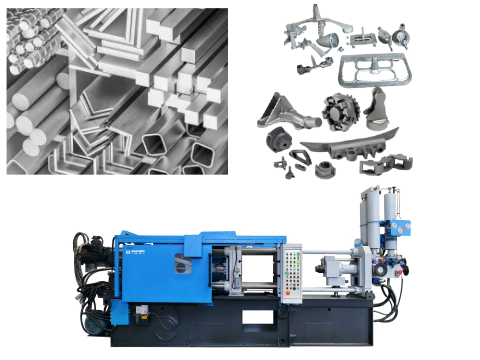
Process of Aluminum cold chamber Die Casting
Aluminum die casting is a metal forming process in which molten aluminum is inject into a mold cavity under high pressure and allowed to cool and solidify to form a part.
- Mold Preparation
- Metal Preparation
- Injection
- Cooling and Solidification
- Ejection and Trimming
Mold Preparation
The mold (also called a die) is made from high-quality steel. It consists of two halves that can be open and close. It is precisely machined to form the desire shape of the final part.
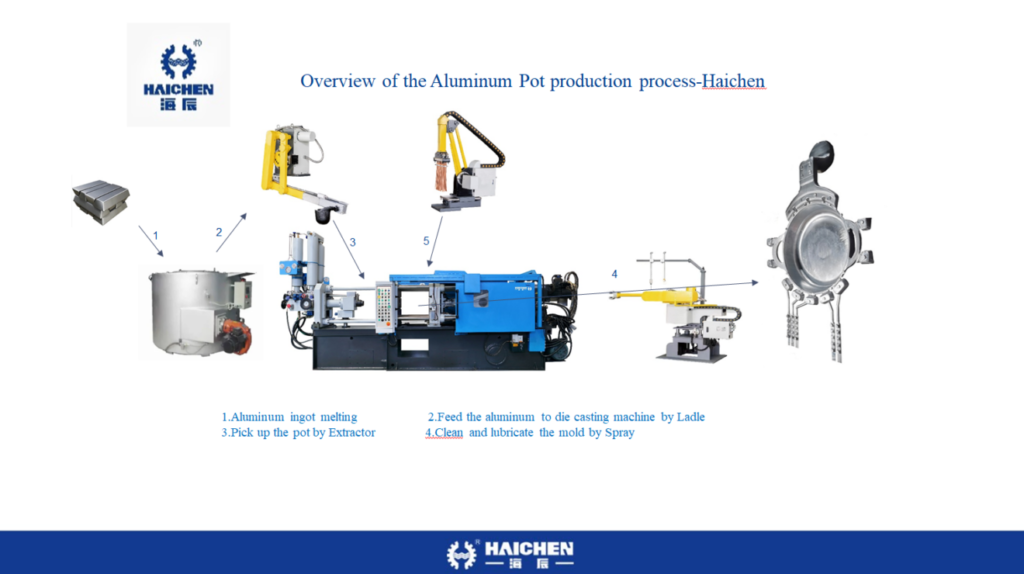
The mold is coate with a release agent to prevent the molten aluminum from sticking to the surface.
Metal Preparation
Aluminum is melte in a separate furnace outside the machine. The melting temperature for aluminum typically ranges from 650°C to 700°C.
The molten aluminum is then transfer to a holding furnace or ladle, which is part of the machine.
Injection
The molten aluminum is ladled or poured into a shot sleeve (also called a cold chamber) in the machine. This chamber is not heated and is kept at a lower temperature compared to the molten metal.
A hydraulic plunger or piston then forces the molten aluminum from the shot sleeve into the mold cavity at high speed and under high pressure (typically around 1,500 to 20,000 psi).
Cooling and Solidification
Once the molten aluminum fills the mold cavity, it begins to cool and solidify. The cooling time depends on the thickness and complexity of the part.
The mold remains closed until the part has fully solidified.
Ejection and Trimming
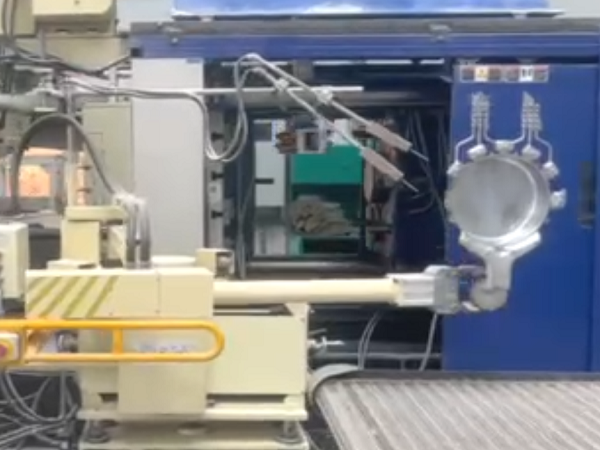
After solidification, the mold is opened, and the part is ejected using ejector pins.
Any excess material, such as flash or runners, is trimmed away to obtain the final part.
Advantages of Aluminum Cold Chamber Die Casting
- Suitability for High-Melting-Point Metals
- High Precision and Complexity
- Good Mechanical Properties
- Lightweight Parts
Suitability for High-Melting-Point Metals:
Aluminum has a relatively high melting temperature. And the cold chamber process is well-suited for metals like aluminum, zinc alloys, and magnesium that require high-temperature handling.
High Precision and Complexity:
The process allows for the production of parts with intricate designs, thin walls, and tight tolerances. The high injection pressure ensures that the molten metal fills even the most complex mold cavities.
Good Mechanical Properties:
The rapid cooling rate during solidification helps to refine the microstructure of the aluminum, resulting in parts with good mechanical properties. Such as high strength and hardness.
Lightweight Parts:
Aluminum is a lightweight material, making cold chamber die casting ideal for applications where weight reduction is important. Such as in the automotive and aerospace industries.
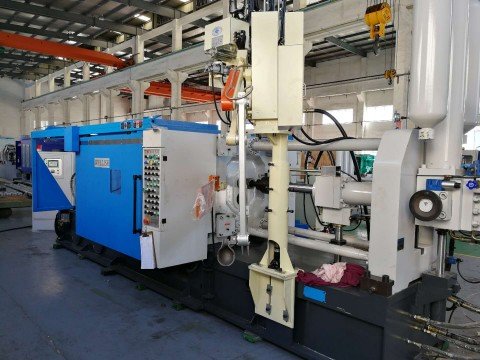
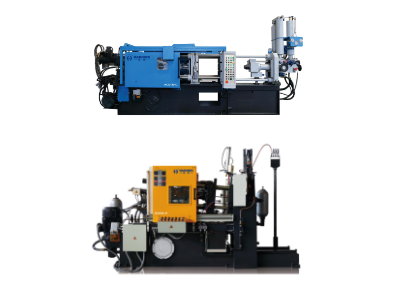
HAICHEN Machines for Aluminum Die Casting
HAICHEN cold chamber die casting machines are designed to meet the specific requirements of aluminum casting. Key features include:
- Injection System: Our machines provide multi-stage injection speed control, allowing precise filling of complex mold cavities. The injection pressure reaches up to 2500 bar, ensuring complete filling and reduced porosity.
- Clamping Unit: High-rigidity clamping structures maintain mold alignment under high pressure, minimizing flash and ensuring dimensional consistency across production runs.
- Control System: Advanced PLC with real-time monitoring enables precise control of injection parameters, temperature, and cycle timing. Operators can store and recall process settings for different parts.
- Automation Integration: Machines support integration with robots, sprayers, and extractors for fully automated production cells.
Application Example: Automotive Bracket Production
A manufacturer producing aluminum brackets for electric vehicles faced inconsistent quality and high scrap rates. Using a HAICHEN 630-ton cold chamber machine with optimized injection profiles, they achieved:
- Cycle time reduction from 120 to 95 seconds
- Scrap rate decrease from 8% to 2.5%
- Consistent dimensional accuracy within ±0.15mm
Aluminum Casting machine supplier: Haichen Machinery
Haichen Machinery is a Chinese company specializing in the manufacturing and supply of aluminum cold chamber die casting machines, hot chamber die casting machines and related equipment. We offer a range of die-casting solutions, including cold chamber die casting machines, which are commonly used for aluminum, magnesium, and other non-ferrous alloys.
Aluminum cold chamber die casting is a highly efficient and versatile manufacturing process that is particularly well-suited for producing high-quality, complex parts from high-melting-point metals like aluminum. Its ability to deliver precision, high production rates, and good mechanical properties makes it a popular choice across various industries, including automotive, aerospace, and electronics.


