The cooling system in a die casting mold is a critical component designed to manage the temperature of the mold during the die casting process.
It plays a vital role in ensuring the quality of the cast parts, the efficiency of the process, and the longevity of the mold.
The generation of significant heat to cause a rise in temperatures is a flagship feature of die casting.
Still, excessive heat is always detrimental to the capabilities of mechanical production.
So, keeping the heat under control occupies a considerable space in die casting process.
Haichen implement different approaches to maintain an advantageous thermal environment.
And it all starts with the cooling system integrated into the casting mold.
It’s essential to understand the why and the what of the die casting cooling system used for the metal box.
What is A Casting Mold Cooling System?
It’s an interconnected and/or interdependent network of various heat-dissipating channels and passages.
A cooling system enables consistent, systematic, controlled removal of heat during die casting processes. The series of passages or channels required for cooling is either drilled or machined into casting molds.
The standard design puts the channels along the mold contours to achieve the desired temperatures.
A complex design will require an intuitive placement of passages at potential heat buildup points.
The die casting cooling system grants the coolant, oil/water, to enter and circulate throughout the mold to dissipate heat.
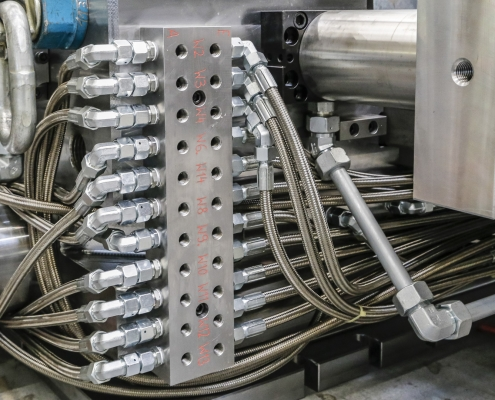
Function of the Cooling System
The primary function of the cooling system is to regulate the mold temperature uniformly.
This helps in achieving consistent solidification of the molten metal, preventing defects such as warping, internal stresses, and porosity.
Effective cooling also reduces cycle times, improving production efficiency.

Components of the Cooling System
- Cooling Channels
- Cooling Inserts
- Cooling Accessories
Cooling Channels
These are internal passages within the mold that allow coolant (usually water or a water-based fluid) to circulate. Place the channels strategically to ensure even heat distribution and rapid cooling.
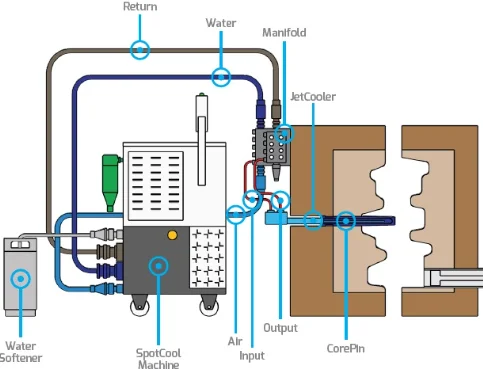
Cooling Inserts
Some advanced molds use conformal cooling inserts to match the shape of the mold cavity. This allows for more efficient heat transfer and better control over the cooling process.
Cooling Accessories
These include baffles, bubblers, heat pipes, and other components that enhance the cooling efficiency.
The Importance of Cooling for Die Casting Molds
Haichen believes that all die casting processes must be equipped with a well-functioning cooling system. This is because molten metal must dissipate heat adequately.
Otherwise, die castings will not achieve the desired texture, performance, and quality.
It is essential to maintain balance, suitability, and stability of the temperature of the injected liquid metal.
Even the slightest deviation can lead to a variety of defects that affect product performance, such as warping, cracking, and/or shrinkage during solidification.
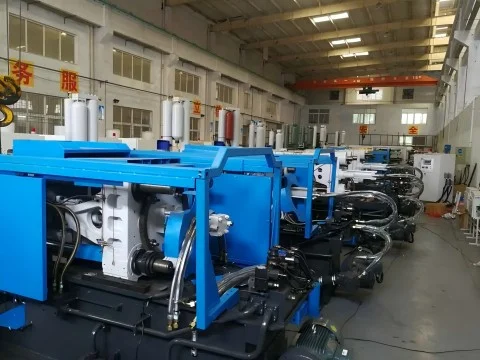
Reduced cycle times are another significant advantage of using a suitable die casting cooling system.
Faster casting speeds mean more injection molds, resulting in increased production efficiency.
Even a delay of a few seconds can lead to huge cost losses in production. In addition, keeping equipment and production sites cool is also an important part of the system.
Air cooling is not ideal as it can cause the temperature of the premises to be too high, which is a safety hazard. Overheated equipment quickly loses its stable operating performance.
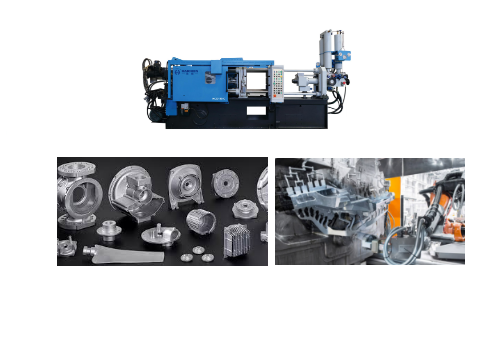
Benefits of an Efficient Cooling System
- Improved Part Quality
- Increased Mold Life
- Reduced Cycle Time
Improved Part Quality
Uniform cooling reduces defects and enhances the mechanical properties of the cast parts.
Increased Mold Life
Proper cooling reduces thermal fatigue and wear on the mold, extending its operational life.
Reduced Cycle Time
Efficient cooling allows for faster solidification, leading to shorter production cycles and higher efficiency.
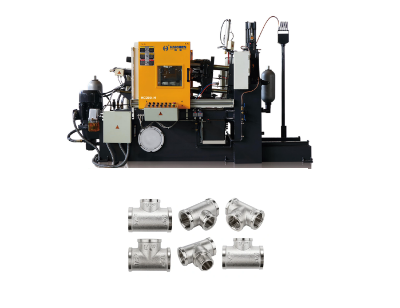
Design Considerations of the cooling system
- Channel Placement
- Uniform Cooling
- Flow Rate and Pressure
- Material Compatibility
Channel Placement
Position cooling channels closely enough to the mold cavity to be effective but not so close that they weaken the mold structure.
Uniform Cooling
Design channels to ensure even cooling across the mold to avoid uneven solidification and part defects.
Flow Rate and Pressure
The cooling system must provide adequate flow rate and pressure to remove heat efficiently.
Material Compatibility
The cooling medium and channel materials must be compatible to prevent corrosion or clogging.
The cooling system in a die casting mold is essential for maintaining consistent mold temperatures, improving part quality, and enhancing production efficiency.
Proper design and implementation of them are crucial for achieving high-quality castings.
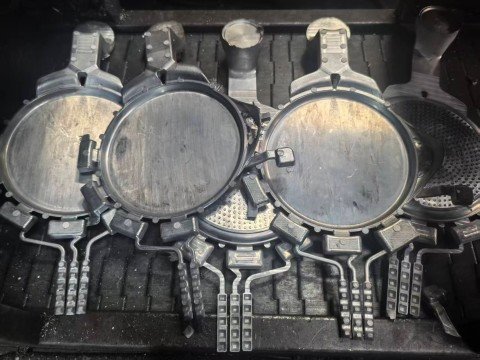
Haichen Cooling System in Die Casting Mold
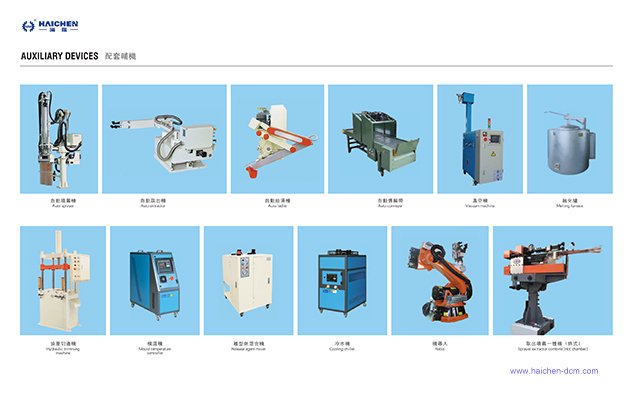
Haichen is a well-known manufacturer and supplier of die casting machines (cold chamber and hot chamber die casting machines)and related equipment, including cooling systems for die casting molds.
Our cooling systems are designed to enhance the efficiency and performance of the die casting process by ensuring precise temperature control and optimal heat management in the mold.
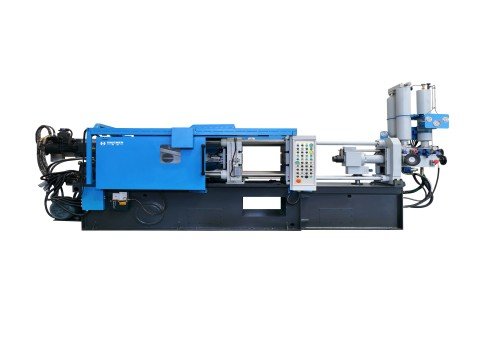
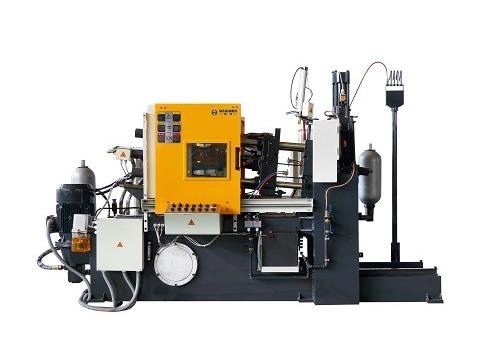
Key Features of Haichen Cooling Systems
High Efficiency: Haichen cooling systems are engineered to provide efficient heat removal, reducing cycle times and improving production rates.
Precision Temperature Control:These systems ensure uniform cooling across the mold, which is critical for producing high-quality castings with minimal defects.
Durability: Haichen cooling systems are built to withstand the harsh conditions of die casting, including high temperatures and pressures.
Customizable Solutions: Haichen offers tailored cooling systems to meet the specific requirements of different die casting applications and mold designs.
Advanced Technology: Their systems often incorporate advanced features like automated temperature monitoring and control, ensuring consistent performance.


