Tie bar measurement system in die casting refers to a system used to detect and monitor the stress or deformation of the tie bar.
In the die-casting process, the pull rod is a long column that connects the fixed template and the movable template. Its main function is to transmit the locking force to keep the mold from being opened during the injection process. Therefore, the stress and deformation of the pull rod directly affect the stability of the mold and the quality of the product.
The tie bar measurement system in the die-casting machine is an important tool to ensure the stability of the die-casting process and product quality. By monitoring and analyzing the stress of the pull rod in real-time, it can identify the potential problems. And resolve in a timely manner. Thereby optimizing production efficiency and extending equipment lifespan.
Tie bar measurement system in die casting method of pull rod
The significance of tie bar measurement system in die casting
Improved Production Efficiency and Automation
Common specifications of pull rods
Application of measurement system
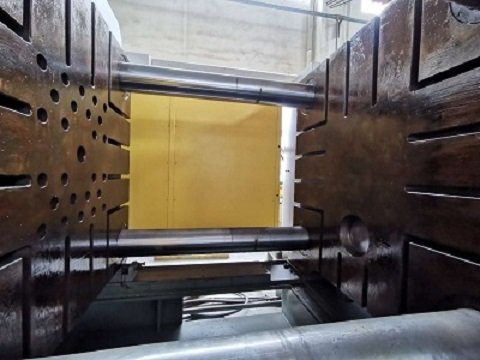
Tie bar measurement system in die casting method of pull rod
- Mechanical measurement
- Electronic measurement
- Ultrasonic measurement
Mechanical measurement
Measuring the elongation of a tension rod by drilling holes on the rod and installing measuring devices such as measuring rods or strain gauges. For example, the stress of the tension rod can calculate by drilling a hole in the center of the rod. And inserting a measuring rod, and then reading the elongation of the measuring rod.
Electronic measurement
Using strain gauges to directly measure the stress of the tension rod, this method can monitor the stress changes of the tension rod in real time, thereby more accurately controlling the locking force.
Ultrasonic measurement
In recent years, ultrasonic measurement technology has applied to stress monitoring of tension rods. By measuring the stress changes of tension rods in real time, it can imporve the accuracy and efficiency of measurement.

The significance of tie bar measurement system in die casting
- Ensure mold stability
- Optimizing the production process
- Fault warning
- Preventing tie rod overload fracture
- Reducing mold damage
- Optimizing equipment maintenance
Ensure mold stability
By measuring the stress of the pull rod, potential stress concentration issues that may occur during the use of the mold. It can detect in a timely manner. And measures can take to avoid mold damage.
Optimizing the production process
By monitoring the stress changes of the pull rod, the locking force can adjust to ensure the stability of each production process. Thereby improving product quality and production efficiency.
Fault warning
When the stress on the pull rod exceeds the safe range, the system can issue a warning to prompt the operator to perform maintenance or replace the pull rod, thereby reducing the risk of equipment failure.
Preventing tie rod overload fracture
Tie rods are susceptible to fatigue under cyclic loading. Measurement systems can detect abnormal stretching (e.g., using strain gauges or ultrasonics) to prevent overload-induced fracture.
Reducing mold damage
Unbalanced tension can cause mold misalignment, leading to flash and “imprinting” of molten metal on the mold surface, shortening mold life. Real-time monitoring can prevent these problems.
Optimizing equipment maintenance
Regularly measuring tie rod strain (e.g., using a drilling method or a magnetic dial indicator) can assess equipment health and guide preventative maintenance.
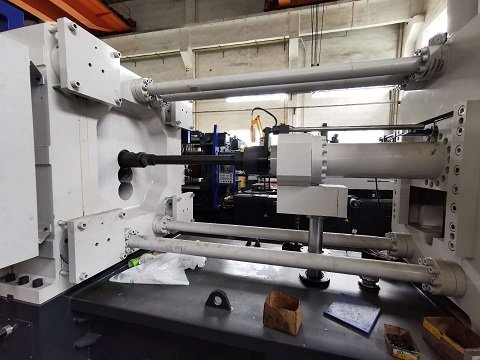
Improved Production Efficiency and Automation
- Reduced Downtime
- Automated Control
- Data Recording and Analysis
Reduced Downtime
Traditional manual adjustments require frequent machine stops. The automated measurement system (which adjusts tension during the mold opening gap) avoids production interruptions.
Automated Control
The electronic control system automatically balances the load on the four tie rods (e.g., by feeding strain signals into the logic circuit), reducing manual intervention and improving operational efficiency.
Data Recording and Analysis
Modern systems can record and transmit clamping force data to a PC for process optimization and quality control.
Common specifications of pull rods
- Diameter typical range
- Design Basis
- Length
- Materials and Strength
The diameter and spacing of the pull rod are important parameters that affect the performance of the die-casting machine. For example, some models of die-casting machines have a pull rod diameter of 125 millimeters and a spacing of 650 millimeters.
Diameter typical range
50–600 mm (steel), with common sizes including 100 mm, 120 mm, and 135 mm.
The spacing and diameter of the pull rods of different models of die-casting machines may vary. For example, some models have a pull rod spacing of 750 millimeters and a diameter of 150 millimeters.
Design Basis
Calculation of bending stress, extrusion stress, and wrapping force is required.
Length
Aspect ratio limit: ≤ 20:1 to prevent buckling failure.
Example: A 1305 mm long Q235B tie rod must have a diameter of ≥ 100 mm to support a 16.4 kg load.
Materials and Strength
- Material:
High-strength alloy steel (such as 45#, 40Cr, 42CrMo), surface hardened (salt bath nitriding, hard chrome plating, etc.). - High-toughness material (such as H13 hot work die steel, hardness 30-37HRC) for fatigue resistance.
Strength Requirements: - Stress Formula: Stress = Clamping Force × 1000 / (3.14 × Diameter²)
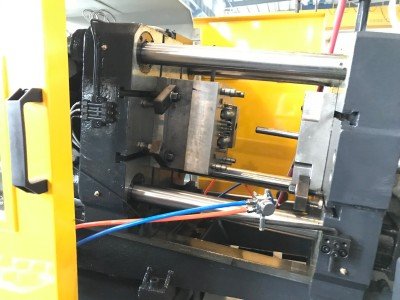
Application of measurement system
- Traditional method
- Modern technology
Traditional method
By installing mechanical measuring devices such as measuring rods or strain gauges on the pull rod, it can directly measure the elongation or stress of the pull rod.
Modern technology
Advanced technologies such as wireless magnetic strain sensors use to achieve remote monitoring and data recording. Improving the convenience and accuracy of measurements.
Haichen tie bar measurement system in die casting
Solve Flash Issues for an Automotive production
One of Haichen customers produce auto parts who had flash on aluminum engine mounts. The problem happened randomly, hurting quality. HAICHEN engineers checked their machine, which lacked tie bar monitoring.
We installed our measurement system. Data showed one tie bar had 15% lower force than others during cycles. We found and fixed a hydraulic issue on that side. After the fix, forces became even, and flash defects were eliminated.
For HAICHEN, a great machine is both strong and smart. Our tie bar measurement system is a key smart feature. It provides data to prevent problems. This shows our focus on precision and reliability. We build machines that help you produce quality parts with less downtime.
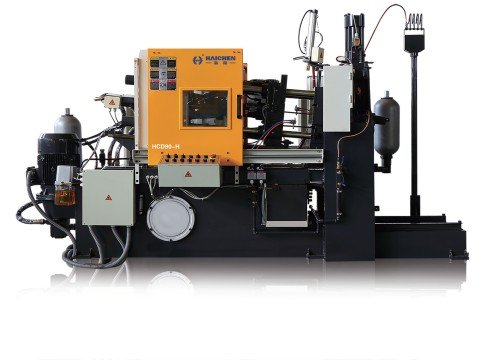
Haichen die casting machine
At the same time, we produce both high pressure cold chamber die casting machine , hot chamber die casting machine and spare parts. They have durable and highly precise features.
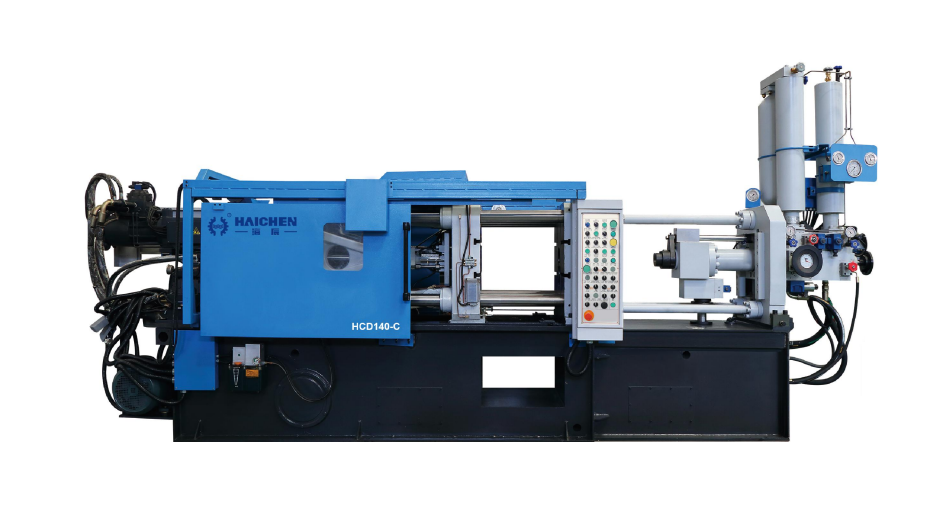
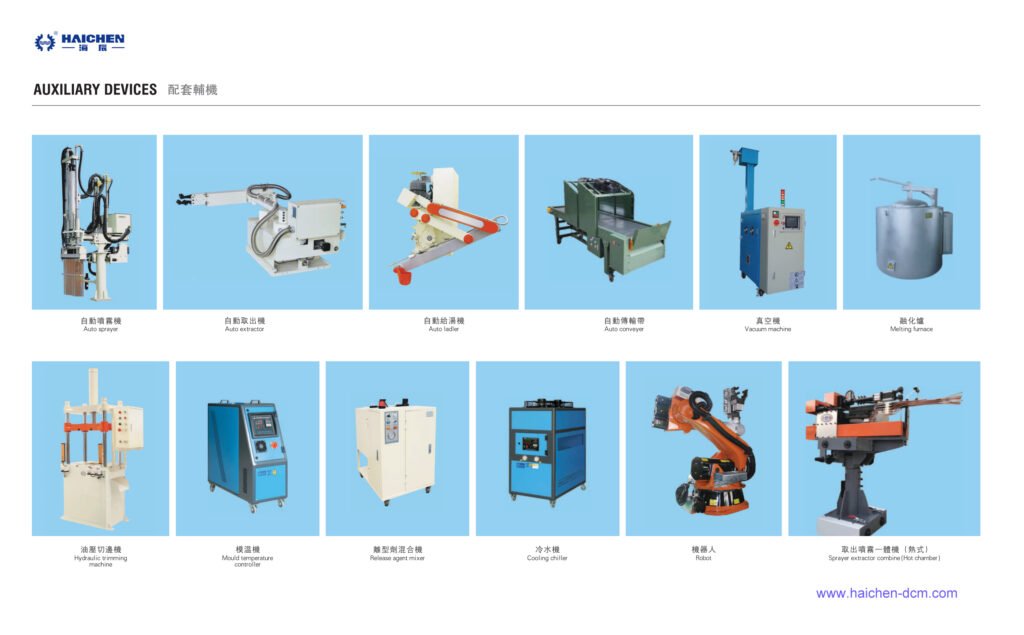
Haichen also produce die casting machine auxiliary equipment. Such as conveyor, vacuum machine, mold temperature controller, industrial robot, sprayer and so on.
We supply cold chamber and hot chamber die casting machine spare parts.
Welcome contact us.


