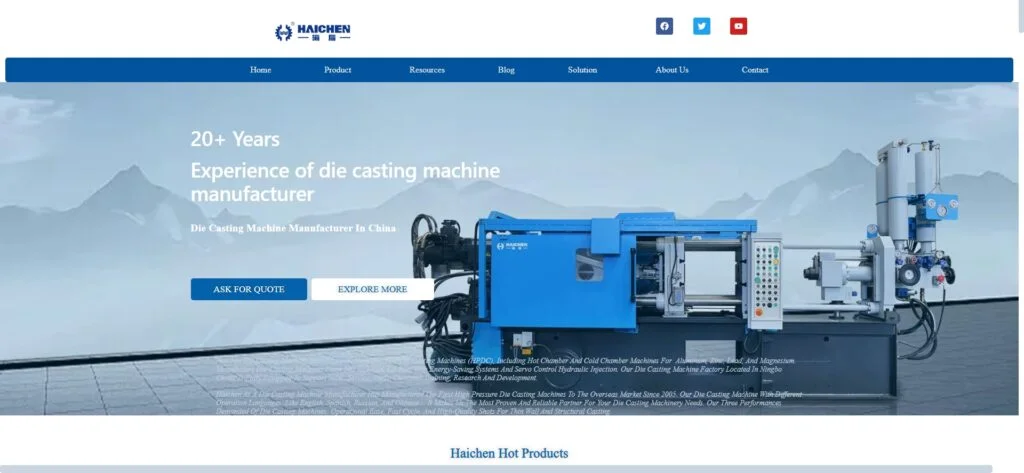
Crucible material including:
- Graphite Crucible
- Quartz Crucible
- Porcelain Crucible
- Corundum Crucible
- Metal Crucible
- Silicon Carbide Crucible
In addition, there are some special-purpose crucibles, such as crucibles for metal film deposition, and technology for cold crucible directional solidification of titanium-based alloys.
The design and material selection of these crucibles are all aimed at meeting specific industrial application needs.
Such as improving melting efficiency, reducing material contamination, and improving product quality.
The selection of materials for the crucible (holding pot) of a die-casting machine is a crucial factor determining the melting efficiency, metal quality, and the lifespan of the equipment.
Different alloys have varying corrosiveness and reactivity towards the crucible, resulting in significant differences in the design and selection of the crucible material.
Graphite Crucible
It refers to a kind of crucible made of graphite, clay, silica and wax stone.
Graphite crucible is mainly used for melting non-ferrous metals and their alloys, such as copper, brass, gold, silver, zinc and lead.
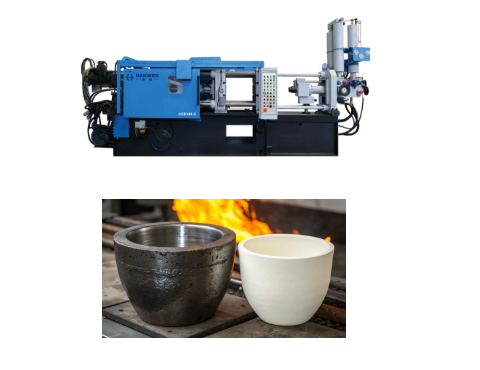
Quartz Crucible
The main chemical composition of quartz crucible is silicon dioxide.
It has the advantages of high purity, strong temperature resistance, large size, high precision and good heat preservation.
It is commonly used for pulling semiconductor materials such as large diameter single crystal silicon.
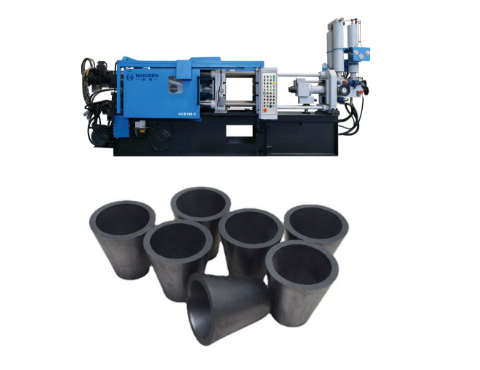
Porcelain Crucible
Porcelain crucible is the main component of chemical laboratory supplies: alumina (45-55%), silicon dioxide.
Maximum heat resistance is about 1200 degree Celsius. Suitable for melting samples of acidic substances such as K2S2O7.
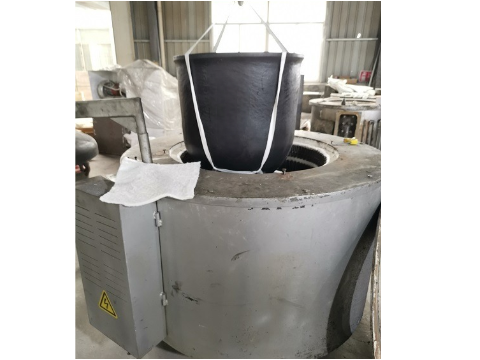
Corundum Crucible
Corundum crucible, the scientific name of alumina crucible, usually called the crucible with alumina content over 95% as corundum crucible.
It consists of porous fused alumina, which is strong and resistant to melting.
It is suitable for melting samples with weak alkalis as the melting agent.
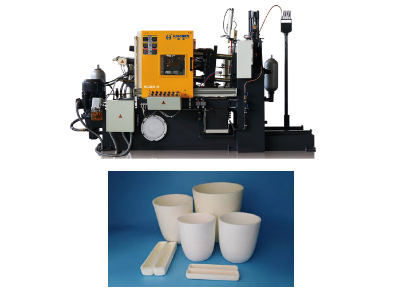
Metal Crucible
such as cast iron crucibles, nickel crucibles, etc. Cast iron crucibles are used to melt metals such as aluminum alloys and zinc alloys.
And nickel crucibles are used to melt samples with NaOH, alkaline solvents, such as Na2o2.
Silicon Carbide Crucible
Silicon carbide crucibles are ceramic deep-bottomed bowl-like containers. Crucibles are necessary when heating solids over high heat.
This is because it can withstand high temperatures better than glassware.
Made of silicon carbide material, it has very high temperature resistance and can withstand very high temperature and pressure, and is not easy to be deformed and cracked.
Silicon carbide crucibles also have good corrosion and heat resistance and are suitable for melting and sintering processes at high temperatures.
Silicon carbide crucibles perform well in melting metals and alloys of high hardness and density.
And their excellent performance ensures the stability and efficiency of the melting process.
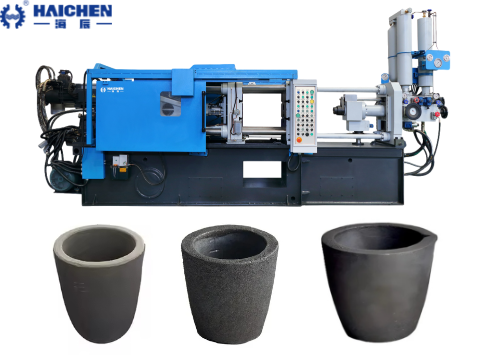
Die-casting machine crucible function
The die-casting machine crucible is one of the core components in the die-casting process.
The crucible is a container used for holding, melting, maintaining temperature, and pouring molten metal.
- Melting: By using an external heater or an internal heating device, solid metal (such as aluminum ingots) is melted into a liquid state.
- Insulation: The material of the crucible needs to have excellent insulation properties to reduce energy loss and temperature fluctuations of the molten metal.
- Pouring: During the operation of the die-casting machine, the molten metal is precisely poured into the mold.
- Filtering: During the pouring process, the filter screen or filtering structure in the crucible can trap slag, ensuring the cleanliness of the molten metal and improving the quality of the castings.
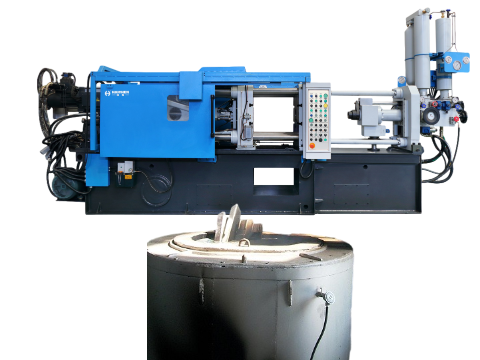
How to choose a suitable crucible for die casting machine
Selecting a suitable crucible for a die casting machine requires consideration of multiple factors.
Including the crucible’s material, design, corrosion resistance, oxidation resistance, high temperature resistance, and cost-effectiveness.
- Material selection
- Design considerations
- Corrosion and oxidation resistance
- Cost-effectiveness
- Other considerations
Material selection
According to the evidence, low-alloy cast iron containing elements such as chromium (Cr) and rare earth (Re) is a good choice as the crucible material because this material has excellent resistance to growth, oxidation, and aluminum melt corrosion.
In addition, new aluminum-melting, galvanized low-alloy cast iron crucibles also show good resistance to oxidation, growth, and melting corrosion.
Design considerations
The design of the split crucible can effectively reduce the stress caused by solidification expansion, thereby avoiding ingot cracking.
In addition, the shape and structure of the crucible should also be optimized to adapt to specific casting needs and improve efficiency.
For example, the optimization of the crucible shape inside the directional solidification silicon ingot furnace can improve the temperature field distribution and reduce defects during the ingot casting process.
Corrosion and oxidation resistance
When selecting the crucible material, its corrosion resistance and oxidation resistance in high-temperature aluminum liquid should be considered.
Studies have shown that the morphology and quantity of high carbon phases in steel materials have an important influence on their resistance to high-temperature aluminum liquid corrosion.
In addition, fine and evenly distributed A-type graphite and appropriate chromium content can significantly improve the resistance to aluminum liquid corrosion.
Cost-effectiveness
Although the initial cost of new crucibles may be higher, their long service life can significantly reduce long-term operating costs.
For example, the service life of low-alloy cast iron crucibles containing elements such as Cr and Re is 2 to 3 times that of ordinary cast iron crucibles.
Other considerations
Thermomechanical coupling analysis of crucibles is also one of the factors that need to be considered when selecting to ensure the stability and safety of crucibles under high temperature and internal compressive stress.
The selection of suitable crucibles for die-casting machines should comprehensively consider materials, design, corrosion resistance, oxidation resistance, cost-effectiveness and other relevant performance indicators.
By comparing crucibles of different materials and designs, combined with actual production needs and budget, the most suitable crucible type can be selected.
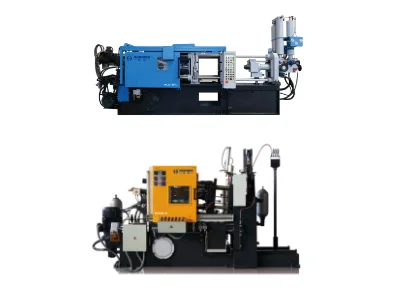
Key points for using our Haichen‘s die-casting crucible
The following points should be noted when using Haichen’s die-casting crucible:
- Temperature control
- Maintenance and care
- Material selection
- Operating specifications
Temperature control
According to, during the use of the crucible used in the magnesium alloy hot chamber die-casting machine, if there is a temperature gradient along the cross section.
Especially at the junction of the bottom and the side near the outer flame, severe deformation and cracking are prone to occur.
Therefore, when using Haichen’s die-casting crucible, it is necessary to ensure that the temperature distribution is uniform and avoid local overheating to reduce the risk of stress concentration and cracking caused by the temperature gradient.
Maintenance and care
The cast iron crucible is subjected to high temperature, corrosion, and strong thermal expansion and contraction. If it is not properly maintained, it will seriously affect the service life.
Therefore, Haichen’s die-casting crucible should be regularly maintained and maintained, including but not limited to checking the integrity and cleanliness of the crucible.
Avoiding corrosion and damage, and taking appropriate cooling measures to reduce the impact of thermal expansion and contraction.
Material selection
Considering the problem that the magnesium alloy crucible is prone to cracking during use mentioned in, choosing the right material is crucial to extending the service life of the crucible.
Although the specific materials of Haichen’s die-cast crucibles are not mentioned in the evidence.
It is recommended to select materials that are resistant to high temperatures, corrosion.
And able to withstand the effects of thermal expansion and contraction to improve the overall performance and service life of the crucible.
Operating specifications
Following correct operating procedures is also key to ensuring the normal use of the crucible.
This includes but is not limited to correct start and stop procedures, avoiding sudden temperature changes.
And regularly checking and adjusting equipment settings to ensure that the crucible operates in optimal conditions.
The correct use and maintenance of Haichen’s die-cast crucibles requires comprehensive consideration of temperature control, maintenance, material selection.
And operating specifications to ensure the long-term stable operation and service life of the crucible.