Servo sprayer die casting machine guide covering accuracy, efficiency, mold life extension and cost savings for improved production quality.
A servo sprayer for die casting machine is a precision device that applies release agent to the mold surface using servo motor drive. Unlike traditional pneumatic or hydraulic sprayers, servo sprayers deliver consistent spray paths, flow rates, and timing for every cycle.
The result is improved demolding, fewer sticking defects, and higher overall casting quality. This guide covers the complete servo sprayer die casting machine advantages — accuracy, efficiency, mold life, and cost savings — with real production data from HAICHEN installations.
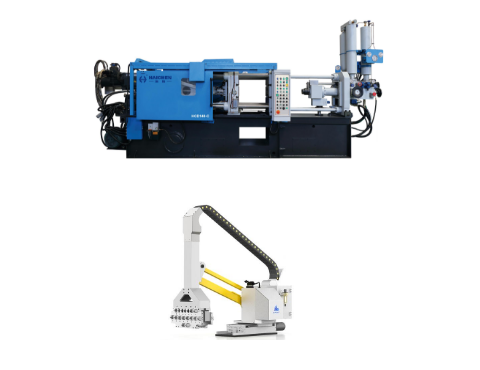
What Is a Servo Sprayer in Die Casting?
A servo sprayer system is a device used for die lubrication and spraying in die-casting machines. Its main function is to realize precise spraying operation through a servo motor drive. The core of the operation lies in servo-driven control, ensuring highly consistent spray path, flow rate, and time for each application, thereby directly improving the demolding effect and surface quality of the castings. This reduces mold sticking problems caused by uneven lubrication and provides reliable guarantee for stable and efficient continuous production.
Servo Sprayer vs Traditional Sprayer
Understanding the differences helps justify the investment in servo sprayer technology for your die casting operation.
| Feature | Servo Sprayer | Traditional Pneumatic Sprayer |
|---|---|---|
| Control mechanism | Servo motor with precise positioning | Pneumatic cylinder |
| Positioning accuracy | ±0.1mm | ±2-5mm |
| Spray consistency | Highly consistent cycle to cycle | Variable, pressure-dependent |
| Release agent consumption | Optimized, 15-25% less waste | Higher, fixed spray amount |
| Programmability | Multiple spray patterns, programmable | Limited, fixed patterns |
| Maintenance | Low, simplified design | Higher, pneumatic components wear |
| Integration | Seamless with machine control | Requires additional PLC |
| Cycle time impact | Optimized, reduces cycle time | Fixed, may extend cycle time |
Key Advantages of Servo Sprayers for Die Casting
Improved Coating Accuracy and Stability
Servo-driven systems achieve extremely high positional accuracy (±0.1mm) and stable movement, ensuring spray accuracy and consistency. This high-precision spraying reduces casting defects and improves casting quality.
Reduced Maintenance Costs and Failure Rates
Since the servo sprayer system integrates with the die casting machine’s control system, no additional PLC is required for maintenance, simplifying upkeep. The low-maintenance design improves equipment reliability and reduces downtime by 30-50%.
Enhanced Production Efficiency
The servo sprayer allows quick changeover and adjustment of spraying parameters, resulting in shorter cycle times and increased productivity. A typical servo sprayer reduces spraying time by 20-30% compared to traditional systems.
Extended Mold Life
By reducing thermal stress and optimizing the spraying process, servo sprayers can significantly extend mold life. For large die casting machines, this reduces maintenance costs and the frequency of mold changes.
Environmental Protection
Servo sprayers utilize advanced lubricants and coating technologies that reduce lubricant usage (15-25% less) and emissions, contributing to a more environmentally friendly manufacturing process.
Data-Driven Process Optimization
Modern servo sprayers record key data such as spraying consumption and execution time for each cycle, enabling production cost accounting, process trend analysis, and predictive maintenance. This data-driven approach helps manufacturers achieve 2-3% yield improvement.
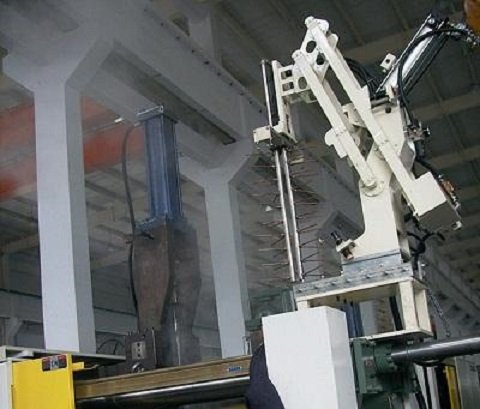
Key Features of Servo Sprayers
Servo Motor Control
The sprayer uses a servo motor to precisely control the spray nozzle’s position and operation. This provides better accuracy over traditional pneumatic or hydraulic systems, enabling more uniform coverage of the mold.
Precise Fluid Delivery
Flow rate control allows for the precise application of mold release agents. This reduces material waste and ensures the correct amount of lubricant is applied, which helps in easier part removal from the mold.
Programmable Settings
Most servo sprayers allow operators to program spray patterns, fluid amounts, and application timing to suit specific die-casting jobs or molds. This flexibility is crucial when dealing with different die sizes or part geometries.
Integration with Die Casting Machines
Servo sprayers can be integrated with die-casting machine control systems to automate the application of release agent, ensuring synchronized operation and reducing cycle times.ution reduces the sticking rate of such complex castings by more than 70% and extends the average mold maintenance interval by 30%.
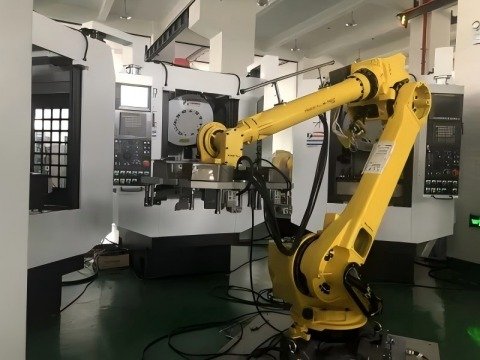
Deep Synergy and Process Optimization with Die-Casting Machines
The high performance of servo sprayers stems not only from their own inherent characteristics but also from their deep synergy with modern die-casting machines, particularly servo drive systems. This synergy enables process optimizations that are difficult to achieve with traditional systems.
A key technology is linked positioning spraying. On die-casting machines equipped with servo-driven electric mold-closing mechanisms, the system can utilize the precise servo positioning function of the moving mold plate. During spraying, the sprayer head and the moving mold plate can move in tandem, intelligently calculating and precisely stopping at the optimal spraying distance from both the moving and fixed mold cavity surfaces. This simplifies the equipment structure and, more importantly, significantly shortens the production cycle time by partially overlapping spraying preparation actions with the mold opening and closing process.

HAICHEN Application Case References
HAICHEN servo sprayers are designed to integrate seamlessly with die casting machines, delivering measurable results in real production environments.
Case 1 – Electric Drive Housing Production
Challenge: A customer producing electric drive housings for new energy vehicles faced uneven spraying of deep-cavity parts, leading to sticking defects and inconsistent quality.
HAICHEN Solution: Integrated die-casting unit with seamless communication between the HAICHEN servo sprayer and the die casting machine’s main control system. The system automatically generates customized spraying trajectories and dosage parameters for deep ribs and heat dissipation fins based on the mold’s 3D model data.
Results:
- Sticking rate reduced by over 70%
- Average mold maintenance interval extended by 30%
Case 2 – Data-Driven Production Management
Challenge: A large die-casting plant needed to reduce process variability and improve overall yield.
HAICHEN Solution: Deployed servo sprayers as key data nodes in the production management system, storing spray programs for all molds and monitoring real-time fluctuations in release agent consumption.
Results:
- Overall yield rate improved by 2.5%
- One-click mold change recall for all spray programs
- Early warning system prevented potential batch defects
Selection Guide for Servo Sprayers
Choosing the right servo sprayer for your die casting operation depends on several factors:
1. Machine Tonnage
For small to medium machines (160-400 tons), a compact servo sprayer with 1-2 spray heads is sufficient. For large machines (400-2500 tons), choose a multi-head system with extended reach and higher flow capacity.
2. Spraying Requirements
Consider whether you need spraying on the moving side, fixed side, or both. Deep cavity molds require longer spray nozzles and adjustable angles.
3. Integration Capability
Verify compatibility with your die casting machine’s control system (CANopen, Profibus, EtherCAT). HAICHEN servo sprayers are designed for seamless integration with most major machine brands.
4. Automation Level
For fully automated cells, choose a servo sprayer with programmable paths, automatic mold recognition, and recipe storage for different molds.
5. Maintenance Support
Ensure local technical support and spare parts availability. HAICHEN provides comprehensive after-sales support for servo sprayers.
Frequently Asked Questions
Q: What is a servo sprayer for die casting machine?
A: A servo sprayer is a precision device that applies release agent to the die casting mold surface using servo motor drive. It ensures consistent spray paths, flow rates, and timing for each cycle.
Q: What are the main advantages of servo sprayers over traditional sprayers?
A: Key advantages include higher positioning accuracy (±0.1mm), 15-25% less release agent consumption, 30-50% lower maintenance, programmable spray patterns, and seamless integration with die casting machine controls.
Q: How much can a servo sprayer reduce cycle time?
A: Typically, a servo sprayer reduces spraying time by 20-30% compared to traditional pneumatic sprayers, directly contributing to shorter overall cycle times.
Q: How does a servo sprayer extend mold life?
A: By applying release agent precisely and consistently, servo sprayers reduce thermal stress on the mold surface and prevent sticking, significantly reducing wear and extending mold life.
Q: What is the typical payback period for a servo sprayer?
A: For most die casting operations, the payback period for a servo sprayer is typically 8-12 months through reduced release agent consumption, lower maintenance costs, and improved yield.
Q: Can HAICHEN servo sprayers integrate with existing die casting machines?
A: Yes — HAICHEN servo sprayers are designed for compatibility with most major die casting machine brands and can be retrofitted to existing equipment with minimal downtime.


