What do die casting conveyor cost? You can expect to pay anywhere from $300 to over $5,000 per unit, depending on the type, material, size, and features you choose. Basic models start around $300–$1,000, while more advanced systems with stainless steel construction and specialized heat resistance can cost $3,500–$5,000 or more.
If you are a procurement professional sourcing a die casting conveyor, you already know that the price tag tells only part of the story. The right conveyor reduces manual labor, speeds up your cooling process, and cuts your overall production costs. The wrong one causes bottlenecks, frequent breakdowns, and costly downtime.
This guide breaks down the real cost of die casting machine conveyors, what drives the price, and how to choose the right system for your production line.
Die Casting Conveyor Price Range Overview
These figures give you a baseline, but the actual price of a die casting conveyor belt depends on several factors we will explore below.
What Drives the Price of a Die Casting Conveyor?
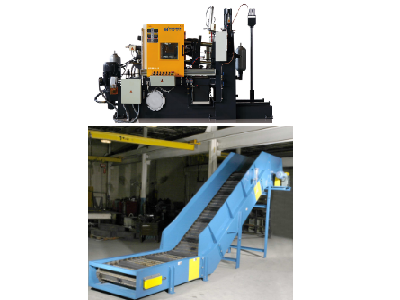
Belt Material and Construction
The material of your conveyor belt directly affects both performance and cost. Standard rubber belts cost less but cannot handle high temperatures. Heat-resistant materials like silicone, Kevlar, or stainless steel mesh belts cost more but withstand the extreme conditions of die casting.
Price impact: High-temperature belts can add 30–50% to the base cost compared to standard options.
Size and Capacity
Larger conveyors with greater load capacity cost more. Width and length directly affect material usage and manufacturing complexity. A W700/L4500 conveyor belt differs significantly in price from a W1000/L3000 model.
Price impact: Every additional meter of belt length adds to the total cost.
Automation and Control Features
Modern die casting conveyors integrate with automated production lines. Features like variable speed controls, sensors, and programmable logic controllers (PLCs) add to the initial cost but reduce labor expenses over time.
Price impact: Automated systems typically cost 20–40% more than basic manual conveyors.
Cooling System Integration
Many die casting machine conveyors include built-in cooling systems. These systems use air or water to cool hot castings immediately after ejection, which improves dimensional accuracy and surface quality. Conveyors with active cooling cost more than simple transport belts.
Price impact: Cooling features add $500–$2,000 to the system price.
Build Quality and Durability
Heavy-duty construction with high-quality welds, abrasion-resistant materials, and overload protection costs more upfront but lasts longer in demanding production environments. Cheaper conveyors may fail sooner, leading to higher total cost of ownership.
Price impact: Premium construction typically adds 15–25% to the purchase price but extends service life significantly.
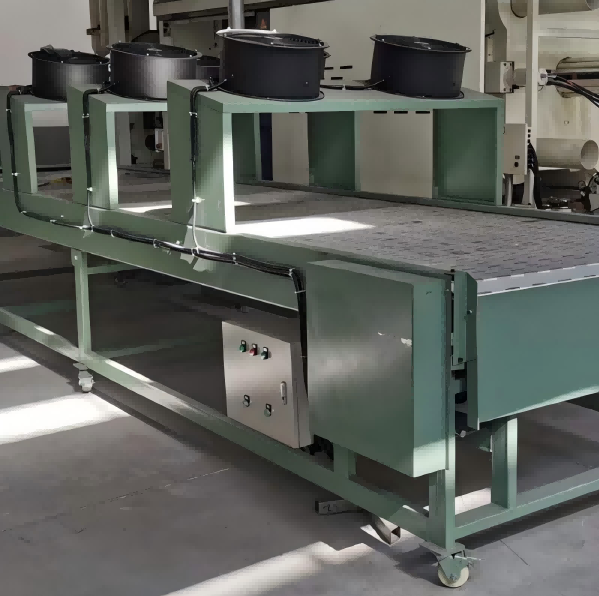
Common Types of Die Casting Conveyors and Their Price Drivers
Mesh Belt Conveyors
These conveyors use stainless steel mesh belts that allow air and water to circulate for cooling. They handle hot castings well and resist heat damage.
Price drivers: Belt material quality, mesh density, and cooling system integration.
Steel Belt Conveyors
Steel belt conveyors handle heavy parts and scrap material reliably. They work well in demanding die casting environments and provide dependable elevation and transfer.
Price drivers: Steel grade, belt thickness, and drive system quality.
Chain Conveyors
Chain conveyors use metal chain plates to transport parts. They offer durability and handle high loads but may require more maintenance.
Price drivers: Chain material (carbon steel vs. stainless steel), pitch size, and wear resistance.
Vibrating Conveyors
These conveyors sort and feed small parts gently. They work well for feeding secondary operations but do not handle heavy parts.
Price drivers: Vibratory motor quality and control system sophistication.
Overhead Conveyors
Overhead conveyors save floor space and transport parts over long distances. They cost more initially but maximize your factory layout efficiency.
Price drivers: Track length, support structure, and drive system.
How to Choose the Right Die Casting Conveyor for Your Budget
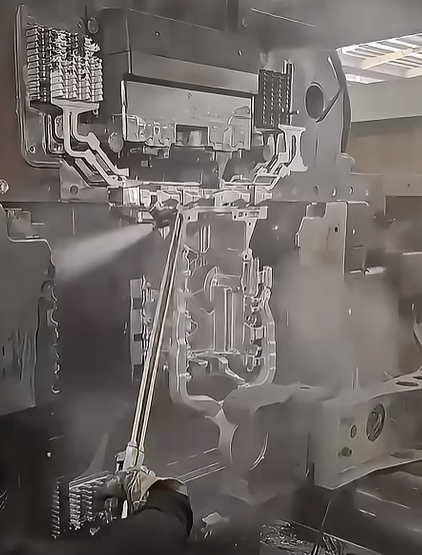
Step 1: Define Your Material Handling Requirements
What are you moving? Die cast parts need different conveyors than metal scrap. Steel belt conveyors work well for finished parts, while special scrap conveyors handle waste material.
Consider your load capacity too. Your conveyor must handle the weight and volume of your production output.
Step 2: Identify Your Temperature Requirements
Hot castings demand heat-resistant conveyors. For aluminum die casting, parts emerge at high temperatures and need controlled cooling. Mesh belt conveyors with air or water cooling handle this well.
High-temperature rubber belts withstand 150°C–175°C, while metal chain plates handle temperatures above 300°C. Choose based on your specific casting temperature.
Step 3: Match the Conveyor Type to Your Process
Different conveyors serve different purposes:
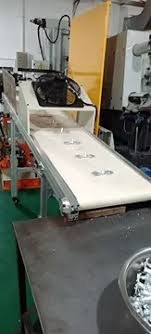
- Cooling conveyors cool castings after ejection
- Transfer conveyors move parts between processes
- Trim press conveyors transport parts to trimming stations
- Sorting conveyors feed secondary operations
Select the type that fits your production flow.
Step 4: Factor in Total Cost of Ownership
The purchase price matters, but do not stop there. Consider maintenance costs, energy consumption, and downtime. Die casting conveyor systems with better build quality and energy-efficient drives cost more initially but save money over time.
High-quality conveyors with features like belt-tracking enhancements and auto-lube systems reduce maintenance needs.
Step 5: Plan for Future Expansion
Choose conveyors with modular designs and intelligent expansion interfaces. This allows you to add workstations or upgrade controls later without replacing the entire system.
Common Mistakes Buyers Make
Choosing the cheapest option. A low-priced conveyor that fails frequently costs more in downtime and repairs. Look at total cost of ownership, not just the purchase price.
Ignoring temperature requirements. Standard belts melt or degrade under high heat. Always match the belt material to your casting temperature.
Overlooking integration. Your conveyor must connect with your die casting machine, trimming press, and other equipment. Check compatibility before you buy.
Forgetting about maintenance. Some conveyors require frequent lubrication and part replacement. Factor this into your operating budget.
Haichen’s Die Casting Conveyor Solutions
Haichen Machinery manufactures die casting machine conveyors as part of our complete auxiliary equipment line. Our auto conveyors carry products out of the mold, cool them, and transport them to designated locations.
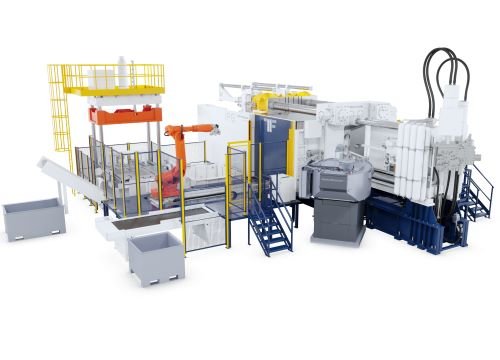
Haichen offers several conveyor types to match different production needs, including walking-type mold conveyors, step-by-step casting mold conveyors, clamping mold conveyors, suspension conveyors, and scale plate conveyors. Each type serves specific applications, from large vertical parting machines to automated production lines.
Our die casting conveyors feature:
- Heat-resistant materials that withstand high temperatures
- Robust construction for demanding production environments
- Modular designs for easy expansion and maintenance
- Integration capabilities with other auxiliary equipment like extractors, sprayers, and vacuum machines
Haichen’s die casting machine conveyor prices range from $300 to $1,000 for standard models. For custom configurations with specialized materials or features, we provide detailed quotes based on your specific requirements.
Beyond conveyors, Haichen supplies complete die casting solutions including cold chamber and hot chamber machines, mold temperature controllers, industrial robots, and release agent mixers. This integrated approach ensures all your equipment works together seamlessly.
Questions to Ask Your Conveyor Supplier
- “What belt material do you recommend for my casting temperature?” – The answer should reflect your specific alloy and process.
- “What is the total cost of ownership, including maintenance and energy?” – Look beyond the purchase price.
- “How does your conveyor integrate with my existing equipment?” – Compatibility matters for smooth operation.
- “What is your lead time for delivery and installation?” – Plan your production schedule accordingly.
- “Do you offer custom sizes and configurations?” – Standard sizes may not fit your layout.
- “What warranties and after-sales support do you provide?” – Know what you get before you buy.
- “Can you provide references from similar applications?” – Proven results matter more than promises.
| Factor | What to Check | Cost Impact |
|---|---|---|
| Belt Material | Heat resistance, durability | High |
| Size and Capacity | Width, length, load rating | Medium |
| Automation | Controls, sensors, PLCs | Medium-High |
| Cooling System | Air or water cooling | Medium |
| Build Quality | Welds, materials, overload protection | Medium |
| Customization | Special sizes or features | Variable |
Need help selecting the right conveyor for your die casting operation? Contact Haichen Machinery. We will analyze your production requirements, temperature conditions, and budget to recommend the optimal conveyor solution for your specific needs.


