Chillers in die-casting mainly have these functions:
- Controlling the mold temperature
- Improve product quality
- Improve production efficiency
- Extend the life of the mold
- Defect reduction
- Improves casting hardness and strength
Chillers are essential temperature control equipment widely applied in die casting production, mainly used to precisely regulate and stabilize mold temperature throughout the casting cycle.
They rapidly absorb and dissipate massive heat released by molten metal during filling and solidification, maintain uniform cooling inside the mold cavity, and reduce thermal shock and temperature fluctuation of the mold.
Meanwhile, chillers help minimize casting defects, improve the dimensional accuracy and surface quality of finished parts, enhance the mechanical hardness and structural strength of castings, extend mold service life, shorten production cycle time and effectively improve overall casting efficiency and product qualification rate.
The chiller is the core of the die-casting temperature control system, ensuring the stability of the mold and the consistency of the product.
When selecting the type, it is necessary to take into account the material properties, mold structure and production capacity requirements.
And establish a preventive maintenance system to ensure the long-term efficient operation of the equipment.
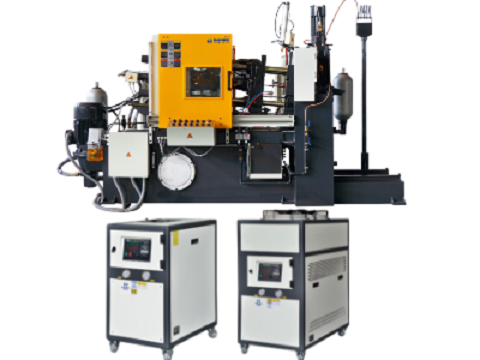
Chillers used in casting
- water chillers
- air-cooled chillers
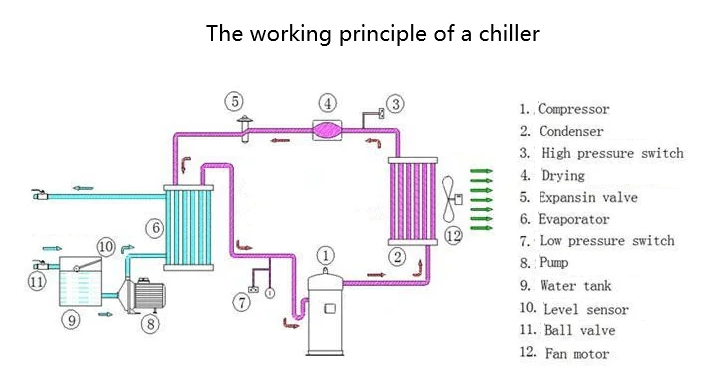
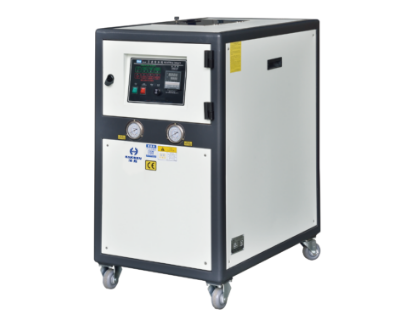
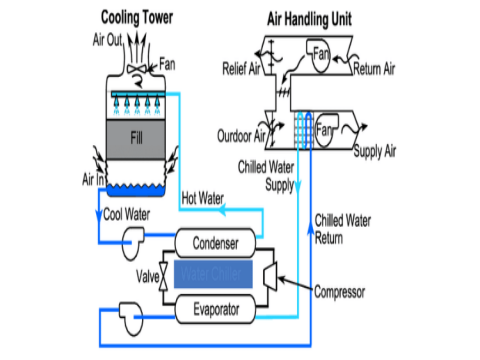
water chillers
Efficient heat dissipation and temperature stability
Remove the heat of the molten metal absorbed by the mold during the high-pressure injection process (usually above 400℃).
And maintain the working temperature of the mold within a reasonable range.
For example, for aluminum alloy die-casting molds, it needs to be controlled at 180-250℃).
The water temperature is regulated through the PID control system (with an accuracy of ±0.5℃) to avoid defects.
Such as shrinkage cavities and hot cracks in the castings caused by local overheating of the mold.
Improve product quality and consistency
Stabilizing the mold temperature can ensure uniform fluidity and solidification rate of the molten metal.
Reduce defects such as pores and cold shuts, and improve the density and surface finish of the castings.
Extend the service life of the equipment
Reducing the thermal stress of the mold, slowing down thermal fatigue cracks and corrosion.
The service life of the mold can be increased by more than 30%.
Energy Conservation and Environmental Protection
Closed-cycle systems reduce water consumption, and high-efficiency compressor designs.
Such as scroll type/screw type lower energy consumption, which is in line with the trend of green manufacturing.
Air-cooled chillers
Supplementary cooling of complex-structured molds
Air-cooled machines are designed for areas such as deep cavities and small cores that cannot be covered by water cooling.
And they provide targeted heat dissipation through compressed air or blowers.
Auxiliary process optimization
The airflow blowing ensures that the mold release agent adheres evenly, avoiding surface defects of the casting caused by local accumulation.
This is to reduce the accumulation of gas in the cavity and lower the porosity of the casting.
Rapid cooling in the post-processing stage
After the casting is demolded, the air-cooled conveyor can reduce the temperature from 400℃ to 20℃ within 300 seconds, significantly shortening the production cycle.
For example, the simulation data shows that the effect is optimal when the fan deflection Angle is 20° and the distance is 300mm).
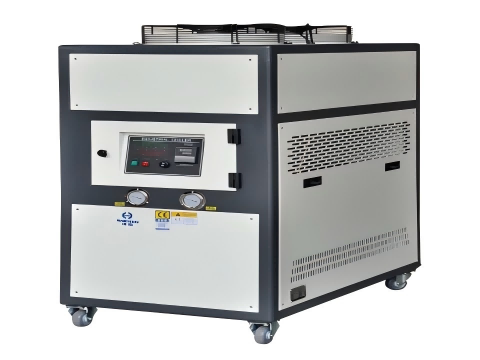
Controlling the mold temperature
The chillers ensures thermal balance by adjusting the temperature of the mold.
Thereby improving the quality and production efficiency of die castings.
Controlling the mold temperature is crucial to stable die casting production, and industrial chillers play an indispensable role in this process.
By circulating constant-temperature cooling water inside the mold.
The chiller quickly takes away massive heat generated by molten metal filling and solidification, maintains balanced and stable mold temperature throughout each casting cycle, and effectively avoids local overheating and excessive temperature fluctuation.
This precise temperature control optimizes the solidification rate of alloy liquid, reduces common casting defects such as porosity, shrinkage cavity, deformation and thermal crack, improves surface finish and dimensional accuracy of finished parts.
Meanwhile, it shortens cooling cycle time, boosts production efficiency, relieves thermal fatigue of the mold, extends mold service life and ensures continuous and stable mass die casting operation.
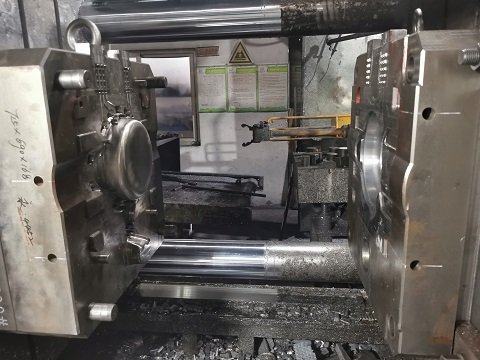
Improve product quality
A reasonable cooling system can effectively control the solidification process of castings and reduce the occurrence of defects.
Such as porosity and inclusions, and surface defects such as thermal cracks and porosity.
so as to improve the quality and reliability of products.
For example, in aluminum alloy die casting, the use of water cooling technology can significantly improve the compactness of the die casting, reduce the air leakage rate, and reduce the scrap rate.
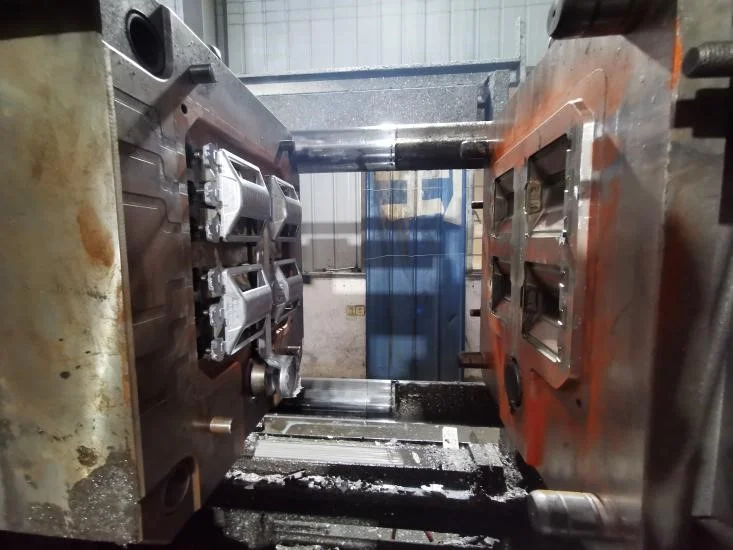
Improve production efficiency
The optimized cooling system can speed up the cooling rate of castings, shorten the production cycle, and improve production efficiency and productivity.
For example, a mold that is not water-cooled can only produce 50-60 castings per hour.
While a mold that is water-cooled can produce 100-120 pieces per hour, which is a doubling increase in productivity.
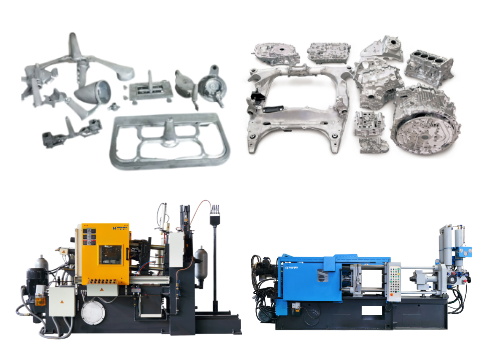
Extend the life of the mould
Extend the life of the mold is one of the key functions of industrial chillers in die casting production.
For example, the mold core jet cooler with fine hole cooling developed abroad can effectively improve the core life and die casting quality even at high temperatures.
The chiller stably controls the mold temperature by continuously circulating cooling water, effectively alleviating severe thermal shock and repeated cold-heat alternation caused by high-temperature molten metal pouring.
It reduces thermal fatigue, surface cracking and deformation of the mold caused by excessive temperature fluctuation, slows down wear and aging of mold components, and minimizes thermal stress damage during long-term cyclic production.
With reliable constant temperature cooling, the mold maintains stable working condition for a long time, lowers the frequency of maintenance and replacement, greatly prolongs the overall service life of the mold and cuts down the comprehensive production cost.
Defect reduction
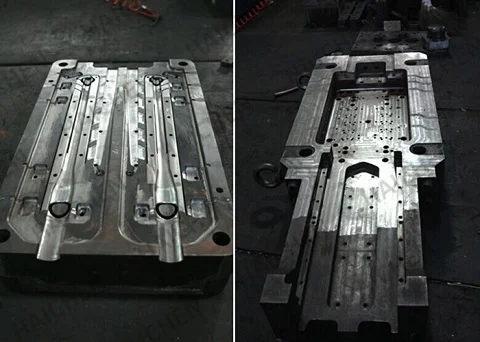
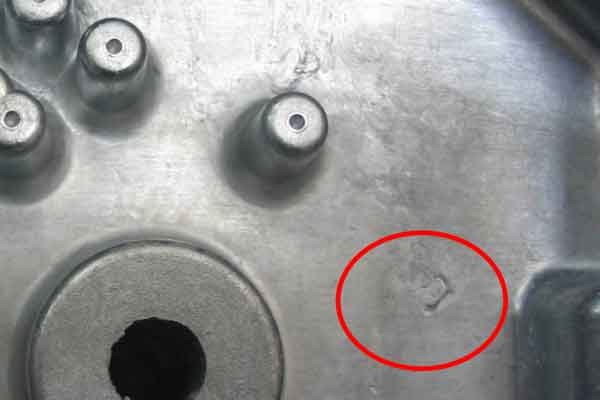
Defect reduction is a core advantage of adopting industrial chillers in die casting processes.
The chiller precisely stabilizes mold temperature and delivers uniform cooling across the mold cavity during alloy filling and solidification, effectively restraining excessive temperature differences and overheating spots inside the mold.
This steady cooling condition standardizes the solidification speed of molten metal, greatly minimizing common die casting defects including porosity, shrinkage cavities, cold shuts, warpage and thermal cracks.
By eliminating drastic thermal fluctuation and unbalanced heat dissipation, the chiller improves part surface finish and dimensional stability, lowers the rate of defective products.
And enhances overall production qualification rate in die casting mass production.
Improves casting hardness and strength
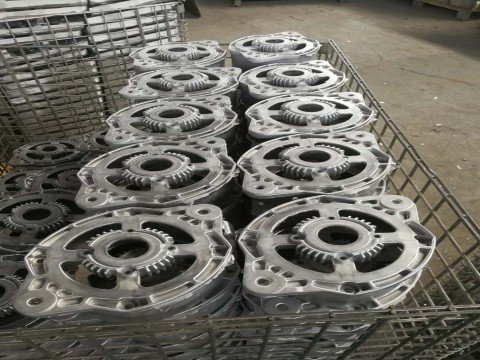
By precisely regulating and maintaining a stable mold temperature in die casting, industrial chillers enable uniform and controlled cooling of molten alloy throughout the mold cavity.
The consistent cooling rate optimizes the internal metallographic structure of the casting, refines metal grains and avoids loose internal texture caused by uneven heat dissipation.
This well-controlled solidification process effectively enhances the overall hardness, tensile strength and structural toughness of die-cast parts, stabilizes mechanical performance batch by batch.
And makes the finished components more reliable for subsequent machining and service application.
Chillers affect die casting
- Cooling rate
- Selection of cooling medium
Cooling rate
Cooling rate is one of the key factors affecting the hardness and strength of castings.
Rapid cooling allows for grain refinement, increasing the continuity of grain boundaries and thus increasing the hardness of the material.
However, too fast cooling can also lead to increased internal stresses and even cracks.
Therefore, controlling the proper cooling rate is essential to achieve the desired hardness and strength.
Selection of cooling medium
Selection of cooling medium is a key consideration in die casting temperature control, and industrial chillers exert a direct and important influence on this aspect.
Professional die-casting chillers can adapt to different cooling media such as pure water, antifreeze fluid and special cooling liquid according to actual production requirements, stably maintain the medium at a constant flow rate and temperature, and ensure efficient heat exchange inside the mold cavity.
Proper matching of cooling medium supported by the chiller optimizes cooling uniformity.
Avoids pipeline scaling, corrosion and freezing failure, stabilizes mold cooling efficiency in different working environments, reduces casting defects, and lays a solid foundation for consistent product quality and smooth continuous die casting production.
Different cooling media such as water, oil, brine, etc., have a significant impact on the cooling rate and final quality of molten aluminum castings due to their different thermal conductivity.
Choosing the right cooling medium can effectively prevent the concentration of thermal stress caused by uneven cooling and reduce the risk of cracking in castings.
Haichen‘s Chiller
In actual production, the production efficiency and product quality of die castings can be significantly improved by applying a cooler.
For example, Haichen can offer dozens of different models of coolers for foundries to choose from.
The application of chiller not only improves the performance of die castings.
But also provides an important reference for research and practice in related fields.


