The making process of zinc alloy medal includes mold design, mold making, die-casting machine injection, and finishing.
Initially, zinc alloy of high quality is first prepared and melted in a controlled atmosphere.
The form of medals is achieved through high – pressure injection of molten alloy into precision – crafted molds.
Medals are removed from the molds after they have cooled and solidified.
They go through polishing, plating, and engraving to further improve their visual appeal as well as their durability.
The medals are then packed in a suitable container after a quality check to confirm that they are free from defects.
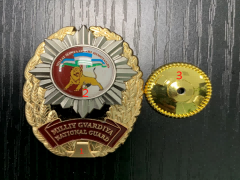
In this article, I will explain how high quality zinc alloy medals are created with die casting techniques. And this is the making process of zinc alloy medal.
Creating A Design and Preparing a Mold
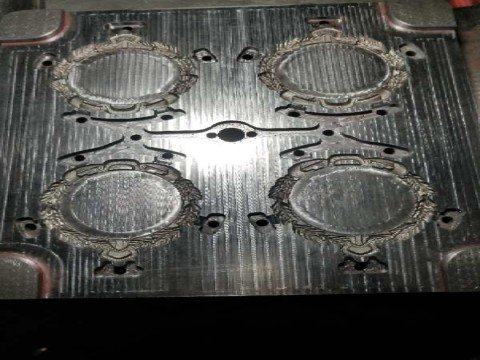
A medal begins with a design. Metal works and jewelers prepare all images, texts, and other intricacies of the medal. After the design, a mold is manufactured which is an exact copy of the medal. The mold is made out of high-end materials such as metal to ensure quality and precision during the casting process.
Die CastingMetal Melting
We select zinc alloy for being robust and corrosion resistant. During the die casting process, we place the alloy into a furnace and heat it until it turns to liquid.
It is very important that the metal is at the right temperature before being injected, otherwise, it will not flow into the mold cavities as desired. During this time, the temperature is strictly regulated, because metal requires a specific heating point. Overheating could ruin the end product.
After fully molten, the alloy is moved to a die-casting machine where the next stage of the process begins.
Die Casting
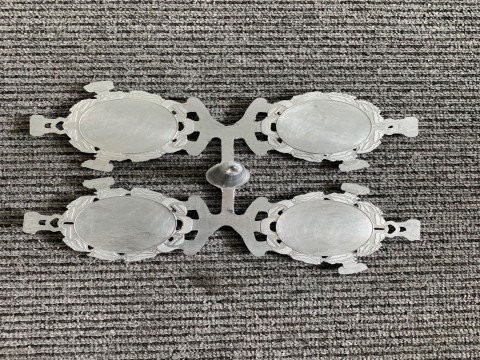
Casting of the medal begins with having liquid zinc alloy along with the mold. In hot chamber die casting, the mold is poured with hot metal under extreme pressure. The intricacy of the design ensures that all details of the medal are included within the medal, which makes it look stunning.
Cooling and Ejection
Once the metal has been poured into the mold, it goes undergoes the cooling phase along with achieving medal solidification.
Without a doubt striking cooling systems are integrated with traditional CNC machines to drastically bring down the cooling time
During this stage the medal and mold go through the stage of optimally controlled cooling to solidify. It is essential for the mediator in order to assure that all details of the shape are kept intact along with smooth edges. Because of this method, none of the cracks or warping are inflicted on the medal.
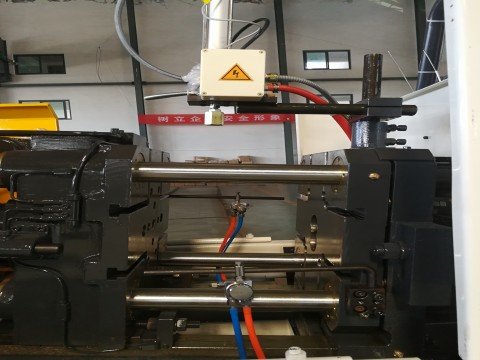
Once the medal has fully solidified, we proceed with the ejection process. The medal is carefully ejected from the mold using automated systems designed to handle delicate parts without causing damage. This ensures that the medal is ready for further processing, such as finishing touches or quality inspection, with minimal risk of defects.
Finishing and Polishing
We accomplish the polishing of the medals’ surface after deflashing them so that any rough edges and inaccuracies can be removed. We also ensure that the medals have a smooth and shiny finish, which makes them far more appealing.
Plating and Coloring
In addition to improving the looks of the medal, the strength of the medal is improved through staking of the other metals. This includes gold, copper, and silver metals. Thus they turn out looking far more attractive than before as they are now being colored through painting and enameling.
Quality Control
Each medal goes through numerous steps of quality check so that their design, finishing, and materials used are of the right required standards. Any medal that does not meet the quality requirements of bare minimum standards is set aside and either reworked or disposed of.

Precision zinc alloy medals making with Haichen die casting machine
For the manufacture of Zinc Alloy Medals, high-precision die casting machine is essential to make good details and quality uniform.
In the process of manufacturing the medals, were employed HCD50-H hot chamber die casting machine from Haichen by its ability to replicate of complex geometrical designs (profiles as heavy 3D impression, edge of badge, quantity of cavities per mould), with dimensional accuracy up to ± 0.03 mm.
An example of a medal manufacturing in Thailand
One day in 2023, a medal factory owner in Thailand called us, we were asked by him to change the the mould and die casting machine for his commemorative medal for him. We had supplied him with the die-castingmachine at that time as follows;
- 0% porosity on key surfaces (guaranteed by integrated vacuum system)
- Mirror polished mold cavity saves 40% polishing time
- High speed mass production cycle of only 12 seconds per medal
Haichen machines accept Zamak 3/5, 2/5, balancing cost efficiency and detail fidelity for medal applications.

Core Process Assurance
Medal production requires replicating fine textures, sharp edges, and deep relief patterns. The HCD50-H hot chamber die casting machine from HAICHEN provides key assurances for this process:
- High-Pressure Precision Injection: The machine delivers stable, high-pressure injection of molten zinc alloy (such as Zamak 3), ensuring the metal completely fills every detail of the mold cavity, from the finest lines to the deepest impressions.
- Exceptional Dimensional Stability: It maintains consistent part dimensions with tolerances as tight as ±0.03mm, which is crucial for medals that may need to fit into standard holders or have interlocking parts.
- Rapid Cycle Time: Engineered for high-speed production, it significantly reduces cooling and cycle time, enabling a production rate as fast as 12 seconds per medal in a multi-cavity mold setup.
Concrete Application Case
A commemorative medal manufacturer in Thailand faced challenges with detail fidelity and production speed using their old equipment. They adopted a HAICHEN HCD50-H machine for a new line of complex commemorative medals.
- Challenge: To produce medals with heavy 3D relief, clear lettering, and multiple cavities per mold while ensuring zero porosity on key visible surfaces.
- HAICHEN Solution: The integrated vacuum system on the HCD50-H effectively removed air from the mold cavity, virtually eliminating gas porosity on critical surfaces. The stable and non-turbulent filling characteristic of the machine allowed for the use of a mirror-polished mold cavity, which improved the as-cast surface quality of the medals and reduced subsequent polishing time by approximately 40%.
- Result: The client achieved high-speed mass production with consistent, high-definition detail replication. The medals exhibited excellent surface quality directly out of the mold, reducing the need for manual finishing. This streamlined their entire production process and lowered costs.
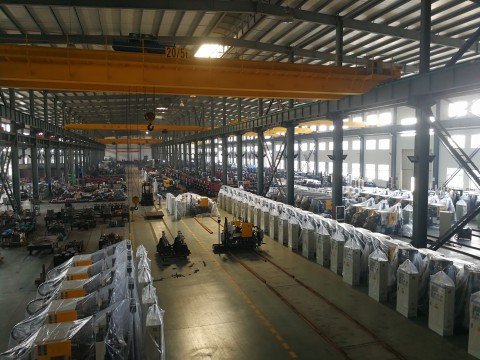
Hot chamber die casting is one type of making process of zinc alloy medal. This allows for detailed designs to be incorporated while still making it highly durable, and visually appealing.
Using advanced die casting technologies, award winning medals for diverse commemorative and sporting events can now be easily manufactured.


