Advantages of die casting process:
- High Production Efficiency
- Precision and Consistency
- Excellent Surface Finish
- Cost-Effectiveness
- Strength and Durability
- Material Versatility
- Complex Geometries
- Recyclability
The die casting process offers numerous benefits for producing high-quality metal parts with precision and efficiency.
Furthermore, it provides a wealth of inherent advantages that make it a highly preferred solution across modern manufacturing industries.
Die casting is one of the most flexible and innovative manufacturing techniques for fabricating metal parts.
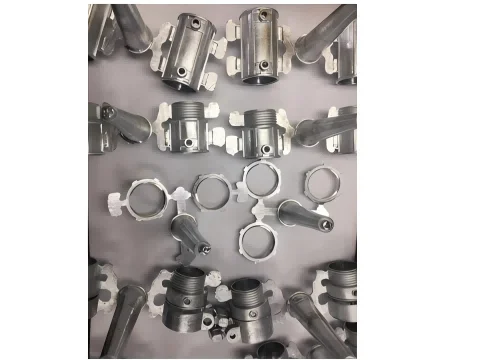
Several components for gears, locks, automobiles and motorcycle parts are manufactured with die casting.
Die casting provides complex shapes within closer tolerances than many other mass production processes.
Little or no machining is required and thousands can be produced before additional tooling is required.
If you choose die casting process for your applications, it’s best to know its pros and cons beforehand.
What is Die Casting?
Die casting is a manufacturing process involving molten metals and alloys into a steel mold under extreme temperature and pressure conditions to create the desired shape.
The die casting process is quite similar to that of plastic injection molding.
However, it is mainly used for uses non-ferrous metals with low melting points and high fluidity, such as aluminum, zinc, copper, magnesium, etc.
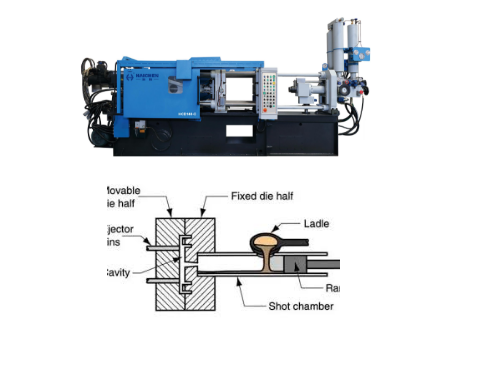
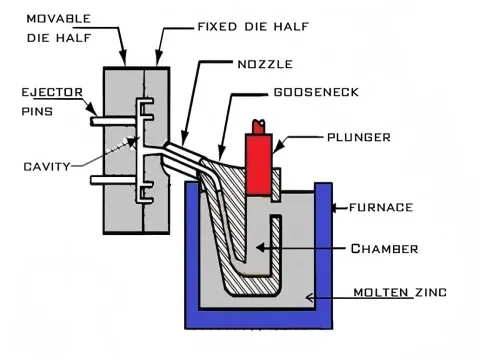
There are of two types machines for die casting, the hot and cold chamber die casting machine.
A hot chamber cast machine features a built-in furnace that heats metal into a molten state before transferring it into molds for shaping, which can accelerate cycling production.
In contrast, in cold chamber machine, heating metals takes place in a separate furnace.

Hot chamber machine casts metal alloys with low melting points like zinc, copper and lead.
On the other hand, the cold chamber machine is preferred for high melting temperature metals and corrosion resistance.
Therefore, the material you choose for the process determines which machine to use.
Die Casting Process
The die casting process uses different mechanics based on metal type, application, and method.
Operators can pour molten metal by gravity or inject it under high pressure.
A typical die casting process includes six main stages:
- Mould Creation
- Mould Preparation
- Metal Injection
- Cooling
- Casting
- Removal
- Finishing Operations
Mould Creation
Engineers design die casting moulds using CAD/CAM and CFD software.
These tools simulate key parameters like friction, temperature, flow, and heat transfer.
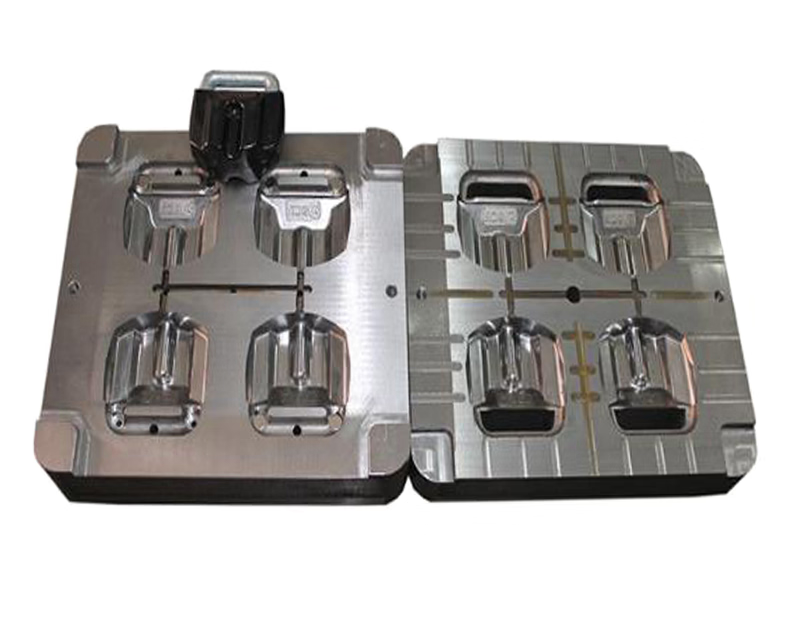
Specialist toolmakers make the mould via CNC machining and test it to meet specifications.
A high-quality mould prevents defects, reduces waste, and ensures stable production.
Mould Preparation
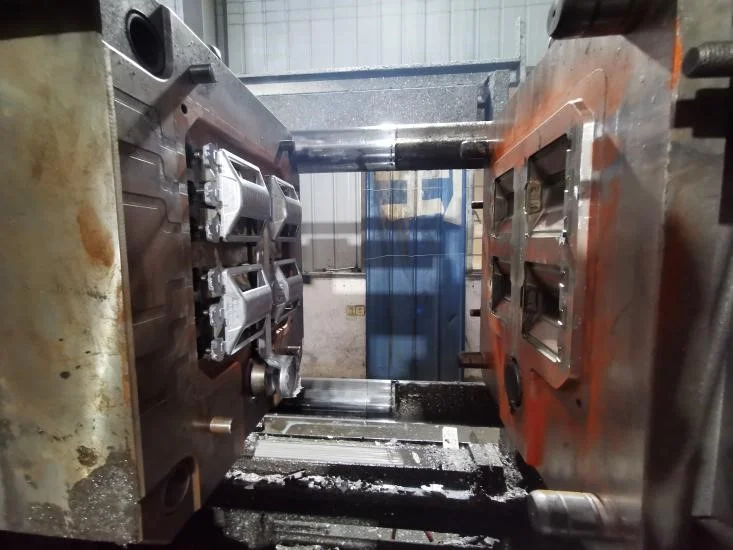
Workers clean, heat, and lubricate the two-part mould before production.
Lubrication lowers friction, controls temperature, and eases casting ejection.
Operators then close and clamp the mould securely under high pressure.
Metal Injection
Manufacturers fill the mould in two ways:
Gravity die casting: Uses gravity to fill the cavity.
High-pressure die casting: Injects metal at 100–1800 bars.
High-pressure die casting delivers faster filling, thinner walls, better precision, smoother surfaces, and less finishing work.
Cooling
After filling, the mould cools the metal uniformly. Controlled cooling ensures good microstructure and avoids internal or surface defects.
Casting Removal
Once solidified, workers open the mould. Ejector pins safely push out the casting, either manually or automatically.

Finishing Operations
Teams remove sprues and runners, then remelt and reuse these excess materials.
Final grinding and machining prepare the casting for customer delivery.
Advantages of Die Casting — Combined with Haichen Die Casting Machines
- High Production
- Precision
- Excellent Surface Finish
- Cost-Effectiveness
- Strength and Durability
- Material Versatility
- Complex Geometries
- Recyclability
High Production
Die casting enables fast mass production of identical parts, thanks to automated operation and short cycle times, ideal for high-volume manufacturing.
Haichen die casting machines adopt servo automatic control to further shorten cycle time, support 24-hour continuous unmanned production, and significantly boost overall production capacity.
Precision
Die casting delivers high dimensional accuracy, stable consistency, complex shapes and tight tolerances, lowering defect rates and ensuring uniform batch quality.
Haichen equipment features multi-stage precise injection control and high-precision sensing, stably maintaining strict tolerances and reliable repeatability for high-precision castings.

Excellent Surface
Finish Die-cast parts come with smooth surfaces and few defects, often eliminating the need for secondary finishing and cutting production costs.
Haichen optimized gating and mold temperature control systems reduce inclusions and oxidation, producing high-quality surface finishes to minimize post-processing procedures.
Cost-Effectiveness
Though initial tooling and machine investment is higher, die casting reduces unit cost via high output and low material waste.
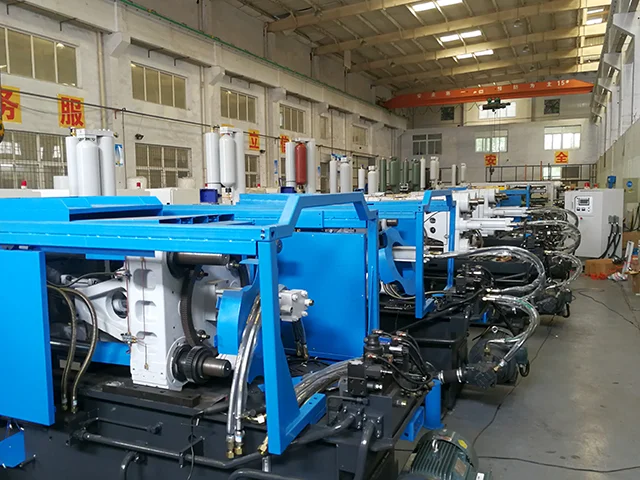
Haichen die casting machines adopt energy-saving servo design and durable core components, lowering power consumption, material loss and later maintenance costs for long-term economic benefits.
Strength and Durability
High-pressure die casting forms dense internal structures, granting parts better mechanical strength and durability than conventional casting methods.
Haichen stable high-pressure injection creates compact casting microstructure; vacuum models further reduce porosity and improve tensile strength and service life.
Material Versatility
Die casting is suitable for aluminum, zinc, magnesium, copper and other non-ferrous alloys for flexible material selection.
Haichen die casting machines adapt to multiple alloy materials with customizable configurations, meeting diverse product performance demands.
Complex Geometries
The process easily manufactures thin-walled and complex-shaped parts, well suited for automotive, aerospace and lightweight component production.
Haichen precise pressure and stroke control supports the forming of intricate thin-walled parts, satisfying integrated and lightweight design requirements.
Recyclability
Die-cast materials are fully recyclable, reducing waste and realizing eco-friendly production.
THaichen closed molten metal circulation system minimizes metal loss, and all scrap materials can be recycled and reused to cut waste and lower carbon emissions.
Haichen die casting machine supplier
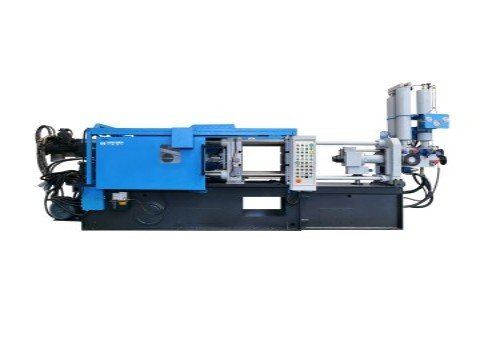
Haichen is a die casting machine supplier from China, specializing in the production of high-quality cold chamber and hot chamber die casting machines.
The company provides advanced solutions for aluminum, magnesium, zinc, and other non-ferrous alloy die casting applications.

Key Features of Haichen Die Casting Machines
- High Precision & Stability: Ensures consistent part quality with tight tolerances.
- Energy Efficiency: Advanced hydraulic systems reduce power consumption.
- Fast Cycle Times: Improves productivity for high-volume manufacturing.
- Durable Construction: Robust machine design for long service life.
- Smart Control Systems: PLC and CNC integration for automated operation.
If you’re looking for a reliable die casting machine supplier, Haichen offers a good balance of performance, durability, and affordability.


