What is a boosting handwheel on a die casting machine? A boosting handwheel is a manual control device that allows operators to apply additional force to the injection unit, giving them precise control over the injection process. It is a circular manual control that adjusts key machine parameters such as injection pressure, clamping force, and boosting speed.
If you are a procurement professional evaluating die casting equipment, the boosting handwheel directly affects your production quality, defect rates, and operator efficiency. A well-designed handwheel system gives your operators the control they need to produce consistent, high-quality castings. A poorly designed one leads to inconsistent parts, higher scrap rates, and frustrated operators.
This guide explains what a boosting handwheel does, what features you should look for, and how modern smart handwheel systems are changing the game.
What Does a Boosting Handwheel Actually Do?
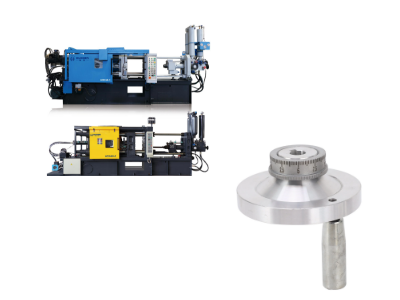
The boosting handwheel controls the hydraulic pressure that drives the die casting process. When an operator rotates the handwheel, they adjust the pressure distribution in the hydraulic system, which directly affects how the molten metal fills the mold.
Rotation direction matters. Tightening the handwheel increases the boosting pressure, while loosening it reduces the pressure. This simple mechanical action gives operators real-time control over the injection force.
Why this matters to you: The boosting handwheel gives your operators the ability to fine-tune the injection process without stopping production or accessing complex digital controls. This means faster adjustments and less downtime.
Key Features of the Boosting Handwheel
Pressure Adjustment by Rotation
The boosting handwheel allows operators to adjust injection pressure simply by turning the wheel. This direct mechanical control gives immediate feedback—operators can feel the resistance and see the results in real time.
For a 300-ton die casting machine, the rotation translates into measurable speed changes: 2 turns typically produce about 0.5 m/s, 4 turns give around 2 m/s, and 6 turns deliver approximately 6.5 m/s. Beyond 6 turns, the speed plateaus, so operators know exactly where the limits are.
What this means for your production: Your operators can make quick, precise adjustments without navigating complex menus or waiting for digital systems to respond. This speeds up setup times and reduces the learning curve for new operators.
Pressure Building Time Control
The handwheel does more than just set pressure levels—it also controls how quickly that pressure builds. Some die casting machines achieve pressure buildup in 20 milliseconds or less.
Why this matters: Faster pressure buildup means better filling of thin-walled sections and fewer internal defects. However, pressure that builds too quickly can cause flash formation and reduce mold life. The handwheel gives operators the ability to find the right balance for each specific part.
Flow Rate Adjustment for Different Wall Thicknesses
Different castings require different flow rates. Thicker walls need smaller boosting flow rates, while thinner walls require higher flow rates for rapid filling.
The boosting handwheel allows operators to adjust the flow rate dynamically based on the casting design. This flexibility means your machine can handle a wider range of parts without requiring major setup changes.
What this means for your production: One machine can produce parts with different wall thicknesses and complexity levels. This gives you greater flexibility in your production planning.
Mold Protection Against Overpressure
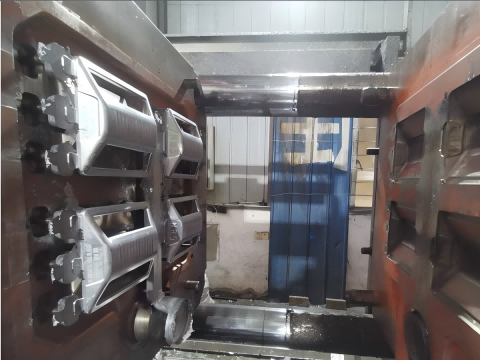
Overpressure is one of the leading causes of mold damage in die casting. When the injection pressure exceeds what the mold can handle, it causes flash formation, shortens mold life, and can even crack the mold.
The boosting handwheel helps prevent this by giving operators precise control over the pressure level. They can set the pressure to exactly what the mold needs—no more, no less.
Why this matters to your bottom line: Mold replacement is expensive. A handwheel that helps operators avoid overpressure extends mold life and reduces your tooling costs over time.
Precision Control and Enhanced Resolution
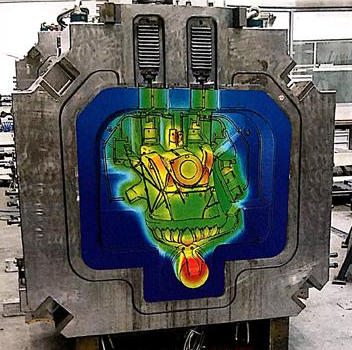
Modern boosting handwheels incorporate a dual transmission system—a gearbox and gear assembly that amplifies the handwheel’s operational stroke. This design significantly improves the manual feed resolution, allowing operators to make extremely fine adjustments.
What this means for part quality: Fine adjustments mean better dimensional accuracy. Your parts come out closer to specification, with fewer rejects and less rework.
The gearbox ratio also reduces the physical force required to rotate the handwheel. Operators can make precise adjustments without excessive effort, reducing fatigue during long production runs.
Effort-Saving Operation and Safety
Operator fatigue is a real concern in high-volume die casting production. The boosting handwheel’s gearbox reduces the force needed to rotate the wheel, enabling ergonomic operation. Your operators can make adjustments comfortably throughout their shift.
Safety features matter too. The system integrates a safety lock mechanism that prevents accidental handwheel rotation during automatic boosting modes. This protects both the equipment and the operator.
Why this matters: Accidental adjustments during automatic operation can cause defective parts or even equipment damage. The safety lock gives you peace of mind that the settings stay where they should be.
Smart Boosting Handwheel: The Next Generation
What is a smart boosting handwheel? It is a high-precision operating device that integrates sensors, wireless communication, and real-time control algorithms. It is mainly used for the precise adjustment of key parameters such as injection speed, pressure, and clamping force in die casting systems.
Unlike traditional manual handwheels, the smart version converts manual operation force into stable and adjustable boosting force through mechanical transmission and intelligent feedback. It provides real-time data feedback and intelligent protection, making operations more efficient and safe.
Dynamic Feedback Control
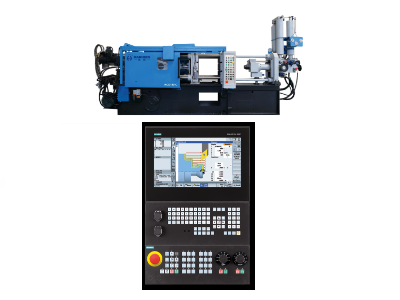
Smart handwheels collect real-time data through pressure and position sensors. Closed-loop control algorithms automatically adjust the actuator—whether motor or hydraulic valve—to ensure stable process parameters.
During the die casting process, the smart handwheel dynamically controls the injection punch’s speed and pressure profile, enabling real-time optimization of the casting cycle. Some advanced systems, like Yizumi’s LEAP9000T, achieve 10 speed stages from 0.05 to 12 m/s through handwheel adjustment.
What this means for your production: Your operators get real-time feedback and automatic adjustments, reducing the need for manual intervention and improving consistency.
Wireless Operation and Multi-Axis Control
Wireless transmission technology enables multi-axis selection and remote operation. This reduces die casting machine boosting handwheel cable constraints and increases operational flexibility. Operators can make adjustments from different positions around the machine, improving both safety and efficiency.
Safety Enhancements
Smart boosting handwheel systems come with integrated safety features:
- E-STOP button for instant emergency shutdown
- Low voltage alarm module to warn against unstable power supply
- Intelligent vibration alert to detect abnormal mechanical oscillation
These multi-dimensional safety modules work together to eliminate potential risks and deliver fully secure daily operation.
Applications of the Boosting Handwheel
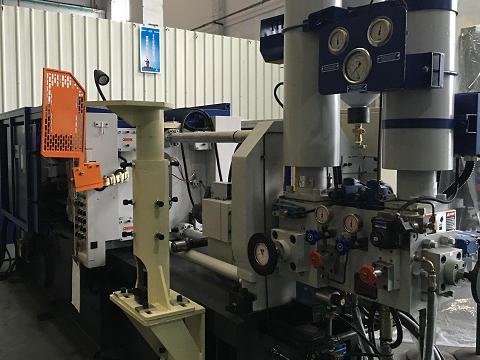
Injection Speed and Pressure Regulation
During the die casting process, operators use the handwheel to control both speed and pressure. Low-speed stages (50–700 mm/s) allow fine-tuning that ensures smooth cavity filling and avoids porosity. High-speed phases (over 8 m/s) enable efficient filling of thin-walled parts with fast response acceleration time under 20 ms.
Dynamic Optimization of Clamping Force
The intelligent die casting machine boosting handwheel links with real-time monitoring systems to dynamically adjust clamping force. This ensures that the machine applies exactly the right amount of force for each cycle, reducing wear and improving part quality.
Mold Adjustment and Maintenance
During mold setup and maintenance, the boosting handwheel gives operators precise control over positioning and pressure. This speeds up setup times and reduces the risk of damage during maintenance procedures.
Common Questions from Buyers
What is the difference between a boosting handwheel and a speed handwheel?
The boosting handwheel controls the intensification phase—the pressure applied after the mold is filled. The speed handwheel (often located on the side of the machine) controls the injection speed during the filling phase. Both are essential for proper process control.
How do I know when to adjust the boosting handwheel?
Operators adjust the handwheel when they see defects like porosity, incomplete filling, or surface finish problems. It is also adjusted during mold setup or when changing to a different part design.
Can the boosting handwheel be integrated with automated systems?
Yes. Smart die casting machine boosting handwheel integrate with PLC control systems and real-time monitoring, allowing both manual and automated operation.
Haichen’s Innovation in Boosting Systems
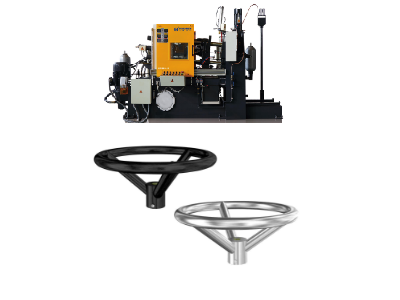
Haichen integrates boosting handwheels with advanced technologies to deliver superior performance:
AI-Driven Optimization. Machine learning algorithms predict pressure needs based on specific mold geometry. This means the system anticipates what pressure the mold requires before the operator even makes an adjustment.
Eco-Efficiency. During idle periods, energy-saving modes lower hydraulic consumption while maintaining readiness for adjustments. This reduces your energy costs without sacrificing performance.
Customization. Handwheels are made to suit different machine sizes with diameters ranging from 160 to 250 mm. They are also designed with operator ergonomics in mind, ensuring comfortable use throughout long production shifts.
Haichen produces both cold chamber and hot chamber die casting machines, and our boosting handwheel systems are designed to work seamlessly across our entire product line. We understand that buyers need equipment that delivers precise control, reduces defects, and keeps operators safe and productive.


