Smart Boosting Handwheel is a high-precision operating device that integrates sensors, wireless communication, and real-time control algorithms.
And is mainly used for the precise adjustment of key parameters (e.g., injection speed, pressure, and clamping force) in die casting systems.
In the die casting industry, precision control and operational efficiency are the core pillars of high-quality production.
The smart boosting handwheel is a key component in die casting systems.
With intelligent design and precise control, it has gradually replaced traditional manual handwheels and upgraded the stability and accuracy of die casting operations.
It integrates mechanical control and intelligent technology.
It adapts well to the complex working environment of die casting equipment and becomes an indispensable part of modern die casting production lines.
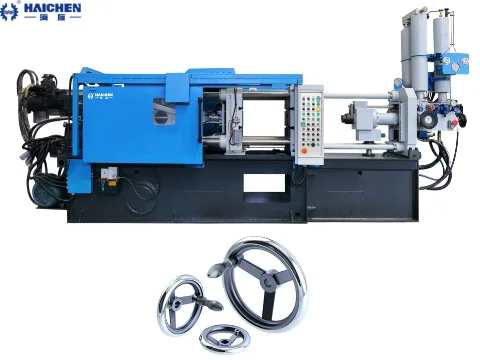
What is a Smart Boosting Handwheel
The smart boosting handwheel is an intelligent manual control component specially designed for die casting systems, which is improved and upgraded on the basis of traditional handwheels.
Different from the simple mechanical transmission of traditional handwheels, it integrates boosting mechanisms, precision sensors and intelligent control modules.
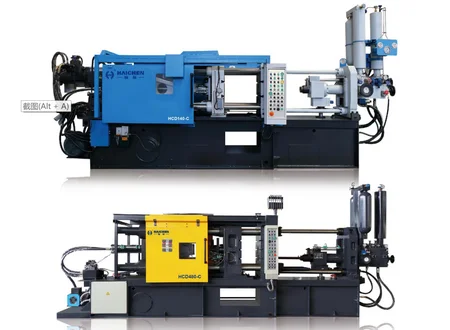
And can convert manual operation force into stable and adjustable boosting force through mechanical transmission and intelligent feedback.
Its core function is to realize precise adjustment of key parameters such as pressure and position in the die casting process.
While providing real-time data feedback and intelligent protection, making the operation more efficient and safe.
Smart boosting handwheel function
- Dynamic feedback control
- Wireless operation and multi-axis control
- Safety Enhancements
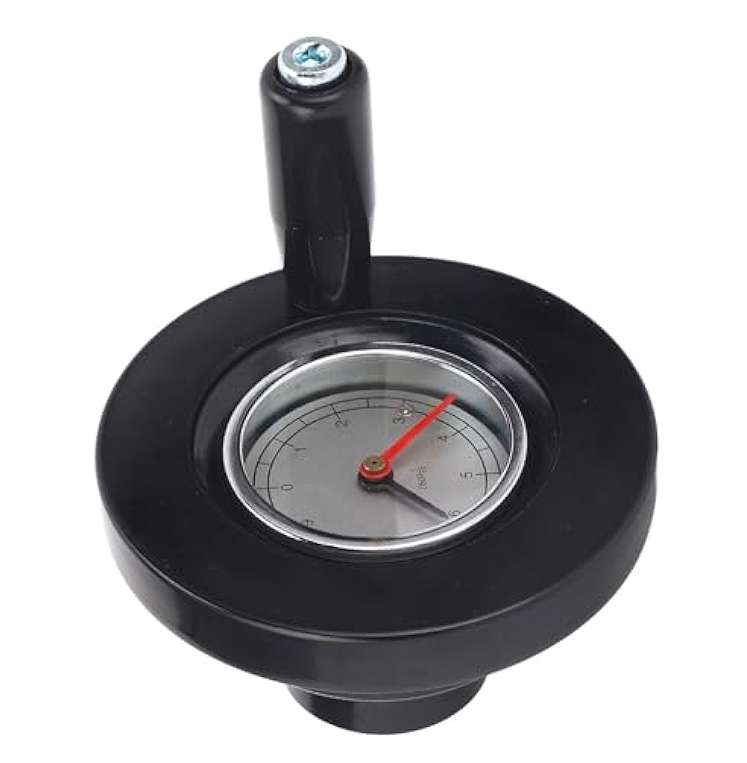
Dynamic feedback control
Real-time data collection through pressure and position sensors, combined with closed-loop control algorithms to automatically adjust the actuator.
Such as motor or hydraulic valve to ensure the stability of process parameters.
Wireless operation and multi-axis control
Wireless transmission technology, such as the HR 550 FS handwheel from HEIDENHAIN.
Enables multi-axis selection and remote operation, reducing cable constraints and increasing operational flexibility.
Safety Enhancements
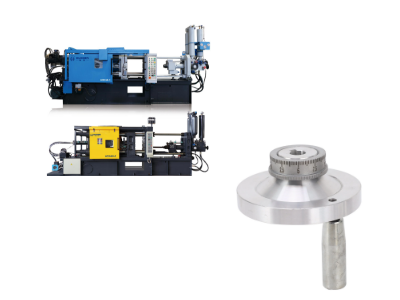
Our die casting machine adopts full-range safety enhancement designs for foundry production.
It comes with an integrated E-STOP button for instant emergency shutdown, a dedicated low voltage alarm module to warn against unstable power supply.
As well as an intelligent vibration alert function to detect abnormal mechanical oscillation.
These multi-dimensional safety modules work together to eliminate potential risks and deliver fully secure daily operation of the die casting unit.
Boosting handwheel application in die casting systems
- Injection speed and pressure regulation
- Dynamic optimization of clamping force
- Mold adjustment and maintenance
Injection speed and pressure regulation
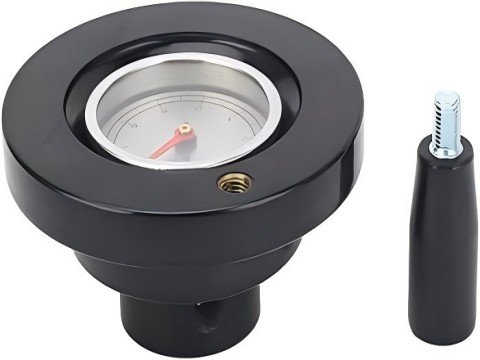
During the die casting process, the smart handwheel dynamically controls the injection punch’s speed and pressure profile, thereby enabling real-time optimization of the casting cycle.
For example, Yizumi’s LEAP9000T die-casting machine realizes 10 speed stages (0.05~12m/s) adjustment through a handwheel.
And uses the end brake function to reduce flash and improve the quality of castings.
Low-speed stage (50~700mm/s): Fine-tuning of the handwheel ensures that the molten metal fills the cavity smoothly and avoids porosity.
High-speed phase (>8 m/s): Efficient filling of thin-walled parts with fast response acceleration time < 20 ms.
Dynamic optimization of clamping force
The intelligent handwheel is linked with the real-time monitoring system, which can dynamically adjust the clamping force.
For example, a high-end foundry project in Shanghai used an intelligent injection system to increase the clamping speed by 7% and shorten the production cycle.
Mold adjustment and maintenance
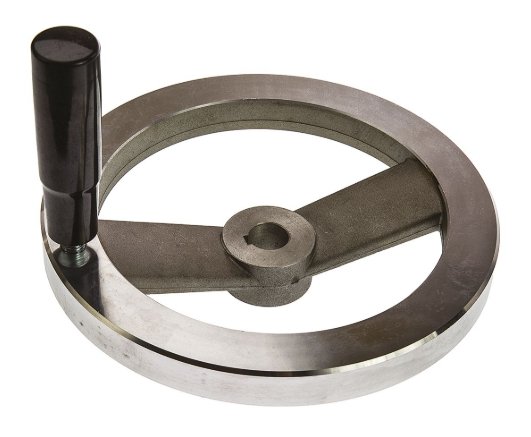
During the mold change process, the handwheel is used to precisely adjust the force on the corins to avoid overloading.
For example, the IMPRESS-PLUS die casting machine‘s intelligent mold adjustment system automatically calibrates the clamping force to a set value, reducing the mold change time to less than 1 hour.
The technical principle of the handwheel
The intelligent supercharged handwheel is a new type of actuator that integrates mechanical transmission and digital control.
- Signal Conversion System
- Closed-loop control mechanism
- Human-computer interaction innovation
Signal Conversion System
Incremental encoder (2000 lines/turn) is used to convert the rotation angle of the handwheel into a pulse signal with a resolution of up to 0.1° .
Built-in Hall sensor to detect torque (0-5Nm adjustable) to achieve pressure-speed coupling control.
Closed-loop control mechanism
The pulse signal is received through the PLC to adjust the proportional valve opening in real time.
Then, the pressure sensor feeds back the actual pressure increase value (accuracy ± 0.2MPa) to form a PID control closed loop.
Human-computer interaction innovation
The LCD display integrates axis coordinate display (resolution 1μm) and magnification switching (×1/×10/×100).
The safety locking design incorporates a dual independent locking system to prevent false touch,additionally, the user must press the enabling switch to activate the operation.
Smart boosting handwheel technology development
Trend AI Fusion: Predict the best boost curve through machine learning algorithms.
Such as the real-time casting defect prediction system adopted by Tesla Giga Press.
Haptic feedback: Introduce force feedback motors (such as HD haptic technology) to simulate the flow resistance of different molten metals.
Modular design: quick-change pressurized module supports magnesium/aluminum alloy process switching.
Daily Maintenance Work
- Surface Cleaning
- Connection Inspection
- Sensor Calibration
Surface Cleaning
In terms of daily maintenance, it is necessary to regularly clean the surface of the handwheel to remove dust, oil stains and metal debris in the die casting process. So as to avoid affecting the rotation flexibility of the handwheel and the sensitivity of sensors.
Connection Inspection
Regularly check the connection parts of the handwheel, such as screws, connecting rods and boosting mechanisms. And tighten them in time if there is looseness to prevent abnormal operation caused by poor connection.
Sensor Calibration
At the same time, regularly calibrate the sensor and boosting module of the smart handwheel to ensure the accuracy of data feedback and control precision.
Operation Specifications
- Standard Rotation Operation
- Anti-Corrosion Protection
Standard Rotation Operation
In terms of operation, operators should strictly follow the operation specifications, avoid violent rotation or excessive force, and prevent damage to the internal boosting mechanism and sensor.
Anti-Corrosion Protection
In addition, pay attention to avoiding the handwheel being eroded by high-temperature molten metal and corrosive substances, so as to protect its structural integrity and performance stability.


