How to choose cooling chiller in die casting: Consider cooling capacity, temperature precision, and machine compatibility.
In die casting, mold temperature control directly affects product quality, productivity, and efficiency. A properly sized cooling chiller maintains the mold at the optimal temperature (180-250°C for aluminum alloys), reducing defects, extending mold life, and cutting cycle time.
This guide covers the complete cooling chiller die casting selection process — capacity calculation, types (air-cooled vs water-cooled), key specifications, and selection tips — with real production data from HAICHEN installations.
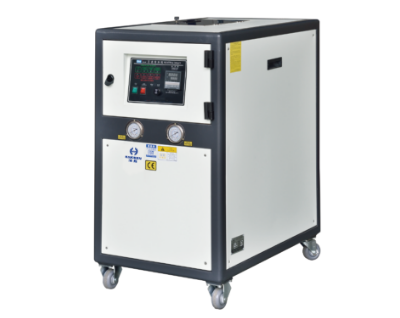
The Critical Role of Cooling Chillers in Die Casting
Chillers are considered critical auxiliary machinery in die casting operations. Their functionality is essential in determining product quality and efficiency and controlling production costs.
Temperature Precision Control
Defects in castings such as shrinkage cavities, aluminum adhesion, and surface roughness are due to temperature fluctuations in the die. Chillers maintain the cooling water temperature to within ±1°C, guaranteeing the die is kept at the optimal working temperature (180-250°C for aluminum alloys) during the die casting process.
Production Efficiency Improvement
Chillers maintain the needed temperature for cooling water (5-25°C), accelerating casting cooling and reducing cycle time. Effective cooling reduces the scrap rate by 15-20% and increases production capacity by 25% as revealed in case studies.
Equipment Life Extension
Controlled cooling reduces the thermal stresses in the die which lead to steel annealing, microcracking, and high-temperature sticking, leading to extension of die life by over 40%.
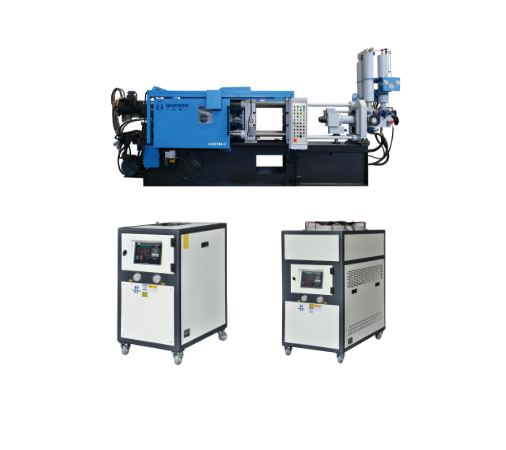
Air-Cooled vs Water-Cooled Chillers
The choice between air-cooled and water-cooled chillers significantly impacts your cooling system’s performance and operating costs.
| Feature | Air-Cooled Chiller | Water-Cooled Chiller |
|---|---|---|
| Installation | Easy, no external water tower | Requires cooling tower |
| Initial cost | Lower | Higher |
| Cooling efficiency | Decreases on hot days (35°C+ ambient) | Stable, independent of ambient air |
| Energy consumption | Higher (10-15% more) | Lower |
| Maintenance | Simple, air filter cleaning | More complex, tower maintenance required |
| Water consumption | None | Requires makeup water for tower |
| Best suited for | Small equipment, limited-space workshops, temperate climates | Large die casting machines, high-temperature workshops, continuous production |
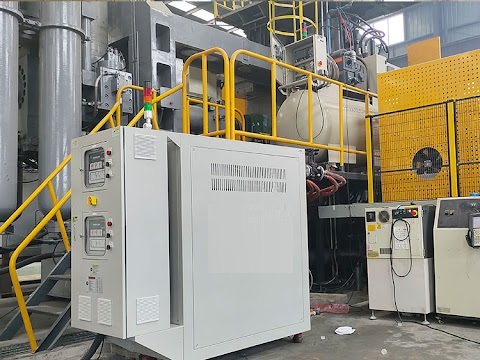
How to Calculate Required Cooling Capacity
Selecting the right chiller capacity is critical — too small leads to overheating and defects; too large wastes energy and capital.
Basic calculation method:
- Determine the heat load from the casting process: Typically 2-5 kW per 100 kg of aluminum cast per hour
- Calculate mold cooling requirement: Shot weight × cycle rate × alloy-specific heat factor
- Add safety margin: Multiply by 1.2-1.5 for peak conditions
Quick reference – chiller capacity by machine tonnage:
| Die Casting Machine | Recommended Chiller Capacity | Typical Application |
|---|---|---|
| 160-280 tons | 3-5 tons (10-15 kW) | Small zinc/aluminum parts |
| 280-400 tons | 5-8 tons (15-25 kW) | Medium aluminum parts |
| 400-650 tons | 8-12 tons (25-35 kW) | Large aluminum/automotive parts |
| 650-1000 tons | 12-18 tons (35-55 kW) | Structural parts, EV components |
| 1000-2000 tons | 18-30 tons (55-90 kW) | Large structural, giga-casting |
Note: These are general guidelines. Actual selection should be based on specific shot weight, cycle time, and alloy type. HAICHEN provides free chiller sizing service based on your production data.dels you have in stock, aligns with your die casting machine specifications. Check interface dimensions.
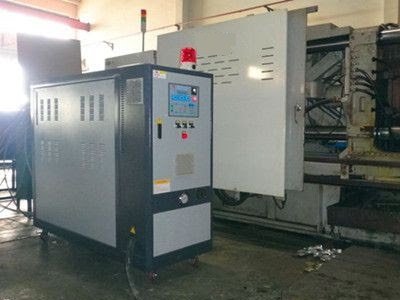
Key Selection Factors for Cooling Chillers
Cooling Capacity
It should not exceed or fall short of the thermal load for your die casting process. Use the calculation method above to determine your required capacity.
Temperature Control Precision
Look for overall variability of ±1°C for achieving precision. HAICHEN chillers maintain ±1°C stability.
Flow Rate
Maintain adequate level of coolant flow to allow for effective cooling. Insufficient flow causes hot spots and uneven cooling.
Integration with Die Casting Machines
Ensure the chiller models align with your die casting machine specifications. Check interface dimensions and control compatibility.
Maintenance and Lifespan
The chiller requires regular maintenance. An advanced design that resists corrosion, has easily serviced parts, and features automatic fault alarms is essential for die casting industry conditions.
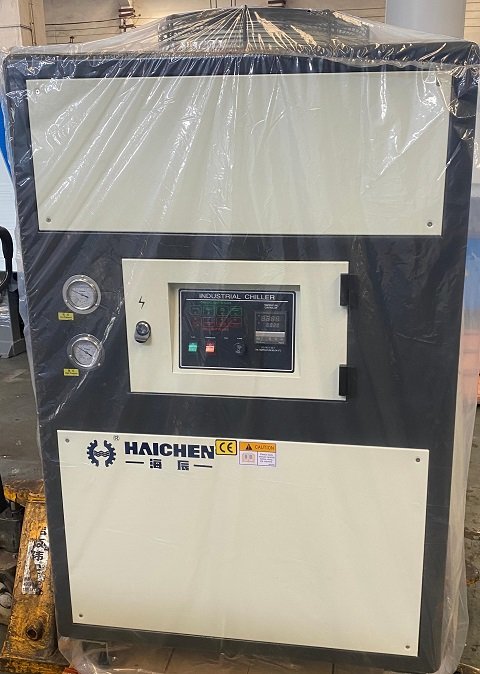
HAICHEN Chiller Solutions
HAICHEN is a die casting machine manufacturer that equally specializes in producing high-performance auxiliary equipment. We manufacture customized chillers configured for perfect integration with HAICHEN die casting machines to ensure efficient temperature management and energy savings.
Core design philosophy of HAICHEN chillers:
The design of HAICHEN chillers begins with a precise analysis of heat flow in die-casting molds. The core philosophy is to provide stable, precisely temperature-controlled, high-flow-rate cooling water to cope with the severe transient thermal shocks to the mold surface during the die-casting cycle.
Key features:
- Industrial-grade compressors for reliable operation
- High-efficiency shell-and-tube evaporators and condensers
- Large-capacity chilled water tank for temperature stability
- Temperature control precision within ±1°C
- Automatic fault alarms and diagnostics
- Corrosion-resistant construction for long service life
Application Case – Temperature Stability Improvement
Challenge: A die casting manufacturer producing aluminum automotive parts experienced temperature fluctuations leading to inconsistent quality and increased scrap.
HAICHEN Solution: Installed a HAICHEN water-cooled chiller with ±1°C precision and integrated it with the existing die casting machine control system.
Results:
- Energy consumption reduced by 12%
- Scrap rate reduced by 18%
- Production capacity increased by 25%
- Mold life extended by over 40%
Frequently Asked Questions
Q: Why does die casting need a cooling chiller?
A: Mold temperature control directly affects casting quality, cycle time, and mold life. A chiller maintains optimal temperature (180-250°C for aluminum), reducing defects, speeding cooling, and extending mold life.
Q: What is the difference between air-cooled and water-cooled chillers?
A: Air-cooled chillers are easier to install with no external cooling tower required, but their efficiency decreases on hot days. Water-cooled chillers offer stronger, more stable cooling but require a cooling tower and have higher initial cost.
Q: How do I calculate the right chiller capacity for my machine?
A: Capacity depends on shot weight, cycle time, and alloy type. A 160-280 ton machine typically needs 3-5 tons capacity; 400-650 tons needs 8-12 tons. HAICHEN provides free sizing service based on your specific production data.
Q: What temperature control precision do I need?
A: For most die casting applications, precision within ±1°C is sufficient. HAICHEN chillers maintain ±1°C stability for consistent quality.
Q: Can I integrate a chiller with my existing die casting machine?
A: Yes — HAICHEN chillers are designed for compatibility with most major die casting machine brands and can be integrated with existing control systems.
Q: How often should I maintain my cooling chiller?
A: Regular maintenance is essential. We recommend monthly air filter cleaning, quarterly compressor and refrigerant level checks, and annual full system inspection.


