The die casting crucible volume (zinc) refers to the maximum amount of liquid zinc alloy that the crucible can hold during actual production. In practical terms, it answers a simple question: how much zinc can you melt in the crucible at one time?
If you are a procurement professional sourcing a die casting machine, understanding crucible volume directly affects your production capacity, energy costs, and overall efficiency. Choose a crucible that is too small, and you will face frequent refilling and production delays. Choose one that is too large, and you waste energy heating metal you do not need.
This guide explains what effective crucible volume means, how to calculate it, and how to choose the right size for your zinc die casting operation.
What Exactly Is Effective Crucible Volume?
The effective volume of a crucible is not the same as its total physical capacity. You cannot fill a crucible to the brim with molten zinc—you need headspace to prevent spillage and allow for safe operation. The effective volume represents the usable working capacity that you can rely on in daily production.
For zinc alloys, the crucible holds molten metal at temperatures between 400°C and 425°C. The effective volume determines how many shots you can run before you need to refill. A larger effective volume means longer continuous production runs and fewer interruptions.
Why this matters to you: The effective volume directly impacts your production rhythm. If your crucible holds 110 kg of zinc, you can run more shots between refills than with a 50 kg crucible. This reduces downtime and increases overall productivity.
Why Effective Crucible Volume Matters to Your Bottom Line
Production continuity. A crucible that matches your shot size and cycle time keeps your machine running smoothly. Undersized crucibles force you to stop production frequently to refill, breaking your rhythm and reducing output.
Energy efficiency. Heating a crucible that is too large wastes energy. You pay to heat metal you are not using. The right size crucible minimizes energy consumption while maintaining adequate molten metal supply.
Metal quality. Maintaining a stable molten metal level in the crucible helps preserve consistent alloy temperature and composition. Frequent refilling introduces temperature fluctuations that can affect casting quality.
Cost control. The crucible itself represents a significant investment. Choosing the right effective volume the first time saves you from replacing an undersized or oversized crucible later.
How to Calculate the Effective Crucible Volume You Need
Calculating the right effective volume requires understanding your production parameters. Here is a straightforward approach:
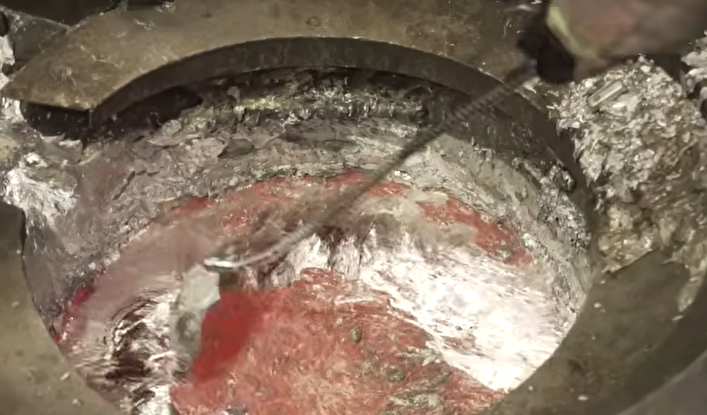
Step 1: Determine your shot weight. Calculate the total weight of zinc alloy required for each shot. This includes the part weight plus the gating system (runners, overflows, and sprue).
Step 2: Estimate your refill frequency. Decide how many shots you want to run between crucible refills. A common target is 30 to 60 minutes of continuous production.
Step 3: Calculate the required molten metal weight. Multiply your shot weight by the number of shots you plan to run between refills. Add a safety margin of 10–15% to account for metal loss due to oxidation and dross formation.
Step 4: Convert weight to volume. Zinc alloy has a density of approximately 6.6 g/cm³ (or 6600 kg/m³). Use this figure to convert your required molten metal weight into volume.
For example, if your shot weight is 2 kg and you want to run 50 shots between refills, you need 100 kg of molten zinc. Adding a 10% safety margin brings you to 110 kg—which matches a common crucible effective capacity for zinc.
Step 5: Select the nearest standard crucible size. Crucible capacities for zinc typically come in standard sizes such as 110 kg, 130 kg, 260 kg, 320 kg, 400 kg, 550 kg, and 820 kg. Choose the size that meets or slightly exceeds your calculated requirement.
Common Zinc Crucible Effective Volumes
Here are typical effective volumes you will encounter in the die casting industry:
| Crucible Capacity (Zinc) | Typical Application |
|---|---|
| 110 kg | Small machines, low-volume production, prototyping |
| 130 kg | Small to medium machines, moderate production |
| 260 kg | Medium machines, standard production runs |
| 320 kg | Medium to large machines, higher output |
| 400 kg | Large machines, high-volume production |
| 550 kg | Extra-large machines, continuous high-output |
| 820 kg | Very large machines, maximum production capacity |
These capacities represent the effective volume—the amount of molten zinc you can actually use in production.
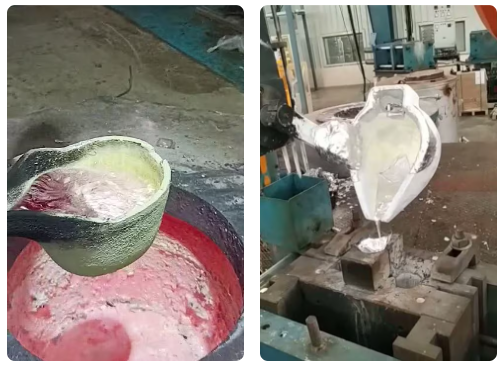
Material Considerations for Zinc Crucibles
The crucible material affects both effective volume and service life. For zinc alloys, you have several options:
Cast iron crucibles are durable and handle the lower melting point of zinc well. They offer good thermal conductivity and resist corrosion from molten zinc. Many zinc die casting operations use cast iron crucibles because they provide a cost-effective balance of performance and longevity.
Graphite crucibles offer excellent thermal conductivity and resistance to thermal shock. They work well for holding high-temperature metals but also perform reliably for zinc. Graphite crucibles heat evenly and transfer heat efficiently.
Silicon carbide crucibles provide enhanced oxidation resistance and thermal shock stability. They last longer than standard graphite crucibles and maintain their structural integrity under repeated heating cycles.
What this means for you: Choose your crucible material based on your production volume, operating temperature, and budget. Cast iron suits most zinc applications, while silicon carbide offers longer service life for high-volume operations.
How Crucible Shape Affects Effective Volume
The shape of your crucible influences both its effective volume and how well it performs in your machine.
Cylindrical crucibles are the most common design. They distribute heat evenly and work well with standard hot chamber machines. The uniform shape makes it easy to calculate effective volume and maintain consistent metal levels.
Conical crucibles taper toward the bottom. This design facilitates easy pouring and minimizes the risk of splashing or spillage. Conical crucibles can improve metal flow and reduce dross formation.
Shape and machine compatibility. The crucible must fit properly into your die casting machine’s holding mechanism. Haichen designs its die casting machines to accommodate various crucible sizes and types, offering flexibility and ease of use for different production needs.
Common Mistakes Buyers Make
Choosing based on total capacity instead of effective volume. The physical size of a crucible does not equal its usable capacity. Always ask for the effective volume—the amount of molten metal you can actually use.
Ignoring production growth. Your current production needs may grow. Choosing a crucible with some extra effective volume gives you room to increase output without replacing equipment.
Overlooking refill frequency. A crucible that forces you to refill every 15 minutes disrupts production. Aim for at least 30–60 minutes between refills to maintain smooth operations.
Forgetting about metal loss. Zinc oxidizes and forms dross during melting. Factor in a 5–10% metal loss when calculating your required crucible volume.
Questions
- “What is the effective volume for zinc in this crucible?” – Get the usable capacity, not the total physical volume.
- “What material do you recommend for my production volume?” – Cast iron, graphite, or silicon carbide each suit different needs.
- “How does the crucible shape affect performance in my machine?” – Cylindrical and conical designs offer different benefits.
- “What is the expected service life under my operating conditions?” – Factor replacement costs into your budget.
- “Does the crucible come with a warranty?” – Know what protection you have against defects.
- “Can you provide references from similar zinc die casting operations?” – Proven results matter more than promises.
Haichen’s Crucible Solutions for Zinc Die Casting
Haichen Machinery manufactures die casting machines designed to accommodate various crucible sizes and types. We understand that the effective volume of the crucible (zinc) is a critical specification that directly affects your production capacity and efficiency.
Our hot chamber die casting machines work with zinc alloys at temperatures between 400°C and 425°C. We offer machines with crucible capacities ranging from 110 kg to 820 kg of zinc, matching the full spectrum of production requirements.
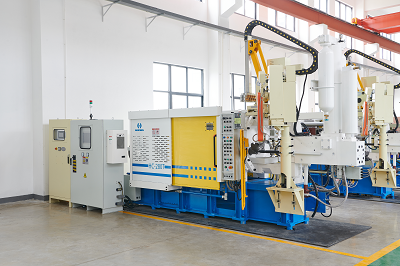
Haichen’s crucible selection guide helps buyers choose the right effective volume based on their shot weight, cycle time, and production targets. We consider material compatibility, thermal conductivity, and maintenance requirements to ensure optimal performance.
Beyond crucibles, Haichen provides complete die casting solutions including cold chamber and hot chamber machines, auxiliary equipment, and spare parts. We help buyers avoid common mistakes and select the right effective volume for their specific production needs.
Need help determining the right effective crucible volume for your zinc die casting operation? Contact Haichen Machinery. We will analyze your shot weight, production targets, and budget to recommend the optimal crucible capacity for your specific needs.


