Road safety depends on clear lane guidance, especially at night and in poor weather.
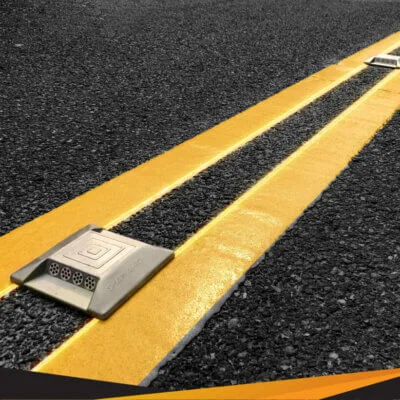
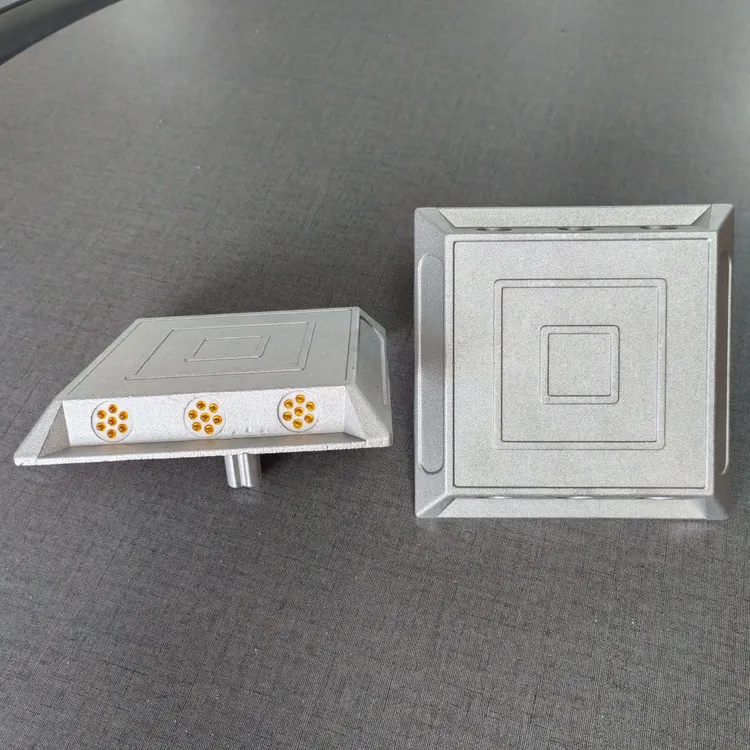
Aluminum road studs play an important role by reflecting vehicle headlights and helping drivers stay in the correct lane.
You can find these durable road safety markers on highways, bridges, tunnels, intersections, parking areas, and airport runways around the world.
Compared with plastic road studs, aluminum road studs offer higher strength, better impact resistance, and a much longer service life.
Their strong aluminum body can withstand heavy traffic, while high-quality reflectors provide excellent visibility in rain, fog, and darkness.
These advantages make aluminum road studs a preferred choice for government road projects and private infrastructure developments.
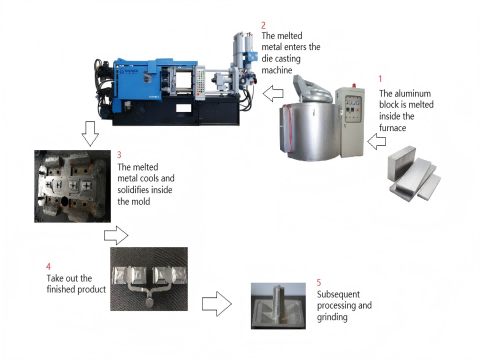
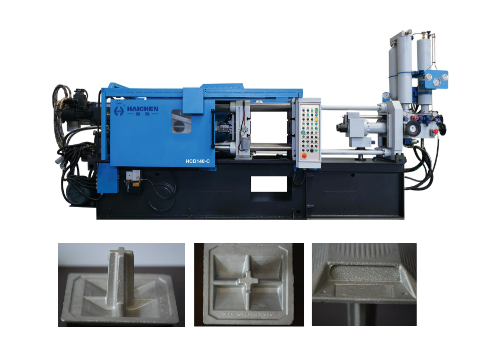
Manufacturers usually produce aluminum road studs through cold chamber high-pressure die casting.
This process creates accurate dimensions, smooth surfaces, and consistent product quality while supporting large-scale production.
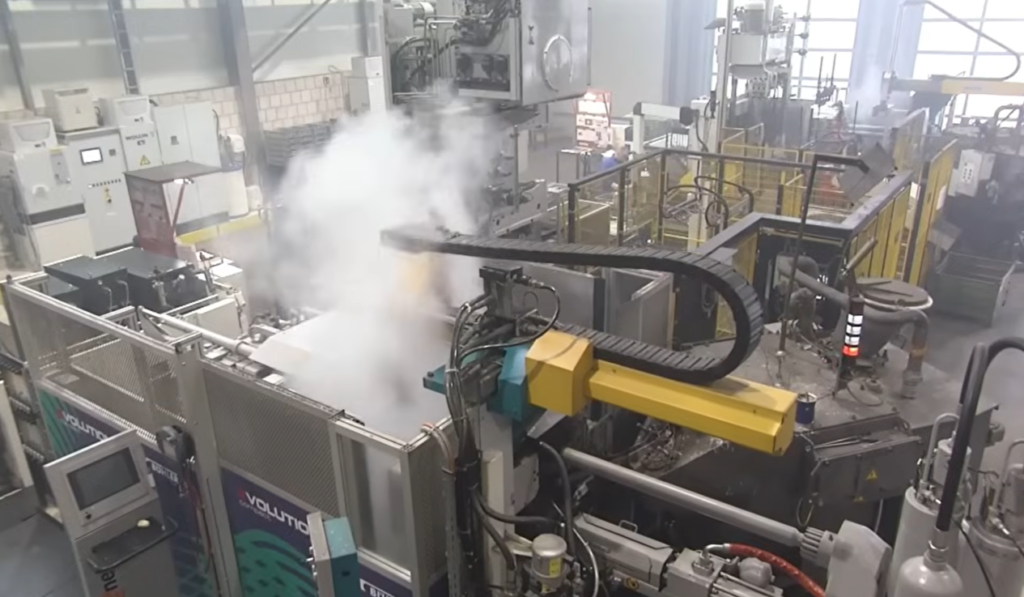
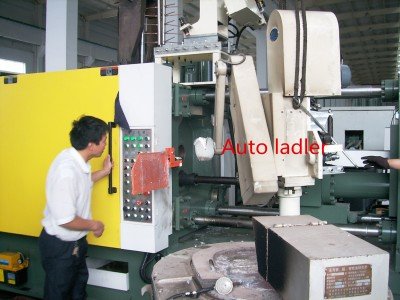
Modern production lines also use robots, automatic spraying systems, and automatic ladling equipment to improve efficiency and reduce labor costs.
In this guide, you will learn how aluminum road studs are manufactured, how to choose the right die casting machine and mould.
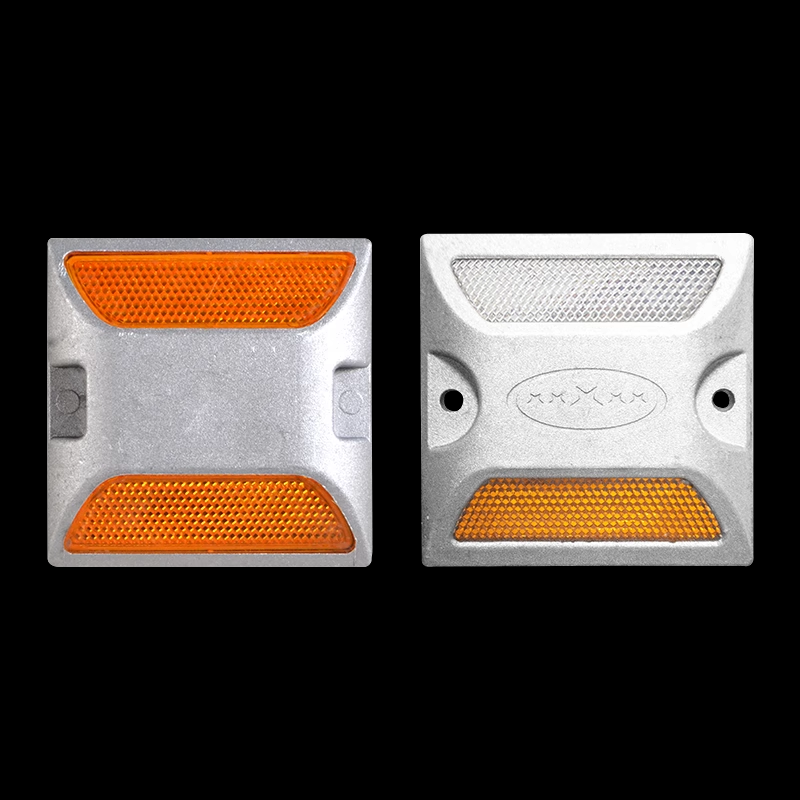
How Are Aluminum Road Studs Manufactured?
Manufacturing a high-quality aluminum road stud requires more than simply pouring molten aluminum into a mold.
Every step affects the product’s strength, dimensional accuracy, reflector performance, and service life.
Modern manufacturers use an automated production line that combines cold chamber die casting machines, precision molds, industrial robots, trimming equipment, and inspection systems.
This combination ensures consistent quality while reducing production costs.
Below is the complete manufacturing process used by most professional aluminum road stud manufacturers.
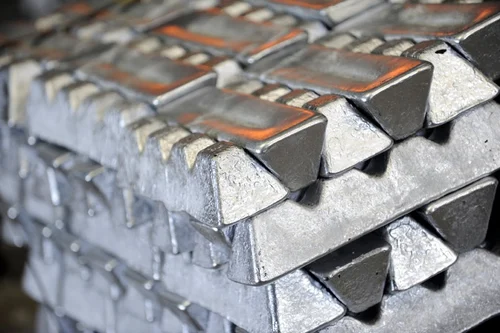
Step 1: Select the Right Aluminum Alloy
Every quality road stud starts with the right material.
Manufacturers normally choose aluminum die-casting alloys such as ADC12 or A380. These alloys provide excellent casting performance, high strength, and good corrosion resistance.
The selected alloy should offer:
- High mechanical strength
- Good fluidity during die casting
- Excellent corrosion resistance
- Stable dimensions after cooling
- Long outdoor service life
Using recycled aluminum without proper quality control may increase porosity, reduce strength, and shorten product life. For this reason, professional manufacturers carefully inspect raw materials before production begins.
Step 2: Melt the Aluminum
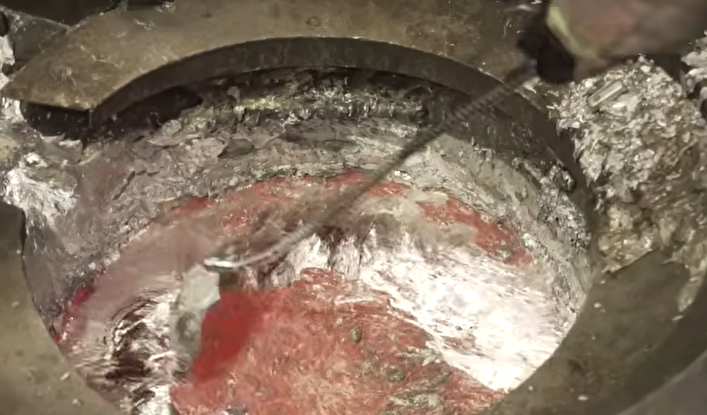
After selecting the alloy, operators load the aluminum into a melting furnace.
The furnace heats the metal until it reaches the required pouring temperature.
Operators continuously monitor the temperature because overheating may increase oxidation, while low temperatures may reduce metal flow during die casting.
Before pouring, workers remove slag and impurities from the molten aluminum. Clean molten metal produces smoother castings and reduces internal defects.
Maintaining stable metal quality at this stage helps improve the final product and reduces scrap rates.
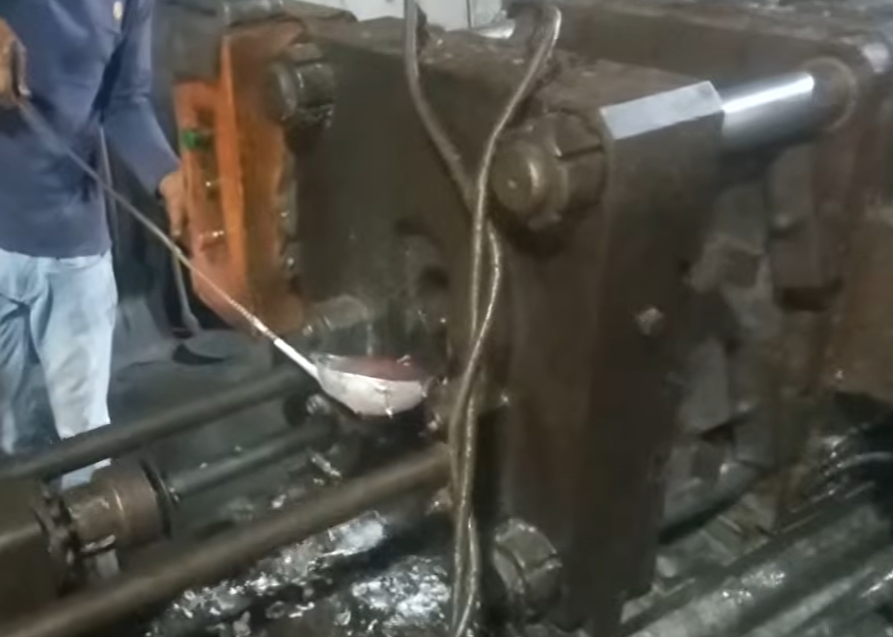
Step 3: Inject Molten Aluminum into the Mold
This step forms the aluminum road stud.
Manufacturers usually use a cold chamber die casting machine because aluminum has a relatively high melting point.
Unlike a hot chamber machine, the molten aluminum stays in a separate furnace and enters the shot chamber only when the machine is ready for injection.
The injection system pushes the molten aluminum into the mold cavity at high pressure and high speed. The pressure forces the metal into every corner of the mold, producing accurate dimensions and a smooth surface.
Compared with gravity casting, high-pressure die casting offers several advantages:
- Faster production cycles
- Better dimensional accuracy
- Higher production efficiency
- Improved surface quality
- Consistent product weight
This process allows manufacturers to produce thousands of identical aluminum road studs every day.
Step 4: Cool and Solidify the Casting
After injection, the aluminum cools rapidly inside the mold.
The cooling system controls mold temperature and helps the casting solidify evenly.
Uniform cooling reduces internal stress and minimizes defects such as shrinkage or distortion.
Cooling time depends on factors such as:
- Product size
- Wall thickness
- Mold temperature
- Aluminum alloy
- Machine settings
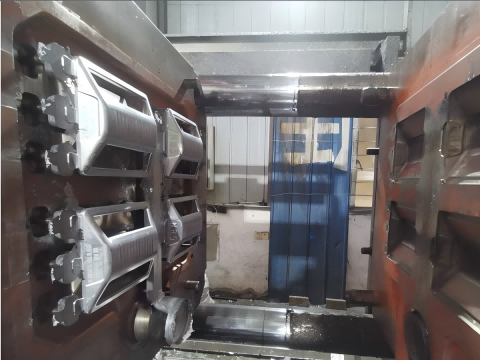
Once the casting reaches the required strength, the mold opens automatically.
Step 5: Remove the Casting from the Mold
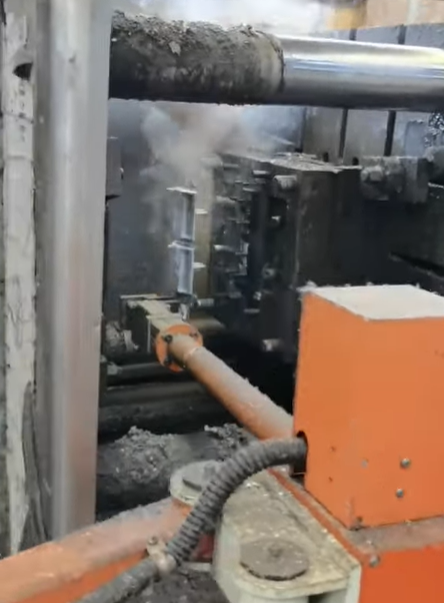
After the mold opens, an industrial robot or automatic extractor removes the aluminum road stud from the mold.
Automated handling offers several benefits:
- Shorter production cycles
- Stable product quality
- Improved workplace safety
- Lower labor costs
- Less product damage
Modern production lines often combine automatic part removal with conveyor systems, allowing continuous production without interrupting machine operation.
Step 6: Trim Excess Material
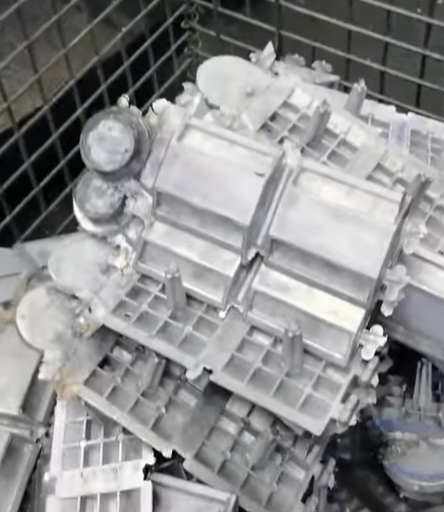
The casting still contains runners, gates, and flash after it leaves the mold.
Workers or trimming machines remove these excess materials to create the final product shape.
Accurate trimming helps:
- Improve appearance
- Reduce weight variation
- Prepare the surface for later processing
- Improve assembly accuracy
Some manufacturers recycle trimmed aluminum back into the melting process, reducing material waste.
Step 7: Clean the Surface
Manufacturers clean the casting before assembly.
Shot blasting is one of the most common surface treatment methods.
Steel shots remove oxidation, burrs, and surface residues while creating a uniform finish.
Depending on customer requirements, manufacturers may also apply:
- Sand blasting
- Powder coating
- Anodizing
- Protective coatings
Proper surface treatment improves corrosion resistance and gives the product a clean, professional appearance.
Automation Makes Manufacturing More Efficient
Modern aluminum road stud factories rely heavily on automation to improve productivity and maintain consistent quality.
A typical automated production line may include:
- Automatic ladling system
- Die casting machine
- Automatic spraying system
- Industrial robot
- Automatic trimming equipment
- Conveyor system
- Vision inspection system
Compared with manual production, automated manufacturing offers several advantages:
| Manual Production | Automated Production |
| Lower productivity | Higher productivity |
| More labor required | Fewer operators |
| Greater quality variation | Consistent product quality |
| Higher operating cost | Lower cost per part |
| Higher defect rate | Better production stability |
As labor costs continue to rise, more manufacturers choose automated die casting solutions to increase output, reduce waste, and improve product consistency.
Why Cold Chamber Die Casting Is the Best Choice for Aluminum Road Studs
Not all die casting machines work well with aluminum alloys.
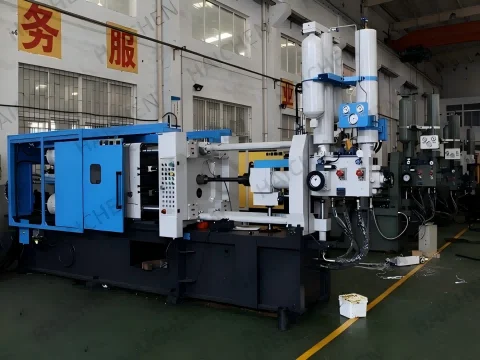
Because aluminum melts at a much higher temperature than zinc or magnesium, manufacturers almost always choose cold chamber die casting machines for aluminum road stud production.
In a cold chamber process, the machine injects molten aluminum from a separate shot chamber into the mold.
This design protects the injection system from continuous exposure to high temperatures and extends machine life.
Cold chamber die casting offers several important advantages:
- High injection pressure for complete mold filling
- Excellent dimensional accuracy
- Smooth casting surfaces with minimal finishing
- Stable production for high-volume manufacturing
- Long mold life when paired with H13 tool steel
- Easy integration with automated production equipment
For manufacturers that produce thousands of aluminum road studs every day, cold chamber die casting provides the ideal balance of speed, precision, and long-term operating efficiency.
How to Choose an Aluminum Road Stud Mold
The mold is one of the most important parts of the aluminum road stud manufacturing process.
A high-quality mold directly affects production efficiency, product accuracy, surface quality, and operating costs.
When manufacturers invest in an aluminum road stud production line, they should not only focus on the die casting machine.
The mold design and material selection also determine the long-term success of the project.
A well-designed aluminum road stud mold should provide:
- Stable production performance
- Accurate product dimensions
- Short cycle time
- Easy maintenance
- Long service life
- Low production waste
Before selecting a mold, manufacturers need to consider several key factors.
Mold Cavity Number
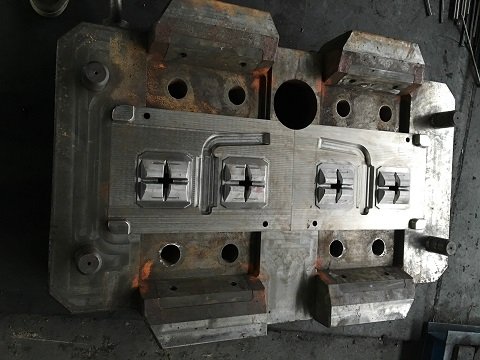
The cavity number determines how many road studs the mold can produce in one casting cycle.
The most common designs for aluminum road studs are:
- 2-cavity molds
- 4-cavity molds
2-Cavity Aluminum Road Stud Mold
A 2-cavity mold produces two road studs during each injection cycle.
This design is suitable for:
- Small production requirements
- New production projects
- Customers who need flexible manufacturing
- Products with larger sizes or complex structures
Advantages:
- Lower initial investment
- Easier mold maintenance
- Lower machine requirements
- Simple production management
For manufacturers who are entering the aluminum road stud market, a 2-cavity mold can be a practical starting solution.
4-Cavity Aluminum Road Stud Mold
A 4-cavity mold produces four road studs in one cycle.
This design is more suitable for large-volume production because it improves output without increasing machine operating time.
Advantages include:
- Higher production capacity
- Better labor efficiency
- Lower cost per piece
- Higher return on investment
However, a 4-cavity mold requires:
- Higher injection energy
- Larger machine capacity
- Better mold design
- More precise manufacturing
For large road safety projects or export-oriented factories, a 4-cavity mold is usually a better choice.

Mold Design Considerations
A professional mold manufacturer considers many details before producing an aluminum road stud mold.
Product Size and Shape
Different road projects require different road stud designs.
The mold must match:
- Product dimensions
- Reflector position
- Bottom structure
- Installation method
- Customer standards
A small design mistake can affect installation stability and product performance.
Runner System Design
The runner system controls how molten aluminum flows into the cavity.
A good runner design helps:
- Fill the cavity evenly
- Reduce air traps
- Improve surface quality
- Reduce material waste
Poor runner design may create defects such as:
- Cold shut
- Porosity
- Incomplete filling
Cooling System Design
Cooling channels inside the mold control temperature during production.
A proper cooling system helps:
- Shorten cycle time
- Improve product consistency
- Reduce mold deformation
- Extend mold life
Because aluminum die casting operates under high temperature and pressure, efficient cooling is essential.
Mold Maintenance
Even a high-quality mold requires regular maintenance.
Manufacturers should check:
- Mold surface condition
- Cooling channels
- Ejector system
- Moving parts
- Lubrication points
Regular maintenance helps prevent unexpected downtime and extends mold service life.

How to Choose the Right Die Casting Machine for Aluminum Road Stud Production
Choosing the correct aluminum road stud die casting machine directly affects product quality, production capacity, and investment return.
Many manufacturers make the mistake of choosing equipment only based on price.
However, the correct machine should match the product design, mold structure, and expected production volume.
The main factors include:
- Clamping force
- Injection energy
- Mold size
- Production capacity
- Automation level
- Maintenance requirements
Choose the Right Clamping Force
Clamping force prevents the mold from opening during injection.
If the clamping force is too low:
- Aluminum may leak from the mold
- Product dimensions may become unstable
- Flash defects may appear
Manufacturers should calculate the required force according to:
- Product projection area
- Injection pressure
- Number of cavities
- Safety factor
Typical Machine Options
For aluminum road stud production, manufacturers commonly choose:
200-Ton Die Casting Machine
Suitable for:
- Small or medium production
- 2-cavity molds
- Standard road stud designs
Advantages:
- Lower investment
- Lower energy consumption
- Easy operation
300-Ton Die Casting Machine
Suitable for:
- Higher production capacity
- 4-cavity molds
- Large export orders
Advantages:
- Higher output
- Better production efficiency
- Supports larger molds
Automation Level
Modern factories increasingly use automation to improve efficiency.
A complete aluminum road stud production line may include:
- Automatic pouring system
- Automatic spraying system
- Robot extraction system
- Conveyor system
- Automatic inspection equipment
Automation provides:
- Higher production speed
- More stable quality
- Lower labor requirements
- Safer working conditions
Machine Selection Checklist
Before purchasing a die casting machine, manufacturers should confirm:
- Product size and weight
- Required production output
- Mold cavity number
- Required clamping force
- Factory space
- Automation requirements
- After-sales service support
Choosing the correct machine at the beginning can reduce operating costs and improve production efficiency for many years.
Aluminum Road Stud Quality Standards and Inspection Methods
Producing a high-quality aluminum road stud requires more than accurate casting.
Manufacturers must control every stage of production to ensure that the final product can withstand long-term outdoor use.
Road studs work in demanding environments. They experience vehicle pressure, temperature changes, rain, snow, sunlight, and road chemicals.
For this reason, professional manufacturers perform strict quality inspections before delivery.
A reliable aluminum road stud should meet requirements related to:
- Mechanical strength
- Reflective performance
- Weather resistance
- Dimensional accuracy
- Surface quality
- Installation reliability
Dimensional Accuracy Inspection
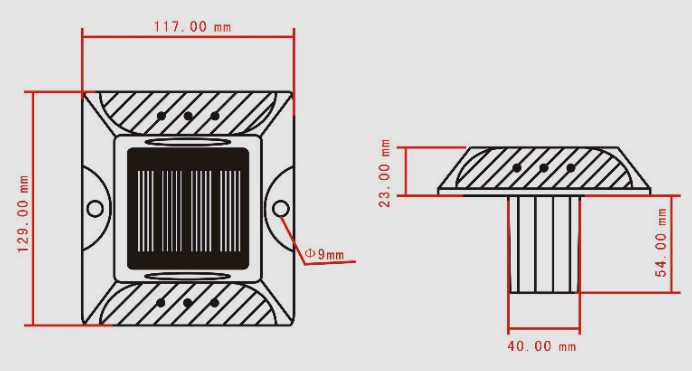
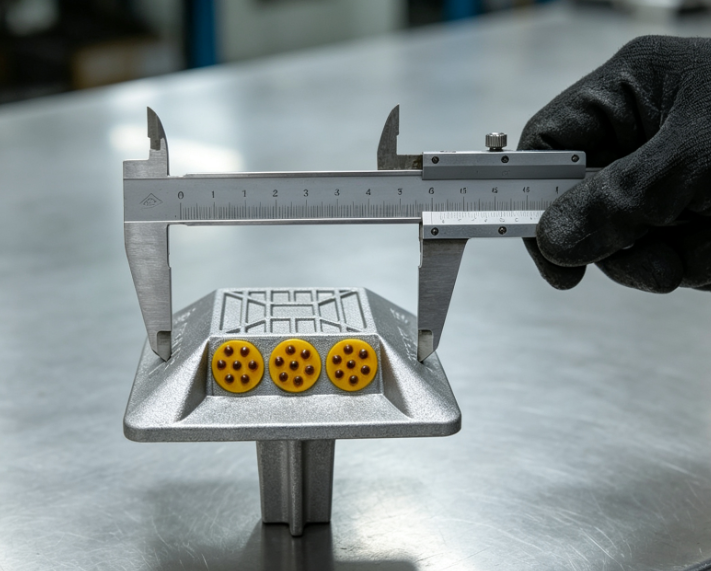
The size of an aluminum road stud directly affects installation and road performance.
Manufacturers check:
- Overall length and width
- Product height
- Reflector position
- Bottom surface flatness
- Weight tolerance
A precise die casting process helps maintain consistent dimensions between different production batches.
Stable dimensions are especially important for large road projects because contractors need thousands or even millions of identical products.
Surface Quality Inspection
The surface finish affects both appearance and durability.
Manufacturers inspect:
- Casting defects
- Flash
- Scratches
- Porosity
- Surface oxidation
A good surface treatment improves corrosion resistance and gives the product a professional appearance.
Why Choose Haichen for Aluminum Road Stud Production Solutions?
Choosing the right equipment supplier is an important decision for any company planning to manufacture aluminum road studs.
A reliable supplier should provide more than a die casting machine. They should offer complete technical support, production experience, and solutions that match the customer’s requirements.
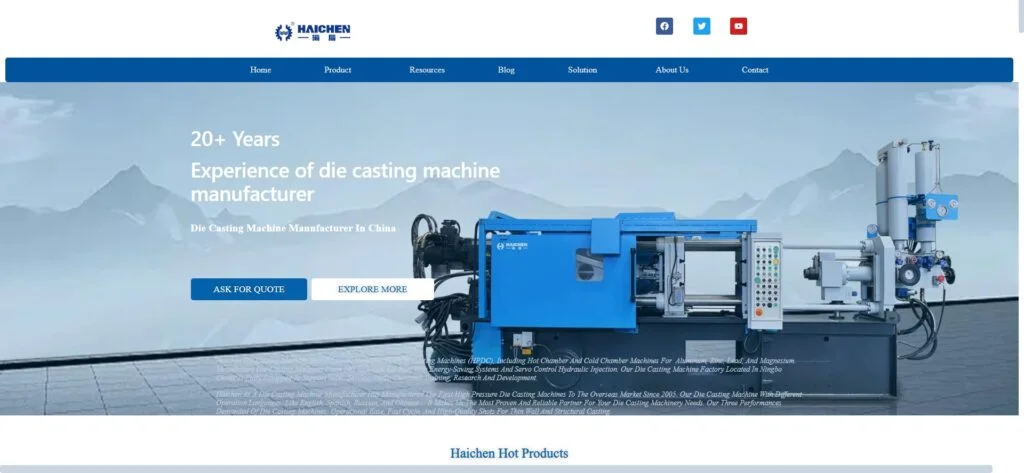
Haichen provides aluminum road stud manufacturing solutions based on customer production needs, including:
- Cold chamber die casting machines
- Aluminum road stud molds
- Automated production equipment
- Technical support
- Installation guidance
- Maintenance service
Complete Die Casting Solutions
Different customers have different production goals.
Some companies need a small production line for local projects, while others require high-output equipment for international markets.
Haichen helps customers select suitable solutions according to:
- Product design
- Mold cavity number
- Required output
- Factory conditions
- Automation level
This approach helps customers avoid unnecessary investment and choose equipment that matches their actual needs.
Technical Support and After-Sales Service
A successful production line requires long-term support.
Professional service includes:
- Machine installation
- Production adjustment
- Operator training
- Maintenance guidance
- Spare parts support
With proper technical support, manufacturers can maintain stable production and reduce unexpected downtime.


