A die casting sprayer can develop problems such as spray gun leakage, uneven spray patterns, nozzle blockage, unstable spray pressure, pump failure, or control system faults.
These problems can affect mold lubrication, release agent coverage, casting quality, and production cycle time.
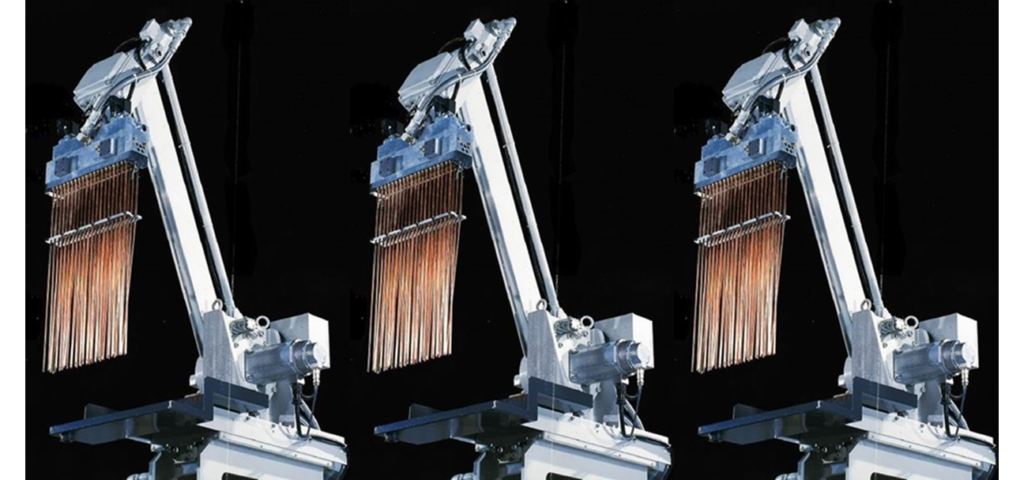
Fortunately, many die casting sprayer problems can be found by checking a few key areas, including the nozzle, sealing rings, air supply, pump, sensors, and control system.
This guide explains the most common die casting sprayer failures, their possible causes, and practical troubleshooting methods.
Common Die Casting Sprayer Problems
| Die Casting Sprayer Problems | Possible Cause | What to Check |
|---|---|---|
| Sprayer does not start | Power, fuse, PLC, or sensor problem | Power supply, alarms, fuse, sensors |
| Spray gun leaks | Worn seal or loose connection | Sealing rings and fittings |
| Spray width is unstable | Air pressure or nozzle problem | Air pressure, nozzle, air ring |
| No lubricant comes out | Blocked nozzle or supply problem | Nozzle, filter, pump, pipes |
| Spray is uneven | Nozzle blockage or poor alignment | Nozzle position and air cap |
| Pump pressure is low | Filter blockage, air leakage, or pump wear | Filter, pipes, pump |
| HMI does not work | Power or communication problem | HMI, PLC, cables |
| Robot does not move | Servo, sensor, or control fault | Servo system and sensors |
The exact cause depends on the sprayer design and the operating conditions. Therefore, always check the manufacturer’s maintenance instructions before replacing components.
What Is a Die Casting Sprayer?
A die casting sprayer is auxiliary equipment used to apply release agent and clean the die between casting cycles.
A typical automatic sprayer may include:
- Mechanical arm or robot
- Spray gun
- Spray nozzles
- Release agent supply system
- Pump
- Compressed air system
- Control system
- Sensors
- Piping and filters
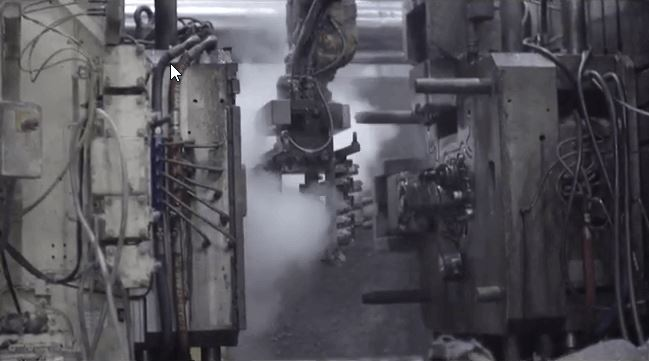
The sprayer normally enters the die area after the casting is ejected.
It can blow air from the die surface, spray release agent, and then blow excess lubricant away before the next shot.
A stable spraying process helps maintain consistent die conditions and can reduce problems such as sticking, poor surface finish, and uneven release agent coverage.

Sprayer Does Not Start
One of the first problems to check is a sprayer that does not start.
Possible causes include:
- Power supply failure
- Blown fuse
- Loose cable connection
- Emergency stop activation
- PLC alarm
- Sensor failure
- Servo drive alarm
- Communication problem
How to Troubleshoot It
Start with the power supply and control cabinet.
Then check whether the HMI shows an alarm or error code. Next, inspect the fuse, terminal connections, emergency stop circuit, and relevant sensors.
If the mechanical arm does not move but the control system is powered, check the servo drive and motor alarms.
Do not immediately disassemble the pump or motor before checking the electrical and control system.
Spray Gun Leakage
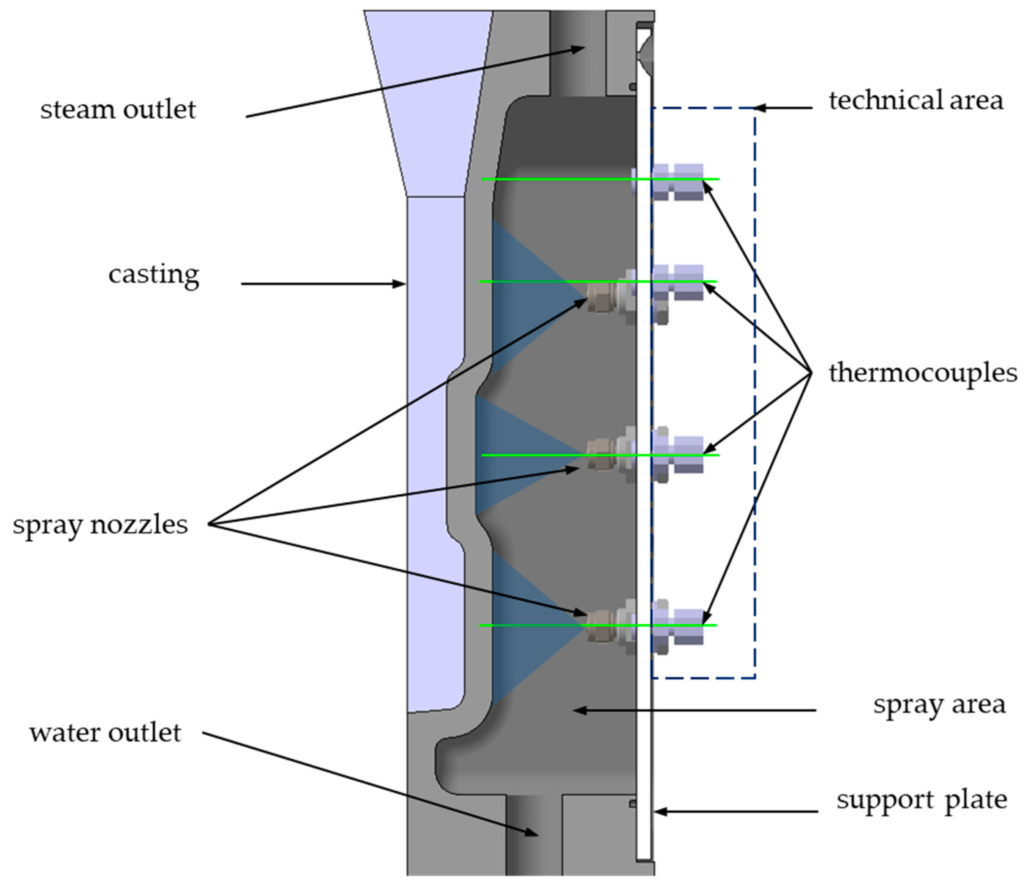
Release agent leakage from the spray gun can result in unstable spraying and material waste.
Common causes include:
- Worn sealing rings
- Damaged seals
- Loose fittings
- Incorrect assembly
- Damaged nozzle components
- Excessive pressure
How to Troubleshoot Spray Gun Leakage
First, stop the sprayer and release the pressure.
Then inspect the sealing rings and connections around the spray gun. Look for cracks, deformation, wear, or loose fittings.
If a sealing ring is damaged, replace it with the correct specification.
After reassembly, check the connection and run a controlled spray test.
A leaking spray gun should not be ignored because continuous leakage can affect spray pressure and the amount of release agent applied to the die.
Uneven Spray or Abnormal Spray Width
An unstable spray pattern is another common die casting sprayer problem.
Typical symptoms include:
- Spray fan too narrow
- Spray fan too wide
- Uneven coverage
- One-sided spray
- Distorted spray pattern
- Poor atomization
- Changing spray width
Possible causes include:
- Blocked nozzle
- Incorrect nozzle position
- Damaged air distribution ring
- Unstable air pressure
- Worn sealing ring
- Incorrect nozzle assembly
How to Troubleshoot Spray Width Problems
Start by checking the nozzle for blockage.
Next, check whether the nozzle is correctly positioned and securely installed.
Then inspect the air distribution ring and sealing components.
Finally, check the compressed air supply against the pressure range specified by the sprayer manufacturer.
If the air pressure is unstable, the spray pattern may change even when the nozzle itself is working correctly.
Nozzle Blockage
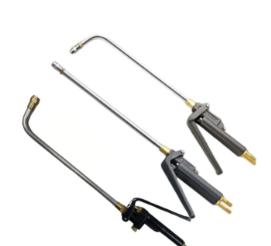
Nozzle blockage can prevent the sprayer from delivering release agent correctly.
Common contaminants include:
- Dried release agent
- Water impurities
- Small metal particles
- Dust
- Other residues
A blocked nozzle may cause:
- Weak spray
- Interrupted spray
- Uneven atomization
- Narrow spray width
- No spray from one nozzle
How to Prevent Nozzle Blockage
Clean the nozzle according to the equipment manufacturer’s instructions.
Do not use sharp tools that can damage the nozzle opening.
Also check the release agent supply system, filter, and pipes. Cleaning only the nozzle may not solve the problem if contamination is coming from upstream.
Damage to the Air Distribution Ring
The air distribution ring helps control the flow of compressed air around the spray nozzle.
If it becomes worn, damaged, or incorrectly installed, air distribution may become uneven.
Possible symptoms include:
- Poor atomization
- Uneven spray fan
- Air leakage
- Unstable spray width
- Reduced spraying performance
How to Troubleshoot It
Remove the air distribution ring according to the equipment manufacturer’s maintenance procedure.
Check for cracks, deformation, contamination, and wear.
If the component is damaged, replace it rather than trying to compensate for the problem by changing the air pressure.
After replacement, check the nozzle position and spray pattern again.
Loose or Worn Sealing Rings
Sealing rings are small components, but they play an important role in maintaining air and fluid pressure.
A damaged sealing ring can cause:
- Air leakage
- Release agent leakage
- Unstable atomization
- Changing spray width
- Reduced spraying efficiency
Sealing rings can deteriorate because of:
- Long-term use
- Chemical exposure
- Heat
- Incorrect installation
- Mechanical wear
Maintenance Tip
Inspect sealing rings during regular maintenance.
Replace them when they show cracking, deformation, hardening, or excessive wear.
When installing a new seal, make sure it is seated correctly and is compatible with the release agent and operating conditions.
Die Casting Sprayer Problems–Pump
The pump supplies release agent to the spray gun.
Pump problems can appear as:
- Low spray pressure
- No release agent delivery
- Unstable flow
- Abnormal noise
- Leakage
- Slow response
Possible causes include:
- Blocked filter
- Empty supply tank
- Air entering the supply line
- Worn pump components
- Damaged motor
- Loose connection
How to Troubleshoot Pump Problems
First, check the release agent level and filter.
Then inspect the inlet and outlet pipes for blockage or leakage.
If the supply system is normal, check the pump and motor according to the manufacturer’s maintenance procedure.
For electrical motors, verify the power supply and motor alarm before opening the pump.
HMI or Digital Display Problems
A die casting sprayer may use an HMI or digital display to control spraying parameters and monitor alarms.
If the display does not work, possible causes include:
- Power supply failure
- Loose cable
- HMI hardware fault
- PLC communication problem
- Damaged terminal
- Electrical interference
How to Troubleshoot the Display
Check whether the control cabinet has power.
Then inspect the HMI power connection and communication cable.
If the HMI is powered but cannot communicate with the PLC, check the communication connection and control system alarms.
Avoid opening electrical equipment while the machine is energized. Electrical troubleshooting should be performed by qualified personnel.
Sensor Problems
Sensors help the sprayer know the position and status of the equipment.
Depending on the machine design, sensors may monitor:
- Robot position
- Spray arm position
- Die position
- Limit position
- Pressure
- Other machine conditions
A failed or misaligned sensor can stop the sprayer from starting or prevent the spray arm from completing its cycle.
How to Troubleshoot Sensor Problems
Check the sensor position, cable, connector, and HMI alarm.
If the sensor is adjustable, verify its position according to the machine manual.
If the sensor is damaged, replace it with the correct specification.
Improper Nozzle Installation
Even a good nozzle can produce poor spraying results if it is installed incorrectly.
Common installation problems include:
- Incorrect angle
- Incorrect position
- Loose fixing
- Wrong nozzle specification
- Poor alignment
These problems can cause the spray to miss part of the die surface.
How to Correct Nozzle Installation
First, stop the machine and make the equipment safe.
Then check the nozzle angle and position according to the machine or die spraying layout.
Secure the nozzle and run a test spray.
The final spray pattern should cover the required die surface without excessive overspray.
Problems Caused by Improper Cleaning
Cleaning is important because release agent residue can gradually build up inside the nozzle, filter, and pipes.
If cleaning is incomplete, deposits can cause:
- Nozzle blockage
- Reduced flow
- Uneven atomization
- Unstable spray width
- Increased pump load
However, excessive or aggressive cleaning can also damage seals and small nozzle components.
Better Cleaning Practice
A good maintenance routine should include:
- Cleaning the nozzle.
- Checking the filter.
- Inspecting the release agent pipes.
- Removing residue from the spray gun.
- Checking sealing rings.
- Inspecting the air passage.
- Testing the spray pattern after cleaning.
Always use a cleaning method that is compatible with the sprayer components and release agent.
How to Prevent Die Casting Sprayer Failures
Preventive maintenance is usually cheaper than repairing a failed sprayer during production.
A practical maintenance routine should include:
Daily Checks
- Check release agent level.
- Check air pressure.
- Check for visible leakage.
- Check the spray pattern.
- Check machine alarms.
- Clean the nozzles if necessary.
Regular Checks
- Inspect sealing rings.
- Check air distribution rings.
- Clean filters and pipes.
- Inspect pump performance.
- Check sensors and cables.
- Check nozzle alignment.
- Inspect the mechanical arm or robot.
Replace Worn Components
Do not wait until a worn sealing ring, nozzle, or air distribution ring causes a production stoppage.
Replacing low-cost wear parts during scheduled maintenance can help prevent larger failures.
When Should You Replace Sprayer Components?
Replacement depends on the component and operating conditions.
Consider replacing a component when you find:
- Visible cracks
- Deformation
- Severe wear
- Repeated leakage
- Unstable spray performance
- Persistent blockage
- Abnormal noise
- Repeated alarms
For critical components, follow the maintenance interval recommended by the equipment manufacturer.
Haichen Die Casting Sprayer
Haichen supplies die casting auxiliary equipment, including automatic spraying solutions for die casting production.
A properly configured die casting sprayer can help automate:
- Die surface cleaning
- Release agent spraying
- Air blowing
- Spray arm movement
- Repeated spraying cycles
For high-volume production, automatic spraying can improve process consistency and reduce manual operation.
When selecting a die casting sprayer, consider the die size, die layout, release agent type, required spray coverage, cycle time, number of nozzles, and automation requirements.
If you are experiencing unstable spray width, nozzle blockage, spray gun leakage, or other sprayer problems, provide the machine model, sprayer configuration, release agent type.
And the symptoms you observe. This information can help identify the likely cause and the correct solution.


