What is the difference between cold and hot chamber die casting machines? The key difference lies in where the injection chamber sits. In a hot chamber machine, the chamber stays inside the furnace.
It immerses directly in the molten metal. In a cold chamber die casting machine, the chamber sits outside the furnace. This single design difference drives every other distinction between the two machine types. It affects the metals they can process, their production speed, and their cost structure.
This guide walks you through the technical differences between cold and hot chamber die casting machines. You will learn how each type works. You will discover what materials they handle. And you will find out which one fits your production needs.
Working Principles: How Each Machine Type Operates
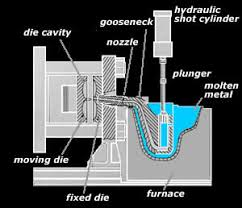
Hot chamber die casting machines integrate the furnace and injection system into one unit. The injection mechanism—including the gooseneck and plunger—immerses directly in the molten metal bath. During injection, the plunger moves down. It forces metal through the gooseneck into the mold cavity. On the return stroke, molten metal refills automatically. This happens without any external ladling. This closed system keeps the metal flowing continuously.
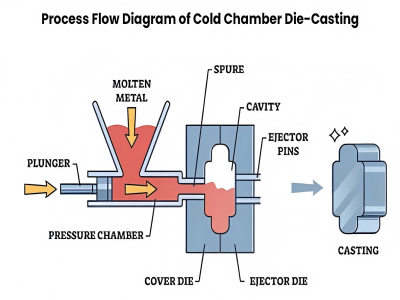
Cold chamber die casting machines separate the furnace from the injection chamber. The furnace stands independently. It only melts and holds the metal. An automatic ladle delivers a measured amount of molten metal into the horizontal injection chamber for each shot. The injection plunger then advances rapidly. It pushes the metal into the mold cavity. After solidification, the mold opens. Ejectors push out the casting. This process repeats for every cycle.
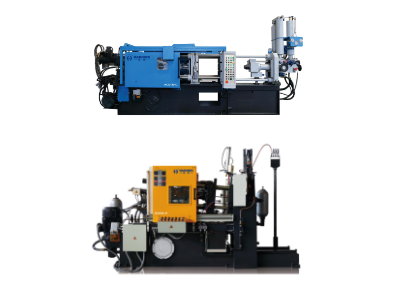
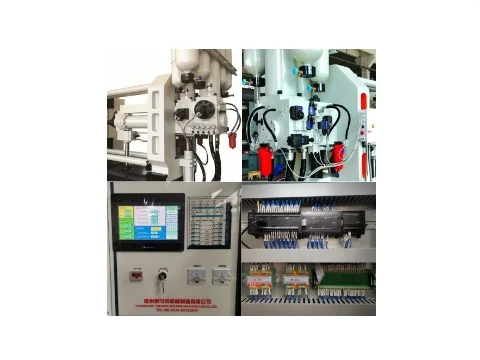
Haichen’s die casting machine design. Haichen manufactures both types of die casting machines. The HCD-H series hot chamber machines feature a closed-loop control system. This system precisely regulates the injection process and metal temperature. The HCD-C series cold chamber machines come equipped with large injection cylinders and high-pressure systems. These systems can produce larger, more complex parts.
Applicable Materials: What Each Die Casting Machine Can Process
Hot chamber die casting machines process low-melting-point metals. These include zinc alloys (Zamak 3, Zamak 5, ZA series), lead alloys, tin alloys, and some magnesium alloys. The machine’s heating temperature is lower than that of cold chamber machines. So it can only melt zinc and other low-melting-point metals.
Cold chamber die casting machines process high-melting-point metals. These include aluminum, magnesium, and copper alloys. Due to the high melting point of aluminum alloys, cold chamber machines are more suitable for processing these materials. The cold chamber process also handles brass and other high-temperature alloys.
Material compatibility is the most critical distinction. If you need to cast aluminum or brass, choose a cold chamber die casting machine. It is your only option. The corrosive properties of these molten metals would destroy the internal gooseneck and plunger of a hot chamber machine. Conversely, if you are working with zinc, a hot chamber die casting machine offers a more efficient and faster process. Zinc is the most commonly used material in hot chamber die casting. Its hardness, toughness, and excellent casting qualities make it ideal.
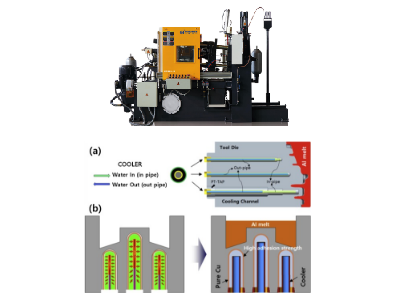
Haichen’s material expertise. Haichen specializes in producing a wide range of die casting equipment. This includes cold chamber machines for aluminum and hot chamber machines for zinc and lead. The HCD-C series offers locking forces from 350 to 20800 kN. These forces are suitable for producing aluminum and magnesium parts. The HCD-H series hot chamber machines are specifically optimized for zinc and magnesium alloys.
Production Speed and Efficiency
Hot chamber die casting machines deliver significantly faster cycle times. With no ladling step required, cycle rates are much higher. Small parts can cycle in as little as 2-3 seconds. Hot chamber machines can reach 400 to 900 cycles per hour. Some achieve up to 800 shots per hour. The injection mechanism immerses in the molten metal. This enables extremely fast cycle times.
Cold chamber die casting machines operate more slowly. The process takes longer because operators must transfer metal from an external furnace for each cycle. Cold chamber die casting machines average 50 to 90 cycles per hour. The additional ladling step adds time to every cycle.
Why speed matters to your production. Faster cycle times translate directly to higher output. They also lower per-part costs. Hot chamber machines offer significantly shorter cycle times than cold chamber machines. This is because there is no need to transfer metal from an external furnace. For compatible materials like zinc, this speed advantage often translates to a lower per-part cost in high-volume production.
Haichen’s efficiency record. Haichen’s hot chamber machines achieve extremely fast cycle times, typically up to 800 shots per hour. This makes them ideal for mass production of small to medium-sized parts such as gears, housings, and connectors.
Precision, Surface Quality, and Porosity
Hot chamber die casting machines produce excellent surface quality. The molten metal flows in a closed system. This reduces oxidation and inclusions. This closed design prevents air from contacting the metal being injected. This significantly reduces porosity in the final casting. Hot chamber die casting can provide better surface quality and dimensional accuracy compared to cold chamber machines. The process also minimizes the metal’s exposure to the atmosphere. This can reduce oxidation and improve the final part’s consistency.
Cold chamber die casting machines also deliver high precision. Cold chamber die casting stands out for its ability to handle high-melting-point metals. It delivers exceptional consistency and structural integrity. The excellent surface finish and tight dimensional tolerances make it suitable for demanding applications. However, cold chamber machines face a higher porosity risk. Air can become trapped during the ladling step.
What this means for your parts. Hot chamber die casting machines generally produce parts with lower porosity and better surface finish. Cold chamber machines still deliver good quality. But you may need to account for porosity risks when designing parts for aluminum or other high-melting-point metals.
Tool Life and Maintenance
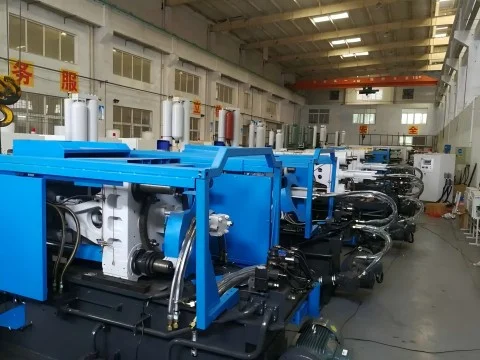
Hot chamber die casting machines offer longer tool life. The injection system immerses in molten metal. Its mechanical parts experience less thermal shock. The consistent temperature environment reduces the thermal cycling stress on components. This extends their service life. The hot chamber process also operates at lower pressures. It is particularly suitable for thin-walled castings.
Hot chamber machines have maintenance considerations. The injection chamber and plunger remain immersed in liquid metal for extended periods. This can lead to erosion over time. However, the simple equipment structure makes hot chamber machines easy to operate and maintain. The compact structure requires less floor space. It offers a high level of automation.
Cold chamber die casting machines face different wear patterns. The separate furnace design means the injection components do not sit in molten metal continuously. This reduces certain types of corrosion. But it introduces other wear mechanisms from the repeated ladling and injection cycles.
Haichen’s durable construction. Haichen die casting machines feature robust clamping units and precise injection systems. These ensure smooth and accurate high-pressure injection. The advanced control systems monitor process parameters in real time. This guarantees consistency for every shot.
Energy Consumption and Heat Loss
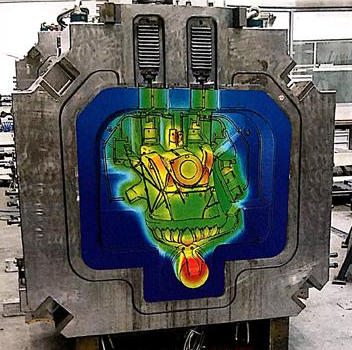
Hot chamber die casting machines consume less energy. The molten metal stays in a closed channel within the furnace. Heat loss is minimal. The injection system—including the piston and gooseneck—is directly immersed in molten metal. This maintains the high temperature of the metal and reduces heat loss. Per-part energy use is 30-40% lower than cold chamber machines.
Cold chamber die casting machines lose more heat. The metal must be transferred from a separate furnace to the injection chamber for each cycle. This transfer step allows heat to escape. It requires more energy to maintain the metal at the proper casting temperature.
What this means for your operating costs. Hot chamber die casting machines offer lower energy consumption. This reduces your operating costs over time. The low heat loss and low energy consumption make hot chamber machines particularly cost-effective for high-volume production.
Application Fields
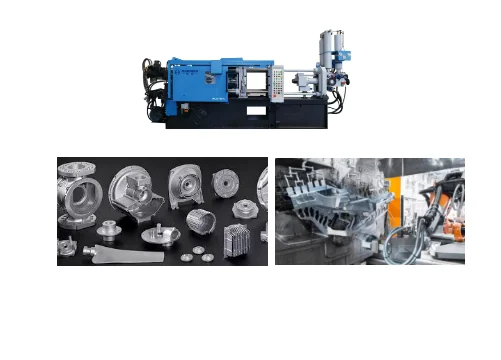
Hot chamber die casting machines excel at producing small, precise parts. The process is widely used in automotive, electronics, aerospace, and hardware industries. Common applications include building hardware such as door handles, locks, and hinges. Automotive parts like door lock mechanisms and sensor housings are also common. Electronic products include connector housings and precision instrument frames. Toys and crafts include model cars, badges, and commemorative coins.
Cold chamber die casting machines dominate large, structural applications. The process serves the automotive, aerospace, electronics, home appliances, and communications industries. In the automobile industry, cold chamber machines produce various parts and components such as engine parts. Other applications include wheel hubs, chassis components, and communication base station cooling components. They also produce structural parts for industrial equipment. Cold chamber machines produce electronic and electrical products and thermal management components like heat sinks for LEDs and power devices.
How to match the die casting machine to your application. Hot chamber machines suit the production of small and precise parts with high efficiency and low cost. Cold chamber machines suit the manufacture of large and complex parts with high precision and strong mechanical properties. Hot chamber casting is ideal for small, simple parts, especially thin-walled or high-precision components. Cold chamber casting is more suitable for large, complex parts where powerful injection is needed to fill intricate sections and reduce defects like porosity or shrinkage.


