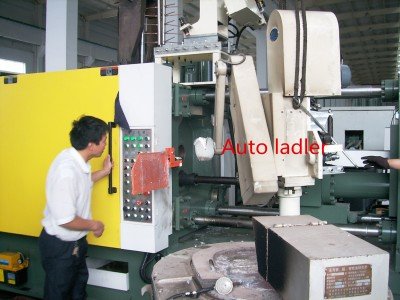
Features of die casting ladle include high temperature resistant material manufacturing, precise pouring gate design and ergonomic design for easy operation.
The ladle is an indispensable part of the die casting process. It is responsible for safely and accurately transporting the molten metal from the holding furnace to the cavity entrance of the die casting mold. The operator uses it to control the amount of metal injected each time, which is critical to ensure that the entire die casting process runs smoothly and efficiently.
Because the ladle directly affects the quality of the final casting (such as reducing defects such as pores and cold shuts) and the efficiency of the production line, it is particularly important to understand its specific structure and practical use points.
This guide covers the complete die casting ladle features — materials, design, insulation, types, selection criteria, and maintenance — with real production insights from HAICHEN installations.
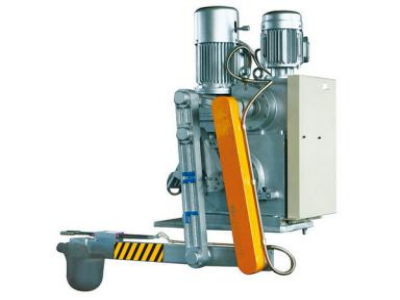
Definition and Core Role of Die Casting Ladle
The die-casting ladle is a tool used in the foundry to hold, transport and pour molten metal. As a key device connecting the smelting furnace and the die-casting mold, its operation effect will directly affect the quality of the casting and production efficiency.
Specifically, its value is mainly reflected in three aspects:
Precise Transfer of Molten Metal
The ladle needs to accurately transfer molten metal such as aluminum, zinc or magnesium alloy from the holding furnace to the pressure chamber or mold cavity of the die-casting machine. In cold chamber die casting, this work usually needs to be completed with the help of a robotic arm, and the pouring accuracy error needs to be controlled within ±2%.
Guarantee the Quality of Castings
By reducing the oxidation of the molten metal during the transfer process, the mixing of impurities and the loss of heat, the ladle can effectively reduce the risk of defects such as pores and cold shuts in the casting. For example, its scraping edge design can remove the oxide layer on the surface of the molten metal, while the ceramic lining can maintain the metal temperature and prevent iron contamination.
Adapt to Automated Production
In the robotic pouring unit, the ladle can achieve high-precision quantitative pouring to ensure the consistency of the production rhythm. Its handle and lever mechanism support the robot arm for stable operation, while weight markings help control the amount of each pour.port the robot arm for stable operation, while weight markings help control the amount of each pour.
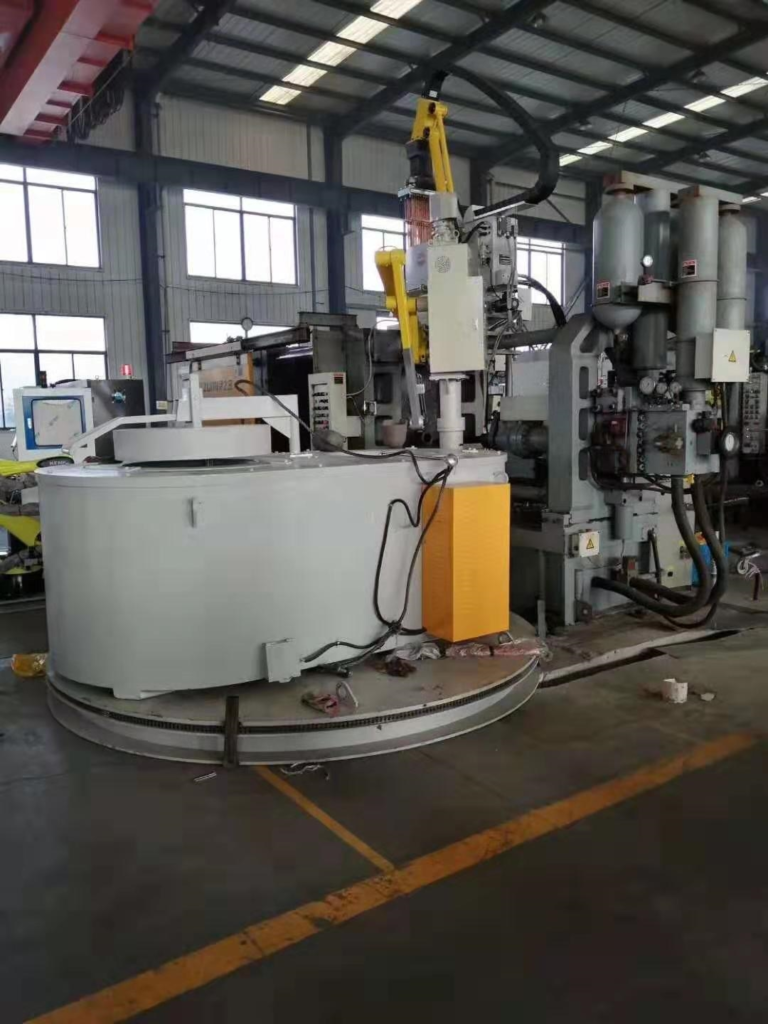
Key Features of Die Casting Ladle
Material Resistance
In terms of material selection, ladles are typically made from graphite, cast iron, special alloys, or ceramic materials, which can withstand high-temperature melts above 1300°C and effectively resist the erosion of molten metal.
| Material | Max Temperature | Key Advantage | Best Suited For |
|---|---|---|---|
| Graphite | 1300°C+ | High thermal stability, maintains structural integrity | Aluminum alloys, manual operation |
| Cast Iron | 1000-1200°C | Cost-effective, good thermal conductivity | Zinc alloys, general purpose |
| Special Alloys (with Cr) | 1300°C+ | Corrosion resistance, 30%+ longer service life | High-temperature aluminum/magnesium |
| Ceramic (ceramic lined) | 1860°C | Low thermal expansion, prevents oxide contamination | High-purity aluminum, thin-wall parts |
Ceramic cups have a high melting point (1860°C ± 10°C) and low thermal expansion, making them suitable for high-temperature environments. They also prevent oxides from entering the molten metal, reducing defects in the final casting. Cast iron cups, while less resistant to thermal shock and corrosion, are more cost-effective and have good thermal conductivity.
Insulation
The thermal insulation performance is mainly achieved through the ladle lining. The 20-40cm thick high-aluminum refractory layer can slow down heat loss. This design controls the temperature fluctuation of the melt transfer process within ±15°C, ensuring that the metal fluidity during pouring meets the process requirements.
Actual measurements show that the moisture content of the optimized castable is less than 3%, and its thermal conductivity is only 0.08-0.12W/(cm·K), which significantly reduces energy consumption. Maintaining temperature stability is crucial for casting molding. When heat loss exceeds 5%, it may cause cold shut or porosity defects.
Pour Spout Design
The inclined nozzle can achieve precise flow control, reduce molten metal splashing, and ensure that the molten metal is smoothly injected into the injection chamber.
Ease of Use
The handle adopts ergonomic design to reduce operator fatigue. It is compatible with the robot arm interface to improve the operation safety in high temperature environment.
Temperature Resistance
The ladle body and lining are made of special refractory materials which can withstand the high temperature of molten metal for a long time (usually >1000°C), avoid deformation or failure, and ensure the safety and stability of the casting process.is crucial for casting molding. When heat loss exceeds 5%, it may cause cold shut or porosity defects.
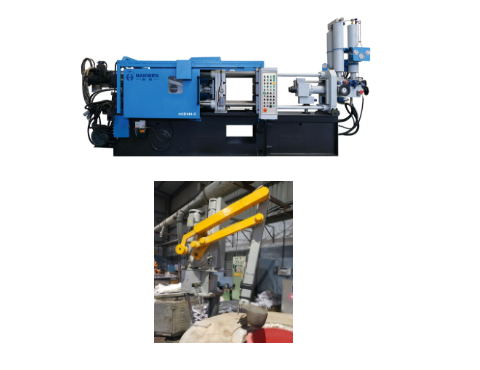
Ladle Shape and Capacity Considerations
Ladle shape directly affects pouring stability and metal transfer efficiency. Common shapes include:
| Shape | Best For | Key Advantage |
|---|---|---|
| Round-bottom ladles | Manual operation | Better heat retention, curved bottom allows complete emptying with minimal metal residue |
| Flat-bottom ladles | Automated systems | Greater stability on furnace edges, precise positioning |
Capacity selection should match the shot weight of the die casting machine. A ladle that is too large causes metal temperature drop during pouring. A ladle that is too small requires multiple trips, slowing cycle time. General rule: ladle capacity should be 20-30% larger than the required shot weight to allow safe handling without spillage.
Cold Chamber vs Hot Chamber Requirements
Different die casting processes have different ladle requirements:
| Die Casting Type | Core Requirements for Ladles | Adaptation Solutions |
|---|---|---|
| Cold chamber die casting | Large capacity (≥5kg), fast transfer | Steel ladles + robotic arm collaboration, suitable for aluminum/magnesium alloys |
| Hot chamber die casting | Small capacity, low temperature corrosion resistance | Ceramic lined ladles, suitable for zinc/tin alloys (melting point ≤450°C) |
at is too small requires multiple trips, slowing cycle time. General rule: ladle capacity should be 20-30% larger than the required shot weight to allow safe handling without spillage.
HAICHEN Ladle Solutions
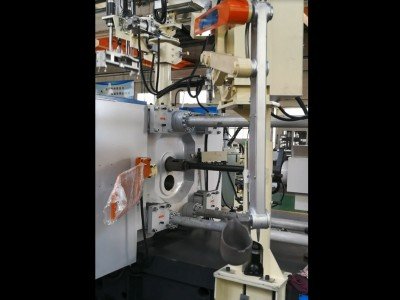
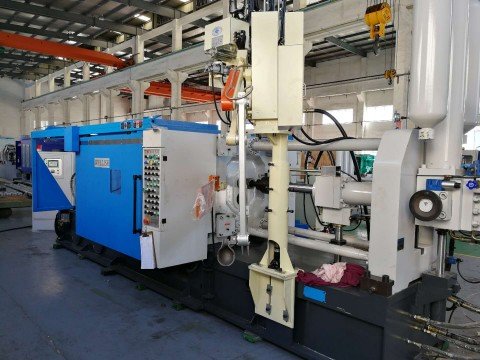
As a manufacturer that provides integrated die-casting systems, HAICHEN designs its ladles to meet these critical requirements precisely.
Key features of HAICHEN ladles:
- Precise control: Equipped with precision gate design. When operating, you will feel the process of molten metal flowing smoothly into the shot barrel. This design can effectively reduce metal splashing and reduce the oxidation problem caused by the contact between molten metal and air.
- High-quality materials: Manufactured from high-grade heat-resistant materials. You will clearly feel its stability under extreme temperatures in daily use. This material property directly extends the life of the equipment, reduces the frequency of repairs caused by high-temperature deformation, and saves you long-term maintenance costs.
- Optimized scraping edge and advanced ceramic lining: Not only maintain molten metal temperature effectively but also minimize oxidation and iron contamination during transfer.
- Standardized interface: Allows for effortless integration into HAICHEN’s automated pouring units, ensuring the ±2% pouring accuracy and consistent cycle times demanded by modern, high-volume production lines.
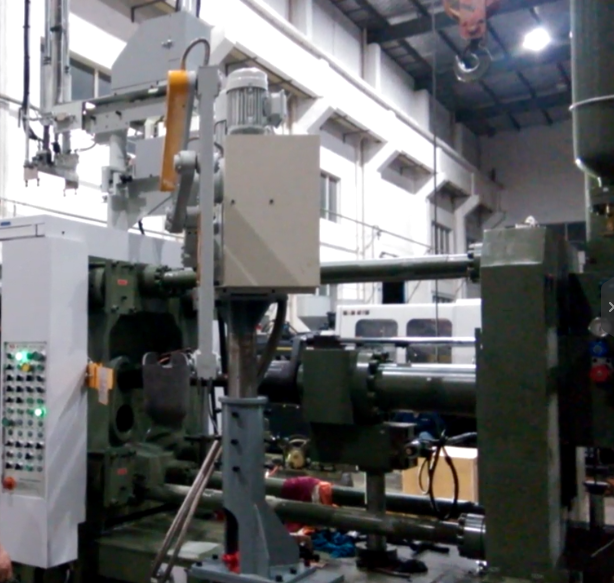
HAICHEN ladle specifications:
- Precise and consistent dosing of up to 60 kg of liquid aluminum
- VF control for stable speed change and accurate ladling
- AC motor for long-time continual operation without maintenance
- Special material adopted for ladle shaft matched with special journal for long-time operation at high temperature under no lubrication condition
How to Choose and Maintain Die Casting Ladles
Selection Criteria
Choose ladle material based on alloy type:
- Aluminum alloys: Cast iron or coated steel ladles with ceramic lining to prevent iron pickup
- Zinc alloys: Cast iron ladles are sufficient due to lower operating temperatures
- Magnesium alloys: Steel ladles with protective coating to prevent reaction
Consider automation compatibility. Ladles for robotic pouring must have standardized mounting interfaces and weight markings for consistent operation.
Maintenance Guidelines
- Preheat before use: Preheat ladles before first use each day to 150-200°C to prevent thermal shock and metal splash solidification
- Clean after each shift: Remove built-up oxide layers using wire brushes or light scraping. Avoid aggressive tools that damage the protective coating
- Regular inspection: Inspect for cracks, deformation, or lining wear. Replace when wall thickness reduces by more than 30% or when cracks appear
Proper ladle selection and maintenance ensure consistent shot weight, reduce metal oxidation, and extend ladle service life by 40-60%.
Frequently Asked Questions
Q: What is a die casting ladle?
A: A die casting ladle is a tool used to hold, transport, and pour molten metal from the holding furnace to the die casting mold cavity. It is essential for precise metal transfer and casting quality.
Q: What materials are used for die casting ladles?
A: Common materials include graphite, cast iron, special alloys (with chromium for corrosion resistance), and ceramic materials. Each offers different temperature resistance and cost profiles. Ceramic cups can withstand up to 1860°C.
Q: How do I choose the right ladle capacity?
A: Ladle capacity should be 20-30% larger than the required shot weight. Too large causes temperature drop; too small requires multiple trips, slowing cycle time.
Q: What is the difference between round-bottom and flat-bottom ladles?
A: Round-bottom ladles provide better heat retention and complete emptying, suitable for manual operation. Flat-bottom ladles offer greater stability on furnace edges, ideal for automated systems.
Q: How should I maintain my die casting ladle?
A: Preheat to 150-200°C before first use each day, clean after each shift to remove oxide layers, and inspect regularly for cracks or deformation. Replace when wall thickness reduces by more than 30%.
Q: What is the typical pouring accuracy of a robotic ladle system?
A: Robotic ladle systems typically achieve pouring accuracy within ±2%, ensuring consistent shot weight and production quality.