Die casting machine platens is closely connected to the development of larger machines, mega casting, intelligent manufacturing, and higher production requirements.
A platen may look like a simple steel structure, but it plays a critical role in supporting the die, transmitting clamping force, maintaining die alignment, and controlling deformation during high-pressure die casting.
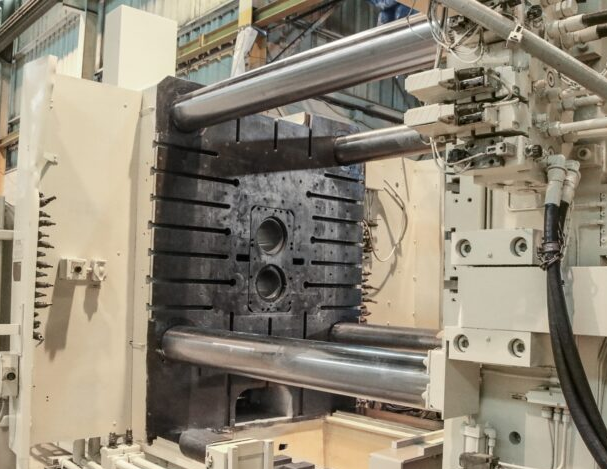
As die casting machines become larger and more automated, platen design is also changing.
Engineers are looking for better stiffness, lower weight, improved thermal stability, easier maintenance, and more intelligent condition monitoring.
Here are five important trends that are shaping the next generation of die casting machine platens.
Larger and Stiffer Die Casting Machine Platens for Mega Casting
One of the biggest changes in die casting is the move toward larger machines for structural automotive components.
Mega casting applications can require extremely large dies and high clamping forces.
As machine size increases, platen dimensions and structural loads also increase.
A larger platen must maintain sufficient rigidity while avoiding excessive deformation.
This creates a difficult engineering balance:
Higher rigidity + lower structural weight + stable dimensional accuracy
If a platen bends excessively under clamping force, the die parting surfaces may not remain properly aligned.
Possible consequences include:
- Flash
- Die mismatch
- Uneven clamping force
- Dimensional variation
- Increased die wear
Therefore, future large-machine platens will increasingly focus on optimized structural stiffness rather than simply adding more material.
FEA-Based Structural Optimization
Finite element analysis (FEA) can simulate stress and deformation before the platen is manufactured.
Engineers can evaluate:
- Clamping-force distribution
- Tie-bar loads
- Platen deflection
- Stress concentration
- Local reinforcement
- Material distribution
This allows unnecessary material to be removed from low-stress areas while reinforcing critical sections.
The result can be a platen that is lighter without sacrificing the rigidity required for high-pressure die casting.
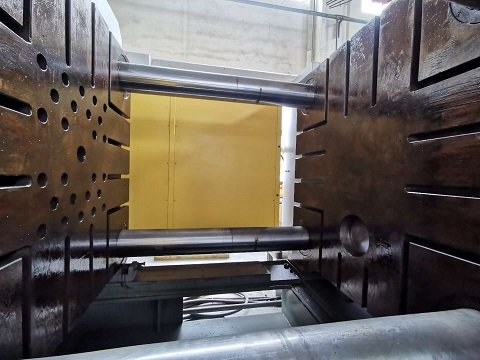
Lightweight Platen Design
Larger machines naturally require larger platens.
However, increasing platen size and weight also increases the moving mass of the clamping system.
A heavier moving structure can require more energy and may affect mold opening and closing dynamics.
For this reason, lightweight design will become increasingly important.

Topology Optimization
Topology optimization can help engineers identify where material is structurally necessary.
Instead of designing a solid block and removing material afterward, engineers can optimize the internal geometry based on expected loads.
The objective is not simply to make the platen lighter.
The real objective is:
Reduce unnecessary mass while maintaining stiffness, strength, and dimensional stability.
This approach is particularly useful for large die casting machines where even a small percentage of weight reduction can represent a significant amount of material.
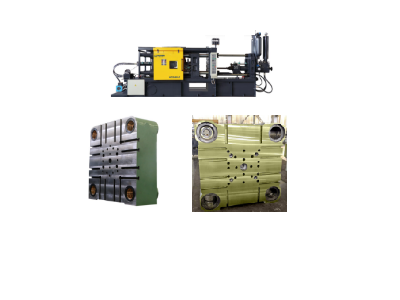
Smart Platen Monitoring
Another important trend is the integration of sensors into the die casting machine structure.
Traditional platen inspection normally relies on scheduled maintenance and visual checks.
Future systems can provide continuous information about the platen and clamping system.
Potential monitoring parameters include:
- Temperature
- Strain
- Vibration
- Clamping force
- Platen position
- Deflection
- Cycle count
Monitoring Platen Deflection
Platen deformation is particularly important for large machines.
If deformation gradually changes during production, it may indicate:
- Excessive loading
- Structural fatigue
- Tie-bar problems
- Die alignment problems
- Uneven thermal conditions
Continuous monitoring can provide an early warning before the problem causes significant casting defects.
Condition-Based Maintenance
Sensor data can also support condition-based maintenance.
Instead of replacing components only according to a fixed schedule, maintenance teams can use actual operating data to determine when inspection is required.
This approach can reduce unnecessary maintenance while helping prevent unexpected downtime.
However, sensor systems should be treated as monitoring tools rather than a replacement for mechanical inspection.
Better Thermal Management
Temperature stability is another important factor in platen design.
During continuous die casting, the mold transfers heat to the surrounding machine structure.
Large dies can create uneven temperature distributions, which may contribute to thermal expansion and dimensional changes.
Therefore, future platen systems may pay more attention to thermal management.
Optimized Cooling
Cooling design can be evaluated together with the mold and platen structure.
The goal is not necessarily to cool the platen as much as possible.
Instead, engineers need to control temperature differences and maintain a stable thermal condition.
This can help reduce:
- Thermal deformation
- Die alignment changes
- Dimensional variation
- Long-term mechanical stress
Temperature Monitoring
Temperature sensors can provide real-time information about different areas of the platen or clamping system.
If one area becomes significantly hotter than expected, the machine can trigger an inspection or process adjustment.
This becomes increasingly useful for large, high-cycle production systems.
Longer Service Life Through Better Materials and Surface Engineering
Die casting platens operate under repeated mechanical loads.
Large machines can experience high clamping forces thousands of times during production.
Therefore, fatigue resistance and long-term dimensional stability remain critical.
Future platen development will continue to focus on suitable structural materials, heat treatment, machining accuracy, and surface protection.
High-Strength Structural Materials
Material selection should be based on:
- Machine size
- Clamping force
- Cycle frequency
- Required rigidity
- Manufacturing method
- Cost
For large machines, material strength alone is not enough.
The complete structure must provide a suitable combination of strength, stiffness, toughness, machinability, and fatigue resistance.
Precision Machining
Even a strong platen can cause problems if its mounting surfaces are not accurately machined.
Important areas include:
- Die mounting surface
- Tie-bar holes
- Guide areas
- T-slots
- Ejector-related mounting areas
High machining accuracy helps maintain the required relationship between the platen, die, and clamping system.
How Will Die Casting Machine Platens Design Change With Mega Casting?
Mega casting is pushing die casting machines toward much larger dimensions and higher clamping forces.
This changes the engineering priorities for platens.
| Traditional Priority | Future Priority |
|---|---|
| Basic strength | Optimized stiffness-to-weight ratio |
| Scheduled inspection | Condition monitoring |
| Fixed structural design | FEA and topology optimization |
| Basic thermal management | Integrated thermal monitoring |
| Manual maintenance | Data-supported predictive maintenance |
| Standard machine sizes | Large and application-specific structures |
The future platen is therefore not simply a larger version of a traditional platen.
It needs to become a more optimized structural component that works together with the die casting machine’s hydraulic, mechanical, thermal, and control systems.
Will Smart Sensors Replace Traditional Die Casting Machine Platens Inspection?
No.
Sensors can provide useful information, but mechanical inspection remains important.
For example, a sensor may indicate an abnormal temperature or strain value, but engineers still need to determine the physical cause.
Traditional inspections should still include:
- Mounting surface condition
- Tie-bar hole condition
- T-slot condition
- Surface flatness
- Alignment
- Wear
- Cracks or other visible damage
The most practical future approach is likely to combine sensor-based monitoring with regular mechanical inspection.
What Should Die Casting Machine Buyers Look for in a Platen?
When evaluating a die casting machine, buyers should not look only at the machine’s nominal clamping force.
The platen system should also be evaluated.
Important factors include:
1. Platen Rigidity
Ask how the manufacturer evaluates platen deformation under clamping force.
FEA analysis and structural calculations can provide useful information.
2. Mold Mounting Dimensions
Check:
- Platen dimensions
- Tie-bar spacing
- Mold mounting area
- T-slot or threaded-hole layout
- Maximum mold dimensions
The machine must accommodate the intended die safely and accurately.
3. Thermal Stability
For continuous production, ask how the machine manages temperature changes around the die and clamping system.
4. Manufacturing Accuracy
The platen mounting surface and critical holes must meet the required machining tolerances.
5. Maintenance and Inspection
Ask how platen wear, alignment, and deformation are inspected during the machine’s service life.
Haichen’s Approach to Die Casting Machine Platens Design
Haichen has experience manufacturing and processing large die casting machine components, including platens, tie rods, bushings, split tie rod nuts, and other heavy structural parts.
According to Haichen, its machining capability includes very large die casting components, with some die casting platens exceeding 40,000 pounds in weight.
This experience is particularly relevant to large-machine applications where machining accuracy, structural stability, and handling capability are important.
For future die casting machine development, platen design needs to work together with:
- Clamping system
- Tie bars
- Hydraulic system
- Mold
- Cooling system
- Control system
A platen should therefore be evaluated as part of the complete die casting machine rather than as an isolated steel component.
What Is the Future of Die Casting Machine Platens?
The future of platen technology will likely focus on five major directions:
- Larger and stiffer structures for mega casting
- FEA and topology optimization for better stiffness-to-weight ratios
- Smart sensors for condition monitoring
- Improved thermal management for dimensional stability
- Better materials and precision manufacturing for longer service life
At the same time, the fundamental requirements will remain unchanged.
A good platen must support the die, withstand the required clamping force, maintain alignment, and remain dimensionally stable throughout repeated production cycles.
The future development of die casting machine platens is therefore not about adding technology for its own sake.
It is about combining structural engineering, precision manufacturing, monitoring, and thermal management to create a more reliable and efficient die casting machine.


